Kenya Dairy Sector Gets KSh 1.4 Billion Infrastructure Boost as Government Cuts Genetics Costs
- Kenya dairy sector gets KSh 1.428 billion for 230 milk coolers as government cuts sexed semen prices, expands feed production and reforms sugar governance.
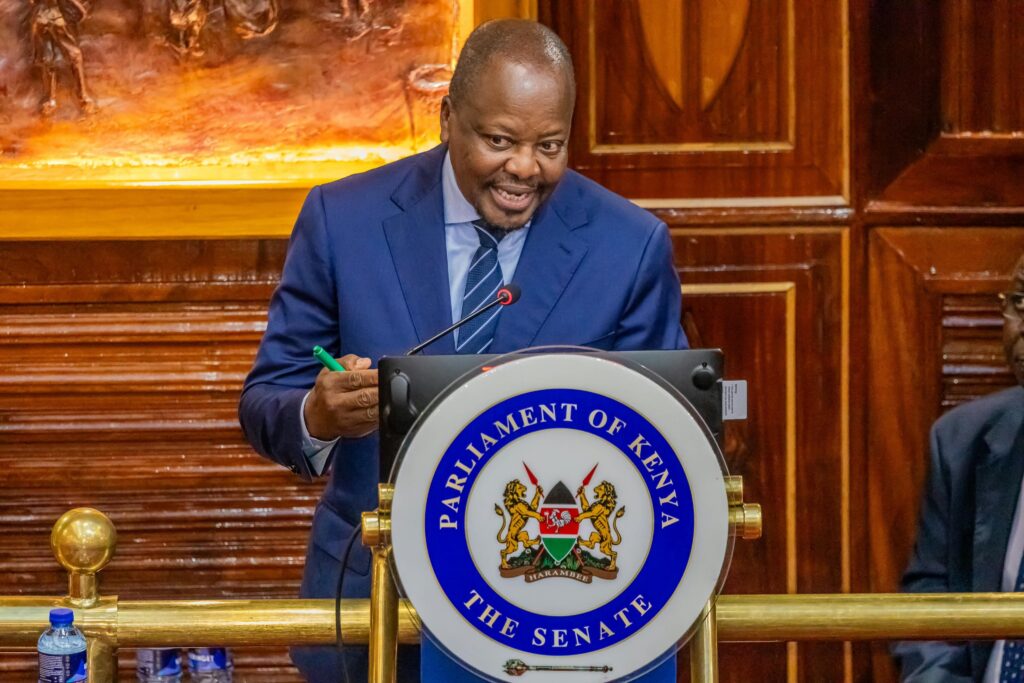
The Kenya dairy sector is receiving a KSh 1.428 billion infrastructure investment as the government expands milk cooling capacity, reduces the cost of improved genetics and introduces measures aimed at lowering animal feed costs.
Agriculture and Livestock Development Cabinet Secretary Sen. Mutahi Kagwe outlined the interventions while appearing before Parliament to respond to questions on the agriculture sector.
The measures cover milk aggregation, dairy genetics, animal feeds and agricultural land, alongside wider institutional reforms in the sugar industry.
The government says the interventions are intended to lower production costs, increase productivity, reduce post-production losses and improve farmer incomes as demand for milk continues to grow.
KSh 1.428 Billion to Fund 230 Bulk Milk Coolers
The largest investment in the dairy programme is the allocation of KSh 1.428 billion for 230 bulk milk coolers across the country.
Of the 230 units, 200 will be solar powered. The use of solar energy is expected to reduce electricity costs for dairy cooperatives while allowing milk collection centres to maintain cooling capacity in areas where access to reliable electricity remains a challenge.
According to the Ministry, the solar-powered milk coolers are expected to save dairy cooperatives about KSh 73 million annually in electricity costs.
The infrastructure will support more than 115,000 farmers across 41 counties and is expected to help aggregate an estimated 475,000 litres of milk every day.
Milk cooling is an important part of dairy production because raw milk requires proper handling and temperature control after collection. Improved aggregation infrastructure also gives cooperatives greater capacity to collect milk from farmers and maintain quality before the product reaches processors and other markets.
The government is therefore linking investment in cooling facilities with efforts to strengthen the wider dairy value chain.
For farmers, better collection infrastructure could reduce losses associated with poor handling and improve the ability of cooperatives to consolidate milk volumes for buyers.
The solar component also addresses part of the operating cost faced by cooperatives. Lower electricity expenditure would reduce the running costs of milk collection centres and leave more resources available for other cooperative activities.
The investment comes as the government seeks to increase the efficiency of a dairy sector that supports large numbers of smallholder farmers across Kenya.
Sexed Semen Price Cut Targets Dairy Genetics
The government is also reducing the cost of improved dairy genetics through a subsidy on sexed semen.
The price has been reduced by nearly 65 percent, from KSh 2,900 to KSh 1,000 per dose.
Sexed semen is used by dairy farmers seeking to increase the likelihood of producing female calves for herd replacement and expansion. Lowering the purchase price is intended to make the technology accessible to more farmers.
The government sees improved genetics as one of the tools for raising dairy productivity and improving the performance of individual animals.
The price reduction also forms part of a wider effort to lower the cost of inputs faced by farmers.
Animal feed remains another major production cost for dairy farmers. The government is responding through the National Animal Feeds Development Strategy and the establishment of a National Strategic Feeds Reserve.
The two measures are intended to improve the availability and security of animal feed, particularly during periods when farmers face shortages or sharp increases in feed prices.
The government is also using the Land Commercialization Initiative to make underutilised public land available for commercial fodder production.
The initiative includes government agricultural farms associated with the Ministry of Agriculture and Livestock Development and the Kenya Agricultural and Livestock Research Organisation.
The aim is to increase domestic fodder production and reduce pressure on farmers who depend on purchased feeds.
The government is also pursuing partnerships with private companies to increase feed manufacturing capacity.
One of the investments cited by the Ministry is De Heus’ KSh 300 million animal feed mill in Athi River.
The government has also entered into an agreement with UAE-based Al-Dahra to utilise up to 200,000 acres at Galana-Kulalu for agricultural production.
The broader objective is to increase the availability of agricultural raw materials and fodder while supporting a more reliable feed supply.
Tax measures have also been introduced to reduce costs in the animal feed industry. These include duty waivers and VAT exemptions on selected raw materials used to manufacture animal feeds.
The government says these measures are intended to reduce input costs and improve the affordability of feeds for livestock farmers.
Production costs are also being monitored through regular cost-of-production studies.
According to the Ministry, these studies put the average cost of milk production at about KSh 36.20 per litre across different production systems.
The data is being used to inform government policy and discussions around sustainable producer prices as milk demand increases.
The cost figures also provide a basis for assessing the effect of feed, genetics, energy and other input costs on dairy farmers.
For farmers, the combination of lower genetics costs, investment in milk cooling and measures targeting animal feeds represents a broad attempt to address several major expenses along the dairy production chain.
Sugar Board Reforms Continue Under Sugar Act 2024
Alongside the dairy interventions, the government is continuing institutional reforms in Kenya’s sugar sector under the Sugar Act, 2024.
The Kenya Sugar Board is currently being constituted, with several key positions already filled.
The appointed positions include the Chairperson, a National Treasury representative, a Council of Governors nominee and a representative from the State Department of Agriculture.
The process of establishing grower representation on the Board has faced delays following court injunctions and petitions challenging aspects of the election process.
The legal challenges include disputes concerning election procedures and the definition of sugar catchment areas.
The Ministry said the issues are being addressed through the courts, after which the process of electing growers’ representatives is expected to resume.
The full constitution of the Kenya Sugar Board is important for the implementation of the institutional framework established under the Sugar Act, 2024.
While the process continues, the Ministry has maintained the necessary administrative functions to ensure continuity in the management of the sugar industry.
The government is also expected to continue implementing statutory functions required for the administration of the sugar sector during the transition.
The sugar reforms come amid wider efforts to improve governance and strengthen the management of agricultural value chains.
For sugarcane farmers, effective grower representation is important because decisions affecting the industry cover production, marketing, processing, regulation and relationships between farmers and millers.
The government says the institutional changes are intended to provide a stronger framework for managing the sugar industry and implementing the provisions of the Sugar Act, 2024.
The dairy and sugar measures form part of a wider government programme aimed at addressing production costs while improving infrastructure and sector governance.
In dairy, the focus is on increasing milk aggregation capacity, improving genetics, addressing feed shortages and reducing operating costs at collection centres.
In sugar, the focus is on establishing the institutions required under the new legal framework and ensuring continuity of sector administration while court cases affecting grower representation are resolved.
The dairy programme also places greater emphasis on investment in infrastructure that directly connects farmers to markets.
The 230 bulk milk coolers are expected to increase the capacity of cooperatives to collect and preserve milk, while the solar units could reduce energy costs at collection centres.
The sexed semen subsidy addresses another part of dairy production by lowering the cost of improved breeding technology.
Feed interventions are aimed at one of the other major expenses faced by livestock farmers. Through fodder production, strategic feed reserves, private-sector investments and tax measures, the government is seeking to improve both supply and affordability.
The Ministry’s regular cost-of-production studies will continue to provide information for policy decisions on dairy production and producer prices.
The combined interventions point to an approach focused on addressing several constraints at the same time rather than relying on a single measure.
For dairy farmers, the effect of the programme will depend on how quickly the new cooling facilities are installed, how widely farmers access subsidised genetics, and whether feed supply and prices improve.
For sugarcane farmers, the next stage of institutional reform will depend partly on the resolution of legal challenges surrounding grower representation on the Kenya Sugar Board.
The government says the overall objective across both sectors is to strengthen agricultural value chains, reduce production costs and create conditions for farmers to earn better returns.
With more than 115,000 dairy farmers targeted by the milk cooling investment and new measures being introduced across the feed and genetics sectors, the Kenya dairy sector is at the centre of the government’s latest agricultural infrastructure and cost-reduction programme.
The sugar reforms, meanwhile, are focused on completing the institutional framework required to manage the industry under the Sugar Act, 2024.
https://farmerstrend.co.ke/farming-news/kenya-dairy-sector-ksh-1-4-billion-infrastructure-boost/https://farmerstrend.co.ke/wp-content/uploads/2026/09/Kenya-Dairy-Sector-Gets-KSh-1.4-Billion-Infrastructure-Boost-as-Government-Cuts-Genetics-Costs-1024x683.jpeghttps://farmerstrend.co.ke/wp-content/uploads/2026/09/Kenya-Dairy-Sector-Gets-KSh-1.4-Billion-Infrastructure-Boost-as-Government-Cuts-Genetics-Costs-150x150.jpegFarming Newsagricultural reforms Kenya,animal feeds Kenya,dairy farmers Kenya,dairy farming in kenya,dairy genetics Kenya,Kenya dairy sector,Kenya Sugar Board,Kenya sugar sector,milk coolers Kenya,sexed semen Kenya,Sugar Act 2024Kenya dairy sector gets KSh 1.428 billion for 230 milk coolers as government cuts sexed semen prices, expands feed production and reforms sugar governance.The Kenya dairy sector is receiving a KSh 1.428 billion infrastructure investment as the government expands milk cooling capacity, reduces the cost of improved genetics...FarmersTrendjohn doefarmerstrend@gmail.comAdministratorFarmers Trend Ltd.








Leave a Reply