Hass Avocado Nursery Irrigation: 7 Costly Watering Mistakes Killing Seedlings
Hass avocado nursery irrigation decides how many seedlings you sell and how many you lose. Avocado roots are shallow and fine. They drown in soggy media and dry out within hours in hot weather. Most nursery losses trace back to water, not to the graft.
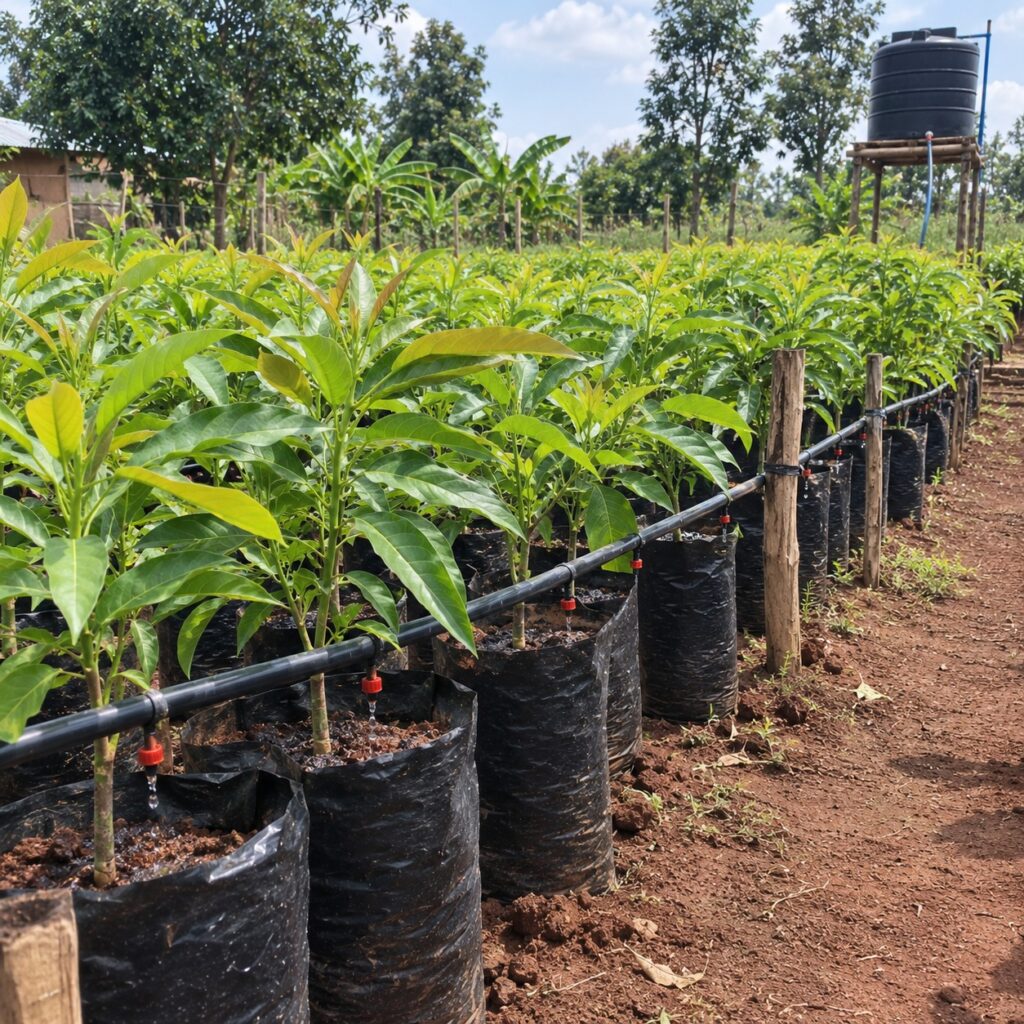
This guide shows you how to water Hass seedlings from sowing to dispatch. You will learn how to test your water, build a free-draining nursery, set a watering routine, size your tank, choose a system and avoid seven costly mistakes. You will also see what poor watering costs you in shillings.
If you prefer ready seedlings, Farmers Trend Limited sells certified grafted Hass avocado seedlings at KES 250 each, down from KES 350. Farmers Trend Limited has nurseries in Muranga and Nairobi.
Why Water Decides Seedling Survival in a Hass Avocado Nursery
Avocado roots have few root hairs. They need air in the media as much as they need water. Each time you water, you push air out of the bag. Each time the bag drains, air returns. A nursery works when this cycle runs fast.
Wet media for long periods starves roots of air. Phytophthora root rot then takes hold and kills seedlings, often within days. Dry media does the opposite. Leaf tips burn, leaves drop and the graft union dries out.
The safe window between too wet and too dry is narrow. You manage water every day, in every bag, in every season. Nurseries which respect this window sell strong seedlings. Nurseries which ignore this window sell weak seedlings, or lose the batch.
How a Hass Avocado Seedling Grows in the Nursery
Water needs change with each stage. A seedling in week two needs a different routine from a seedling in month six. The table shows the usual stages. Timing differs between nurseries, so treat the figures as a guide.
| Stage | Approximate timing | Water focus |
|---|---|---|
| Rootstock seed sowing and germination | Four to eight weeks | Keep the seedbed moist, never soggy |
| Rootstock growth in polybags | Several months, until the stem reaches pencil thickness | Build a steady routine and strong roots |
| Grafting and union healing | About three to four weeks after grafting | Water at the base, keep the wrap dry |
| Scion growth | Weeks after the union heals | Even moisture, no swings |
| Hardening | Two to three weeks before sale | Less often, full watering each time |
| Ready seedling | At least 6 to 8 months old | Water the day before dispatch |
Choose seedlings at least 6 to 8 months old. A seedling raised with steady, correct watering reaches this age with a healthy root system and a healed graft.
Irrigating the Rootstock Seedbed and Young Seedlings
Rootstock seeds germinate in a seedbed or directly in bags. Keep the media moist, never wet. Seeds rot in soggy media before they sprout, and a wet seedbed loses more seeds than a dry one.
Sow in loose, sandy media. Water lightly with a fine rose once a day in cool weather and twice a day in hot weather. Cover the seedbed with shade net. Stop watering when the media feels moist to the touch.
Move strong seedlings into polybags when they are firm enough to handle. Water each new bag straight after transplanting, so the media settles around the roots. In the first days, water lightly and check often. Young roots dry out fast, and a torn root cannot take up water from soggy media.
Water the seedbed and young bags separately from older seedlings. Their needs differ, and one routine for all stages overwaters some and underwaters others.
Test Your Water Before You Irrigate
Avocado is sensitive to salts. Water with high salt content burns leaf edges and stunts growth. Some borehole and river water carries salts, so test pH and salinity before you build the nursery. A laboratory, your county extension officer or KALRO will help you collect the sample.
Avoid stagnant dam or pond water. Phytophthora spreads in standing water. Use clean water from a covered tank, a protected borehole or a treated supply.
Fit a filter if you use drip lines or micro-sprinklers. Sand and algae block emitters, and blocked emitters leave seedlings dry. Cover your tank to keep sunlight out, because sunlight grows algae.
Retest your water each season. Boreholes change as water tables fall, and the salt level rises in dry years.
Build Your Nursery to Drain Fast
Good irrigation starts before you water the first bag. If the nursery holds water, no routine will save your seedlings.
Choose Loose, Clean Growing Media
Use loose, clean media. One example mix is three parts forest topsoil, one part river sand and one part well-rotted manure. Adjust the mix to your soil. Test the result by watering a filled bag. Water must leave through the base holes within a few minutes.
Avoid heavy clay in the mix. Clay packs tight, holds water and drives out air. Do not use soil from fields with a history of avocado root rot or wilt.
Use Bags with Drainage Holes and Raised Benches
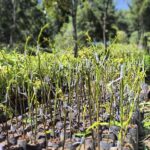
Use polybags with drainage holes at the base. Place bags on raised benches or on a bed of gravel, off bare soil. Seedlings standing on soil send roots out through the holes. Rain splash also carries disease spores from the soil into the bags.
Slope the floor so water runs away from the bags. Dig a drain along the edge of the nursery. Standing water around the benches breeds disease and invites mosquitoes.
Cover the Nursery with Shade Net
Cover the nursery with shade net. Newly grafted seedlings do best under about 50 percent shade. Shade lowers leaf temperature and slows water loss, so you water less often and lose fewer scions.
Clean your tools between batches. Do not reuse old bags, and do not stack unused bags on the nursery floor.
How Much Water and How Often
No fixed timetable works for every nursery. Weather, bag size, media and seedling age decide the answer. Use three checks every morning.
First, push a finger 2 cm into the media. Water if the media feels dry. Second, lift a bag. A dry bag feels light, and a wet bag feels heavy. Third, look at the leaves. Firm, dark green leaves mean the seedling has enough water.
Water until a little runs from the base holes, then stop. Standing water in the bag tray means you gave too much. The table gives starting points. Adjust them with the three checks.
| Weather | Starting pattern | Check before you water |
|---|---|---|
| Hot and dry | Daily, early morning, plus a light second watering if the top media dries | Finger test at midday |
| Warm | Every one to two days | Finger test and bag weight |
| Cool or cloudy | Every three to four days | Finger test |
| Heavy rain | Skip watering, move bags under cover if the rain floods them | Drainage at the base holes |
Young seedlings under eight weeks old have small root systems. Give them smaller amounts more often. Older seedlings in larger bags take more water less often.
Walk the whole nursery before you water. Corners, edges and the sunny side of the benches dry first. Bags near the shade net edge dry faster than bags in the centre. Water these bags earlier, or add a drip emitter.
Work Out Your Nursery Water Demand
Size your tank and pump before you buy seedlings. The sum is simple. Multiply the number of bags by the water each bag receives, then multiply by the days you want in storage.
The example below assumes 0.3 litres per bag per day in hot weather. This is a planning figure, not a rule. Measure your own bags by collecting the water one bag takes until runoff starts, then use your figure.
| Seedlings in the nursery | Water per day at 0.3 litres each | Water for 7 days |
|---|---|---|
| 1,000 | 300 litres | 2,100 litres |
| 2,500 | 750 litres | 5,250 litres |
| 5,000 | 1,500 litres | 10,500 litres |
| 10,000 | 3,000 litres | 21,000 litres |
A nursery with 5,000 seedlings needs about 1,500 litres a day. A 10,000 litre tank then holds about six and a half days of water, since 10,000 divided by 1,500 gives 6.7. Add a second tank or a backup supply if your pump or the mains fails often. A nursery without water for two hot days loses seedlings.
A Weekly Irrigation Routine and a 2,000 Seedling Example
A routine keeps your nursery steady. The daily tasks never change. Check the media, water in the morning and write the record. The weekly tasks keep your system working.
| Day | Task |
|---|---|
| Every day | Finger test, morning watering, daily record |
| Monday | Clean the filter, flush the laterals, check the tank level |
| Wednesday | Clear drains, check benches and shade net |
| Friday | Check a sample of bags for roots, scout for yellow leaves |
| Saturday | Remove weak or sick seedlings |
| Sunday | Read the week’s record and adjust the routine |
Take a nursery with 2,000 seedlings. At 0.3 litres per seedling per day in hot weather, the nursery uses 600 litres a day, since 2,000 times 0.3 gives 600. Over seven days, the nursery uses 4,200 litres.
A 5,000 litre tank holds 8.3 days of water at this rate, since 5,000 divided by 600 gives 8.3. Set a refill mark at 1,200 litres. This is two days of water, so you refill before the tank runs low. Check the tank every morning in the dry season.
Best Time to Water
Water early, between 6 and 9 in the morning. Leaves dry by midday, and seedlings enter the hot hours with full moisture.
Midday watering wastes water through evaporation and shocks hot leaves. Evening watering leaves leaves wet overnight and raises the risk of fungal disease. Pick one time and keep to the routine. Seedlings settle into a steady rhythm when you water at the same hour each day.
Irrigation Methods Compared
Choose a system by nursery size and budget. The table compares four common options.
| Method | Best for | Strength | Weakness |
|---|---|---|---|
| Hand watering with a fine rose | Small nurseries | Low cost, you see every seedling | Slow, uneven, labour heavy |
| Drip irrigation | Larger nurseries with bags on benches | Water goes to the roots, leaves stay dry, saves water | Emitters block, needs a filter, higher set-up cost |
| Micro-sprinklers | Medium nurseries and hardening areas | Even coverage, cools seedlings in heat | Wets leaves and grafts, uses more water |
| Overhead sprinklers | Last choice | Cheap coverage | Wets leaves, spreads disease, wastes water |
Drip irrigation suits most commercial nurseries. Hand watering with a fine rose suits a small home nursery if you water slowly and check each bag. Never use a hose without a rose. A hard jet washes media from the bag and exposes roots.
How to Set Up Drip Irrigation for Seedling Bags
Parts You Need
A drip system for a nursery has six parts. You need a tank, a pump or a raised tank stand to give pressure, a filter, a main pipe, lateral lines along each bench, and emitters at each bag.
Place one emitter at each bag for young seedlings. Move to two emitters per bag for larger bags in hot weather, so water reaches both sides of the root ball. Use stakes to hold the emitter tubes in place, so the water drips on the media and not on the stem.
Run Time and Timers
Test run time before you plant the whole nursery. Run the system for five minutes, then check how far water has moved into a filled bag. Cut the bag open if you need to. Increase or reduce the run time until the media is wet through, with a little runoff at the base.
Fit a timer if you are able to. A timer waters at the same hour each day, even when you travel. In hot weather, split the run into two short cycles, one early and one mid-morning, so water soaks in and does not run off.
Maintenance
Clean the filter each week. Flush the lateral lines each week by opening the end caps for a minute. Check each emitter by hand. A blocked emitter looks the same from a distance as a working one, and the seedling under the blocked emitter pays the price.
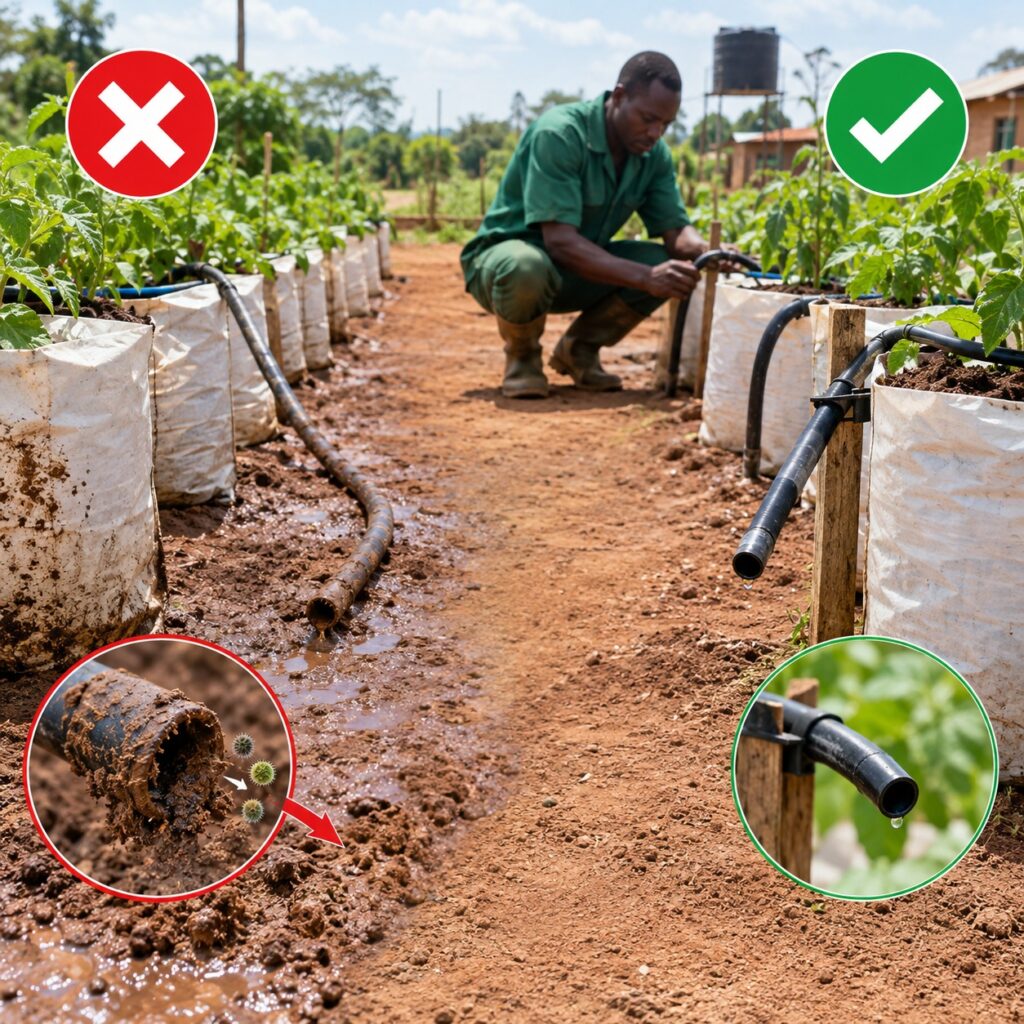
Keep hose ends and pipe ends off the floor. Floor soil carries spores, and a hose end dragged through mud brings them to the next bag.
Watering Newly Grafted Seedlings
A fresh graft is fragile. Keep the graft union dry. Water at the base of the seedling, not over the graft wrap. Wet wrap rots, and a rotting union means a lost seedling.
Hold humidity with shade, not with extra water. Keep seedlings under shade net for the first weeks while the union heals. Do not feed with fertilizer until the scion pushes new leaves.
Check the scion every day. A shrivelled scion means the media dried out or the union failed. A scion which stays green and plump after three weeks signals a healed union. Mark failed grafts and remove them, so you do not water bags which will never produce a seedling.
Feeding Through Your Irrigation and Managing Salts
Fertilizer adds salt to the media. Too much fertilizer burns roots in the same way as salty water. Start feeding only after the scion pushes new growth. Use low doses at regular intervals, not heavy doses at long intervals.
Salts build up in bags over time, especially in hot weather when water evaporates and leaves salt behind. Flush the bags once every few weeks. Water until clear water runs freely from the base holes, and do this on a cool morning. Flushing washes salt out of the root zone.
Look for white crust on the media surface or brown, burnt leaf edges. Both signs point to salt stress. Test your water again and reduce your fertilizer dose.
Irrigation During Hardening
Hardening prepares seedlings for the farm. Over two to three weeks, move seedlings from shade into full sun. Water less often and give a full watering each time. Do not starve the seedlings. Starved seedlings wilt and drop leaves in the field.
Look for firm, dark green leaves and a woody base at the end of hardening. Soft, pale leaves scorch in the sun. Water seedlings the day before dispatch so they travel with moist, not dripping, media. Soak the bag again before planting.
Signs of Too Much and Too Little Water
Read your seedlings every day. The table helps you tell the two problems apart.
| Sign | Too much water | Too little water |
|---|---|---|
| Leaves | Yellow, soft, lower leaves drop | Brown, crisp tips, leaves curl and look dull |
| Media | Soggy, green algae, sour smell | Dry, pulls away from the bag, bag feels light |
| Roots | Dark brown and mushy | Thin, dry and brittle |
| Wilting | Seedling wilts while media is wet | Seedling wilts and recovers after watering |
Wilting in wet media signals root rot. Do not water more. Lift the seedling, check the roots and remove sick seedlings from the nursery before disease spreads.
Protect Your Seedlings from Phytophthora Root Rot
Phytophthora root rot is the biggest threat to avocado seedlings. The disease spreads through water, soil and tools. Your irrigation routine is your first defence.
Start with clean media and clean bags. Place bags on raised benches. Use clean water. Do not let runoff from sick seedlings flow past healthy bags. Remove sick seedlings at the first sign, and discard their media away from the nursery.
Wash your hands and tools when you move from a sick batch to a healthy batch. Check with your agrovet or extension officer for fungicides registered with the Pest Control Products Board, and follow the label on dose and interval. Never mix stronger doses than the label states.
Buy certified seedlings from nurseries which control these risks. KEPHIS inspects plant nurseries and certifies planting material in Kenya. Certified Hass seedlings from Farmers Trend Limited grow in a disease-free environment and receive health tests.
Troubleshooting Irrigation Problems in Your Nursery
When seedlings show stress, look for the cause before you change the water. The table links common signs to their likely causes.
| Problem | Likely cause | Action |
|---|---|---|
| Brown, burnt leaf tips on many seedlings | Salty water or too much fertilizer | Test the water, flush the bags, cut the fertilizer dose |
| Yellow lower leaves with wet media | Overwatering or poor drainage | Skip watering, clear drains, check the base holes |
| Wilting at midday, recovery by evening | Heat stress | Check the shade net, water early, add a light second watering |
| Seedlings on one bench fail | Blocked emitters or poor drainage on this bench | Flush the lines, test each emitter, level the bench |
| Green algae on bags and benches | Constant wetness or sunlight on tank water | Water less, cover the tank, clean the benches |
| Scion dries after grafting | Dry media or a failed union | Check moisture, mark and remove failed grafts |
Change one thing at a time. If you change water, shade and fertilizer on the same day, you will not know which change solved the problem.
Irrigation in Rainy Weather
Heavy rain tests your drainage. Skip watering when rain wets the media. Check the base holes after each storm. If water stands in trays or on the bench, clear the drain.
Cover the nursery with clear polythene or move bags under a roof when rain is heavy and long, as in El Niño seasons. Rain splash spreads disease, and saturated media starves roots. Keep the shade net on, and keep air moving through the sides of the structure.
After a long wet spell, check seedlings for yellow leaves and soft stems. Wait for the media to dry to the finger test before you water again.
Keep a Daily Watering Record
A written record shows you what works. The record also helps new staff follow the routine. Use a simple sheet at the nursery gate. The table shows an example.
| Date | Weather | Finger test | Water given | Problems seen |
|---|---|---|---|---|
| Monday | Hot, dry | Dry at 2 cm | Full watering at 7 am | None |
| Tuesday | Cloudy | Moist at 2 cm | None | Algae on bench 3 |
| Wednesday | Rain overnight | Wet at 2 cm | None | Water standing at drain |
Review the record each week. If problems repeat on one bench, look at drainage, emitters or shade in this spot.
7 Costly Watering Mistakes Killing Hass Seedlings
- Using one timetable for every day. Weather changes, so the water need changes. Check the media each morning and adjust.
- Standing bags on bare soil. Roots escape through the holes and rain splash brings spores into the bag. Use benches or gravel.
- Using untested or stagnant water. Salts burn leaves, and standing water carries Phytophthora. Test the water and store the supply in a covered tank.
- Watering in the evening. Wet leaves overnight invite fungal disease. Water in the morning.
- Wetting the graft union. Water at the base and keep the wrap dry.
- Letting bags dry out, then flooding them. Swings between dry and wet damage fine roots. Keep moisture even.
- Starving seedlings during hardening. Reduce how often you water, not how much each seedling receives.
What Poor Watering Costs You
Water mistakes show up as dead seedlings, and dead seedlings are lost income. Certified grafted Hass seedlings from Farmers Trend Limited sell at KES 250 each. A batch of 1,000 seedlings has a value of KES 250,000 at this price.
| Loss in a batch of 1,000 | Seedlings lost | Value lost at KES 250 each |
|---|---|---|
| 5 percent | 50 | KES 12,500 |
| 10 percent | 100 | KES 25,000 |
| 20 percent | 200 | KES 50,000 |
A drip kit, a filter and a timer cost less than one bad batch. Spend on water control before you spend on more seedlings.
Watering Your Seedlings After Planting
The nursery routine continues in the field. A seedling moved from a daily watering to no water in the first month struggles to survive.
Soak the bag the evening before planting. Plant at the start of the rains, and water each seedling at planting. As a practical guide, give about 20 litres per seedling at planting. In dry weather, water every three to four days for the first month, then weekly through the first dry season. Keep the soil moist, never waterlogged.
Mulch around the seedling, and keep the mulch off the stem. Mulch holds moisture and reduces the number of waterings you need. Avoid planting in a spot where water stands after rain. Avocado roots rot in the field as fast as they rot in the nursery.
For orchard planning, spacing and care, read the Farmers Trend Limited Hass avocado farming guide.
Irrigation Equipment at the Farmers Trend Limited Virtual Agrovet
You buy irrigation equipment from the Farmers Trend Limited irrigation equipment category. Farmers Trend Limited stocks a generic garden irrigation system at KES 3,724, down from KES 4,200. A hand-held garden sprinkler costs KES 1,250, down from KES 1,800.
A garden kit suits a home nursery or a small batch. A commercial nursery needs a full drip design with a tank, a pump, a filter and laterals. Prices change, so check the current price before you order.
Hass Avocado Seedling Price and What to Check Before You Buy
Farmers Trend Limited sells certified grafted Hass avocado seedlings at KES 250 each. The earlier price was KES 350. The seedlings are in stock at the nurseries in Muranga and Nairobi. The table shows the cost for common quantities.
| Number of seedlings | Cost at KES 250 each |
|---|---|
| 50 | KES 12,500 |
| 100 | KES 25,000 |
| 200 | KES 50,000 |
| 500 | KES 125,000 |
| 1,000 | KES 250,000 |
The prices exclude delivery. Ask about delivery to your area when you call.
Check five things before you pay.
Age. Choose seedlings at least 6 to 8 months old. Younger plants are not well established.
Roots. Look for a healthy, well-developed root system. Avoid damaged or stunted roots.
Leaves. Choose vibrant green leaves with no yellow or brown patches and no sign of disease.
Trunk and height. The trunk must stand sturdy and straight. The seedling must look balanced for the size of its bag.
Graft union. The graft must be fully healed, smooth and firm.
Ask the nursery how the team waters and hardens seedlings. A good nursery answers in detail.
Tips for a Small Home Nursery
You do not need a large budget to raise a few seedlings well. Use clean bags with base holes, a loose media mix and a raised bench made from poles or blocks. Water with a jug or container fitted with a fine rose, and water slowly.
Use the finger test every morning. Water at the base, not over the leaves. Keep seedlings in light shade, and move them to full sun in steps. If you plan a larger orchard, buying certified grafted seedlings saves months of nursery work and the risk of failed grafts.
Adjust Your Irrigation Through the Seasons
A nursery faces different water risks in each season. Change your routine as the weather changes, and do not wait for seedlings to show stress.
Dry season. Water demand reaches its peak. Check your tank level every day, and confirm your pump and filter work before the dry weeks start. Add a light second watering on the hottest days. Wind dries bags on the exposed side of the nursery, so set up a windbreak or extend the shade net down the windward side.
Long and short rains. Water demand falls and disease pressure rises. Cut your watering to match the finger test. Clear drains before the rains start, and keep benches clean. Look for yellow leaves and algae after each storm.
Cool months. Media dries slowly, so the risk of overwatering is highest. Water less often, and water in the warmer part of the morning so leaves dry before evening. A bag which stays wet for days in cool weather invites root rot.
Hot spells. Seedlings lose water fast under strong sun. Check shade net condition and replace torn sections. Water early, and look again at midday.
Train Your Nursery Staff
The best system fails when staff water without checking. Train every worker to run the finger test, read the leaf signs and report problems at once. Show them a healthy bag and a rotting bag side by side, so they see the difference.
Write simple rules and post them at the nursery gate. Water in the morning. Water at the base. Skip watering when the media is wet. Keep hose ends off the floor. Report wilting in wet media to the manager at once.
Assign one person to own the daily record. This person checks the tank, the filter and the drains each morning, and signs the sheet. Clear ownership prevents missed checks.
Your Daily Irrigation Checklist
- Walk the nursery before you water and look at the leaves.
- Run the finger test at 2 cm in bags from every bench.
- Water between 6 and 9 in the morning.
- Water at the base and keep graft wraps dry.
- Check emitters, filters and drains.
- Remove sick seedlings at once.
- Write the day’s record.
Frequently Asked Questions About Hass Avocado Nursery Irrigation
How often should you water Hass avocado seedlings in a nursery?
Water daily in hot, dry weather, every one to two days in warm weather and every three to four days in cool weather. Check the media with your finger first. Water only when the top 2 cm feels dry.
What is the best irrigation system for a Hass avocado nursery?
Drip irrigation suits most commercial nurseries because water goes to the roots and leaves stay dry. Hand watering with a fine rose works for a small nursery.
When is the best time to water avocado seedlings?
Water between 6 and 9 in the morning. Avoid midday heat and evening watering.
Does overwatering kill avocado seedlings?
Yes. Soggy media starves roots of air and invites Phytophthora root rot. Use free-draining media, bags with base holes and raised benches.
What water quality do Hass avocado seedlings need?
Use clean, low-salt water. Test pH and salinity before you build the nursery, and avoid stagnant dam water.
How much water does a nursery of 5,000 seedlings need?
At 0.3 litres per seedling per day in hot weather, you need about 1,500 litres a day. Measure your own bags and replace the figure with your result.
How do you water a newly grafted seedling?
Water at the base and keep the graft wrap dry. Keep the seedling under shade net until the union heals and the scion pushes new leaves.
How do you harden Hass avocado seedlings?
Move seedlings from shade into full sun over two to three weeks. Water less often and give a full watering each time.
How do you know if a seedling has root rot?
A seedling which wilts in wet media, with yellow leaves and dark, mushy roots, has root rot. Remove the seedling and fix drainage.
How old should a Hass avocado seedling be before you plant?
Choose seedlings at least 6 to 8 months old, with a healed graft, healthy roots and vibrant green leaves.
Does shade net reduce the amount of water your seedlings need?
Yes. Shade net lowers leaf temperature and slows water loss. Newly grafted seedlings do best under about 50 percent shade, and you water less often than in full sun.
How often should you flush salts from seedling bags?
Flush every few weeks in hot weather, and sooner if you see white crust on the media or burnt leaf edges. Water until clear water runs from the base holes.
How long do Hass avocado seedlings stay in the nursery?
Seedlings are ready at 6 to 8 months old. Nurseries differ on timing, so ask the seller about the age and the hardening routine.
How much do certified grafted Hass avocado seedlings cost?
They cost KES 250 each at Farmers Trend Limited, down from KES 350.
Where do you buy certified grafted Hass avocado seedlings?
Call or WhatsApp 0724 559 286 or 0790 509 684 to order from the Farmers Trend Limited nurseries in Murang’a and Nairobi, or order online at agrovet.farmerstrend.co.ke.
Bringing Your Hass Avocado Nursery Irrigation Together
Good irrigation follows a clear order. Start with water and drainage. Then build the routine. Then protect the graft and the seedlings through hardening.
Test your water for salts, and store the supply in a covered tank. Raise your bags on benches. Fill them with loose media and base holes which drain within minutes. These steps cost little and prevent most root rot.
Run the finger test at 2 cm every morning. Water between 6 and 9 in the morning. Water at the base, and keep graft wraps dry. Size your tank from your own numbers. A nursery with 5,000 seedlings needs about 1,500 litres a day at 0.3 litres per seedling.
Choose drip irrigation for a commercial nursery, and a fine rose for a small home nursery. Feed in low doses after the scion pushes new growth. Flush salts from the bags every few weeks. Harden seedlings over two to three weeks, and water them the day before dispatch.
Keep a daily record, train your staff and remove sick seedlings at once. These habits protect your income. A 10 percent loss in a batch of 1,000 seedlings costs KES 25,000 at KES 250 each. Seven costly mistakes cause most of these losses, and each one has a simple fix.
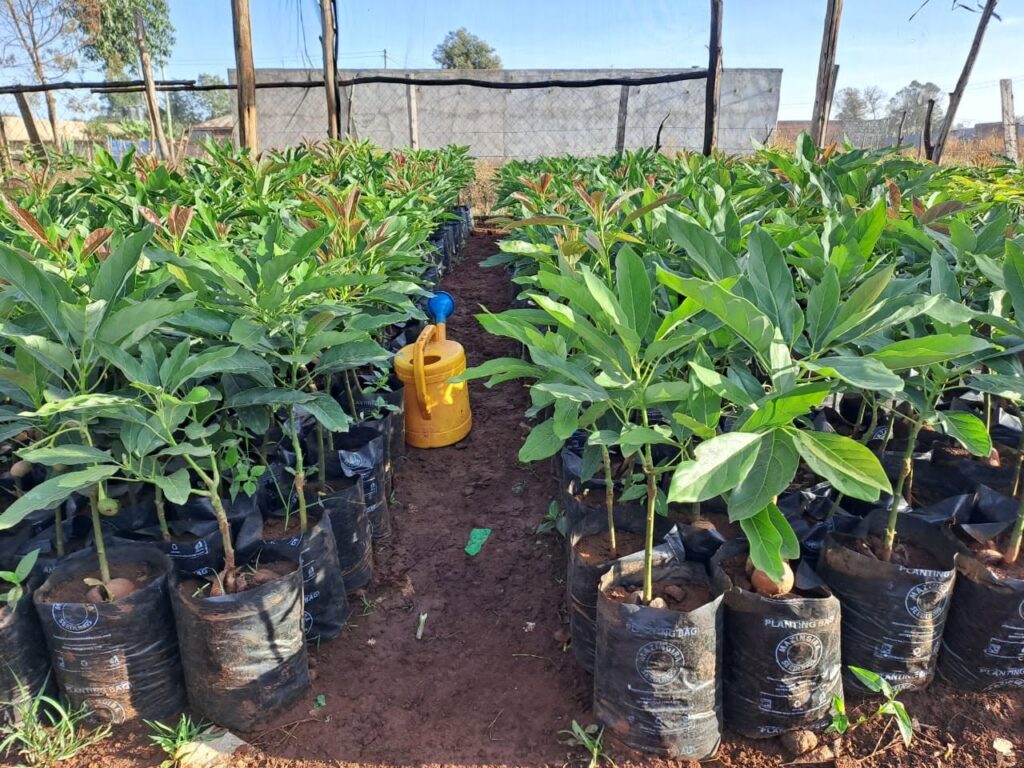
If you prefer to buy seedlings raised under a controlled routine, order certified grafted Hass avocado seedlings from Farmers Trend Limited at KES 250 each. Choose seedlings at least 6 to 8 months old, with a healed graft, healthy roots and vibrant green leaves. Call or WhatsApp 0724 559 286 or 0790 509 684 to place your order.
Farmers Trend Limited
Call/WhatsApp: 0724 559 286 | 0790 509 684
Website: www.farmerstrend.co.ke
Email: info@farmerstrend.co.ke







Leave a Reply