From Zero to 400kg: How Irrigation and Training Are Boosting Avocado Yields in Maragua Ridge
The arid landscape of Maragua Ridge in Murang’a County is transforming. Months after residents gained access to irrigation water through a national government initiative, farmers have received another major boost to improve food security in the region. Over 500 farmers were provided with 10,000 certified grafted Hass avocado seedlings and maize seeds. Agricultural experts trained them on sustainable and profitable avocado farming techniques .
This is a story of transformation. It is a story of how access to water, quality seedlings, and practical training can turn an arid region into a productive agricultural zone. This guide covers the Maragua Ridge initiative. You will learn the key practices that are driving this success and how you can apply them to your own farm.

The transformation at Maragua Ridge is part of a larger trend across Kenya’s avocado-growing regions. For farmers looking to establish successful orchards in similar areas, understanding the best counties and regions for successful Hass avocado farming in Kenya is essential.
The Maragua Ridge Initiative: A Blueprint for Success
The Maragua Ridge initiative is a model for agricultural transformation. It addresses three critical factors for successful avocado farming: water, quality planting material, and knowledge.
Access to Irrigation Water
Water is the lifeblood of any farm. In arid and semi-arid areas, it is the single most important factor determining success or failure. The national government initiative that brought irrigation water to Maragua Ridge removed this barrier. Farmers now have a reliable source of water for their crops.
The irrigation project, funded at a cost of Sh312 million, covers 400 acres in parts of Kambiti and Kamahuha Wards within Maragua Constituency. It benefits 848 households and has created over 12,700 jobs . Deputy Chief of Staff Eliud Owalo described the project as a “game-changer” for the region .
The project is financially, socially, and economically viable, with a payback period of four years . It enables farmers to cultivate fruits, vegetables, maize, and beans year-round .
Quality Seedlings
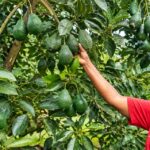
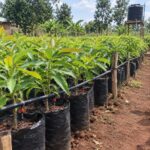
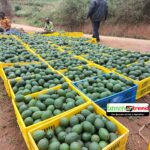
The farmers received 10,000 certified grafted Hass avocado seedlings sourced from Farmers Trend Ltd nursery in Murang’a . Grafted seedlings are superior to seed-grown trees. They are disease-free, uniform, and produce fruit much earlier. The Hass variety is known for its high oil content, long shelf life, and strong market demand.
Murang’a County leads Kenya and the African continent in avocado production. The county has 6,900 acres under avocado cultivation with an annual production of 200,000 metric tonnes. Farmers in Murang’a fetched Sh5.9 billion from avocado sales in 2024.
Expert Training
Agricultural experts trained the farmers on sustainable and profitable avocado farming techniques . This training covered everything from planting to pruning to pest management. The farmers learned how to care for their trees to maximize yields and profits.
The Irrigation Project: Transforming Lives
The Maragua Ridge Irrigation Development Project was commissioned by President William Ruto on April 3, 2025. The project is 99% complete and targets to irrigate 800 acres, with 400 acres already under irrigation infrastructure and in use . Phase 2 will put another 400 acres under irrigation .
Key Project Statistics :
- Investment: Sh312 million
- Area covered: 400 acres (Phase 1), with an additional 400 acres in Phase 2
- Beneficiaries: 848 households
- Jobs created: 12,700 (direct and indirect)
- Direct jobs: 4,240
- Indirect jobs: 8,480
- Payback period: Four years
- Water drawn: More than 7,000 cubic metres from Maragua Dam
- Pipeline network: 70 kilometres installed
The project draws water from Maragua Dam (Maragua River) . Cabinet Secretary for Water, Sanitation and Irrigation, Eng. Eric Mugaa, inspected the project on March 28, 2025, and expressed his satisfaction with the work done by the farmers .
The agricultural enterprises include the cultivation of pineapples and horticultural crops such as tomatoes, cabbage, spinach, lettuce, onions, carrots, baby corn, and capsicums, among others . The project is expected to create 4,240 direct jobs and 8,480 indirect jobs, significantly boosting local employment and food security .
Financial Viability:
The results of the financial analysis confirm that the project is financially, socially, and economically viable . Horticultural crops earmarked to be grown under the irrigation project have estimated average gross margins of Sh208,034 per acre per year . With the additional avocado component, farmers can earn significantly more, with gross margins reaching KES 450,000 per year per acre .
The Broader Economic Context: Murang’a’s Avocado Success
Murang’a County has emerged as Kenya’s avocado powerhouse. The county has 6,900 acres under avocado cultivation with an annual production of 200,000 metric tonnes. Farmers in Murang’a fetched Sh5.9 billion from avocado sales in 2024, making it the leading avocado-producing county in Kenya and Africa.
Why Murang’a Succeeds:
- Favorable Climate: The county’s warm climate and well-distributed rainfall create ideal conditions for avocado cultivation.
- Government Support: The county government provides 1 million Hass seedlings annually and has grouped 200,000 farmers into a giant producer group to increase bargaining power.
- Export Market Access: Murang’a farmers are connected to major exporters like Kakuzi PLC, which pays farmers a farm-gate price on delivery and shares profits as annual bonuses.
- Irrigation Infrastructure: Projects like Maragua Ridge are expanding irrigation access, enabling year-round production.
Farmer Success Stories
Wilson Nduati, a farmer from Ndutumi in Maragua sub-county, has been growing Hass avocados for 10 years on three and a half acres of land. His 200 Hass avocado trees have not only sustained his family but also educated two of his six children up to university level.
“I planted the avocados 10 years ago, there are two main seasons in a year but if the tree is properly manured and watered harvesting can be done up to four times,” Nduati says . “Life was unbearable for my family and I could not manage to educate all my children until a friend introduced me to the hass avocados. He showed me how to graft the ordinary avocado tree with a hass tree to get the seedling and that was my turning point.”
On a good season, Nduati harvests up to a tonne and sells up to Sh240 a kilo to a local exporting company . He hopes that the county government will ensure they are connected to irrigation water, as that is the only challenge he and other avocado farmers experience .
The Ndutumi Avocado Growers Association, which Nduati chairs, is a testament to the power of collective action. Farmers in the association benefit from shared knowledge, better market access, and stronger bargaining power.
The Avocado Value Chain
The success of Maragua Ridge is part of a larger story about Kenya’s avocado sector. Kenya produces an estimated 200,000 metric tonnes of avocado annually, but only 16,000 is exported . Small-scale farmers produce about 81,000 metric tonnes annually, of which 30,000 to 40,000 tonnes goes to waste due to lack of ready market.
The Maragua Ridge initiative addresses this gap by:
- Increasing production through irrigation and quality seedlings
- Improving quality through expert training and best practices
- Reducing waste by connecting farmers to export markets
- Creating jobs through the irrigation project and associated value chains
For farmers interested in scaling up, learning about Hass avocado farming for export in Kenya provides a comprehensive overview of the export process and market requirements.
Expert Advice on Planting and Caring for Hass Avocados
Agricultural expert Mburu Ngigi provided practical, actionable advice to the Maragua Ridge farmers . These are the key practices you should follow.
Land Preparation
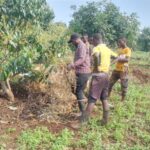
You must prepare the land properly before planting. “Planting Hass avocados requires preparing holes 2m by 2.4 ft, filling them with manure, and ensuring proper watering. Avoid waterlogging to prevent root rot,” Ngigi said .
The hole dimensions are specific: 2 metres long and 2.4 feet (approximately 73 cm) wide. This ensures adequate space for root development. The use of manure enriches the soil with organic matter, essential for healthy tree growth.
Watering
He recommended weekly watering and the use of drip irrigation . Drip irrigation delivers water directly to the root zone. This minimizes waste and ensures the trees get the moisture they need. It is particularly important in arid regions like Maragua Ridge.
Pruning
Pruning is essential for healthy avocado trees. “Prune during the dry season to remove dead branches, thin crowded areas, improve air circulation, enhance sunlight penetration, and encourage healthy fruit development,” Ngigi advised .
Pruning during the dry season is critical because it reduces the risk of fungal infections. Removing dead branches and thinning crowded areas allows better air circulation and sunlight penetration, which are essential for fruit production.
The Hass Advantage
The Hass avocado variety distributed is smaller than ordinary avocados, ripens slowly, but offers high yields . It is the preferred variety for export markets due to its quality and shelf life. Avocados from arid regions rank highly in oil content and market value .
A Farmer’s Perspective on Best Practices
Wilson Nduati, the farmer from Ndutumi, shares similar advice based on his 10 years of experience: “Choose quality seedlings, manure properly and control pests and diseases for quality yields.” He prunes his avocados trees once per year and uses a glued trap to catch thrips, which are common pests in avocados.
The Economic Impact: From Sh5,000 to Sh140 Million
The Maragua Ridge initiative is not just about planting trees. It is about creating a sustainable source of income for farmers. The numbers speak for themselves.
Income Per Tree
A single Hass avocado tree can earn a farmer up to Sh5,000 annually . This is a significant income stream for smallholder farmers. Unlike tea or coffee, avocados are not labor-intensive, making them a suitable investment .
Yield Per Tree
One avocado tree can produce up to 400 kilograms of fruit per season . This is an impressive yield that demonstrates the potential of the Hass variety under good management. In Gatanga, Murang’a County, a 110-acre avocado farm with more than 900 Hass avocado trees planted in 2018 achieves yields of 250-400 kg per tree during peak seasons.
Total Expected Returns
From the 10,000 seedlings distributed, Avocado Farmers Association Chairperson Ruoho Wangeci expects returns of not less than Sh140 million within five years . This is a powerful demonstration of the economic potential of avocado farming.
Economic Projections for Maragua Ridge:
| Year | Expected Returns (Sh) | Notes |
|---|---|---|
| Year 1-2 | Investment phase | Trees establishing; no significant harvest |
| Year 3 | First significant harvest | 18-24 months after planting |
| Year 5 | Sh140 million | Full production from 10,000 trees |
Comparison with Other Crops
| Crop | Income Per Acre Per Year | Labor Intensity | Market Access |
|---|---|---|---|
| Hass Avocado (with irrigation) | Up to Sh450,000 | Low | Strong export market |
| Maize (rain-fed) | Sh35,000-Sh60,000 | Moderate | Local market only |
| Tea | Moderate | High | Regulated market |
Farmer Optimism and the Path Forward
Farmer John Kimani expressed the optimism felt by many of his fellow farmers. “I have received 10 Hass avocado seedlings which I will plant immediately. With access to irrigation, watering them during the dry season will be easy. This will be a reliable income source, and extension support will help us farm profitably,” he said .
Kimani added that he had prepared land for the planting season but lacked funds to purchase certified maize seeds. “I have received maize seeds, which I will plant and harvest later in the year for better returns,” he noted .
The Government’s Vision
Deputy Chief of Staff Eliud Owalo emphasized the significance of the project, stating that it would transform the lives of residents through irrigation farming while also ensuring access to water for household use . He urged farmers to organize themselves effectively and venture into commercial farming to generate income from their land .
“This irrigation project will be a game-changer. Farmers need to be well-organized to receive the necessary government support, particularly in extension services and market access. This will ensure a vibrant rural economy with money circulating at the grassroots,” said Owalo .
What This Means for You
If you are a farmer in an arid or semi-arid region, the Maragua Ridge example offers valuable lessons:
- Irrigation is key: Access to reliable water sources can transform your farming potential.
- Quality seedlings matter: Invest in certified grafted Hass avocado seedlings for higher yields and disease resistance.
- Training is essential: Seek out agricultural extension services and training to learn best practices.
- Patience pays off: The first harvest is expected within 18-24 months, but the returns are worth the wait.
- Market access is critical: Connect with exporters and aggregators to access premium markets.
To get started with quality planting material, explore the range of grafted Hass avocado seedlings available for your orchard.
Frequently Asked Questions
What is the Maragua Ridge initiative?
It is a program that provided 10,000 certified grafted Hass avocado seedlings and maize seeds to over 500 farmers in Maragua Ridge, Murang’a County. It also included training on sustainable farming techniques.
What is the irrigation project at Maragua Ridge?
The irrigation project is a Sh312 million government initiative that covers 400 acres and benefits 848 households . It has created over 12,700 jobs. The project was commissioned by President William Ruto on April 3, 2025 .
How much can a single Hass avocado tree earn?
A single Hass avocado tree can earn a farmer up to Sh5,000 annually.
What is the yield potential of a Hass avocado tree?
One tree can produce up to 400 kilograms of fruit per season.
What are the key practices for successful avocado farming?
Key practices include proper land preparation, weekly watering (preferably with drip irrigation), pruning during the dry season, and using manure. Avoid waterlogging to prevent root rot.
How long does it take for Hass avocados to produce fruit?
The first harvest is expected within 18 to 24 months.
Why is the Hass avocado variety preferred?
Hass avocados are preferred for their high oil content, long shelf life, and strong market demand.
What is the economic potential of avocado farming?
From 10,000 seedlings, expected returns are not less than Sh140 million within five years.
conclusion
The Maragua Ridge story is a powerful testament to what happens when government investment meets community effort. The Sh312 million irrigation project has brought water to 848 households, creating over 12,700 jobs and enabling farmers to grow high-value crops year-round. The distribution of 10,000 grafted Hass avocado seedlings to over 500 farmers, combined with expert training, has set the stage for an agricultural transformation.
The numbers speak for themselves. A single Hass avocado tree can earn a farmer up to Sh5,000 annually. One tree can produce up to 400 kilograms of fruit per season. From the 10,000 seedlings, expected returns are not less than Sh140 million within five years. These are not just statistics. They represent real income for real families.
The success of Maragua Ridge is built on three pillars: access to water, quality seedlings, and practical training. The farmers in this region now have the tools and knowledge to build a sustainable future. They are no longer at the mercy of erratic rainfall and poor market access. They are in control of their own destiny.
You can apply these same principles to your own farm. Invest in irrigation. Use certified grafted Hass avocado seedlings. Seek out training and extension services. The path from zero to 400 kilograms per tree is clear. It starts with a single step.
To get started with quality planting material, explore the range of grafted Hass avocado seedlings available for your orchard.
https://farmerstrend.co.ke/trending/https-farmerstrend-co-ke-hass-avocado-farming-in-kenya/https://farmerstrend.co.ke/wp-content/uploads/2026/08/M2-_NRv7KSZ6uHLpGZIbLwUk70tkAd1ONQtrEcu60Pd8Q74OmJn6X_XsL2MS7tBQwwegOYidJg4vWXZY6OLs-P0Y9xV0yBen-0AdBm3np8MTl468Jp_U8RLWWQV7mpouZSlYz3XT9xaOnsH7kDkuIYsxVob1akMfpahIjT59w4RSslhE0Pwh30DsEcBHoNM-1024x683.jpghttps://farmerstrend.co.ke/wp-content/uploads/2026/08/M2-_NRv7KSZ6uHLpGZIbLwUk70tkAd1ONQtrEcu60Pd8Q74OmJn6X_XsL2MS7tBQwwegOYidJg4vWXZY6OLs-P0Y9xV0yBen-0AdBm3np8MTl468Jp_U8RLWWQV7mpouZSlYz3XT9xaOnsH7kDkuIYsxVob1akMfpahIjT59w4RSslhE0Pwh30DsEcBHoNM-150x150.jpg# TrendingAvocado FarmingFarming Business PlanFruitsIn Fruits400kg Avocado Tree,agribusiness in KEnya,avocado export Kenya,Avocado Farm Irrigation,Avocado Farm Management,avocado farmers Kenya,avocado farming business,Avocado Farming for Profit,Avocado Farming Guide 2026,avocado farming in kenya,Avocado Farming in Murang'a,avocado farming training,Avocado Irrigation Kenya,avocado market Kenya,avocado orchard management,avocado production Kenya,Avocado Yield Per Tre,Avocado Yields in Kenya,Certified Avocado Seedlings,Commercial Avocado Farming,Drip Irrigation for Avocado,farmers trend,fruit farming Kenya,grafted hass avocado seedlings,hass avocado export,hass avocado farming,Hass Avocado Farming Guide,hass avocado farming kenya,hass avocado seedlings,Irrigated Avocado Farming,irrigation farming Kenya,Kenya Agriculture,kenyan farmers,Maragua Irrigation Project,Maragua Ridge Avocado Farming,Maragua Ridge Irrigation,Murang'a Agriculture,Murang’a avocado farmers,profitable farming in kenya,sustainable avocado farmingThe arid landscape of Maragua Ridge in Murang'a County is transforming. Months after residents gained access to irrigation water through a national government initiative, farmers have received another major boost to improve food security in the region. Over 500 farmers were provided with 10,000 certified grafted Hass avocado seedlings...FarmersTrendjohn doefarmerstrend@gmail.comAdministratorFarmers Trend Ltd.



Leave a Reply