Seedling Distribution in Kenya Under Scrutiny as KALRO, AFA and KEPHIS Strengthen Verification
- Seedling distribution in Kenya is under review as KALRO, AFA, KEPHIS and the Ministry of Agriculture coordinate nursery verification, seedling quality and suitability for farmers.
Seedling Distribution in Kenya Under Scrutiny as KALRO, AFA and KEPHIS Strengthen Verification
The distribution of seedlings to farmers in Kenya is coming under closer scrutiny as agricultural institutions move to strengthen verification of nurseries, planting material quality and the suitability of seedlings supplied under a government-supported crop diversification programme.
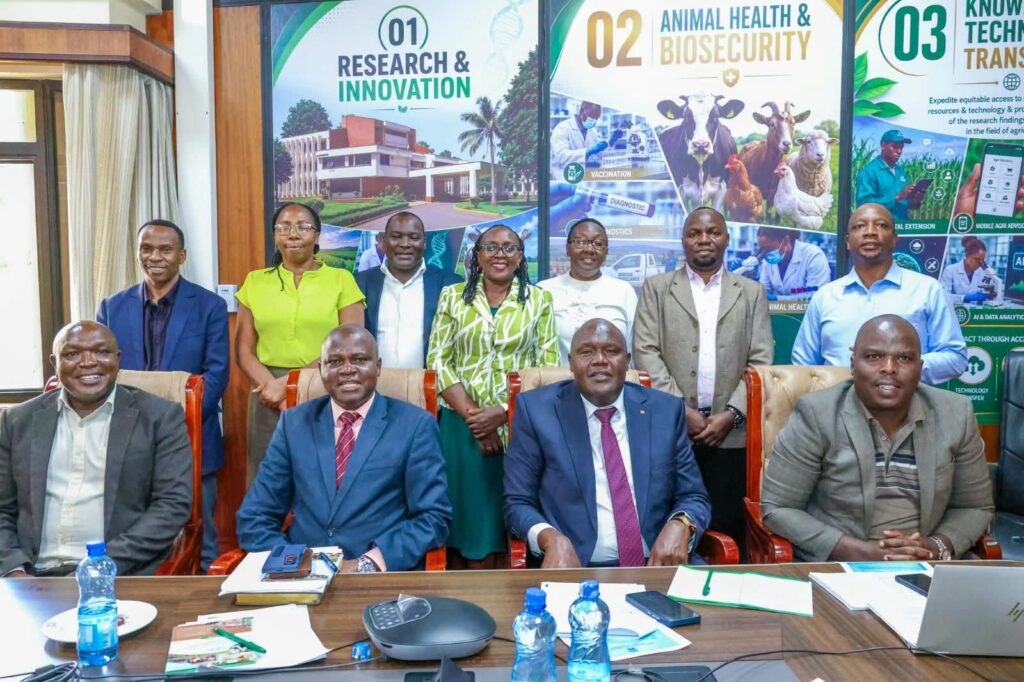
A consultative meeting held at the Kenya Agricultural and Livestock Research Organization (KALRO) headquarters in Nairobi brought together officials from KALRO, the Agriculture and Food Authority (AFA), the Kenya Plant Health Inspectorate Service (KEPHIS) and the Ministry of Agriculture and Livestock Development to discuss how the verification exercise should be conducted.
The discussions focused on ensuring that seedlings distributed under the Food Security and Crop Diversification Programme come from verified nurseries, meet the required quality standards and are appropriate for the agroecological conditions of the areas where farmers intend to plant them.
The meeting was chaired by KALRO Director General Dr Patrick Ketiem, alongside KALRO Deputy Director General for Crops Dr Alice Murage. Those in attendance included AFA Acting Director General Calistus Kundu, representatives of the Ministry of Agriculture and Livestock Development and KEPHIS.
The institutions discussed their respective responsibilities, the need to harmonise verification tools, the quality of seedlings, suitability for different agroecological zones and the coordination of joint technical teams. They also considered the work plan, implementation timelines, logistical arrangements and reporting mechanisms required to guide the exercise.
The meeting signals an effort to strengthen oversight of seedling distribution, an important issue for farmers investing land, labour and money in crops that may take months or years to generate returns.
Why seedling verification matters to farmers
For farmers, receiving seedlings is only the first step towards establishing a productive orchard or diversifying an existing farm. The quality and suitability of the planting material can influence establishment, crop performance, disease risk and the eventual returns from the investment.
A farmer who receives weak, unhealthy or incorrectly labelled seedlings may experience poor establishment, uneven growth or disappointing production. In perennial crops such as avocado, mango and citrus, mistakes made at planting can have consequences that persist for years.
Seedling quality is therefore not simply a matter of appearance. It includes the identity of the plant, its health, the quality of the propagation process and whether it is suitable for the intended production system.
For grafted fruit seedlings, farmers also need confidence that the scion variety is correctly identified and that the graft union is healthy and properly formed. Where a particular variety is selected for its fruit quality, maturity period or market demand, incorrect labelling can undermine the farmer’s production and marketing plans.
Verification can help reduce these risks by establishing whether nurseries and planting materials meet the relevant requirements. However, the effectiveness of the process will depend on how consistently checks are conducted, how findings are documented and what action follows when problems are identified.
KALRO, AFA and KEPHIS to coordinate verification
The involvement of several agricultural institutions reflects the different responsibilities required to oversee planting material distribution.
KALRO contributes agricultural research and technical expertise, including knowledge relevant to crop performance and suitable production practices. AFA has regulatory responsibilities across agricultural value chains under its mandate, while KEPHIS is responsible for plant health, phytosanitary controls and relevant seed and plant variety regulatory functions.
The Ministry of Agriculture and Livestock Development provides national policy and sector coordination.
For the verification exercise to be effective, the participating institutions need to agree on what will be checked, which agency will handle each aspect and how the results will be reported. Harmonised tools can help technical teams apply consistent procedures across different locations and reduce confusion during inspections.
Joint verification may also help identify gaps that would be difficult to address through isolated inspections. These could include inconsistencies in nursery records, questions about the identity of planting materials, plant health concerns or a mismatch between the varieties being supplied and the requirements of the intended growing areas.
The consultative meeting sought to establish a common framework for the exercise, including timelines, logistics and reporting arrangements. The details and outcomes of the verification process will be important in determining how effectively the institutions translate the discussions into action.
Seedling suitability must match local agroecological conditions
One of the issues discussed at the meeting was the suitability of seedlings for different agroecological zones. This is particularly important in Kenya, where rainfall, temperature, altitude, soil characteristics and water availability vary considerably between regions.
A fruit variety that performs well under one set of conditions may struggle in another. Differences in temperature, rainfall distribution and soil drainage can influence establishment, flowering, fruit development and overall productivity.
Farmers should therefore avoid selecting seedlings based on availability alone. The intended crop and variety should match the conditions on the farm, the farmer’s ability to provide irrigation where necessary and the market requirements for the eventual harvest.
For example, establishing a commercial fruit orchard requires more than distributing a large number of seedlings. Farmers need planting material suited to the location, appropriate spacing, sound land preparation and access to reliable management advice.
The verification exercise could help strengthen the link between the planting materials distributed and the needs of farmers in different regions. Its practical value will depend on whether suitability assessments are incorporated into the selection and distribution process, rather than being treated as a separate administrative requirement.
Accountability must extend beyond handing seedlings to farmers
The distribution of seedlings under a food security or crop diversification programme involves more than counting the number of plants supplied. Accountability also requires a clear record of where the seedlings originated, who received them, what varieties were distributed and whether the planting material met the programme’s requirements.
Such records can help institutions trace problems when farmers report poor-quality seedlings or discover that the varieties supplied do not match what they were promised.
Transparent distribution procedures can also help ensure that intended beneficiaries receive the planting materials. Clear documentation of deliveries, recipient details, nursery sources and verification findings makes it easier to investigate complaints and assess whether the programme is reaching its intended targets.
Where deficiencies are identified, the responsible institutions need procedures for documenting the findings and determining the appropriate corrective action. Depending on the nature of the problem, this may involve further inspection, technical guidance, supplier follow-up or other action permitted under the relevant programme and regulatory framework.
The consultative meeting placed emphasis on agreed institutional roles, coordinated technical teams and reporting mechanisms. These elements are essential if the verification process is to produce actionable findings rather than simply generate inspection reports.
What the verification exercise could mean for farmers
For farmers participating in the Food Security and Crop Diversification Programme, effective verification could provide greater confidence in the planting materials they receive.
Quality seedlings can help farmers establish crops with the potential to perform as expected, provided they are planted under suitable conditions and managed properly. Access to appropriate planting material is especially important for perennial crops, where farmers may commit resources long before the first commercial harvest.
However, verification alone cannot guarantee high yields or financial returns. Weather, soil conditions, water availability, pests, diseases, farm management and market prices will continue to influence results.
Farmers also need clear information about the crop varieties they receive, where and when to plant them, recommended spacing, nutrient requirements and aftercare. Extension support is particularly valuable for farmers who are establishing unfamiliar crops or diversifying from their traditional farming activities.
A well-managed seedling programme should therefore connect quality assurance with practical farmer support. This helps ensure that the planting material supplied is not only suitable but also used correctly.
Crop diversification and food security
Crop diversification can help farmers spread production risks and create additional sources of income. Depending on the location and market opportunities, farmers may diversify into fruit crops or other suitable enterprises alongside existing agricultural activities.
But diversification is a long-term decision. Farmers need to consider the time required before a crop generates income, the cost of establishing and maintaining it, the availability of buyers and the suitability of local growing conditions.
For perennial fruit crops, poor planting material can delay progress and increase the cost of establishing a productive orchard. This makes quality assurance particularly important in programmes intended to encourage farmers to adopt new crops.
The government-supported programme’s objectives include supporting food security and crop diversification. Strengthening nursery and seedling verification could contribute to these goals by improving oversight of the planting materials supplied to farmers.
The wider impact will depend on implementation, including the quality of the seedlings distributed, the effectiveness of beneficiary selection, the availability of extension services and the ability of farmers to manage the crops after planting.
The next step is implementation
The consultative meeting at KALRO headquarters established a basis for closer coordination among the participating institutions. The proposed verification exercise will need clear responsibilities, practical inspection procedures, adequate logistics and timely reporting to achieve its intended purpose.
Farmers will ultimately judge the process by its results. They need planting materials that are correctly identified, healthy, suitable for their farms and supplied through a transparent distribution system.
For the institutions involved, the challenge is to ensure that verification findings lead to appropriate action and that lessons from the exercise inform future seedling distribution programmes.
As Kenya continues to promote crop diversification and strengthen food security, accountability in the supply of agricultural inputs remains an important part of protecting farmers’ investments.
Do you think stronger nursery verification and seedling quality checks will improve the success of government-supported planting programmes in Kenya? What more should be done to ensure farmers receive the right seedlings and the support needed to establish productive crops?
https://farmerstrend.co.ke/trending/seedling-distribution-in-kenya/https://farmerstrend.co.ke/wp-content/uploads/2026/10/Seedling-Distribution-in-Kenya-Under-Scrutiny-as-KALRO-AFA-and-KEPHIS-Strengthen-Verification-1024x682.jpghttps://farmerstrend.co.ke/wp-content/uploads/2026/10/Seedling-Distribution-in-Kenya-Under-Scrutiny-as-KALRO-AFA-and-KEPHIS-Strengthen-Verification-150x150.jpg# TrendingAFA,agricultural inputs,agroecological zones,certified tree nurseries,crop diversification,Food Security and Crop Diversification Programme,food security in Kenya.,fruit farming in kenya,Kalro,kenyan farmers,kephis,Ministry of Agriculture Kenya,Quality Seedlings,seedling distribution in Kenya,seedling quality standardsSeedling distribution in Kenya is under review as KALRO, AFA, KEPHIS and the Ministry of Agriculture coordinate nursery verification, seedling quality and suitability for farmers.Seedling Distribution in Kenya Under Scrutiny as KALRO, AFA and KEPHIS Strengthen Verification The distribution of seedlings to farmers in Kenya is coming under closer...FarmersTrendjohn doefarmerstrend@gmail.comAdministratorFarmers Trend Ltd.







Leave a Reply