Why Farming in Kenya Feels Like Gambling Even When Farmers Do Everything Right
- Farming in Kenya comes with unpredictable weather, pests, rising input costs and unstable market prices. Discover why farmers face these risks and how they can protect their investments.

Why Farming in Kenya Feels Like Gambling Even When Farmers Do Everything Right
A farmer can prepare the land on time, buy quality seeds, apply the recommended fertiliser, manage pests and diseases, hire workers and follow an agronomist’s advice, yet still end the season counting losses. The rains may stop when the crop needs water most. A disease may spread faster than expected. The price that looked attractive when planting began may collapse by the time the produce reaches the market.
This is one of the hardest realities of farming in Kenya. Farmers invest money, labour, time and years of experience in a business whose final outcome they can influence but never completely control.
When a trader sees that a business is losing money, there may be an opportunity to reduce stock, change suppliers or withdraw from the market. A manufacturer may slow production. A shopkeeper can decide not to restock an item that is selling poorly. Farmers have fewer options once a crop is in the ground.
A tomato farmer cannot switch off the crop because prices have fallen. A maize farmer cannot move the planting season forward after discovering that the rains have failed. An avocado grower cannot recover the years spent establishing an orchard simply because export prices have changed or a buyer has rejected the fruit.
The farmer has already committed the money. The crop must continue growing, workers must be paid, pests and diseases must be managed, and the harvest must eventually find a market.
That is why the statement that farming is gambling resonates with many people who work in agriculture. A farmer takes a financial risk without knowing exactly what the weather, pests, production costs or market will look like when the crop is ready for sale.
But farming is not gambling in the ordinary sense. A farmer is not simply placing a bet and waiting for luck to decide the outcome. Knowledge, experience, good agronomy, careful financial planning and timely decisions can make a substantial difference.
The problem is that even the best decisions cannot eliminate every risk.
For farmers in Kenya, where production systems range from rain-fed maize farming to irrigated horticulture, dairy production and commercial fruit orchards, the challenge is to manage uncertainty while protecting the money and livelihoods invested in the farm.
A farmer puts much more than seeds into the ground
When people look at a growing crop, they may see seedlings, green leaves, flowers or fruits developing on the plants. They may not see the money that has already been spent or the financial pressure building behind the scenes.
Before planting begins, a farmer may have paid for land preparation, seeds or seedlings, fertiliser, manure, labour, irrigation equipment, fuel and other inputs. During production, additional expenses arise from weeding, spraying, pruning, irrigation, harvesting, packaging and transport.
For a smallholder farmer, much of this money may come from household savings accumulated over several months. Some farmers sell livestock or use income from another business to finance production. Others borrow from banks, savings and credit cooperative organisations, family members, traders or agricultural input suppliers.
Commercial farmers may have larger budgets, but their exposure can be much greater because they are financing bigger acreages, employing more workers and operating machinery, irrigation systems, packhouses or cold storage facilities.
The investment is not limited to cash. A farmer also commits time, attention and future opportunities. Land used for one crop may not be available for another during the same season. Money spent on a failed crop cannot easily be recovered to finance the next one.
This makes agricultural losses particularly painful. The farmer is not merely losing the value of the harvested produce. In many cases, the farmer is losing money that was committed months earlier, before there was any guarantee of income.
A good harvest may repay the investment and leave money for the next season. A poor harvest can leave the farmer with debts, unpaid bills and little capital to restart production.
For a farmer who has experienced several successful seasons, one bad year can undo much of the progress made over time.
The weather can change everything in a matter of days
Weather is among the risks that make farming difficult because it can change crop performance across an entire region.
Kenyan farmers experience different rainfall patterns depending on their location, altitude and local climate. Some rely heavily on seasonal rains, while others use irrigation or combine rainfall with supplementary watering. Even farmers with irrigation infrastructure remain exposed to water shortages, high pumping costs and changes in temperature.
A farmer may plant after the first rains arrive, only for the rains to stop before the crop has established properly. Another may experience excessive rainfall that causes waterlogging, erosion or increased disease pressure.
The timing of these events matters.
A dry spell during a sensitive stage of crop development may cause more damage than the same period when the crop has lower water requirements. Inadequate moisture during flowering or fruit development can affect yields and quality. Heavy rainfall near harvest may make field operations difficult, damage produce or delay transport.
In fruit farming, the consequences can extend beyond a single harvest. Water stress can affect fruit development and tree performance, while prolonged waterlogging may damage roots. Severe stress during establishment can also affect the long-term growth of young orchards.
Farmers can reduce some of these risks by selecting crops and varieties suited to their areas, choosing appropriate planting dates, improving drainage, conserving soil moisture and investing in irrigation where the water supply and economics make it viable.
However, none of these measures gives a farmer complete control over the weather.
Irrigation equipment can fail. Boreholes and rivers may provide less water than expected. Electricity and fuel costs may rise. A farmer may have the right infrastructure but lack the money to operate it throughout a prolonged dry period.
Weather forecasts can help farmers prepare, but forecasts describe probabilities rather than guaranteeing exactly what will happen on every farm.
A farmer who receives an early warning of likely dry conditions may adjust planting dates, choose a shorter-duration variety or plan water use more carefully. Such decisions can reduce exposure, but they cannot remove the uncertainty.
The farmer must therefore make important financial decisions using information that is useful but never perfect.
The same farming advice does not always produce the same results
Two farmers can grow the same crop, plant the same variety and apply similar fertiliser rates, yet obtain very different results.
One may harvest a healthy crop while the other struggles with poor growth, disease or low yields. The difference may lie in soil conditions, drainage, water availability, planting material, management practices or the timing of farm operations.
Soils can vary considerably, even between neighbouring farms. One field may have adequate organic matter and good water-holding capacity, while another may drain too quickly or remain waterlogged after heavy rain. Soil acidity can affect nutrient availability, and compacted soil can restrict root development.
A farmer who assumes that poor growth always means a shortage of fertiliser may spend more money without solving the actual problem.
For example, yellowing leaves may be associated with a nutrient deficiency, but similar symptoms can arise from waterlogging, root damage, pests, disease or other stresses. Applying fertiliser without identifying the cause may increase costs while leaving the underlying problem unresolved.
Soil testing, proper field observation and advice from qualified agronomists or agricultural extension officers can help farmers identify production constraints before spending money on additional inputs.
The same principle applies to seed and seedlings. Planting material should be suited to the intended production system, local conditions and market requirements. A variety that performs well in one area may not be the best choice for another.
Farmers also need to understand spacing, planting depth, irrigation requirements, pruning, pollination where relevant, and the expected time before harvest. Small mistakes made during establishment can affect production for months or even years.
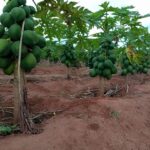
This is particularly important in perennial crops such as avocado, mango and macadamia. A mistake made when establishing an orchard can continue affecting the farm long after the original expenditure has been forgotten.
Good farming requires farmers to understand the conditions on their own farms rather than simply copy what worked for someone else.
Pests and diseases can turn a promising season into a crisis
Few situations create more pressure for a farmer than discovering a pest or disease attacking a valuable crop.
A tomato farmer may notice whiteflies, thrips, mites or caterpillars. A potato farmer may identify symptoms associated with late blight. A maize farmer may find fall armyworm damage. An avocado grower may discover fruit damage, root problems or symptoms that require investigation.
The first instinct is often to act immediately. Every day seems important, especially when the crop is close to harvest or the farmer has invested heavily in production.
But the correct response depends on what is causing the problem, how widespread it is, how quickly it is developing and how much damage it is likely to cause.
Not every insect is a pest. Some insects are beneficial and help control other pests or support pollination. Not every leaf spot is a fungal disease. Similar symptoms can arise from bacterial infections, nutrient deficiencies, water stress or chemical damage.
If a farmer treats the wrong problem, the cost may be wasted and the actual cause may continue spreading.
On the other hand, delaying action against a serious pest or disease can lead to significant losses. Some crop problems develop rapidly, leaving little time to respond once visible symptoms become widespread.
The farmer is therefore making a decision under pressure, often with incomplete information and limited money.
Why spraying can feel safer than waiting
Consider a farm manager overseeing a commercial vegetable crop. The owner has invested heavily in seeds, fertiliser, irrigation, labour and other inputs. A pest outbreak is reported, and the manager must decide whether to recommend treatment.
If the manager delays spraying and the crop suffers severe damage, the owner may ask why action was not taken earlier. If the manager recommends a pesticide, the decision may be easier to defend because an intervention was made.
This creates an incentive to act even when the evidence is not conclusive.
The manager may fear losing a job if the crop fails after a decision not to spray. The farm owner may fear losing invested capital. A smallholder farmer may worry that a pest problem will destroy the only source of income expected that season.
In such circumstances, spraying can appear less risky than waiting, even when a more careful assessment might recommend monitoring or another control measure.
This does not mean that farmers should ignore pests or that pesticide recommendations are inherently wrong. Crop protection products can be necessary and effective when selected and used correctly.
The concern is that fear, financial pressure and uncertainty can influence decisions that should be guided by field evidence.
The pressure from input suppliers
Farmers receive advice from agrovet shops, sales representatives, fellow farmers, agricultural officers, consultants and online platforms. These sources can provide valuable information, but their recommendations may differ.
A farmer dealing with a serious disease might be advised to purchase several products, apply them at particular intervals or combine treatments. Another adviser may recommend a different product or approach.
For a farmer with limited cash, deciding which advice to follow can be difficult.
Input companies have products to sell, and many employ qualified technical staff who provide legitimate crop protection advice. Nevertheless, farmers should recognise that commercial recommendations need to be evaluated against the actual problem on the farm.
A product being available does not automatically mean it is necessary. A costly treatment does not guarantee a better result, and using several products does not necessarily provide better control.
Farmers should seek accurate diagnosis, verify that a product is registered for the intended crop and target problem, and follow its label instructions. Where a recommendation is unclear, an independent agronomist or qualified extension officer can help assess the situation.
The goal is not to avoid spending money on crop protection. It is to ensure that the money is spent on an intervention likely to solve the problem.
Why integrated pest management matters
Integrated pest management, commonly called IPM, gives farmers a way to make crop protection decisions using a combination of methods rather than relying automatically on chemical spraying.
It begins with prevention, observation and correct identification. Depending on the crop and pest, management may involve field sanitation, crop rotation, suitable varieties, physical controls, biological methods, conservation of beneficial organisms and careful use of pesticides when necessary.
Farmers can inspect their crops regularly, record pest levels, monitor changes in symptoms and identify the stages when a crop is most vulnerable. These observations help determine whether intervention is necessary and which measures are appropriate.
Chemical control remains part of IPM where justified. However, the objective is to avoid unnecessary applications and use suitable products responsibly.
Pesticides should be selected for the identified pest or disease, the crop being treated and the production conditions. Farmers should follow label directions, use the required protective equipment, respect pre-harvest intervals and observe environmental precautions.
Unnecessary applications can increase production costs, expose workers to avoidable risks, harm beneficial organisms and contribute to pesticide resistance. Repeated use of the same mode of action can make some pest populations harder to control over time.
At the same time, refusing to use an effective treatment when a serious problem warrants intervention can also be costly.
The practical lesson is that good crop protection is not measured by how often a farmer sprays. It is measured by how effectively the farmer protects the crop while managing financial, health and environmental risks.
Rising input costs make the gamble more expensive
Even when the weather is favourable and pests are under control, farmers must contend with the cost of producing a crop.
Seed, seedlings, fertiliser, manure, pesticides, herbicides, fungicides, irrigation, fuel, labour, machinery, packaging and transport all contribute to the final cost of production.
The actual cost structure varies by crop and production system. A rain-fed maize farmer has different expenses from a greenhouse tomato grower or an avocado exporter supplying a packhouse.
However, the financial principle is the same. Every additional cost reduces the margin available to cover unexpected losses and generate profit.
Suppose a farmer prepares a production budget using the prices of inputs from the previous season. By planting time, fertiliser, fuel or labour may have become more expensive. The farmer must either spend more than planned, reduce some expenditure or change the production strategy.
Reducing costs is not always straightforward. Cutting expenditure on a critical operation can lower yields or increase losses. Spending more, however, does not automatically guarantee a better harvest.
The farmer must decide which costs are essential, which can be reduced without significantly affecting production and which investments are likely to provide a worthwhile return.
This is where records become important. A farmer who tracks the cost of each major operation can compare expenditure with the results obtained. Without records, decisions are often based on memory, assumptions or what other farmers appear to be doing.
The challenge is particularly serious when a farmer keeps increasing expenditure because so much has already been invested. After spending heavily on a crop, it can be tempting to approve another spray, fertiliser application or irrigation cycle simply because stopping feels like accepting failure.
But the money already spent cannot be recovered merely by spending more.
Every additional expense should be assessed on its own merits. The farmer needs to ask whether the expected benefit justifies the cost, whether the intervention is likely to work and what may happen if the money is not spent.
Sometimes additional expenditure will protect a valuable crop. In other cases, it may deepen the loss.
A large harvest can still leave a farmer in debt
One of the most misleading measures of agricultural success is the size of the harvest.
A farmer may produce more tonnes per acre than neighbouring farms but earn less money because production costs were too high or the selling price was poor.
Another farmer may harvest less but achieve a better financial return because costs were controlled, the produce met buyer specifications or the crop was sold when prices were more favourable.
Consider a tomato farmer who invests heavily in irrigation, labour and crop protection to achieve a high yield. If many farmers harvest at the same time, the market may become oversupplied and prices may fall.
The farmer may sell a large quantity but discover that the revenue is insufficient to cover the cost of production, harvesting, packaging and transport.
This is the difference between yield and profitability.
Yield measures how much a farmer produces. Revenue measures how much money comes from sales. Profit is what remains after the relevant costs have been accounted for.
Farmers need to understand all three.
A farm budget should include the cost of land preparation, seeds or seedlings, fertiliser, crop protection, irrigation, labour, machinery, harvesting, packaging, transport, finance and other expenses. Where family labour is used without payment, its economic value should still be considered when assessing the true profitability of the enterprise.
The farmer should also account for produce that is rejected, damaged, lost after harvest or sold at a discount.
Without these calculations, a farmer may mistake high sales for high profits and continue using a production system that consumes savings year after year.
Market prices can collapse just when the farmer needs money
Agricultural markets introduce another layer of uncertainty because farmers often make production decisions months before they know the price they will receive.
When a farmer plants tomatoes, onions, potatoes or other crops, the market price at harvest may be very different from the price at planting.
If supply is limited when the crop reaches the market, prices may be attractive. If many farmers harvest simultaneously, buyers may have more produce than they can sell at the prevailing price.
Perishable crops are especially vulnerable because farmers cannot always store them while waiting for better prices. Tomatoes, leafy vegetables, ripe fruits and other fresh produce may lose quality quickly if they are not harvested, handled and transported properly.
A farmer facing rapid deterioration may accept a low offer rather than risk losing the entire consignment.
This can create a painful situation in which the farmer has done everything possible to produce a good crop but cannot secure a reasonable return.
The market does not necessarily reward farmers according to the effort they invested. Buyers respond to supply, demand, quality, timing, competition and their own costs.
For farmers supplying formal markets, additional requirements may include uniform size, colour, maturity, traceability, packaging, residue compliance and reliable delivery schedules.
A crop can be perfectly acceptable for one market and unsuitable for another. Produce rejected by an export buyer may still have value in a domestic market, but the farmer may receive a lower price or incur additional transport and handling costs.
This is why farmers should investigate market requirements before investing in production.
Planting a crop because its current market price is high can be dangerous if the price is likely to attract many other producers. By the time the crop matures, the supply situation may have changed.
Market information cannot predict the future perfectly, but it can help farmers make more informed decisions about what to grow, how much to plant, when to harvest and where to sell.
The supermarket wants consistency, but nature does not work like a factory
Modern food markets often demand uniform produce. Buyers may specify size, colour, maturity, appearance, shelf life, packaging and delivery times.
These standards make sense for retailers, processors, exporters and consumers who expect products to meet particular requirements.
However, agricultural production is not a factory process in which every unit can be made identical.
Fruits on the same tree may differ in size. Tomatoes in the same field may mature at different rates. Rainfall and temperature can influence colour development, fruit size and harvest timing. Pest damage, pollination conditions and soil variability can also affect quality.
Farmers can improve consistency through good crop management, suitable varieties, timely harvesting, grading and post-harvest handling. Yet natural variation remains part of production.
For smallholders, meeting formal buyer specifications can be difficult without access to grading equipment, storage, reliable transport and consistent technical support.
A farmer may produce a large volume of fruit but find that only part meets a buyer’s preferred grade. The remaining produce may be sold at a lower price or require a different market.
This can make the economics of farming more complicated than simply calculating the total weight harvested.
Farmers need to understand what buyers will pay for different grades, how much produce is likely to qualify and whether the extra investment required to meet a higher standard will generate enough additional income.
The right market is not necessarily the one offering the highest advertised price. It is the one where the farmer can consistently meet the requirements and receive a return that justifies the cost and risk.
Farm managers are often judged by outcomes they cannot fully control
The uncertainty of agriculture creates a difficult environment for people managing farms on behalf of owners or investors.
A farm manager may be responsible for planting, irrigation, labour, crop protection, fertiliser application, harvesting and sales. The manager may have considerable experience and make decisions based on the best information available.
Yet the final result may depend on factors beyond the manager’s control.
If a crop fails after a dry spell, the owner may question the production strategy. If a disease outbreak causes losses, the manager may be asked why it was not detected earlier. If a crop is sold at a low price, the manager may be blamed for poor planning even when the market changed unexpectedly.
This pressure can encourage decisions designed to avoid blame rather than maximise the farm’s long-term performance.
For example, a manager may approve an unnecessary input application because it is easier to defend having acted than having waited. A manager may also be reluctant to report an emerging problem if the farm’s culture punishes bad news rather than encouraging early intervention.
Farm owners and investors need to recognise that responsible management is not the same as guaranteeing a successful harvest.
Managers should be held accountable for decisions within their control, including record-keeping, timely operations, accurate reporting, budget discipline and following sound agronomic practices. They should not be judged solely by yield or profit without considering the weather, market conditions, resources provided and risks faced.
A good management system encourages people to identify problems early, document decisions and explain the reasoning behind them. It also allows farmers and managers to learn from mistakes without automatically treating every loss as proof of incompetence.
Agriculture needs accountability, but it also needs a realistic understanding of uncertainty.
Social media makes farming look easier than it is
Today, farmers can watch videos showing impressive harvests, fast-growing crops, heavy fruit loads and entrepreneurs claiming high earnings from small pieces of land.
Such content can provide useful ideas and introduce farmers to technologies, crop varieties and production methods they might not otherwise encounter.
The problem begins when a successful example is presented without the information needed to understand how it was achieved.
A video may show a greenhouse full of tomatoes without explaining the cost of construction, seed, fertiliser, irrigation, labour, pest management, harvesting and marketing. An orchard may be shown carrying a heavy fruit load without revealing the age of the trees, the number of trees that failed, the years spent establishing the farm or the price received by the grower.
A claim about earnings may refer to gross sales rather than profit. It may describe an unusually favourable season rather than a typical result. In some cases, the person sharing the content may earn money from selling seedlings, inputs, equipment, training or consultancy services.
Farmers who see only the attractive side may underestimate the capital and expertise required to reproduce the results.
The danger is not that farmers should avoid learning from successful growers. It is that they should ask more questions before committing their money.
What variety was planted? Where was the farm located? How old were the plants? What was the production cost per acre? How much produce was actually sold? What price did the farmer receive? How long did it take to recover the initial investment? Were rejected produce, labour, transport and loan interest included in the calculations?
These questions help separate useful information from claims that are incomplete or difficult to verify.
There is no shortcut that removes the need to understand the crop, the farm and the market.
Why copying another farmer can be expensive
Farmers naturally learn from one another. Demonstration farms, farmer groups, field days and practical training can be valuable ways to share knowledge.
However, copying a successful farmer without understanding the conditions behind the success can lead to losses.
A crop that performs well in a cool, high-altitude area may not perform in the same way in a hotter location. A variety that suits a fresh export market may not be the best option for a farmer selling to local traders. An irrigation system that works for a large commercial farm may be too expensive for a smallholder with limited water and capital.
Even farms within the same county may differ in soil, rainfall, labour availability, road access and distance to buyers.
Before adopting a new crop or technology, farmers should assess whether it suits their own conditions. Where possible, they can begin with a small trial, observe the results and expand only when the production and market arrangements make sense.
This is particularly important for unfamiliar fruit crops and perennial investments. A farmer who plants several acres of a new fruit variety based only on an attractive price or online success story may discover that demand is limited, the climate is unsuitable or the buyer requires standards that are difficult to achieve.
A small trial may not provide all the answers, but it can reduce the amount of capital exposed before the farmer has practical experience.
The goal is not to avoid innovation. It is to adopt it in a way that protects the farm’s ability to survive if the results are disappointing.
Farming requires the mind of several professionals
A farmer may begin the morning checking soil moisture, spend the afternoon assessing pest damage and end the day negotiating with a buyer.
At different moments, the farmer must think like a biologist, soil scientist, meteorologist, economist, accountant and business strategist.
The biological side involves understanding plant growth, animal health, pollination, pests and diseases. The soil and water side requires decisions about fertility, drainage, irrigation and conservation. The business side involves budgeting, credit, labour, sales, customer relationships and investment.
Farmers also need to understand post-harvest handling, food safety, record-keeping and the regulations relevant to the markets they supply.
No individual can know everything about every subject. This is why agricultural extension, farmer organisations, research institutions, cooperatives and access to qualified advisers are important.
Training should not be limited to teaching farmers how to plant a crop or apply fertiliser. It should also help them diagnose problems, interpret information, calculate production costs, compare market options and decide when a proposed investment is too risky.
Practical knowledge is particularly valuable when it helps farmers understand the reasons behind recommendations. A farmer who understands why a nutrient is needed or how a disease develops is better equipped to make decisions when conditions differ from those covered in a training session.
Agriculture changes from season to season, and farmers need the ability to adapt rather than simply follow instructions.
How farmers can reduce the risk of losing everything in one season
Farming will always involve uncertainty, but farmers can take steps to make their businesses more resilient. No single measure works for every crop or location. The right approach depends on the farmer’s resources, climate, market access and production goals.
Start with a realistic farm budget
Before planting, estimate the cost of production from land preparation to the sale of the crop. Include seeds or seedlings, fertiliser, manure, crop protection, labour, irrigation, harvesting, packaging, transport and finance costs.
Where possible, prepare three scenarios: a good season, an average season and a poor season. Estimate the likely revenue under each scenario using realistic yield and price assumptions.
The exercise helps farmers understand how much they can afford to invest and whether the crop remains financially viable when conditions are less favourable than expected.
It also makes it easier to compare crops and production systems. A crop with an attractive selling price may be less suitable than another crop if it requires much more capital, has a longer waiting period or faces greater market uncertainty.
Keep farm records
Record expenditure, labour, input applications, harvest quantities, selling prices, rejected produce and other important details.
The records do not need to begin as a complicated accounting system. A notebook or a simple spreadsheet can provide useful information if entries are made consistently.
Over time, the farmer can calculate the cost of producing a kilogram, crate or other unit of produce. The figures can help identify expensive operations, compare seasons and determine whether a particular crop is generating an acceptable return.
Records also make it easier to evaluate new technologies. If a farmer changes the fertiliser programme, installs irrigation or adopts a new variety, the results can be compared with the previous system rather than judged from memory alone.
Avoid committing all available capital to one uncertain outcome
Where practical, farmers can spread risk across crops, planting dates, markets or income sources. Diversification may include growing more than one crop, combining crop and livestock enterprises or maintaining another source of income that helps support the farm during a difficult season.
However, diversification should be planned carefully. Growing several unfamiliar crops can increase management complexity, while planting many crops without understanding their markets can spread resources too thinly.
The purpose is not simply to grow everything. It is to avoid making the entire business dependent on one crop, one buyer or one production window where a more balanced approach is feasible.
Choose crops according to the market, not just the price
Before planting a commercial crop, investigate who will buy it, the required quality, expected volumes, delivery arrangements and likely costs of reaching the market.
Where a buyer has offered a contract, understand the terms, quality requirements, payment schedule and circumstances under which produce may be rejected. Do not assume that a verbal promise guarantees a market.
Farmers supplying fresh produce should also consider the distance to buyers, availability of transport, post-harvest losses and the time needed to move produce from the field to the market.
A strong production plan begins with an understanding of how the crop will be sold.
Use inputs based on need and evidence
Farmers should avoid treating input expenditure as a substitute for diagnosis.
Soil tests, regular crop inspections, correct pest identification and professional advice can help determine which interventions are justified. This reduces the risk of spending money on products that do not address the actual problem.
Where a treatment is necessary, use the appropriate registered product according to its label and recommended safety measures. Keep records of applications and assess whether the intervention achieved its intended result.
The goal is to protect both the crop and the financial sustainability of the farm.
Protect soil and water resources
Healthy soil and reliable access to water help farms withstand some production stresses. Practices may include maintaining soil cover where appropriate, controlling erosion, improving organic matter, managing drainage and using irrigation efficiently.
The specific measures should suit the crop and local conditions. Farmers should also avoid assuming that more water or more fertiliser will always improve performance. Excessive irrigation can create root problems or waste resources, while inappropriate fertiliser use can increase costs and contribute to nutrient losses.
Long-term farm productivity depends on managing the resources on which future harvests will rely.
Build relationships with buyers before harvest
Farmers who wait until their produce is ready before searching for buyers may have limited negotiating power, particularly when dealing with perishable crops.
Where possible, they should identify potential buyers early, understand the grades and volumes required and compare available sales channels.
Farmer groups and cooperatives may help some growers aggregate produce, negotiate transport and reach buyers who require larger volumes. However, collective marketing works best when members agree on quality standards, delivery schedules, record-keeping and transparent payment arrangements.
Farmers should also assess whether storage, processing or staggered planting is practical for their crops. These options can improve flexibility, although each requires additional planning and may involve significant costs.
Maintain an emergency reserve where possible
An emergency reserve can help a farm survive a period of low income without immediately borrowing at unfavourable terms or selling productive assets.
The amount a farmer can save will depend on the size of the business and household obligations. Some farmers may only be able to retain a small amount after each harvest, but even a modest reserve can provide flexibility when an unexpected repair, input purchase or household expense arises.
A reserve should not replace investment in the farm or access to appropriate finance. Its purpose is to reduce the pressure to make desperate decisions when the next harvest is uncertain.
Consider insurance and other risk-sharing options
Agricultural insurance may help protect eligible farmers against specified losses, depending on the policy, crop, location, coverage and exclusions. Farmers should understand exactly what is insured, the conditions for compensation, the premium and the claims process before purchasing a policy.
Insurance does not guarantee a profit, and not every risk is covered. It can, however, form part of a broader risk-management plan where a suitable product is available and affordable.
Other arrangements, including well-structured contract farming and collective marketing, may help reduce certain production or market risks. Their value depends on the terms and reliability of the parties involved.
The important point is to understand what each arrangement protects against instead of assuming that any contract, loan or insurance policy will eliminate uncertainty.
What government, financial institutions and agricultural organisations need to do
Farmers cannot manage every risk individually. Some of the biggest challenges require coordinated action from government, researchers, financial institutions, buyers, insurers and agricultural service providers.
Reliable weather information needs to reach farmers in forms they can understand and use. Agricultural extension services need the capacity to provide practical, timely advice. Research should respond to the pests, diseases, soil constraints and changing climatic conditions that farmers face in different regions.
Farmers also need access to affordable finance whose repayment terms reflect the production cycle. Lending arrangements designed around regular monthly income may not suit every agricultural enterprise, particularly crops that take months or years to generate substantial revenue.
Financial institutions can improve agricultural lending by assessing the crop, production calendar, market arrangements and risks rather than treating every farm like a business with predictable weekly sales.
Markets require attention as well. Better roads, storage, cold-chain facilities, aggregation centres and processing capacity can help reduce post-harvest losses and expand the options available to farmers. Transparent market information can improve decision-making, although information alone cannot guarantee favourable prices.
Public and private agricultural programmes should also be realistic about what technology can achieve. Improved seed, irrigation, digital platforms and modern crop protection tools can be valuable, but farmers need training, reliable supplies and technical support to use them effectively.
Most importantly, agricultural policy should recognise that a farmer’s income depends on more than the amount produced. Production costs, market access, quality requirements, bargaining power and the distribution of value across the supply chain all influence the final return.
Supporting farmers means helping them produce well, sell effectively and manage the risks that remain.
The farmer needs better information, not just more instructions
Farmers receive many recommendations about what to plant, which fertiliser to buy, how often to spray and where to sell their produce. The difficulty is deciding which recommendations apply to their particular circumstances.
Useful agricultural advice should explain the reasoning behind a recommendation, the conditions under which it is likely to work and the limitations that farmers should consider.
For example, recommending irrigation without discussing water availability, energy costs and crop economics may leave a farmer with an expensive system that is difficult to operate. Promoting a high-value fruit crop without explaining the time to first harvest, quality requirements and market access can encourage investment before the business case is clear.
Likewise, advice about fertiliser should consider soil conditions and crop needs rather than assume that every field requires the same treatment.
Farmers benefit when advisers are willing to discuss uncertainty honestly. A responsible recommendation does not promise that a crop will succeed under all conditions. It helps the farmer understand the likely benefits, costs and risks so that a decision can be made with open eyes.
The ability to ask questions is especially important when the recommendation involves a large investment or a long-term commitment.
Farmers should not be made to feel that seeking a second opinion is a sign of ignorance. In a business where mistakes can be expensive, checking important decisions is a sensible form of risk management.
Why farmers deserve respect even when a crop fails
A failed crop is often judged by the final result. People see the dried maize, damaged tomatoes, fallen fruits or low harvest and assume that the farmer made a mistake.
Sometimes poor decisions contribute to losses, and those mistakes need to be understood. But a failed crop does not automatically mean that the farmer was careless or lacked knowledge.
A farmer may have planted at the recommended time, used appropriate inputs and followed good practices, only for an unexpected weather event or serious disease outbreak to affect production.
Another farmer may have achieved a good harvest but received a price too low to cover the cost of producing it. A third may have produced high-quality fruit but lost part of the expected income because transport failed or a buyer rejected a consignment.
These outcomes cannot be understood simply by looking at the field after harvest.
It is reasonable to expect farmers to plan carefully, keep records, seek advice and manage resources responsibly. It is equally reasonable to recognise that farming involves conditions no individual can fully control.
Respect for farmers should not depend only on whether the harvest was successful.
The work itself requires technical knowledge, financial commitment, patience and continuous decision-making. Farmers must respond to changing conditions while carrying the consequences when their decisions do not produce the expected results.
A more informed public would ask what happened, what could be learned and what support might reduce similar losses in the future, rather than assuming that every failure reflects poor management.
The best farmer is not necessarily the one who uses the most inputs
There is a persistent assumption that higher production comes from applying more fertiliser, spraying more frequently, buying the most expensive products or investing in the latest technology.
In reality, successful farming depends on matching resources to the needs of the crop and the conditions of the farm.
An expensive input may be worthwhile when it solves a serious production constraint and generates sufficient additional income. The same input may be wasteful when the problem lies elsewhere.
Technology can improve farm performance, but it must be appropriate for the production system and supported by the skills and resources needed to operate it.
The best farmer is not necessarily the one who spends the most money or records the highest yield in a single season. It may be the farmer who understands the costs, observes the crop carefully, makes timely decisions, protects soil and water, maintains market relationships and avoids exposing the entire business to unnecessary risk.
This does not mean that farmers should be satisfied with low productivity. It means that higher productivity must be evaluated alongside costs, quality, market access and the sustainability of the production system.
The objective is not simply to grow more. It is to build a farm that can generate reasonable returns over time and survive the difficult seasons that inevitably occur.
Farming is a long-term commitment, not a shortcut to quick money
The appeal of agriculture often increases when people see attractive prices for particular crops or hear stories about farmers making large sums of money from small pieces of land.
Such opportunities can be real, but the results depend on many conditions that may not be visible in a short video or a successful farmer’s story.
A crop may require specialised knowledge, reliable water, substantial capital, a long establishment period or access to buyers with strict quality standards. A high-value crop can also carry high production and marketing costs.
Perennial crops require particular patience. Establishing an orchard is a long-term investment, and the farmer must manage the trees through their early years before the enterprise reaches its expected production level. The final returns depend on survival rates, tree performance, management, market demand and the costs incurred along the way.
Farmers should therefore evaluate agricultural opportunities using a realistic timeline and a complete cost estimate. They should be cautious about claims that promise quick returns without explaining the conditions required to achieve them.
Agriculture can provide income, employment and valuable business opportunities. But it rewards preparation and sustained management more reliably than impatience.
The farmer who understands this is better positioned to distinguish a genuine opportunity from a risky investment built around unrealistic expectations.
So, is farming gambling?
Farming shares some features with gambling because money is committed before the final outcome is known. Weather, pests, diseases and market prices can change the result, sometimes dramatically. A farmer may do many things correctly and still lose money.
But farming is not simply a game of chance.
Farmers can influence their outcomes through sound agronomy, appropriate crop selection, financial planning, soil and water management, crop monitoring, careful use of inputs, market research and accurate records.
The distinction is that farmers manage probabilities rather than control every outcome. They can reduce exposure to risk, but they cannot remove uncertainty from a living system.
A farmer who studies the market before planting, tests the soil, selects suitable varieties and monitors pests is generally better prepared than one who makes decisions without reliable information. Yet even the better-prepared farmer remains vulnerable to conditions beyond the farm’s control.
That is why successful agriculture requires more than hard work. It needs access to knowledge, capital, technology, reliable markets and support systems that allow farmers to recover when things go wrong.
It also requires a realistic understanding of what farmers can reasonably be expected to control.
Respect the farmer who keeps planting
Every season, farmers make decisions that affect their savings, families, employees and future plans. They invest in crops without knowing exactly how much rain will fall, what pests will emerge or what buyers will pay at harvest.
They must decide when to plant, how much to spend, whether to treat a pest problem, when to irrigate, which market to target and whether the expected return justifies the next investment.
They make these decisions while living with the consequences of being wrong.
A gambler may be able to walk away when the odds turn against them. A farmer who has already planted a crop, established an orchard or invested in livestock often has obligations that cannot simply be abandoned.
This is why farmers deserve more than praise when harvests are good. They deserve access to practical advice, fair market opportunities, responsible input recommendations, suitable finance and policies that recognise the risks of agricultural production.
They also deserve to be judged fairly. A poor harvest is not always proof of poor farming, just as a bumper harvest is not always proof of excellent management.
The real measure of a strong farming business is not whether it avoids every loss. No farm can guarantee that. It is whether the farmer makes informed decisions, manages resources carefully, learns from each season and builds the capacity to withstand setbacks.
Farming is not gambling, but it does involve risks that can be difficult to predict and expensive to absorb. The difference between a farmer who survives these risks and one who loses years of investment may depend on information, planning, resources and circumstances that extend far beyond individual effort.
The next time you see a farmer in the field, remember that the crop is only part of the story. Behind it are savings, debts, labour, family responsibilities, difficult decisions and hopes for a better future.
Respect the farmer, not only when the harvest is abundant, but also when a season goes wrong despite every reasonable effort.
Because the farmer is not simply growing a crop. The farmer is investing in a living system, a business and a livelihood that can be influenced by good decisions but never fully controlled.
And when the next season arrives, the farmer must decide whether to plant again.
That decision takes more than luck. It takes courage, knowledge, patience and the willingness to keep working in the face of uncertainty.
Frequently Asked Questions About Farming Risks in Kenya
Why does farming in Kenya feel like gambling?
Farming in Kenya can feel like gambling because farmers spend money before knowing the final yield, production costs or selling price. Weather changes, pests, diseases and market fluctuations can cause losses even when farmers follow good agricultural practices. However, planning, technical knowledge and risk management can improve the likelihood of a successful outcome.
What are the biggest risks facing Kenyan farmers?
Major risks include unpredictable rainfall, drought, excessive rain, pests and diseases, rising input costs, labour shortages, post-harvest losses, limited market access and unstable farm-gate prices. The importance of each risk varies by location, crop and production system.
Can farmers prevent crop losses completely?
No. Farmers can reduce losses through suitable varieties, good soil and water management, regular crop monitoring, timely interventions and careful planning. However, weather extremes, new pest outbreaks and market disruptions can still cause losses.
How can farmers reduce the risk of losing money?
Farmers can prepare realistic budgets, keep accurate records, investigate markets before planting, avoid unnecessary input expenditure, diversify where practical and assess the financial consequences of poor yields or low prices. Insurance and suitable financing arrangements may also help manage specific risks.
Is using more fertiliser and pesticides a guarantee of higher yields?
No. Inputs should be selected according to crop requirements, field conditions and the problem being addressed. Excessive or inappropriate applications can increase costs without improving production and may cause environmental or crop-related problems. Soil testing, correct diagnosis and qualified advice can help farmers make better decisions.
Why can farmers lose money even after harvesting a large crop?
A large harvest does not guarantee profit. Farmers may receive low prices when supply is high, incur high harvesting and transport costs, lose produce after harvest or have part of the crop rejected for failing to meet buyer specifications. Profit depends on both revenue and the full cost of production and marketing.
Should a farmer plant a crop because its current market price is high?
Not without further investigation. High prices may attract more farmers into production, increasing supply by the time the crop matures. Farmers should consider production costs, the crop’s growing period, likely demand, competing suppliers, buyer requirements and available markets before committing substantial capital.
How important are farm records in managing agricultural risks?
Farm records help farmers understand production costs, compare yields, calculate profit and identify practices that are not providing sufficient returns. They also help with budgeting, credit applications and decisions about whether to expand, change varieties or adopt new technologies.
What role does agricultural extension play in reducing farm risks?
Agricultural extension services can help farmers identify pests and diseases, interpret soil and crop conditions, choose suitable production practices and respond to changing weather or market requirements. Timely, practical advice can reduce avoidable mistakes, although it cannot eliminate every agricultural risk.
Is farming still a good business despite these risks?
Farming can be a viable business when the crop or livestock enterprise suits the available resources, production conditions and market opportunities. Profitability depends on the full cost of production, the price received, management quality and the ability to withstand difficult seasons. Farmers should assess opportunities carefully rather than relying on high-price claims or promises of quick returns.
https://farmerstrend.co.ke/trending/farming-in-kenya-feels-like-gambling/https://farmerstrend.co.ke/wp-content/uploads/2026/10/Why-Farming-in-Kenya-Feels-Like-Gambling-Even-When-Farmers-Do-Everything-Right-1024x576.jpghttps://farmerstrend.co.ke/wp-content/uploads/2026/10/Why-Farming-in-Kenya-Feels-Like-Gambling-Even-When-Farmers-Do-Everything-Right-150x150.jpg# TrendingFarming in Kenya comes with unpredictable weather, pests, rising input costs and unstable market prices. Discover why farmers face these risks and how they can protect their investments.Why Farming in Kenya Feels Like Gambling Even When Farmers Do Everything Right A farmer can prepare the land on time, buy...FarmersTrendjohn doefarmerstrend@gmail.comAdministratorFarmers Trend Ltd.


Leave a Reply