Agroforestry in Kenya: 7 Best Trees to Plant With Your Crops for Extra Income and Better Soil
Agroforestry in Kenya means growing trees on the same land as your crops or livestock. The trees give you timber, fodder, fruit and firewood. The trees also feed your soil and protect your fields from wind, runoff and drought. You earn from the trees and keep your crops.

The government is pushing agroforestry in Kenya. Kenya aims for 30 percent tree cover by 2032 and plans to grow 15 billion trees. The Ministry of Environment reports nearly 1.93 billion trees grown so far, according to the Kenya News Agency. Farm trees make up a large share of the target. Your farm is part of the plan.
This guide to agroforestry in Kenya covers seven proven trees, the systems you use to plant them, spacing, costs, income examples, mistakes and the rules you follow. You will see which tree suits the highlands, the midlands and the drylands. Farmers Trend Limited publishes this guide so you plant the right tree in the right place.
What Is Agroforestry in Kenya?
Agroforestry in Kenya combines trees with food crops, fodder or animals on one piece of land. You do not clear a field to plant trees. You plant trees along boundaries, between rows, in scattered stands or in fodder hedges. Your maize, beans, coffee, tea and dairy cows stay on the farm.
Trees work for you in five ways on every farm practising agroforestry in Kenya. The table shows each benefit and how the benefit reaches you.
| Benefit | How the tree delivers the benefit |
|---|---|
| Extra income | Timber, poles, fruit, nuts and seedlings sell for cash |
| Better soil | Fallen leaves add organic matter. Legume trees add nitrogen |
| Animal feed | Fodder trees replace part of the dairy meal you buy |
| Fuel and building wood | Prunings and poles supply firewood and fencing |
| Protection | Roots and canopy cut wind, runoff and erosion |
Why Agroforestry in Kenya Matters Now
Kenya set out a 10-year plan in September 2025. The National Agroforestry Strategy (2025 to 2035) aims to establish five million acres of woodlots in drylands and strengthen value chains for tree products. A monitoring framework tracks the restoration of 10.6 million hectares of degraded land by 2032.
Policy for agroforestry in Kenya also reaches your farm. Kenyan policy promotes a minimum of 10 percent tree cover on agricultural land. County governments run tree growing campaigns each short rains season. Kericho County, for example, reports a tree cover of 23 percent and a target of 163 million trees by 2032.
Farmers already practise agroforestry in Kenya. A study of 620 smallholder farmers in Vihiga County, published through the Conversation, found most farms hold a few tree species beside maize and beans, mainly Eucalyptus and Grevillea robusta. The researchers found farmers who had planted trees before, or had seen neighbours plant, were more likely to plant a wider range. Wider tree choice protects your income when one product loses value.
Agroforestry Systems for Your Farm
Choose a system for agroforestry in Kenya before you choose a tree. Your land size, crops and animals decide the best fit.
| System | How you plant | Best for |
|---|---|---|
| Boundary planting | One row of trees along fences, paths and field edges | Small farms with little spare land |
| Alley cropping | Rows of legume trees with crops grown in the alleys between rows | Maize and bean farms needing nitrogen |
| Scattered trees | Trees spread through cropland at wide spacing | Dry zones and large fields |
| Fodder hedges and banks | Dense rows of fodder shrubs cut for feed | Zero-grazing dairy farms |
| Woodlots | A block of timber or fuel trees on poor or spare land | Farms with a corner too poor for crops |
| Tree crops with intercrops | Fruit trees with short crops between the rows in the first years | Farms planting avocado and mango orchards |
Boundary Planting for Agroforestry in Kenya
Boundary planting needs no extra land. A one-acre plot measures about 64 m by 64 m, and the boundary runs about 255 m. At 2 to 2.5 m spacing in a single row, you plant about 100 to 125 trees around one acre. Single-row boundaries cause little shade on your crops.
Alley Cropping and Fodder Hedges in Agroforestry in Kenya
In alley cropping, you plant rows of fast-growing legume trees. You cut the trees back before planting and spread the green leaves on the soil as mulch. Fodder hedges work the same way, but you feed the cut leaves to your animals. Both systems suit small farms with steady rainfall.
How to Choose Trees for Your Farm
Four questions decide your choice of trees for agroforestry in Kenya. What altitude and rainfall does your farm have? What do you want from the tree: timber, fodder, fruit or soil fertility? Which crops grow beside the tree? How many years will you wait for the first income?
Match the tree to your zone. A tree outside the right range grows slowly, suffers disease and gives poor returns. Ask your county agroforestry officer or a KEFRI office for local guidance before you buy.
Agroforestry in Kenya works best with mixed species. Avoid planting a single species everywhere. The Vihiga study warns farms dominated by one or two species carry more risk. Plant at least three different trees for different purposes.
The 7 Best Trees for Agroforestry in Kenya
The table compares the seven best trees for agroforestry in Kenya. Each tree has a section with spacing, care and income notes.
| Tree | Main use | Suitable zone | Wait for first income |
|---|---|---|---|
| Grevillea robusta | Timber, poles, firewood | Highlands and midlands below about 2,000 m | Poles and firewood early, timber later |
| Calliandra calothyrsus | Dairy fodder, nitrogen, firewood | 0 to 2,200 m with adequate rain | About 1 to 2 years |
| Gliricidia sepium | Green manure, fodder, live fence | Warm zones, 0 to 1,600 m | About 1 to 2 years |
| Faidherbia albida | Soil nitrogen for cereals, fodder | Dry zones with maize, sorghum or millet | Slow, benefits grow over many years |
| Melia volkensii (mukau) | High-value timber | Drylands, 400 to 1,650 m | Long wait, high timber value |
| Hass avocado | Fruit for local and export markets | 1,500 to 2,100 m | 2 to 3 years (grafted) |
| Grafted mango | Fruit for local markets and juice | Warm lowlands | About 3 to 4 years (grafted) |
1. Grevillea Robusta: Agroforestry in Kenya’s Timber and Pole Tree
Grevillea is the most common farm tree in the Kenyan highlands. Farmers plant grevillea for timber, poles and firewood. CIFOR-ICRAF researchers note the tree is easy to propagate and grows on low-fertility soils. In farmer trials near Machakos, farmers chose grevillea for boundaries because of fast growth, straight poles and little competition with crops.
Plant grevillea in a single boundary row at 2 to 2.5 m spacing. Expect some yield loss in the first two crop rows next to the trees after the first 18 months. Prune the lower branches every year to cut shade. Use the prunings as firewood or mulch. Grevillea also shows some frost resistance.
Keep grevillea away from your tea. Kenya and Rwanda dropped grevillea as tea shade because root pathogens such as Armillaria spread from dead grevillea roots to tea roots, according to a Winrock review. Termites also attack grevillea in dry areas. In dry zones, choose melia instead.
Check the timber rules before you sell. Farmers often sell trees standing to timber buyers. Ask your Kenya Forest Service office about transport permits before you move cut timber.
2. Calliandra: Fodder and Nitrogen for Dairy Farms
Calliandra calothyrsus is a legume shrub which fixes nitrogen and produces protein-rich leaves. The Crop Trust reports Calliandra gives an affordable source of high-protein fodder for dairy cows. Calliandra provides fodder in the dry season when Napier grass quality falls. One farmer noted he needs less fertiliser in maize fields where he planted the trees.
The numbers are practical. Research summarised by KEFRI shows 3 kg of fresh calliandra has the same effect on milk yield as 1 kg of dairy meal. Calliandra yields about 1.5 kg of dry matter per tree each year in central Kenya hedges. About 500 trees, planted at 0.5 m spacing along 250 m of hedgerow, supply enough fodder to supplement one dairy cow through the year.
Plant calliandra along boundaries and contour lines. Cut the trees back regularly as your extension officer advises. Feed the leaves as a supplement and mix with Napier grass and crop residues. Introduce the feed gradually over two weeks. Hedges of Napier grass and calliandra also reduce runoff and erosion without cutting adjacent maize yields, according to Kenyan trials. KEFRI describes calliandra as fairly resistant to pests and diseases.
3. Gliricidia: A Fast Fertiliser Tree for Maize Farms
Gliricidia sepium fixes nitrogen from the air and returns the nitrogen to the soil through leaves and roots. ICRAF lists Gliricidia among fertiliser trees together with Faidherbia and Calliandra. A study by ICRAF scientist Gudeta Sileshi found maize farms with legume trees had about a 50 percent average yield increase and more stable yields compared with farms with or without fertiliser. The study covered rainfed maize in southern Africa.
Gliricidia grows well in warm zones from sea level to about 1,600 m. Plant rows of Gliricidia 4 to 5 m apart with trees 0.5 to 1 m apart in the row. Adjust the distances to your soil and crop with your extension officer. Cut the trees back before planting maize and spread the leaves as mulch. Use extra leaves as fodder for goats and cattle.
Watch competition. Kenyan reviews report a slight maize yield loss next to Gliricidia hedgerows. The fodder and green manure value offsets this loss. Cut the hedge regularly to keep shade low.
4. Faidherbia Albida: The Tree Which Sheds Leaves in the Rainy Season
Faidherbia albida has an unusual habit. The tree sheds nitrogen-rich leaves in the early rainy season, when you plant, and regrows leaves in the dry season when crops are dormant. The leaves fertilise your crop without shading the crop, according to ICRAF scientists.
The results are large in some regions. In Zambia, unfertilised maize near Faidherbia trees averaged 4.1 tonnes per hectare against 1.3 tonnes beyond the canopy, according to unpublished ICRAF observations. In Malawi, yields under the canopy ran 280 percent above yields outside the canopy. Half a million farmers in Malawi and southern Tanzania grow the tree with maize.
Plant about 100 trees per hectare, which is about 40 trees per acre. Use 10 m by 10 m or 5 m by 20 m spacing. The tree suits maize, sorghum and millet in dry zones. Be patient. Research from Malawi notes the full benefits of Faidherbia parkland systems take decades to develop. Few farmers in eastern and central Kenya know the tree, so ask your agroforestry officer or KEFRI about seedling sources.
5. Melia Volkensii (Mukau): High-Value Timber for Drylands
Melia volkensii, called mukau, thrives in the drylands of Kitui, Makueni, Machakos, Embu and Taita. The tree grows between 400 and 1,650 m in dry bushland. The wood is hard, resistant to borers and classified as durable. KEFRI timber studies place the decay and termite resistance at 15 to 25 years. The colour of mukau timber is close to mahogany.
The income potential is high. KEFRI says farmers earn more than Sh3 million per hectare from timber, according to a Global Citizen report. A Kibwezi farmer who started with 100 trees now holds more than 7,000 and sells lumber at Sh8,000 per metre. Another farmer reports the tree restores degraded soil through leaf drop in about three years.
Melia needs care. The tree needs regular pruning to keep a straight trunk for timber. Seedlings need protection from livestock and early weed control. The KEFRI and JICA programme prioritised Melia for commercial forestry in the drylands. KEFRI researchers also advise farmers against relying on one species. Plant Melia with crops and fodder trees and expect a long wait for the harvest.
6. Hass Avocado: Fruit Income in the Highlands
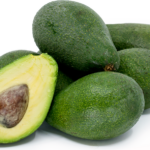
Hass avocado is the highest-value fruit tree for highland farms. The tree grows well between 1,500 and 2,100 m and sells in local and export markets. Grafted seedlings bear fruit in 2 to 3 years. A mature tree gives 100 kg or more in a good year, which is a planning figure you should confirm with your local price and yield records.
Plant Hass at 8 m by 8 m spacing. In the first two years, grow beans, kale or onions between the rows. Keep short crops 1 m from the trunk. Do not plant maize near young trees because maize shades and competes for water. Plant on a mound in wet ground. Waterlogged soil causes root rot.
Buy certified grafted Hass avocado seedlings from a registered nursery. Grafted seedlings fruit earlier and carry the traits of the parent tree.
7. Grafted Mango: Fruit Income in Warm Zones
Mango suits the warm lowlands of Eastern, Coast and parts of Western Kenya. The Kenyan agroforestry review names grafted mangoes among the fast-growing, high-yielding fruit trees promoted for farms. Grafted trees fruit about 3 to 4 years after planting. Seedling-grown trees take longer and give uneven fruit.
Plant grafted mango at 8 to 10 m spacing. Grow short crops between young trees in the first years. Mango also gives shade for your animals and your family. Sell fresh fruit locally, or sell to juice makers when supply peaks. Buy only grafted seedlings from a registered nursery.
Which Trees Suit Your Zone for Agroforestry in Kenya
| Zone | Best trees | Companion crops |
|---|---|---|
| Highlands (above 1,500 m) | Grevillea, Calliandra, Hass avocado | Maize, beans, potatoes, vegetables, dairy fodder |
| Midlands (1,000 to 1,500 m) | Calliandra, Gliricidia, grevillea, grafted mango | Maize, beans, coffee, bananas |
| Warm lowlands and coast | Gliricidia, grafted mango | Maize, cowpeas, vegetables |
| Drylands | Melia volkensii, Faidherbia albida | Sorghum, millet, maize, green grams |
How to Start Agroforestry in Kenya: Step by Step
Choose Your Site and Pattern
Map your farm on paper before you start agroforestry in Kenya. Mark boundaries, steep slopes, wet hollows and spare corners. Decide which system fits each area. Place fodder trees near your cattle shed, timber trees on the boundaries and fruit trees on level, well-drained ground.
Buy Quality Seedlings
Buy seedlings from KEFRI, a registered nursery or a trusted county nursery. Check each seedling for a straight stem, dark green leaves and healthy roots. Reject sick plants. Use grafted seedlings for fruit trees and certified seed sources for timber and fodder species.
Dig Holes and Plant Into the Rains
Dig holes 60 cm by 60 cm by 60 cm for most trees. Mix the topsoil with well-rotted manure and a handful of phosphate fertiliser. Fill the holes two weeks before planting. Plant when the short rains settle into steady rainfall. Plant on a mound in wet soil.
Protect Young Trees
Fence or tie each seedling to a stake. Livestock browse young trees, so keep animals away for the first two years. Mulch the base of each tree. Weed the circle every month. Water seedlings in dry spells.
Prune to Protect Your Crops
Competition for water and light cuts crop yields. A long-term study in semi-arid Kenya found water competition, not shade alone, caused the main yield loss in maize grown under grevillea. Prune lower branches each year. Cut fodder hedges often. Keep tree rows away from the first crop row at planting.
Agroforestry in Kenya: Cost and Income Example
Use the example below to test the income from agroforestry in Kenya. The figures are planning examples. Replace them with your own prices.
Take a Calliandra hedge on a dairy farm. You plant 500 trees along 250 m at 0.5 m spacing. At 1.5 kg of dry matter per tree per year, the hedge gives 750 kg of dry fodder. KEFRI-cited research reports 0.6 to 0.75 kg of extra milk per kilo of dry calliandra. This adds 450 to 560 kg of milk each year. At Sh50 per litre, and counting 1 kg as roughly 1 litre, the extra milk is worth Sh22,500 to Sh28,000 per cow per year.
A Kenyan agroforestry review adds a field figure. Farmers in Embu who joined on-farm Calliandra trials earned an additional US$98 to US$124 per year.
Boundary timber needs a longer wait. A one-acre boundary holds about 100 to 125 grevillea trees. Trees reach sale size over years, so plan the cash flow. Plant fruit and fodder trees for earlier income and grevillea or melia for the long term.
Agroforestry in Kenya With Coffee, Tea, Maize and Dairy
Match your trees to your main enterprise. Each crop has different needs, and some tree and crop pairs fail.
Coffee Farms
Grevillea has a long record as a coffee shade tree in Kenya. A study of coffee shaded by grevillea at 34, 48 and 71 trees per hectare found combined coffee and timber income beat unshaded coffee. Keep tree numbers low and prune the crowns so the coffee still receives light.
Tea Farms
Keep trees off your tea rows and out of your tea shade plan. Grevillea carries a root disease risk for tea. Plant boundary trees at least 3 m from tea bushes and ask the Tea Board or your factory extension officer which tree species suit your block. Fruit trees on the tea farm boundary give a second income without touching your tea.
Maize and Bean Farms
Choose fertiliser trees. Gliricidia suits the warm midlands. Faidherbia suits dry zones. Cut Gliricidia before planting and spread the leaves on the soil. Keep a clear 1 m gap between tree rows and maize in the first seasons.
Dairy Farms
Plant Calliandra near your cattle shed. Fresh fodder cuts your dairy meal bill and gives your cows protein through the dry months. Plant Napier grass beside the hedge for bulk feed. Mix the two in your daily ration.
A Starter Plan for Agroforestry in Kenya on a Small Farm
You do not need to change your whole farm. Start with one quarter acre and a clear plan. A quarter acre measures about 32 m by 32 m, with a boundary near 128 m.
In the first season, plant one fodder or fertiliser hedge along one boundary. Add 10 to 20 fruit or timber trees on the other sides. Choose seedlings for your zone from the seven trees in this guide. Protect every seedling from livestock and weed each circle every month.
In the second season, add a second row or a second tree species. Cut your fodder hedge for the first time and record the kilos fed. Replace seedlings which failed. Prune timber trees for straight stems.
In the third season, review your records. Compare the extra milk, the yield beside the trees and the cost of seedlings and labour. Expand the system on land where the trees performed well. Share what you learn with neighbours and your farmer group.
Common Mistakes in Agroforestry in Kenya
| Mistake | Result | Fix |
|---|---|---|
| Planting one species everywhere | Income risk and disease spread | Plant at least three species for different uses |
| Planting grevillea beside tea | Root pathogens spread to tea bushes | Keep grevillea out of tea fields |
| Planting eucalyptus on your farm without checking the rules | NEMA regulates eucalyptus planting | Ask your agroforestry officer before you plant |
| Dense planting next to crops | Yield loss from shade and water competition | Keep wide spacing and prune each year |
| Planting outside the tree’s zone | Slow growth and early death | Match altitude and rainfall to the tree |
| Leaving seedlings unprotected | Livestock destroy the trees | Fence or stake seedlings for two years |
| Skipping pruning on timber trees | Crooked trunks and low timber value | Prune each year for a straight stem |
Rules, Permits and Support for Agroforestry in Kenya
Check the rules for agroforestry in Kenya before you cut or sell trees. The Kenya Forest Service issues movement permits for timber transport. Ask your county forest office about the current process. NEMA regulates the planting of eucalyptus because of the effect on water and soil.
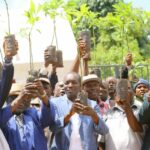
Use support programmes for agroforestry in Kenya. The government distributes seedlings during tree growing days each short rains season. The Ministry upgraded the JazaMiti digital platform to track tree planting and survival. County governments also run nurseries and training for farmers. Join a farmer group, because groups reach nurseries, extension officers and timber buyers as one customer.
Agroforestry in Kenya and Soil Health
Agroforestry in Kenya improves soil through leaves, roots and shade. Leaf drop adds organic matter. Legume trees such as Calliandra, Gliricidia and Faidherbia add nitrogen. Tree roots open the soil so water enters and runoff falls. Fodder hedges on contour lines hold soil on slopes.
Pair trees with other soil practices. Zero-tilled soils hold moisture and structure well, and trees add organic matter to the same soil. Mulch with prunings to protect the surface. Rotate your crops. The combination gives you better soil and higher yields over several seasons.
Buy Tree Seedlings From Farmers Trend Limited
Farmers Trend Limited supports agroforestry in Kenya with fruit tree seedlings from nurseries in Murang’a and Nairobi, and delivers countrywide. Order grafted Hass avocado seedlings for your highland farm. Ask the team about grafted mango and other fruit seedlings for your zone.
Tell the team your county, altitude and farm size. The team recommends trees for your conditions. Order early so your seedlings arrive before the short rains settle.
Call or WhatsApp 0724 559 286 or 0790 509 684. Email info@farmerstrend.co.ke. Visit www.farmerstrend.co.ke.
FAQ on Agroforestry in Kenya
What is agroforestry in Kenya?
Agroforestry in Kenya is the practice of growing trees together with crops or livestock on the same land. The trees give timber, fodder, fruit and soil fertility.
Which trees are best for agroforestry in Kenya?
Grevillea, Calliandra, Gliricidia, Faidherbia albida, Melia volkensii, Hass avocado and grafted mango are the strongest choices for agroforestry in Kenya. Your zone and goals decide the best tree for your farm.
How many trees should you plant on your farm?
Kenyan policy promotes at least 10 percent tree cover on farmland, and the national goal is 30 percent by 2032. A boundary of one acre holds about 100 to 125 trees at 2 to 2.5 m spacing.
Do trees reduce your crop yield?
Trees compete for water and light, especially in the first rows beside the trees. Prune the trees, plant them on boundaries and choose species with low competition. Legume trees and Faidherbia raise yields in many cases.
Which tree gives fodder for dairy cows?
Calliandra gives protein-rich fodder. About 500 trees supplement one cow through the year, and 3 kg of fresh calliandra matches 1 kg of dairy meal in milk response.
Which tree suits dry areas?
Melia volkensii and Faidherbia albida suit dry areas. Melia gives timber and Faidherbia improves soil for maize, sorghum and millet.
When do you plant trees in Kenya?
Plant at the start of steady rains. The short rains begin in October in most regions. Dig and fill your holes before the rains settle.
Do you need a permit to cut farm trees?
Check with the Kenya Forest Service. Permits apply to timber transport and some species. Ask your county forest office before you cut and sell.
Plant Your First Trees This Short Rains Season
Agroforestry in Kenya pays you in timber, fodder, fruit and better soil. Calliandra feeds your cows. Gliricidia and Faidherbia feed your soil. Grevillea and melia give timber. Hass avocado and mango give fruit.
Start small with agroforestry in Kenya. Choose three trees for three purposes. Plant a fodder hedge, a boundary row and a few fruit trees. Dig your holes now, plant into steady rain and protect each seedling for two years. Prune each year to protect your crops.
Record your costs, growth and sales each season. Add more trees when your first trees pay. Contact Farmers Trend Limited on 0724 559 286 or 0790 509 684 to order your seedlings.
https://farmerstrend.co.ke/trending/agroforestry-in-kenya/https://farmerstrend.co.ke/wp-content/uploads/2026/10/WhatsApp-Image-2026-10-14-at-14.03.27-1024x409.jpeghttps://farmerstrend.co.ke/wp-content/uploads/2026/10/WhatsApp-Image-2026-10-14-at-14.03.27-150x150.jpeg# TrendingAvocado FarmingCropsFruitsIn cropsIn FruitsMango Farming30 percent tree cover,agroforestry in Kenya,agroforestry trees,alley cropping,best trees for agroforestry,boundary planting,calliandra,Faidherbia albida,farm forestry,fertilizer trees,fodder trees,Gliricidia,grafted mango,Grevillea robusta,hass avocado,Melia volkensii,mukau,tree planting kenyaAgroforestry in Kenya means growing trees on the same land as your crops or livestock. The trees give you timber, fodder, fruit and firewood. The trees also feed your soil and protect your fields from wind, runoff and drought. You earn from the trees and keep your crops.The government...FarmersTrendjohn doefarmerstrend@gmail.comAdministratorFarmers Trend Ltd.





Leave a Reply