Success Story of Mrs. Seline Awuor’s Sweet Potato Farming Journey in Homabay, Kanyandiko Village
In the heart of Kanyandiko village, nestled within the expansive lands of Kasewe A location in Kabondo West Ward, Homa Bay County, Kenya, lies a vibrant piece of land that tells a tale of not only resilience and ingenuity but also the transformative power of agriculture.

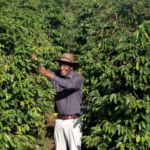
This land belongs to Mrs. Seline Awuor, a seasoned farmer whose unwavering dedication to sweet potato farming has turned her into a beacon of hope and inspiration for her community.
On a sunny Sunday morning, I had the privilege of visiting her farm. The air was alive with the earthy aroma of freshly tilled soil and the chirping of birds, a harmonious melody that seemed to echo the hard work and care poured into this piece of land.
Mrs. Awuor, dressed in her work attire and armed with a warm smile and a firm handshake, welcomed me. Her demeanor exuded the spirit of a woman deeply committed to nurturing both her farm and her community.
As she led me through the meticulously prepared rows of her garden, she began sharing her vast knowledge of potato farming. Her words painted a vivid picture of a tradition deeply rooted in the identity of Kanyandiko and the surrounding region.
The Art and Science of Land Preparation
“The foundation of a good harvest begins here,” Mrs. Awuor said, gesturing proudly at the meticulously tilled rows of soil. She explained that land preparation is far more than merely turning the soil; it’s a calculated, methodical process that ensures the soil is primed to support healthy crop growth.
The first step, she elaborated, involves clearing the land of weeds and debris. This process reduces competition for nutrients and minimizes the risk of pest infestations.
She emphasized the importance of breaking up the soil to improve aeration and water retention.
“Well-prepared soil allows the roots to grow freely and absorb nutrients more effectively,” she noted with conviction. “If the soil is compacted, the plants struggle, and the yield suffers.”
She didn’t stop at the physical aspects of soil preparation; she delved into its role in disease control.
By thoroughly tilling the soil and exposing it to sunlight, harmful pathogens that could wreak havoc on the potato crop are naturally neutralized. She explained that this practice, passed down through generations of farmers in Kanyandiko, remains as relevant today as it was decades ago. It’s a testament to the enduring wisdom embedded in traditional farming techniques.
Tilling: A Labor of Love and Precision
Tilling, Mrs. Awuor explained, is the backbone of successful sweet potato farming. Standing beside her trusted hand-hoe, she described the labor-intensive yet rewarding effort required to till the land properly.
In Kanyandiko, where access to modern farming equipment is a luxury, few can afford, farmers rely on traditional tools and unyielding determination.

“It’s hard work,” she admitted, wiping her brow with a cloth. “But it’s worth every drop of sweat.”
The tilling process ensures that the soil is loose and free of large clumps, creating an ideal environment for planting.
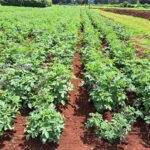
She pointed to the uniform furrows running across her garden. These, she explained, are carefully designed to manage water flow, preventing waterlogging during heavy rains and retaining moisture during dry spells.
“Tilling is not just about turning the soil,” she said with a knowing smile. “It’s about understanding the land and working with it to bring out its best.”
Her meticulous approach and deep connection to her land were evident in every detail of her farm.
The Perfect Potato: Exploring Local Varieties
Our conversation took a delightful turn when she began discussing the different sweet potato species grown in the region. Her eyes lit up with enthusiasm as she described the varieties that have found a home in Kanyandiko’s fertile soil.
“Kanyandiko’s soil is naturally suited for sweet potato farming due to its loamy texture and excellent drainage properties,” she explained.
Over the years, farmers in the area have cultivated various species, each with its unique characteristics and advantages.
“On potato, we have the Shangi variety, which is very popular because it matures quickly and has a good yield,” she said, pointing to a row of healthy-looking plants. “Then there’s the Nyayo variety, which is more resistant to diseases but takes longer to mature. Both have their strengths, and the choice depends on the farmer’s needs and the market demand, sweet potato we have the red flesh, yellow and white.”
Mrs. Awuor stressed the importance of selecting quality seed potatoes and sweet potato tubers. She explained how using certified seeds—free from diseases and pests—can significantly boost yields.
However, she acknowledged the challenge of accessing such seeds due to their high cost. In response, she and other farmers in the community have devised innovative ways to produce their own healthy seeds by carefully selecting tubers from previous harvests.
“It’s about making the best of what we have,” she said, her tone a blend of determination and pragmatism.
A Model for Growth
Standing in the middle of her well-tended farm, it was clear that her methods were not just about maintaining tradition. They were about applying practical, innovative solutions to maximize productivity. Her approach, a blend of experience, knowledge, and ingenuity, is a model that other farmers in the region can emulate.

By focusing on proper land preparation, thorough tilling, and the careful selection of sweet potato varieties, she has consistently achieved high yields. Her success serves as a powerful reminder of the immense potential that lies in adopting best farming practices, even in resource-constrained environments.
The Ripple Effect
The lessons i learnt from her farm are not just inspiring; they’re transformative. Sharing her story through platforms like this can spark a wave of growth and development in Kanyandiko and beyond.
By shining a light on the importance of proper land preparation, tilling, and seed selection, we can encourage other farmers to adopt these practices, leading to improved yields and better livelihoods.
Moreover, her story underscores the urgent need for greater support for small-scale farmers. With access to modern farming equipment, affordable certified seeds, and agricultural training, the potential for growth in regions like Kanyandiko is boundless.
As I left her farm, the earthy scent of the soil lingered in my senses, and a profound sense of optimism filled my heart. In her commitment to excellence and her unyielding spirit, Mrs. Awuor is not just growing potatoes; she is cultivating a legacy of resilience, innovation, and prosperity for her community. And that, without a doubt, is a harvest worth celebrating.
By: Stephen Misori.
Mr. Misori holds a Bachelor’s degree in Education Arts (English and English Literature) from Mount Kenya University. He is a Director on the Board of Trustees at BloomBells Charity, a book reviewer, and a science journalist with a focus on climate, agriculture, education, and the environment. He can be reached at misori.village@gmail.com
https://farmerstrend.co.ke/trending/success-story-of-mrs-seline-awuors-sweet-potato-farming-journey-in-homabay-kanyandiko-village/https://farmerstrend.co.ke/wp-content/uploads/2025/01/472782741_914053364272870_6435059047487057270_n-1024x768.jpghttps://farmerstrend.co.ke/wp-content/uploads/2025/01/472782741_914053364272870_6435059047487057270_n-150x150.jpg# TrendingSuccess StoriesIn the heart of Kanyandiko village, nestled within the expansive lands of Kasewe A location in Kabondo West Ward, Homa Bay County, Kenya, lies a vibrant piece of land that tells a tale of not only resilience and ingenuity but also the transformative power of agriculture.This land belongs to...FarmersTrendjohn doefarmerstrend@gmail.comAdministratorFarmers Trend Ltd.








Leave a Reply