From Poultry to Making it on Rabbits: Success Story of Kibuku Rabbit Farm
Nestled amidst the rolling hills of Maili Sita, Nakuru, lies Kibuku Rabbit Farm—a place where fur and fortune intertwine. James Kibuku, the farm’s passionate proprietor, embarked on a journey that would transform not only his life but also the local community.

“Years ago, I “chickened out” of poultry farming. Frustrated by the challenges of costly feeds and diseases, I sought a new path and that’s when I discovered the world of rabbits. Their gentle demeanor, efficient breeding, and low space requirements intrigued me and I decided to leap into rabbit rearing, hoping it would breathe new life into my dreams,” says Mr James Kibuki the rabbit farm owner.
He explains how he embarked into the rabbit farming business saying Kibuku Rabbit Farm started small—a few hutches, a handful of rabbits. But Mr Kibuku’s determination was boundless. He attended workshops, read voraciously, and refined his skills. Soon, the farm flourished. James mastered rabbit breeding techniques. The farm became a nursery for fluffy bunnies, their twitching noses a promise of abundance.
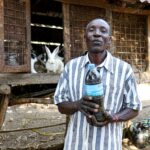
“Kibuku Rabbit Farm supplies tender rabbit meat to local restaurants and households within Nakuru. The lean, protein-rich meat gaining popularity, especially among health-conscious consumers, really promoted the farm and as well it gained popularity. Apart from meat, I also bottle and sell rabbit urine—a potent organic fertiliser to the local farmers flocking to Kibuku Farm, eager to boost their crops with this golden elixir,” says Kibuku.
He advised farmers to reduce the money they spend on pesticides by using rabbit urine, which is effective in killing whiteflies, and other sap-sucking insects that attack crops such as vegetables, pawpaw’s, coffee, macadamia, bananas and avocados.
Kibuku also hosts free training sessions for aspiring rabbit farmers and shares his knowledge generously, empowering others to hop onto the rabbit bandwagon. “Kibuku Rabbit Farm became more than a business—it became a beacon of hope especially for unemployed youth and retirees, he adds.”
“Families in Maili Sita have found an additional income stream through rabbit farming. Children have learned responsibility by caring for the bunnies. Rabbit urine replaced synthetic fertilizers, enriching local soils as this rabbit farm has demonstrated sustainable practices. The farm has become a meeting point where neighbors exchange tips, laugh over coffee, and celebrate each other’s successes,” Mr Kibuku further explains.
As the sun sets over Kibuku Rabbit Farm, James reflects. His once “hare-brained” idea now sustains livelihoods, nourishes soil, and weaves a community tapestry. James encourages those interested in rabbit farming to come up, get to learn more and embrace the project not just for their own benefits but also for the growth of the community at large.
However, he noted that there are a number of people who are still struggling to accept rabbit meat on their dining tables, especially the elderly because they perceive them as wild animals, while some compare them to cats and contend that they cannot fathom eating a domestic animal.
He appealed to locals to expand their culinary appetites since with climate change there are common and accepted foodstuffs that might be wiped out. But much as he appreciates that food is about a people’s culture, he blamed Africans for ‘limiting themselves too much on what is edible,’ and yet other countries such as China have accepted a wider variety of fish including frogs.
He noted with concern that some religious beliefs have continued to play a role in what is accepted as good and bad food, adding that it has ended up denying poor families the much-needed proteins that are abundant in rabbits, which are easier to keep and raise compared to popular poultry.
Ruth Chebet, a resident of Nakuru city, almost vomited when asked whether she eats rabbit meat, and even wondered whether she appears like somebody who eats wild animals. She claimed that, even their culture doesn’t allow them to eat such tiny things, and worse still she wouldn’t allow them to be reared in her compound since they might attract curses, for her family.
She observed that there are plenty of animals from cows to goats that are viable for ‘good’ meat and threw her hands up in despair that some people actually enjoy eating rabbit meat. She marveled aloud whether they also eat the rabbit’s head and the hanging ears.
Peter Koech, a retired agricultural officer who lives near the rabbit farm, confirmed that when it comes to food culture, religion and upbringing play a significant role, and sometimes it’s almost impossible to change people’s minds on what is edible and palatable.
However, he advised families not to condemn other cultures’ foodstuffs because the world is now a global village and they never know where their children might land in the future.
By Veronica Bosibori and Daisy Moraa
Read Original Article Here
https://farmerstrend.co.ke/trending/from-poultry-to-making-it-on-rabbits-success-story-of-kibuku-rabbit-farm/https://farmerstrend.co.ke/wp-content/uploads/2024/05/From-Poultry-to-Making-it-on-Rabbits-Success-Story-of-Kibuku-Rabbit-Farm-2024.jpghttps://farmerstrend.co.ke/wp-content/uploads/2024/05/From-Poultry-to-Making-it-on-Rabbits-Success-Story-of-Kibuku-Rabbit-Farm-2024-150x150.jpg# TrendingRabbit FarmingSuccess StoriesKibuku Rabbit Farm,rabbit farming,rabbit farming businessNestled amidst the rolling hills of Maili Sita, Nakuru, lies Kibuku Rabbit Farm—a place where fur and fortune intertwine. James Kibuku, the farm’s passionate proprietor, embarked on a journey that would transform not only his life but also the local community.“Years ago, I “chickened out” of poultry farming. Frustrated...FarmersTrendjohn doefarmerstrend@gmail.comAdministratorFarmers Trend Ltd.


Leave a Reply