Why Good Agronomists Fail as Farm Managers When They Cannot Control Costs and Lead Teams
- Farm management in Kenya requires more than agronomic knowledge. Learn why good agronomists struggle as farm managers and how financial skills, leadership and strategic thinking improve farm profitability.
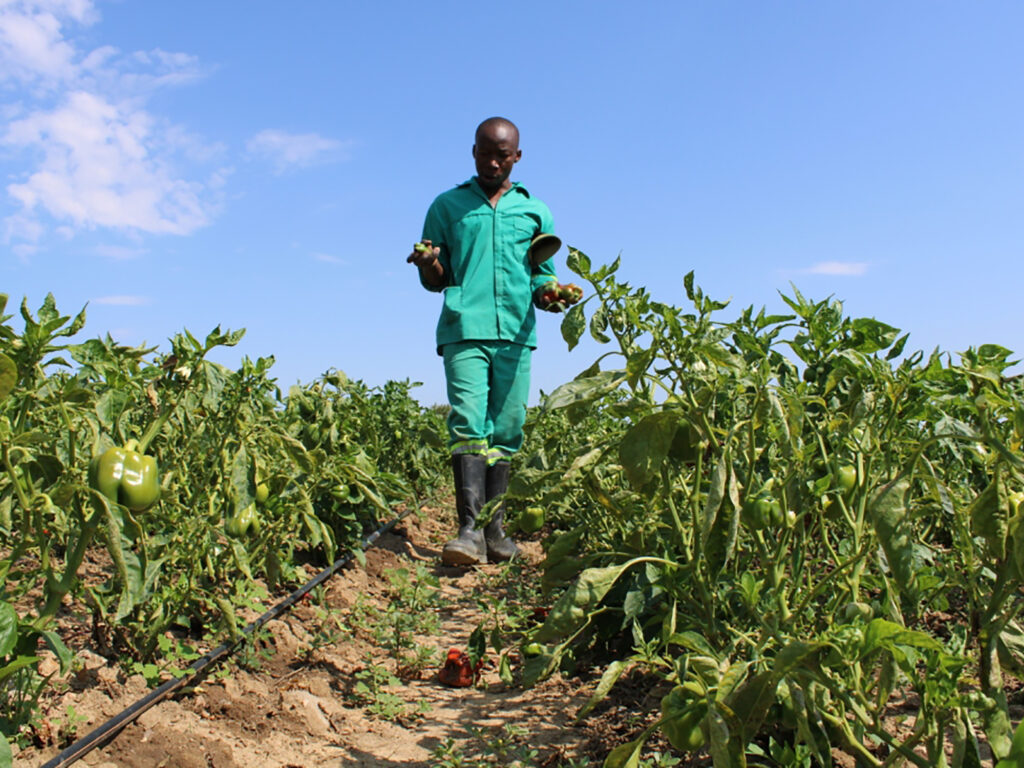
Why Good Agronomists Fail as Farm Managers When They Cannot Control Costs and Lead Teams
An agronomist can know exactly how to improve soil fertility, manage pests, optimise irrigation and increase crop yields, yet still struggle to run a profitable farm.
The problem often emerges after promotion. Someone who was previously responsible for crop health and production recommendations suddenly becomes responsible for labour, machinery, procurement, budgets, staff performance and the financial results of an entire agricultural operation.
The skills that made the person an excellent agronomist remain valuable, but they are no longer sufficient on their own.
On a commercial farm, increasing yield is only one part of the job. The manager must also determine whether the additional production justifies the extra fertiliser, chemicals, labour, fuel, irrigation and harvesting costs. A crop can perform exceptionally well in the field while delivering disappointing financial returns.
This distinction matters in Kenya, where farms operate under different combinations of input costs, labour availability, rainfall patterns, irrigation expenses, market prices and access to finance. The challenge applies to large horticultural farms, commercial grain operations, flower farms, tea estates, dairy enterprises and smaller agribusinesses expanding into more formal management structures.
A technically strong agronomist may understand what the crop needs to reach its potential. An effective farm manager must understand what the business can afford, what the market will reward and how to organise people and resources to achieve the best possible return.
The transition is not about abandoning agronomy. It is about learning to connect agronomic decisions with financial performance, operational efficiency and business strategy.
1. Managing cost per tonne matters as much as increasing yield
Agronomists are trained to improve crop performance. They assess soil conditions, identify nutrient deficiencies, recommend fertiliser programmes, monitor pests and diseases, and develop practices that can increase production.
These skills are essential, but a farm manager must ask another question before approving a production decision: how much will the additional output cost?
Suppose a maize farm increases its yield after applying more fertiliser and investing in additional weed control. The agronomic result may be positive, but the financial outcome depends on the value of the extra maize compared with the additional expenditure.
If the extra production costs more to achieve than the revenue it generates, the farm has improved its yield without improving its profitability.
The same principle applies to horticulture. Increasing avocado production may require additional irrigation, fertiliser, pest management, harvesting labour and post-harvest handling. If the fruit does not meet the required grade, or if market prices are weak, the additional yield may not produce the expected return.
A farm manager should therefore understand the relationship between production costs, marketable output and revenue.
Cost per tonne is useful for crops sold by weight, but it should not be treated as the only measure of performance. For crops sold by grade, size or quality, the manager may also need to calculate the cost per marketable kilogram, export-grade carton, saleable stem or other relevant unit.
The important question is whether the farm is producing the quantity and quality the market needs at a cost that allows it to make a reasonable return.
A farm manager should be able to explain not only how much was harvested, but also how much it cost to produce, what proportion was saleable and how much revenue the harvest generated.
2. Understanding farm budgets before approving expenditure
One of the biggest changes an agronomist faces after promotion is moving from recommending what should be done to deciding what can be done within a budget.
A crop may benefit from additional fertiliser, improved irrigation equipment or more frequent pest scouting. However, the manager must assess the cost, the expected benefit and the availability of funds before committing the farm.
This does not mean choosing the cheapest option in every situation. Cutting expenditure indiscriminately can damage crop health, reduce quality and create more expensive problems later. The objective is to allocate money where it is most likely to deliver a worthwhile return.
A farm manager should understand the approved budget, actual expenditure, outstanding commitments and the expected cost of completing the production cycle. This includes costs that may not be immediately visible, such as equipment maintenance, depreciation, rejected produce, downtime and the cost of financing operations.
Consider a farm that has budgeted for fertiliser, crop protection products, fuel and labour. Midway through the season, fertiliser costs rise and additional spraying becomes necessary. The manager must determine how the changes affect the total production budget and whether adjustments are needed elsewhere.
Waiting until the end of the season to discover that expenditure exceeded the budget is poor management. By then, most of the money has already been spent.
Effective managers review actual costs against the budget regularly, investigate significant differences and communicate the financial implications before the situation becomes difficult to control.
They also understand the difference between an expense that protects future revenue and one that adds little value. That judgement requires both technical knowledge and financial discipline.
3. Turning operational data into decisions
Modern farm management generates large amounts of information, but collecting data is not the same as using it effectively.
An agronomist may record fertiliser application rates, pest incidence, irrigation schedules and crop growth. A farm manager needs to connect these records to operational efficiency and financial outcomes.
How much fuel was consumed per hectare? How many labour hours were used to complete a particular operation? How much did machinery downtime cost? Why did expenditure on crop protection exceed the budget? Did a new production method reduce costs or merely shift them elsewhere?
These are management questions that require consistent records and meaningful analysis.
For example, if fuel consumption rises significantly during land preparation, the manager should investigate whether machinery is operating inefficiently, field conditions have changed, operators require additional training or maintenance is overdue.
If labour costs per hectare increase during harvesting, the explanation might involve poor scheduling, low worker productivity, inconsistent fruit maturity or delays in transporting harvested produce.
The numbers identify where a problem may exist, but the manager must investigate the cause before deciding what to change.
Useful operational indicators include cost per hectare, cost per marketable unit, labour hours per operation, machinery utilisation, fuel consumption, crop rejection rates, budget variance and revenue per hectare.
Not every indicator is equally relevant to every farm. A dairy enterprise needs measures such as feed cost per litre of milk, while a flower farm may focus on production costs per saleable stem and rejection rates. A grain farm may pay closer attention to yield per hectare, harvesting losses and machinery costs per tonne.
The aim is not to generate impressive spreadsheets. It is to make better decisions while there is still time to influence the outcome.
4. Leading people requires more than giving agricultural instructions
An agronomist may be accustomed to advising farm workers, scouting teams or supervisors on technical practices. A farm manager carries a broader responsibility for making sure the entire operation works together.
Workers need clear instructions, realistic targets, the right tools, appropriate training and consistent supervision. Supervisors need to understand what they are accountable for and how their performance will be assessed.
A manager who simply issues instructions without following up may discover that the work was completed late, carried out incorrectly or recorded inaccurately.
On the other hand, a manager who tries to control every small task personally can become a bottleneck. Decisions wait for approval, supervisors lose confidence and routine problems consume time that should be spent planning the operation.
Good leadership means setting expectations, delegating responsibility and checking results without creating unnecessary delays.
It also requires understanding that poor performance does not always result from laziness or lack of discipline. Workers may be operating with faulty equipment, inadequate protective gear, unclear instructions or unrealistic deadlines. A manager must identify these constraints before deciding how to respond.
In labour-intensive farming, this is particularly important. Harvesting, pruning, transplanting, grading and crop maintenance often depend on teams completing work within narrow windows. Poor coordination can affect quality and increase costs even when the agronomic plan is sound.
An effective farm manager builds a system in which people understand their responsibilities, problems are reported early and performance is measured fairly.
5. Learning to make decisions under financial pressure
Agronomic decisions are often based on crop requirements, field observations and technical recommendations. Management decisions must also account for timing, cash flow and competing priorities.
A farm may need fertiliser, pesticide supplies, fuel, spare parts and harvesting materials within the same week. The manager may not have enough cash available to meet every requirement immediately.
This creates difficult choices. Which operation is most urgent? What is the financial consequence of delaying a purchase? Can the farm negotiate better payment terms? Will spending money now prevent a larger loss later?
A technically minded manager may be tempted to insist that every recommended input be purchased immediately. However, the business may need to prioritise interventions based on the severity of the risk, the crop’s stage of development and the expected return.
The opposite mistake is to delay essential expenditure simply to remain within the budget. Postponing a critical disease-control measure, for example, may lead to losses that exceed the original cost of treatment or prevention.
Good management requires an understanding of both agronomic urgency and financial consequences.
The manager must distinguish between essential expenditure, investments with a measurable return and activities that can safely be delayed. When a decision carries substantial risk, the reasoning should be documented and communicated to the people responsible for the farm’s finances.
6. Understanding profitability rather than focusing only on production
High yields do not automatically translate into high profits.
Profitability depends on the relationship between revenue and all relevant costs. These may include land preparation, seed or planting material, fertiliser, crop protection, irrigation, labour, machinery, harvesting, packaging, transport, financing and other overheads.
Market conditions add another layer. A farm may harvest more produce than expected but receive lower prices because several producers are supplying the market at the same time. Alternatively, a smaller harvest may generate strong revenue if quality is high and prices are favourable.
A manager needs to understand how production decisions affect the final margin.
For example, investing in better grading equipment may increase the proportion of produce that meets a buyer’s specifications. Although the equipment adds cost, the investment may be justified if it reduces rejection rates and improves the selling price.
Similarly, increasing plant population may raise output per hectare but also increase expenditure on planting materials, nutrients, crop protection and harvesting. Whether the change is worthwhile depends on the crop, production system and market requirements.
The manager must assess the whole production system rather than treating each decision in isolation.
This also means recognising that the cheapest production method is not necessarily the most profitable. Reducing fertiliser application may lower immediate expenditure but reduce yields. Buying inferior planting material may save money at establishment but result in uneven growth, lower quality or greater disease risk.
The objective is to find the most economically sound way to achieve the required production and quality.
7. Strategic thinking begins before the crop is planted
Farm managers must look beyond the immediate production cycle.
An agronomist may concentrate on the next crop, but a manager must consider whether the farm is allocating its land, labour, equipment, water and capital to the right activities over time.
Crop selection should reflect climate, soil suitability, water availability, production costs, market demand, buyer requirements and the farm’s capacity to manage the crop. A crop that performs well agronomically may still be a poor business choice if the market is too small, logistics are expensive or the farm lacks the necessary skills and infrastructure.
In Kenya, these decisions can vary considerably between production areas. A crop suitable for a well-irrigated farm near established markets may not be suitable for a rain-dependent farm far from reliable buyers.
Strategic thinking also involves planning for risks. What happens if the rains fail? What if the main buyer reduces orders? Can the farm access replacement machinery during a breakdown? Is there enough working capital to complete the production cycle?
These questions should be considered before problems arise.
A good manager does not need to predict every challenge. The manager needs to identify the risks that could materially affect the business and prepare realistic responses.
8. Machinery and labour must be managed as business resources
On commercial farms, machinery can represent a substantial investment. Tractors, sprayers, irrigation pumps, harvesters and transport equipment all require fuel, maintenance, skilled operators and timely servicing.
An agronomist promoted to farm manager may understand why a particular operation is necessary without fully understanding the cost of delivering it.
For instance, owning a tractor does not automatically make land preparation cheaper. The farm must account for purchase or financing costs, depreciation, repairs, fuel, operator wages and the time the machine remains idle.
Hiring machinery may be more economical where utilisation is low, while ownership may make sense when the equipment is needed frequently and suitable service providers are unavailable. The correct decision depends on the farm’s operational requirements and total costs.
Labour requires similar scrutiny. The manager should understand how many workers are needed for each operation, when they are required and how work can be organised to avoid unnecessary idle time.
Reducing the workforce without assessing operational needs can cause delays and increase losses. Hiring more workers than necessary can inflate production costs without improving output.
The objective is to match machinery and labour to the workload, maintain equipment properly and ensure that resources are used efficiently.
9. Procurement and stock control can determine farm performance
Farm operations depend on the availability of inputs, spare parts, packaging materials, fuel and other supplies. Poor procurement planning can disrupt production even when the agronomic programme is technically sound.
If a farm runs out of a required input during a critical crop stage, the manager may have to make an expensive emergency purchase or accept the consequences of delaying the operation.
Excessive purchasing creates a different problem. Inputs may remain unused, tie up working capital, deteriorate in storage or become unsuitable for the intended crop cycle.
A farm manager should understand stock levels, expected consumption, supplier reliability, delivery lead times and the conditions required for safe storage. Purchases should be based on operational needs and approved budgets rather than habit or pressure from suppliers.
The manager must also ensure that procurement decisions are transparent and that the products received match the specifications ordered.
Technical knowledge is useful here because the manager can assess whether an input is appropriate for the intended purpose. Financial and administrative skills are equally important because the farm must obtain suitable products at a reasonable total cost and keep accurate records.
10. Communication with owners and senior management matters
A farm manager is often expected to report production progress, expenditure, risks and expected returns to farm owners, directors or senior executives.
Strong agronomic knowledge alone may not be enough to communicate these issues effectively. Management needs to understand what is happening, why it matters financially and what action is required.
A report stating that a crop is showing nutrient deficiency may be technically accurate, but decision-makers may also need to know how widespread the problem is, what caused it, how much treatment will cost and what losses may occur if action is delayed.
Likewise, reporting that production is below target should be accompanied by an explanation of the main factors, the corrective measures being taken and the likely effect on the budget.
Good communication does not mean hiding difficult information. A manager who reports problems early gives the business more time to respond. A manager who delays reporting bad news may allow a manageable problem to become expensive.
The ability to explain technical issues in financial and operational terms is one of the most useful skills an agronomist can develop when moving into management.
11. Accountability must be supported by clear targets
Farm managers are responsible for results, but they cannot achieve those results through vague expectations.
Targets should be specific enough to guide daily work and measurable enough to assess performance. Depending on the operation, these may include completing land preparation by a given date, keeping expenditure within an approved limit, reducing harvest losses or meeting agreed quality specifications.
Targets must also be realistic. Setting a production target without considering rainfall, water availability, crop condition, labour capacity and input supply can create pressure to pursue unrealistic results or conceal problems.
The manager should review performance consistently and distinguish between factors within the team’s control and external conditions that require a change of plan.
Accountability also applies to the manager. If expenditure exceeds the budget or production falls below expectations, the manager should be able to explain what happened, what was learned and what will change in the next cycle.
This approach creates a culture of improvement rather than one in which staff are concerned mainly with avoiding blame.
12. Why technically strong agronomists sometimes struggle after promotion
The difficulty is not necessarily a lack of intelligence or commitment. It is often a mismatch between the skills developed in a technical role and the demands of a management position.
An agronomist may have spent years becoming highly competent in crop production but received little training in budgeting, financial reporting, staff management, procurement or strategic planning.
Promotion then places the individual in a position where these skills are required every day.
Another challenge is identity. Someone recognised for solving technical problems may continue trying to solve every management problem through technical intervention. Yet some problems cannot be fixed by applying more fertiliser, changing a spray programme or adjusting irrigation.
A labour problem may require clearer supervision. A cost problem may require improved procurement. A market problem may require a different production plan. A cash-flow problem may require revised payment arrangements or better financial forecasting.
The successful transition involves learning when a problem is agronomic, when it is operational and when it is commercial.
It also involves accepting that the manager’s job is not to be the most knowledgeable person in every area. The job is to bring together the right people, information and resources to achieve the farm’s objectives.
13. How agronomists can prepare themselves for farm management
Agronomists who want to progress into leadership should start developing business skills before receiving a management title.
Learning to prepare and interpret a farm budget is a useful first step. They should understand how production costs are calculated, how expenditure is tracked and how changes in yield or selling price affect the financial outcome.
They should also seek opportunities to supervise teams, coordinate operations and participate in procurement or production planning. Practical exposure to machinery costs, labour scheduling, stock management and financial reporting can help bridge the gap between technical work and business management.
Understanding basic accounting concepts is valuable, including revenue, operating costs, gross margin, cash flow and capital expenditure. These measures provide a common language for discussing farm performance with owners and finance teams.
Agronomists should also practise presenting recommendations in terms of expected benefits, costs, risks and measurable outcomes. Instead of recommending an intervention only because it may improve crop performance, they should explain what the intervention is expected to achieve and how the result will be assessed.
Mentorship can accelerate this process. Working alongside an experienced farm manager or participating in operational reviews allows agronomists to see how production decisions interact with staffing, budgets and commercial obligations.
The aim is not to turn every agronomist into an accountant. It is to give technical professionals the financial and leadership skills required to manage agricultural operations responsibly.
14. A good farm manager balances crop performance with business performance
The strongest farm managers do not ignore agronomy. They use it as the foundation for informed business decisions.
They understand that healthy crops, appropriate nutrition, effective pest management and good irrigation practices are essential to production. They also know that every intervention must be considered alongside its cost, timing, expected benefit and contribution to the farm’s objectives.
They pay attention to the people doing the work, the machinery supporting operations, the inputs being purchased and the market into which the harvest will be sold.
Most importantly, they recognise that the farm is a connected system. A decision made in one area can create consequences elsewhere. Increasing planting density may affect labour requirements. Delaying harvesting may reduce quality. Purchasing equipment may improve efficiency but increase financing costs. Cutting expenditure may protect cash in the short term but reduce future output.
Effective management means understanding these connections before committing the business to a decision.
For agronomists moving into leadership, the transition is ultimately a change in responsibility. The focus expands from improving crop performance to coordinating the entire operation so that production targets, quality requirements, budgets and commercial goals work together.
A farm manager must know how to grow the crop, but also how to organise the work, control costs, lead people and protect the financial health of the business.
In your experience, what is the biggest weakness of technically strong agronomists when they become farm managers: financial management, people leadership, operational discipline or strategic thinking?
https://farmerstrend.co.ke/trending/good-agronomists-fail-as-farm-managers/https://farmerstrend.co.ke/wp-content/uploads/2026/10/Why-Good-Agronomists-Fail-as-Farm-Managers-When-They-Cannot-Control-Costs-and-Lead-Teams-1024x768.jpghttps://farmerstrend.co.ke/wp-content/uploads/2026/10/Why-Good-Agronomists-Fail-as-Farm-Managers-When-They-Cannot-Control-Costs-and-Lead-Teams-150x150.jpg# Trendingagribusiness management,agricultural business management,agricultural economics,agricultural leadership,agronomists,cost of production,crop production costs,farm budgeting,farm labour management,farm management in Kenya,farm managers,farm operations,farm profitability,precision agricultureFarm management in Kenya requires more than agronomic knowledge. Learn why good agronomists struggle as farm managers and how financial skills, leadership and strategic thinking improve farm profitability.Why Good Agronomists Fail as Farm Managers When They Cannot Control Costs and Lead Teams An agronomist can know exactly how to...FarmersTrendjohn doefarmerstrend@gmail.comAdministratorFarmers Trend Ltd.







Leave a Reply