Hass Avocado Farming in Kenya 2026: The Complete Guide to 727,000 Tonnes
Hass avocado farming in Kenya now delivers a record crop. The USDA Foreign Agricultural Service forecasts 727,000 tonnes for 2026, up 4.8 percent from 694,000 tonnes in 2025. Hass makes up more than 74 percent of production. Every tonne started as a grafted seedling in a nursery.
You face a direct question. How do you earn from this crop when supply grows and export routes shift? This guide answers with data, steps and numbers on Hass avocado farming in Kenya. You will see the market figures, climate and soil limits, spacing, planting, care, pests, harvest, markets and costs. You will see how to buy certified grafted Hass avocado seedlings at KSh 250 each.
Read the sections on maturity and markets before you plant. Rejected fruit earns nothing.
Hass Avocado Farming in Kenya in 2026: The Market Numbers
Start with the baseline. USDA report KE2026-0007, published in April 2026, puts Kenya’s 2025 avocado output at a record 694,000 tonnes. The agency expected 585,000 tonnes earlier, so actual output beat the earlier estimate by 109,000 tonnes. FAS Nairobi raised the 2025 planted area estimate to 35,600 hectares from 34,000. Area under avocado has grown about 6 percent a year since 2020, according to Ecofin’s summary of the report.

Exports moved the other way. Shipments fell 23.4 percent to 121,000 tonnes in 2025. Red Sea disruption and export controls from the Agriculture and Food Authority (AFA) drove the drop. Premature harvesting damaged fruit quality, which pushed the authority to tighten controls. FAS forecasts exports of 130,000 tonnes in 2026, a rise of 7.4 percent. AFA reopened the 2025/2026 export season on 2 April 2026 after confirming improved fruit maturity, the Nation reported.
| Measure | 2025 | 2026 forecast |
|---|---|---|
| Production | 694,000 tonnes | 727,000 tonnes (up 4.8 percent) |
| Exports | 121,000 tonnes | 130,000 tonnes (up 7.4 percent) |
| Share of crop exported (my calculation) | 17 percent | 18 percent |
| Planted area | 35,600 hectares | Not stated |
| Avocado oil processing | 10,188 tonnes (3,326 in 2024) | Not stated |
What 727,000 Tonnes Means for Your Farm Gate
Divide 694,000 tonnes by 35,600 hectares. The result is about 19.5 tonnes per hectare, or 7.9 tonnes per acre. Treat this as a rough national average. Planted area includes young trees without fruit.
Only about 17 percent of the 2025 crop went to export. Local markets, processors and post-harvest losses took the rest. Oil processing rose from 3,326 tonnes in 2024 to 10,188 tonnes in 2025, which gives lower-grade fruit a buyer.
More fruit gives buyers more choice. Buyers pay for size, shape and maturity. You compete on quality and consistency, not on volume alone.
Why Farmers Choose Hass Avocado Farming in Kenya
Hass has a thick, pebbled skin. The skin protects fruit on long sea routes to Europe and the Middle East. Nation reports Kenya ships more than 60 percent of avocado exports to those two regions, mostly by sea. Buyers prefer varieties with high oil content, and Hass fits.
The Netherlands took 24 percent of Kenya’s avocado exports in 2025 and redistributes fruit across the European Union. Spain and France together took about 11 percent. Turkiye and Germany took roughly 5 percent each, Fresh Fruit Portal reported from the USDA data.
Hass fruits early. KALRO says avocado starts bearing within three years of transplanting. A tree producing in year three returns your seedling cost sooner than a tree producing in year seven.
Best Regions for Hass Avocado Farming in Kenya
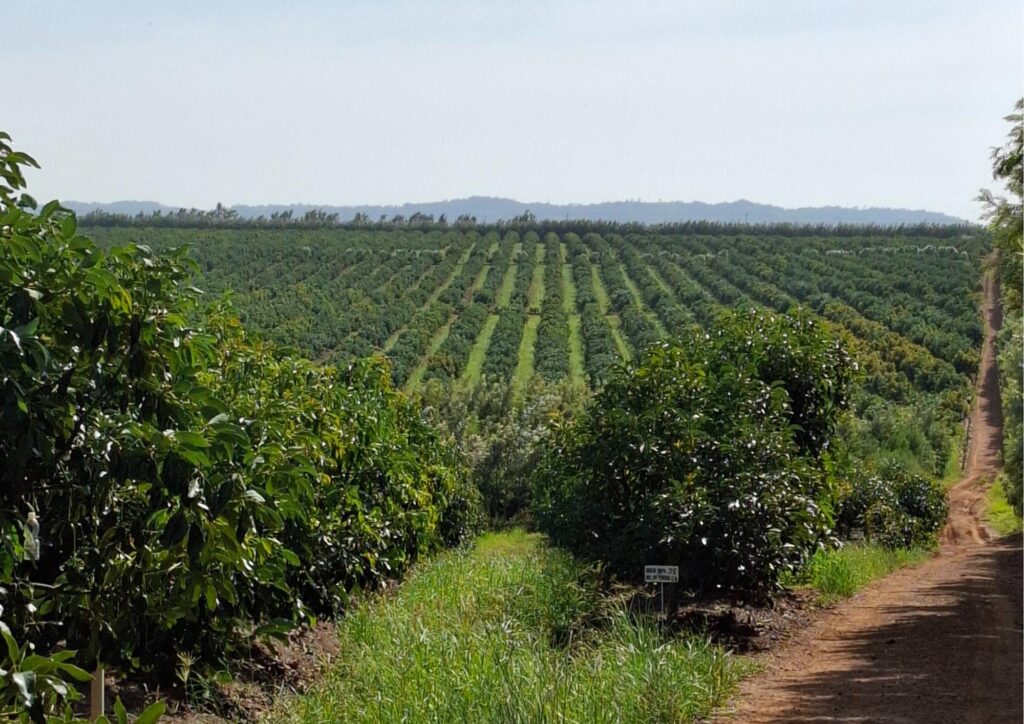
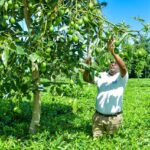
KALRO lists Meru, Kirinyaga, Murang’a and Nandi as major avocado counties. Western Kenya is rising as a production zone, with Bungoma, Kakamega and Vihiga leading the expansion. FAS Nairobi photographed a smallholder avocado farm in Uasin Gishu in March 2026, which shows how far planting has spread beyond the Mt Kenya region.
County names help you start. Your plot decides the result. Match altitude, rainfall and soil to the limits in the next section. A PDF guide to the best counties and regions for Hass avocado farming in Kenya covers regional detail.
Is Hass Avocado Farming in Kenya Right for Your Farm?
Answer six questions before you commit money. Does your plot sit inside the altitude band? Does rainfall reach 1,000 mm, or will irrigation cover the gap? Does your soil drain after heavy rain? Do you have cash to carry the orchard for three years? Do you have access to a buyer or a farmer group? Do you have labour for weekly scouting and spraying?
Six yes answers put you in a strong position. One or two no answers do not rule out Hass avocado farming in Kenya. They show you where to fix the plan first. Start with the weakest answer.
Climate and Soil Requirements for Hass Avocado Farming in Kenya
Climate sets the limits of Hass avocado farming in Kenya. Check each limit against your plot before you spend on seedlings.
Altitude and Temperature
The KALRO avocado factsheet says avocado performs best between 1,500 and 2,100 metres above sea level. AFA training material prepared with JICA lists 1,200 to 2,200 metres. Use 1,500 to 2,100 metres as your target. Ask a KALRO or county extension officer to assess plots outside this band before you buy trees.
Avocado grows well at 16 to 24 degrees Celsius. The maximum is 33 degrees. Frost damages young trees, so avoid cold hollows on valley floors.
Rainfall and Water
KALRO says annual rainfall should not fall below 1,000 mm and should spread through the year. Other Kenyan guides cite up to 1,600 mm as the optimum. Where rain is lower or erratic, plan irrigation before you plant. Dry spells at flowering and fruit set cut fruit numbers.
Soil, Drainage and pH
Hass needs deep, free-draining soil with about one metre of topsoil. Target a pH of 5.5 to 6.5. KALRO notes growers succeed between pH 5 and 8 in some places, but you should test before planting. If pH rises above 6.5, KALRO advises gypsum.
Waterlogging kills avocado roots. Dig a test pit on your plot. Fill the pit with water. If water still stands after a day, choose another plot or build raised ridges. Avoid saline soils and saline water. Avocado does not tolerate salt.
Wind
Avocado branches snap in strong wind. A Nation Media farming column recommends protecting orchards from wind. Plant a windbreak on the windward side one season before the avocado trees go in.
Buy Certified Grafted Hass Seedlings at KSh 250 Each
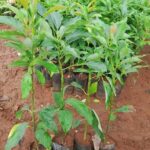
Farmers Trend sells certified grafted Hass avocado seedlings at KSh 250 each. The earlier price was KSh 350. Nurseries operate in Murang’a and Nairobi. Confirm the price when you order, because offers change.

Buy grafted plants for Hass avocado farming in Kenya, not plants raised from seed. Seed-raised avocados take longer to fruit and vary in quality. A grafted plant carries Hass fruiting wood on a rootstock, so you know what the tree will produce.
Seedling Checklist
- Age: choose seedlings at least six to eight months old.
- Graft union: confirm the union has healed and does not wobble.
- Roots: look for a well-developed root system without damaged or stunted roots.
- Leaves: choose healthy, green leaves. Reject yellow or brown leaves and signs of disease.
- Stem: choose a sturdy, straight trunk without damage.
- Source: buy from a nursery with a track record. Ask for batch details.
A customer review on the product page reports a first harvest two years and four months after planting 2,200 grafted Hass plants. Treat this as one farm’s result, not a promise.
Plan your order. At 7 m x 7 m spacing you plant 82 trees on one acre. Add 10 percent spares, which makes 90 seedlings. At KSh 250 each, planting material costs KSh 22,500. To order, call or WhatsApp 0724 559 286 or 0790 509 684, or use the Hass avocado seedlings order page. Read the full Hass avocado seedlings buying guide for supplier checks.
Hass Avocado Farming in Kenya: Spacing and Trees per Acre
One acre equals about 4,047 square metres. Divide 4,047 by the area each tree needs, then round down. The table shows the result for common spacings.
| Spacing | Area per tree (square metres) | Trees per acre | Note |
|---|---|---|---|
| 5 m x 5 m | 25 | 161 | Close planting. Needs a firm pruning plan. |
| 6 m x 6 m | 36 | 112 | Low end of the AFA training range |
| 7 m x 7 m | 49 | 82 | KALRO spacing for Hass |
| 8 m x 8 m | 64 | 63 | Middle option |
| 9 m x 9 m | 81 | 49 | KALRO general spacing for pure stands |
KALRO points to 7 m x 7 m for Hass in the climate-smart agronomy pamphlet. The KALRO factsheet lists 9 m x 9 m for Fuerte and Hass. AFA training material gives a range of 6 to 9 metres by 7 to 10 metres, depending on variety, soil and fertility.
In Hass avocado farming in Kenya, choose spacing by soil and management. Use 7 m x 7 m on average soil if you will prune. Use 9 m x 9 m on deep, rich soil. Wide spacing leaves empty ground in years one to four. Narrow spacing closes canopies, blocks light, weakens spray coverage and slows picking. Do not copy a neighbour’s spacing without checking your soil depth and slope.
When to Start Hass Avocado Farming in Kenya
Kenya has two rainy seasons, the long rains and the short rains. Plant at the start of either one so seedlings establish before dry weather. If you plan to plant in the short rains, dig holes and book seedlings now. Large orders need lead time.
Prepare in this order. Test soil in week one. Clear and peg the plot in week two. Dig holes and mix manure and DSP in weeks three and four. Confirm your seedling order, then plant when the soil is moist. This schedule keeps Hass avocado farming in Kenya on track and avoids planting into dry ground.
Prepare Land and Plant Hass Avocados Step by Step
Land Preparation
Test your soil first. Take samples from several spots across the plot at planting depth, mix them in a clean bucket and send one sample to a laboratory. Clear bush, stumps and perennial weeds. Direct runoff away from planting rows. Peg rows with a measuring rope and string line. Avoid field work when soil is wet, because wet soil compacts.
Planting Holes
Dig holes about 60 cm wide, 60 cm long and 60 cm deep. Keep topsoil and subsoil on separate sides. Mix the topsoil with about 30 kg of well-decomposed manure and about 120 g of double superphosphate (DSP). The Nation farming column and the KALRO factsheet give similar rates.
At 82 trees per acre, you need about 2,460 kg of manure and 9.84 kg of DSP. Dig holes before the rains so the soil settles.
Planting Steps
- Water the seedling well before you move the plant.
- Remove the polythene bag with the soil intact. Cut the bag open instead of pulling the plant.
- Set the plant in the hole. Keep the graft union well above the soil.
- Backfill with the topsoil and manure mix. Firm the soil gently.
- Water slowly until the soil is soaked.
- Mulch around the stem without touching the bark. Stake the plant and shade the seedling for the first weeks.
Plant at the start of a rainy season. Overcast mornings and late afternoons are kinder to young plants than midday sun.
Water, Mulch and Fertilizer for Hass Avocado Trees
Young trees in Hass avocado farming in Kenya need regular water. Check soil moisture with your finger before each watering. Irrigate where rainfall falls short. Drip irrigation equipment delivers water to the root zone and saves water.
Mulch holds moisture and builds organic matter. KALRO names well-dried grass as the most common mulch. Keep mulch away from the trunk to prevent rot.
Let a soil analysis set your fertilizer plan. KALRO says soil analysis must guide how much fertilizer you apply, along with tree age. Split applications across the year instead of applying one heavy dose. Spread fertilizer under the canopy where active roots grow, then water. Buy fertilizers at the Farmers Trend Virtual Agrovet once your soil test tells you what to apply.
Pruning, Pollination and Intercropping
Pruning in Hass avocado farming in Kenya stays simple. Prune dead, diseased and crossing branches with clean tools. Keep tree height manageable so pickers reach fruit. Sharp heavy duty pruning shears cut cleanly and reduce disease entry.
KALRO recommends bees because bees are the main pollinators of avocado. Avoid spraying insecticide while trees flower.
Grow vegetables between rows while trees are young. The Nation column warns against tall crops such as maize and sunflower, which shade and compete with young trees. Stop intercropping when canopies begin to meet.
Pests and Diseases in Hass Avocado Farming in Kenya
Pests and diseases cut grade and yield in Hass avocado farming in Kenya. Prevention costs less than cure.
Diseases to Watch
Phytophthora root rot follows waterlogging. Leaves yellow, wilt and drop, and the tree declines. No spray repairs poor drainage, so prevent the problem with drainage and healthy planting material.
Anthracnose causes dark spots on fruit and rises in wet weather. Cercospora causes brown spots on the skin. Both lower the grade of your fruit. Open canopies, correct spacing and timely sprays reduce both.
Pests to Watch
Fruit flies, thrips, mites and scale insects attack avocado. Scale insects suck sap from leaves. Inspect young shoots and the undersides of leaves every week. Hang traps in the orchard when fruit starts to form. The Lynfield trap sells at KSh 850 at the Virtual Agrovet.
A Control Routine
Scout weekly and record what you find. Spray when counts justify a spray. Use registered products and follow the label. Respect the waiting period before harvest, because export buyers set residue limits. Browse fungicides and insecticides at the Virtual Agrovet, and ask an agronomist which product suits your pest.
Scouting Calendar for Hass Avocado Farming in Kenya
A scouting calendar turns pest control into a routine. Walk your orchard on the same days each week. Record findings in a notebook or phone app. This record supports spray decisions and buyer audits.
Month by Month Scouting Guide
January to February. Check for thrips on flowers and young fruit. Look for scale insects on new shoots. Inspect irrigation lines for blockages.
March to April. Watch for fruit flies as fruit develops. Check for anthracnose spots after rain. Monitor soil moisture before the long rains.
May to June. Scout for phytophthora root rot after heavy rain. Check drainage channels. Look for leaf drop and yellowing.
July to August. Inspect fruit for maturity. Check for fruit fly activity. Prepare harvest crates and storage.
September to October. Monitor post-harvest tree health. Check for mites on leaves. Plan pruning for dead and diseased wood.
November to December. Scout for scale insects on new growth. Check for cercospora spots during short rains. Verify drainage before heavy rain.
What to Record Each Week
- Number of pests found per tree
- Disease symptoms and location
- Rainfall and soil moisture
- Sprays applied and dates
- Beneficial insects seen
This record shows whether pest populations rise or fall. Spray only when counts justify the cost. This practice cuts input spending and protects beneficial insects.
How Long Hass Avocado Trees Take to Fruit and How Much They Yield
KALRO says avocado starts bearing within three years of transplanting. A Nation report puts first fruit at two and a half to three years for Hass under good management. A Nation report from January 2026 puts a healthy mature tree at 350 to 500 fruits a season.
Early crops are light. Yield builds as the canopy fills. Plan cash for the years before full production, and use intercrops to earn in the meantime.
Here is an example at 7 m x 7 m. You plant 82 trees. Take the low end of 350 fruits per mature tree. You harvest 28,700 fruits. The price per fruit is the number you must confirm with your buyer. The table uses test prices, not market quotes.
| Test price per fruit (KSh) | Fruits per acre | Gross sales (KSh) |
|---|---|---|
| 20 | 28,700 | 574,000 |
| 30 | 28,700 | 861,000 |
| 40 | 28,700 | 1,148,000 |
These figures show gross sales at full maturity. They are not profit, and they do not appear in your first harvest.
Harvest Hass Avocados at the Right Maturity
Premature harvesting hurt Kenya’s exports in 2025. FAS and Ecofin link the quality problems to fruit picked before maturity. AFA tests maturity before the export season opens. Ask AFA or your buyer for the current dry matter threshold before you pick.
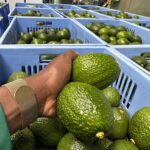
Pick only mature fruit. Immature Hass shrivels, fails to ripen well and gets rejected. Cut fruit with clippers and keep a short stalk. Place fruit in clean crates. Keep crates in shade. KALRO lists cold storage at 5 degrees Celsius for avocado.
KALRO’s factsheet gives April to September as the main harvest period. FAS says Kenya harvests in two main production periods. Confirm your zone’s windows with your buyer. Hass avocado farming in Kenya rewards patience at harvest.
Value Addition in Hass Avocado Farming in Kenya
Value addition turns lower-grade fruit into income. Exporters reject fruit for size, shape and surface marks. Processors buy this fruit for oil, pulp and other products. Avocado oil processing in Kenya rose from 3,326 tonnes in 2024 to 10,188 tonnes in 2025.
Products You Can Explore
Cold-pressed avocado oil. Oil extraction uses ripe fruit. Small presses handle 50 to 100 kilograms per hour. Oil sells to cosmetic firms, food processors and direct consumers. Prices reach up to four times the value of fresh fruit.
Frozen avocado pulp. Pulp processing requires a cold chain. The product serves hotels, restaurants and food manufacturers. Investment costs are higher, so this suits cooperatives and groups.
Dried avocado. Drying extends shelf life and reduces weight for transport. The product serves local and regional markets.
Animal feed. Avocado seed and peel waste makes animal feed after processing. This reduces waste disposal costs.
What Value Addition Requires
- A reliable supply of ripe fruit
- Processing equipment and a clean workspace
- Food safety compliance and certification
- Packaging and storage
- A buyer for the finished product
Start small. Test one product with a small batch. Find a buyer before you scale. Cooperatives pool fruit and share processing costs. Join a group if you want to enter value addition without large capital.
Marketing Hass Avocados: Export, Local and Oil
Hass avocado farming in Kenya gives you three routes. Exporters buy graded, mature fruit and pay the highest prices when your fruit passes. Local markets buy fruit of all grades but pay less. Processors buy lower-grade fruit for oil and pulp. Oil processing tripled in one year, so this route is growing.
Ask every buyer the same five questions. What price per fruit or kilogram applies? Which size and quality grades apply? When do you get paid? Will a second payment follow? What happens to rejected fruit? Write the answers down.
Join a farmer group. A group pools volume, shares transport and strengthens your hand in price talks. Keep spray records and harvest dates. Buyers in Europe ask for them.
Risks in Hass Avocado Farming in Kenya
Four risks affect your income. Shipping routes come first. Ecofin reported tension in the Persian Gulf in 2026 and warned of more Red Sea disruption. Red Sea disruption helped cut 2025 exports. Export controls come second. AFA restricted shipments after immature fruit reached buyers, so pick only mature fruit.
Price comes third. More supply gives buyers more choice, so fruit of poor grade sells at lower prices. Weather comes fourth. Dry spells cut yield, and rain at harvest raises disease pressure. Reduce these risks with irrigation, records, a maturity test before picking and more than one buyer. Managing risk is part of Hass avocado farming in Kenya, not an extra.
Hass Avocado Farming in Kenya: Costs and Profit per Acre
Costs in Hass avocado farming in Kenya vary by farm. Only the seedling cost is confirmed in this table. Get local quotes for every other line. Do not copy another farmer’s figures.
| Item | Quantity at 7 m x 7 m | Cost |
|---|---|---|
| Certified grafted Hass seedlings | 90 seedlings (82 trees plus 8 spares) | KSh 22,500 at KSh 250 each |
| Land preparation | 1 acre | Get local quotes |
| Planting holes | 82 holes, 60 cm each way | Get local quotes |
| Manure | About 2,460 kg | Get local quotes |
| Double superphosphate | About 9.84 kg | Check current price |
| Irrigation | Water source, pipes, drip lines | Depends on your layout |
| Mulch | Dry grass or crop residue | Get local quotes |
| Labour | Planting, weeding, spraying, picking | Local rates |
| Windbreak and fencing | Your perimeter | Depends on perimeter |
| Soil test | 1 test | Get lab quote |
Gross sales are not profit. Profit equals sales minus every cost, including labour, inputs, transport and packing. Divide your yearly running cost by your yearly fruit count to find your break-even price per fruit. For illustration only, if running costs reached KSh 150,000 a year on 28,700 fruits, break-even would be about KSh 5.23 per fruit. Replace this example with your own quotes.
Common Mistakes in Hass Avocado Farming in Kenya
- Planting in waterlogged soil. Roots rot after the first heavy rains.
- Buying seedlings by size. Check the graft union, roots and leaves instead.
- Buying from roadside sellers with no batch records.
- Planting too close without a pruning plan.
- Burying the graft union in soil.
- Picking early for quick cash. Immature fruit gets rejected.
- Skipping irrigation in the first years.
- Starting with a large orchard and no buyer.
- Applying fertilizer without a soil test.
- Ignoring value addition options for lower-grade fruit.
Start Your Hass Avocado Farming in Kenya Plan
Follow five steps. Confirm your altitude and rainfall. Test your soil and check drainage. Choose a spacing suited to your soil and your pruning plan. Buy certified grafted Hass seedlings and plant at the start of the rains. Secure a buyer in writing before your first harvest.
Output will keep rising. Farmers who control quality, maturity and records will sell first. Start with a small block, learn your site, then expand.
Farmers Trend
Call/WhatsApp: 0724 559 286 | 0790 509 684
Website: www.farmerstrend.co.ke
Email: info@farmerstrend.co.ke


Leave a Reply