The Avocado Oil Boom in Kenya: What’s Driving It?
Why is Kenya suddenly booming with avocado oil processors? In this in-depth piece, Meshack Kamau breaks down the key events and trends fueling Kenya’s avocado oil revolution in 2025.

There’s something big brewing in the heart of Kenya’s avocado-growing regions—and it’s not just guacamole. It’s oil. By the end of 2025, Kenya is expected to have over 50 operational avocado oil processing companies. That’s a major shift for a country that, until recently, focused mainly on fresh fruit exports.
So, what sparked this sudden interest in avocado oil?
Why now—and not years earlier?
The answer lies in a mix of quiet changes, smart moves, and a few global disruptions that pushed the industry in a new direction. Let’s break it down.
1. The Reefer Container Revolution (2010)
Back in 2010, Maersk Line introduced refrigerated containers—often called “reefers”—to Kenya’s shipping industry. This was a turning point. Before reefers, exporters had just 7 to 10 days to get fresh avocados to market. After that, spoilage was almost guaranteed.
Reefers changed all that. These containers extended the shelf life of avocados in transit to over 40 days. For the first time, Kenyan farmers and exporters could reliably send fresh avocados to far-off markets like Europe and the Middle East without fear of the fruit over-ripening along the way.
That single innovation opened the door to large-scale exports. Buyers gained confidence. Farmers with established trees started earning more. Export companies expanded operations. It was the first big boost to Kenya’s avocado industry.
2. Devolution and the Seedling Explosion
Also in 2010, Kenya’s political system underwent a major shift—devolution. Power and resources were transferred to 47 county governments, and agriculture became a county-level responsibility.
That change brought agriculture closer to the grassroots. Several counties seized the opportunity to promote high-value crops, and avocados topped the list.
Murang’a, Kiambu, Nyeri, Kisii, and parts of Rift Valley launched seedling distribution programs. They partnered with certified nurseries and gave out subsidized or even free grafted Hass avocado seedlings to farmers.
Murang’a stood out. Under former Governor Mwangi wa Iria, the county gave out hundreds of thousands of seedlings over several years. Extension officers trained farmers on orchard management, and many farmers who had never grown avocado before suddenly had 10, 50, or even 100 trees.
That’s when the snowball started rolling.
3. Understanding Farmer Behavior: The 5 Stages of Adoption
Adoption of new crops doesn’t happen overnight. Farmers generally go through five stages:
Awareness → Interest → Evaluation → Trial → Adoption
When the first wave of seedlings went into the ground around 2013–2014, most farmers were just testing the waters. But when those trees started producing in 2016 and prices looked promising, interest surged. By 2018, yields were strong—many farmers were getting 150kg or more per tree, and orchard sizes were growing fast.
Even the COVID-19 period (2020–2021), which disrupted exports and drove down prices, didn’t stop the trend. In fact, many farmers doubled down, convinced the market would bounce back. They kept planting.
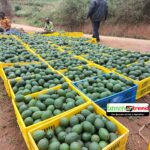
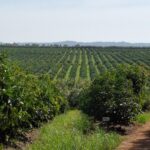
And now, in 2025, we’re seeing the result: a surplus. Thousands of hectares of productive avocado orchards are bearing fruit. The supply is simply more than the fresh export market can absorb.
4. The Suez Canal Blockage (2021): A Wake-Up Call
In March 2021, the Suez Canal—a key trade route for exports to Europe—was blocked for nearly a week. The ripple effect lasted months. Kenyan exporters couldn’t get their fruit out in time. Some of it spoiled en route. Even refrigerated containers couldn’t save it.
For many exporters, that crisis was the tipping point. It exposed just how vulnerable fresh avocado exports were to global logistics.
They had to adapt—and quickly. That’s when the shift toward avocado oil processing really took off.
Instead of letting fruit rot or selling it locally at throwaway prices, companies started investing in oil extraction units. Suddenly, a rejected or overripe avocado wasn’t a loss—it was raw material.
5. What It Takes to Process Avocado Oil
Processing avocado oil isn’t as simple as pressing a button. It involves several steps:
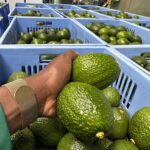
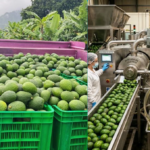
- Sorting and washing the fruit (often fruit that’s overripe or has cosmetic defects but is still nutritious).
- Pulping and malaxing (breaking down the flesh and warming it to release oil).
- Centrifugation or cold-pressing to extract oil.
- Filtering and packaging for either edible use (extra virgin) or cosmetic use (refined).
The beauty is in the margins. A kilo of fresh avocado might fetch KES 10–20 locally. But once processed into oil, it can be sold at much higher prices, especially in international markets like the U.S., Europe, and Asia.
Plus, processing extends shelf life dramatically—from days to months, or even years.
6. Why Oil Makes Sense Now
Let’s look at why this boom is happening now:
✅ More raw material – Kenya has a massive supply of mature Hass avocado trees.
✅ Processing knowledge and equipment – It’s more available, affordable, and adaptable to local needs.
✅ Global demand for healthy oils – Avocado oil is rich in monounsaturated fats and antioxidants. Health-conscious consumers are snapping it up.
✅ Shift toward value addition – Exporting raw products means others profit more. Kenya wants a bigger share of the avocado pie.
✅ Climate-resilience and diversification – Avocado oil isn’t as perishable as fresh fruit. It gives farmers and exporters a safety net.
What’s Next?
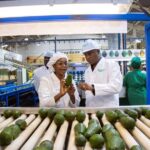
Kenya is no longer just a fresh fruit exporter. It’s becoming a processing hub. Companies are building oil factories near farms. Farmers are finding new buyers. And consumers are getting locally made avocado oil for both cooking and cosmetics.
If this momentum continues, we could soon see avocado oil joining the ranks of Kenya’s major exports—right alongside tea, coffee, and floriculture.
What’s your take? Are we ready for this shift? And how can smallholder farmers tap into this oil boom?
Let’s talk.
Article Credit: Meshack Kamau
Read original post here
Follow Meshack on Linkdein via this link: https://www.linkedin.com/in/meshack-kamau-467052186/







Leave a Reply