Drought-Hit Maize Farmers in Uasin Gishu and Trans Nzoia: What to Plant After a Failed Season as Government Plans 25 Million 90kg Bag Maize Import
Drought-hit maize farmers in Uasin Gishu and Trans Nzoia face a hard decision this October. Your long rains maize failed. The short rains have started. The government plans to bring in up to 25 million bags of maize to cover the national gap. You need a plan for your land, your money and your next twelve months.
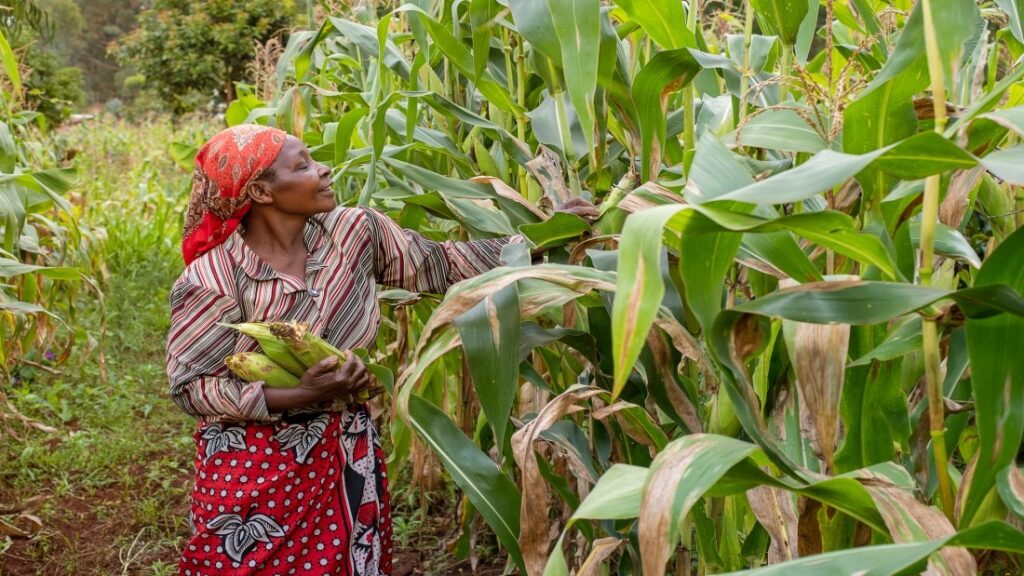
This guide gives you the plan. You will see what happened to the crop, what the import means for your prices, what support the government offers and which crops to plant now and over the next five years. You will also see cost per acre figures for maize and for fruit trees, so you compare both options with your own numbers.
Farmers Trend Limited wrote this guide for farmers in the North Rift and for anyone who buys or sells maize. Each figure comes from a named source. Where a figure is an estimate, the text says so.
Quick Answers for Drought-Hit Maize Farmers
| Question | Short answer |
|---|---|
| What do you plant in the next 90 days? | Beans, Irish potatoes, vegetables or certified early maturing maize, on land where water drains well. |
| What do you plant for the next five years? | Fruit trees on part of your farm. Options include grafted Hass avocado, grafted tree tomato and dwarf pawpaw. |
| What does the government offer? | Subsidised fertiliser at Sh2,000 per 50kg bag and certified maize seed at Sh150 per kilo. |
| What is the import plan? | Private traders will bring in up to 25 million 90kg bags of maize this season. |
| What is the weather risk? | Kenya Met forecast above-normal short rains in many areas. Plan for flooding and waterlogging. |
What Happened to Drought-Hit Maize Farmers in the North Rift This Year
The season started well. March rains were heavy and farmers planted on time. A dry spell then hit during weeding. Crops stunted and many fields failed. The Nation reported this pattern in Uasin Gishu and Trans Nzoia, two of the key maize belts in Kenya.
Official numbers differ by area and by date. The table puts the main reports side by side.
| Source | Area | Reported loss |
|---|---|---|
| Daily Monitor | Trans Nzoia | About 20,000 hectares destroyed, roughly 20 percent of county output |
| Daily Monitor | Uasin Gishu | Projected drop of 60 percent |
| The Nation | North Rift farmers | Estimates of up to 50 percent of the crop lost |
| The Standard | Tinderet, Nandi County | Output down 30 to 40 percent, to 55,000 to 65,000 bags from 90,000 to 100,000 |
| The Standard | North Rift | Principal Secretary Paul Ronoh said about 30 percent of farmers suffered crop failure |
Use the 2024 harvest to see the scale. The Ministry of Agriculture reported 483,211 tonnes of maize from Uasin Gishu and 423,156 tonnes from Trans Nzoia. Those figures equal about 5.4 million and 4.7 million bags of 90kg. A 60 percent drop in Uasin Gishu removes about 3.2 million bags. This is a calculation from the reported figures, not an official count.
The national effect is large. The 2026 Economic Survey from the Kenya National Bureau of Statistics estimates 3.9 million people need food aid between June and January. The National Treasury set aside Sh9 billion for drought response. Of this, Sh8.5 billion goes to emergency food and Sh500 million to livestock feed.
Your own loss matters more than any county average. Write down your acreage, seed cost, fertiliser cost, labour cost and the bags you harvested. You need these figures for every decision in this guide.
Why the Government Plans to Import 25 Million Bags of Maize
Kenya uses between 70 million and 75 million bags of 90kg each year. Agriculture Cabinet Secretary Mutahi Kagwe told the Nation the government will open the market to private traders to import up to 25 million bags. The Daily Monitor notes this gap equals more than a third of annual use.
The decision reverses earlier messaging. Months before, the government reported a record 71 million bags in the previous season. The drought in Uasin Gishu and Trans Nzoia changed the position. The government did not disclose the estimated cost of the import.
The strategic food reserve shows the pressure. The reserve received 180,000 bags against a target of 2 million bags.
The United States Department of Agriculture gives a second view. Its estimate puts the maize shortage at 2.2 million tonnes this year and sets record imports at 2.3 million tonnes. Divide 2.2 million tonnes by 90kg and you get about 24 million bags. This matches the 25 million bag figure. The USDA also notes the sources of the imports are unclear, because regional suppliers face their own farming problems. You find the full report in the Nation coverage of the USDA estimate.
Imports are not new. The Economic Survey shows maize imports rose 51.4 percent in 2025 to 468,109 tonnes, mostly yellow maize for feed makers under a duty-free window. Kenya also signed an agreement with Zambia for up to one million bags. The 2026 import is much larger than both.
What the 25 Million Bag Import Means for Your Prices and Your Farm
The import affects you in three ways. The import changes your household food costs. The import changes the price you earn at your next sale. The import changes what your neighbours plant.
Your Household Food Costs
Maize flour prices follow supply. Imports add supply, so flour prices rise more slowly. If you buy maize for your family, the import protects your budget this season. Keep some cash for food even if you plant a new crop.
Your Next Maize Sale
Maize planted in the next long rains reaches the market late in 2027. Do not plan on high prices. Plan on your break-even price. Farmers in Uasin Gishu have asked the government to stop traders who bypass the supply chain and sell cheap imports against local grain. Join a farmer group and watch the policy before you sign any contract.
What Your Neighbours Plant
Many farmers will look for alternatives at the same time. Beans and potatoes will see more supply in three months. Markets for these crops fill fast. Plant a mix, and time your harvest differently from your neighbours. Early planting or late planting gives you a better price than harvest week.
Government Support for Drought-Hit Maize Farmers: Fertiliser at Sh2,000 and Seed at Sh150 a Kilo
On 24 August 2026, Mutahi Kagwe announced new subsidies. A 50kg bag of subsidised fertiliser now costs Sh2,000, down from Sh2,500. The government pays half the cost of certified maize seed. The farmer price falls from Sh300 to Sh150 per kilo. Farmers get both items through government-designated distribution channels. The Standard report on the subsidy cut gives the full price list.
| Item | Old price | New price |
|---|---|---|
| 50kg bag of subsidised fertiliser | Sh2,500 | Sh2,000 |
| 1kg certified maize seed | Sh300 | Sh150 |
| 2kg pack of maize seed | Sh600 | Sh300 |
| 10kg pack of maize seed | Sh3,000 | Sh1,500 |
| 25kg pack of maize seed | Sh7,500 | Sh3,750 |
The seed subsidy targets 40 million kilograms and costs about Sh6 billion. Kagwe said a bag of fertiliser sold at about Sh7,500 in 2022. The current price is 73 percent lower. The government says the programme cost Sh78.79 billion on fertiliser subsidies since 2022 and distributed 33.55 million bags.
Supply is the problem. Kenya Seed Company produces about 36 million kilograms of certified maize seed each year against a need of 40 million. Private firms cover the gap. The Nation also reported OCP fertiliser, which maize farmers prefer, ran out of stock in some places as farmers rushed to buy ahead of the rains.
Access is also falling. Draft budget documents show 949,951 farmers bought subsidised fertiliser through the National Cereals and Produce Board in the year to June. This is the first fall in farmer access under the current administration. Global fertiliser prices are also rising again, which puts pressure on the subsidy budget.
Act early. Visit your nearest distribution point. Carry your national ID and your farmer registration details. Buy for the acres you plan to plant, and no more. Do not assume the subsidy will last the full season.
A Seven-Step Plan for Drought-Hit Maize Farmers Before You Plant
Step 1: Count Your Losses and Your Cash
List what you spent. List what you earned. Subtract. The result tells you how much money you carry into the next season. If the number is low, choose crops with low input cost and quick returns.
Step 2: Test Your Soil
Drought leaves soil dry and hard. Soil also holds leftover fertiliser from failed crops. A soil test tells you what your land needs. The test costs little compared with fertiliser you do not need. Ask your county agriculture office where to submit samples.
Step 3: Check Altitude, Slope and Drainage
Altitude decides which crops grow well. Slope and drainage decide which crops survive heavy rain. Walk your farm after the next heavy shower. Mark every place where water stands. Keep trees and potatoes away from those spots.
Step 4: Decide How You Split Your Land
Do not put every acre into one crop again. A split spreads your risk. A later section in this guide gives land split examples for small, medium and large farms.
Step 5: Buy Inputs and Seedlings Early
Stock runs out during rushes. Order certified seed, fertiliser and tree seedlings before the planting window opens. Check every seed bag for the certification label and the expiry date.
Step 6: Register and Join a Group
Registered farmers qualify for subsidised inputs. Groups buy inputs at a lower cost and sell produce at better prices. Groups also share the cost of transport and spraying equipment.
Step 7: Keep Records
Write down each cost, each planting date, each yield and each sale. Records show you which crop earns more per acre. Banks and cooperatives ask for records before they lend.
What Drought-Hit Maize Farmers Should Plant in the Next 90 Days
Short crops return money before the next long rains. Government officials and KALRO give the same advice. Principal Secretary Paul Ronoh told farmers on a North Rift tour the government will offer subsidised seed and fertiliser for short-term crops. KALRO Director General Patrick Ketiem urged farmers to use certified, early maturing and drought-resistant seed suited to their zone. The Nation report Farmers weigh options after maize crop failure covers these points. The same report warns a four-month maize crop faces another loss if the rains stop early.
| Crop | Approximate time to harvest | Why this crop suits you now | Main risk |
|---|---|---|---|
| Beans | About 3 months | Low input cost and a ready local market | Rot in standing water |
| Irish potatoes | 3 to 4 months | High demand from towns and processors | Late blight in wet, cool weather |
| Leafy vegetables | 6 to 10 weeks | Fast cash for weekly needs | Price drops when many farmers sell at once |
| Early maturing certified maize | About 4 months | Feeds your family and fits the subsidy | Loss if the rains end early |
| Sorghum or millet | 3 to 4 months | Tolerates dry spells better than maize | Weaker local market in some areas |
Crop times vary with variety and altitude. Check the seed pack and ask your county extension officer before you buy.
Kenya Met expects heavy rain in many areas. Pick crops able to tolerate wet soil, or plant on raised beds. Harvest on time. Maize cobs left in the field during heavy rain rot and attract pests. Dry grain well before storage. Grain stored damp grows aflatoxin, which makes the grain unsafe to eat and impossible to sell.
KALRO Njoro Food Crop Research Centre says enough short-maturity maize seed exists for the short rains. The Capital FM report Maize experts urge farmers to plant region-specific varieties explains why you match variety to your zone.
Plant Safely in the El Niño Rains: Timing, Drainage and Disease
Weather decides your result this season. The Kenya Meteorological Service Authority forecast on 26 August some areas have an 85 to 90 percent likelihood of above-normal rain from October to December. Pre-season showers began in September in some places. Kenya Met also warned El Niño does not bring heavy rain to every area. The August outlook and the Kenya Met October to December 2026 seasonal forecast list the county details. Read the section for your county.
The Famine Early Warning Systems Network expects above-average rain from October to December, driven by El Niño and a positive Indian Ocean Dipole. In July, Deputy President Kithure Kindiki said the rains will last until January. The government activated a national El Niño contingency plan on 2 July.
Use these steps on your farm.
Plant on slopes or raised beds. Avoid flat low ground where water stands. Dig drainage channels along the upper edge of each plot. Mulch the soil to stop splash and erosion. Stake young trees so wind does not rock the roots. Scout for disease every week. Wet weather brings late blight in potatoes and root rot in trees.
Do not plant a single crop and walk away. Visit your field twice a week. Early action costs less than late spraying.
Fruit Trees for Drought-Hit Maize Farmers: Why Many Are Switching
Maize returns once a year, and a drought wipes out the whole return. Fruit trees return for many years. A failed season in year three does not erase the trees you planted in year one.
The shift is already visible. In March 2026, Uasin Gishu County leaders defended a push to reduce maize acreage in the county. The county began registering farmers to grow one million trees. Officials named coffee and avocado as cash crops farmers want. A report from the Standard, Leaders defend push to reduce maize acreage, covers the debate.
The Environment Cabinet Secretary also urged farmers to plant more trees during the El Niño season, and the government plans to speed up the national tree-planting campaign. Tree planting fits the rain pattern.
Hass Avocado
Avocado is the clearest example of the shift. The United States Department of Agriculture projects Kenyan avocado production at 727,000 tonnes in 2026. Exports are forecast at 130,000 tonnes. Planted area is projected to grow 5.6 percent to about 37,600 hectares, as farmers switch from maize and tea. The European Union is the largest market, followed by the Middle East and China. The Nation report on 2026 avocado exports gives the details.
Farmers Trend Limited sells certified grafted Hass avocado seedlings at KSh 250 each. Grafted trees fruit earlier than trees grown from seed. Ask your supplier for the expected first harvest at your altitude. Check frost risk on your farm. Cold pockets at high altitude hurt young trees. Plant on a sheltered slope.
Avocado also needs water in the dry months. Plan a water source before you plant. Mulch heavily around each tree.
Grafted Red Oratia Tree Tomato
Tree tomato suits cool highland areas. Farmers Trend Limited sells grafted Red Oratia tree tomato seedlings at KSh 100 each. The trees begin fruiting in eight months, you harvest weekly with no fixed season, and the trees live about six years. One acre holds 1,200 plants at a spacing of 6 by 6 feet.
Tree tomato gives the fastest return of the three fruit options in this guide. This crop suits farmers who need cash within a year. The cost of seedlings per acre is higher, so plan your finance first.
Dwarf Pawpaw
Pawpaw likes warm sites. In the cooler parts of Uasin Gishu and Trans Nzoia, plant pawpaw on the warmest, most sheltered part of the farm. Dwarf varieties stay short and are easier to pick and spray. See the dwarf pawpaw seedlings page at Farmers Trend for details on the seedlings.
How to Choose Between the Three
| Your situation | Best first choice |
|---|---|
| You want a long-term export crop and have water | Hass avocado |
| You need income within a year and farm in a cool area | Grafted tree tomato |
| Your farm has a warm, sheltered site | Dwarf pawpaw |
| You have little cash | Start with a small block of one crop and add more as income grows |
Cost Per Acre: Maize Versus Fruit Trees
Compare costs with care. Maize is an annual crop. Trees are a multi-year investment. You need the full picture for each.
The Cost of Maize Per Acre
The Tegemeo Institute at Egerton University measured maize costs in Trans Nzoia, Uasin Gishu and Nakuru in 2018. The study found a small-scale farmer spent about Sh24,592 per acre and a large-scale farmer spent about Sh32,290. Average yields were 18.0 bags per acre for small farms and 23.8 bags for large farms. These figures are old and costs have risen since. Use them as a floor, not as a current price. The study is in Tegemeo Policy Brief 32.
In 2023, an Uasin Gishu agriculture officer said a farmer needs at least 10 bags per acre to cover costs. Experts at the time said the price needed to reach Sh6,000 per bag for farmers to break even. Today, subsidised fertiliser and seed lower your cost, as long as you buy them at the subsidised price.
Maize risk sits in the weather. When rain fails, you still spend the full cost and harvest a fraction. A 50 percent loss on an 18 bag acre leaves 9 bags, which falls below the officer’s break-even level.
The Cost of Fruit Trees Per Acre
Seedlings are the first cost. The table uses Farmers Trend Limited prices and standard spacing. The spacing for Hass is an assumption, so adjust the figure for your site.
| Crop | Spacing | Plants per acre | Price per seedling | Seedling cost per acre |
|---|---|---|---|---|
| Hass avocado | 8 by 8 metres | About 63 | KSh 250 | About KSh 15,750 |
| Hass avocado | 7 by 7 metres | About 82 | KSh 250 | About KSh 20,500 |
| Tree tomato | 6 by 6 feet | 1,200 | KSh 100 | KSh 120,000 |
Add other costs. These include planting holes, manure, stakes, mulch, water, labour and spraying. Ask your supplier for a planting guide and cost estimate. Seedling cost is a small part of the total for avocado and a larger part for tree tomato.
Compare With Your Own Numbers
Use this worksheet. Fill each row with your figures.
| Line | Maize (per season) | Fruit trees (per year) |
|---|---|---|
| Cost of seed or seedlings | Your figure | Your figure |
| Fertiliser or manure | Your figure | Your figure |
| Labour and spraying | Your figure | Your figure |
| Water | Your figure | Your figure |
| Expected yield | Bags per acre | Kilos per tree per year |
| Price you expect | Per bag | Per kilo |
| Profit per acre | Income minus cost | Income minus cost |
Use an example with round numbers. A farmer harvests 20 bags per acre and sells at Sh4,000 per bag. Income is Sh80,000. If costs are Sh45,000, profit is Sh35,000. If drought cuts the harvest to 10 bags, income falls to Sh40,000 and profit turns to a loss of Sh5,000. These numbers are an illustration. Replace them with your own.
For trees, ask three nearby farmers what their trees earn per year at your altitude. Ask what they spend. Ask when they first sold fruit. Use their answers, not brochures.
How to Mix Maize, Short Crops and Fruit Trees on One Farm
You do not need to abandon maize. Many households need maize for food. Keep a block for your family. Then add short crops for cash. Then add trees for the future. The table gives starting splits for three farm sizes. These are Farmers Trend Limited suggestions, so adjust them to your soil, your water and your cash.
| Farm size | Maize for food | Short season crops | Fruit trees |
|---|---|---|---|
| 2 acres | 1 acre | 0.5 acre | 0.5 acre |
| 5 acres | 2 acres | 1.5 acres | 1.5 acres |
| 20 acres | 8 acres | 6 acres | 6 acres |
Beans grow well between young trees in the first year or two. You earn from the land while the trees establish. Keep the beans a full metre away from each tree trunk, so roots and stems have room. Stop intercropping when the tree canopy closes.
Start small with trees. Plant a first block this season. Watch how the trees grow. Add a second block next season from the income you earn. This lowers your risk and spreads the cost.
Where to Find Money for the Next Season
Money is the biggest limit for drought-hit maize farmers. Use the options below in order.
First, use the subsidy. Fertiliser at Sh2,000 per bag and seed at Sh150 per kilo cut your largest input costs. Second, sell what you hold. Sell old stock you do not need for food. Third, join a farmer group or SACCO. Groups lend small amounts at lower cost than informal lenders. Fourth, take on casual work in the short rains. Agricultural labour income during the short rains helps many households, according to the Famine Early Warning Systems Network.
Borrow only against a plan with a clear repayment date. Do not borrow to repeat a failed plan. A loan makes sense when you know the crop, the market and the harvest month.
Mistakes Drought-Hit Maize Farmers Should Avoid
Planting Four-Month Maize on Rain You Do Not Trust
Heavy rain does not guarantee a full four months of water. Early cessation hurts late-planted maize. Pick short varieties and plant early.
Buying Uncertified Seed
Uncertified seed carries disease and low germination. A cheap bag costs more when the crop fails. Buy certified seed from a registered dealer.
Planting Trees in Standing Water
Roots rot in waterlogged soil. Dig a test hole. Fill the hole with water. If water remains after a day, choose another site.
Selling All Your Maize for Cash
Your household needs food through the next harvest. Selling everything forces you to buy at a higher price later. Hold enough grain for your family.
Ignoring Records
Without records, you repeat the same errors. Write down every cost and every yield.
Waiting Too Long
Rains, subsidies and seedling stocks all have time limits. Each week of delay shrinks your growing period. Decide this week.
Frequently Asked Questions About Drought-Hit Maize Farmers
What should drought-hit maize farmers plant after a failed season?
Plant short crops for the next 90 days, such as beans, Irish potatoes and vegetables. Add fruit trees on part of your land for income over the next five years. Keep a block of certified early maturing maize for food.
Will the 25 million bag maize import lower prices?
Imports add supply, so maize flour prices rise more slowly. For farmers, the import limits any price rise on your next sale. Plan around your break-even price.
How much does certified maize seed cost now?
Certified maize seed costs Sh150 per kilo under the subsidy announced in August. A 2kg pack costs Sh300 and a 10kg pack costs Sh1,500.
How much does subsidised fertiliser cost now?
A 50kg bag of subsidised fertiliser costs Sh2,000, down from Sh2,500. Stock runs out in some places, so order early.
Do fruit trees grow in Uasin Gishu and Trans Nzoia?
Yes, in many areas. Uasin Gishu County leaders named avocado and coffee as cash crops farmers want. Success depends on altitude, frost, water and drainage on your farm. Ask your county agriculture office and your seedling supplier before you plant.
How many trees fit on one acre?
Hass avocado at 8 by 8 metres gives about 63 trees. At 7 by 7 metres you get about 82. Tree tomato at 6 by 6 feet gives 1,200 plants.
How soon do fruit trees pay?
Tree tomato begins fruiting in eight months. Grafted avocado takes longer. Ask your supplier for the expected first harvest at your altitude.
Should I stop growing maize?
No. Keep maize for your family food. Reduce the acres you put at risk, and add crops with different weather risks.
Your Next Step as a Drought-Hit Maize Farmer
Your long rains crop is gone. The next 90 days decide your cash flow. The next five years decide your income. Short crops fix the first problem. Fruit trees fix the second. The government import covers the national gap, but your farm needs its own plan.
This week, do four things. Write down your losses. Walk your farm and mark wet and dry zones. Register for the subsidy and buy your inputs. Choose one fruit crop and plant a first block.
Farmers Trend Limited has nurseries in Murang’a and Nairobi. The company delivers seedlings countrywide and for export. Farmers Trend Limited sells certified grafted Hass avocado seedlings at KSh 250 and grafted Red Oratia tree tomato seedlings at KSh 100. The team gives planting advice for your altitude and your soil.
Browse the Farmers Trend Limited catalogue with images of fruit seedlings on WhatsApp.
Call or WhatsApp 0724 559 286 or 0790 509 684. Visit www.farmerstrend.co.ke. Email info@farmerstrend.co.ke.
https://farmerstrend.co.ke/trending/drought-hit-maize-farmers/https://farmerstrend.co.ke/wp-content/uploads/2026/10/maize-farming-in-kenya-farming-guide-farmers-trend-1024x576.jpghttps://farmerstrend.co.ke/wp-content/uploads/2026/10/maize-farming-in-kenya-farming-guide-farmers-trend-150x150.jpg# TrendingAvocado FarmingFruitsIn cropsIn FruitsMaize FarmingPawpaw farmingTree tomato farmingdrought-hit maize farmers,El Niño short rains,fruit trees for maize farmers,maize farming Kenya,maize import Kenya,north rift farmers,subsidised fertiliser Kenya,Trans Nzoia maize,Uasin Gishu maize,what to plant after droughtDrought-hit maize farmers in Uasin Gishu and Trans Nzoia face a hard decision this October. Your long rains maize failed. The short rains have started. The government plans to bring in up to 25 million bags of maize to cover the national gap. You need a plan for your...FarmersTrendjohn doefarmerstrend@gmail.comAdministratorFarmers Trend Ltd.



Leave a Reply