Kenya Eyes India’s Irrigation and Rice Processing Models to Cut Imports
- Kenya is looking to India’s irrigation systems, rice varieties and processing models to increase rice production, reduce imports and strengthen food security.
Kenya Eyes India’s Irrigation and Rice Processing Models to Cut Rice Imports
Kenya is looking to adopt India’s irrigation practices, rice varieties and agro-processing models as the government seeks to increase domestic rice production and reduce reliance on imports to meet growing demand.
Stephen Nyaga, a senior economist with the Kenyan government, said Kenya could draw lessons from India’s experience in irrigation development, rice cultivation and the use of agricultural by-products. He made the remarks on the sidelines of the Bharat International Rice Conference 2026, where international buyers, millers, exporters and other industry stakeholders gathered to discuss rice production, processing and trade.
Kenya consumes approximately 1.1 million metric tonnes of rice annually but produces only about 300,000 metric tonnes domestically, according to figures cited by Nyaga. This leaves a supply gap of roughly 800,000 metric tonnes, although he put annual imports at around 700,000 metric tonnes.
The figures illustrate the scale of the challenge facing Kenya as it seeks to increase local production and strengthen food security. Expanding irrigation, improving crop productivity and investing in processing could help the country increase the amount of rice available from domestic farms.
Kenya looks to India to expand irrigation
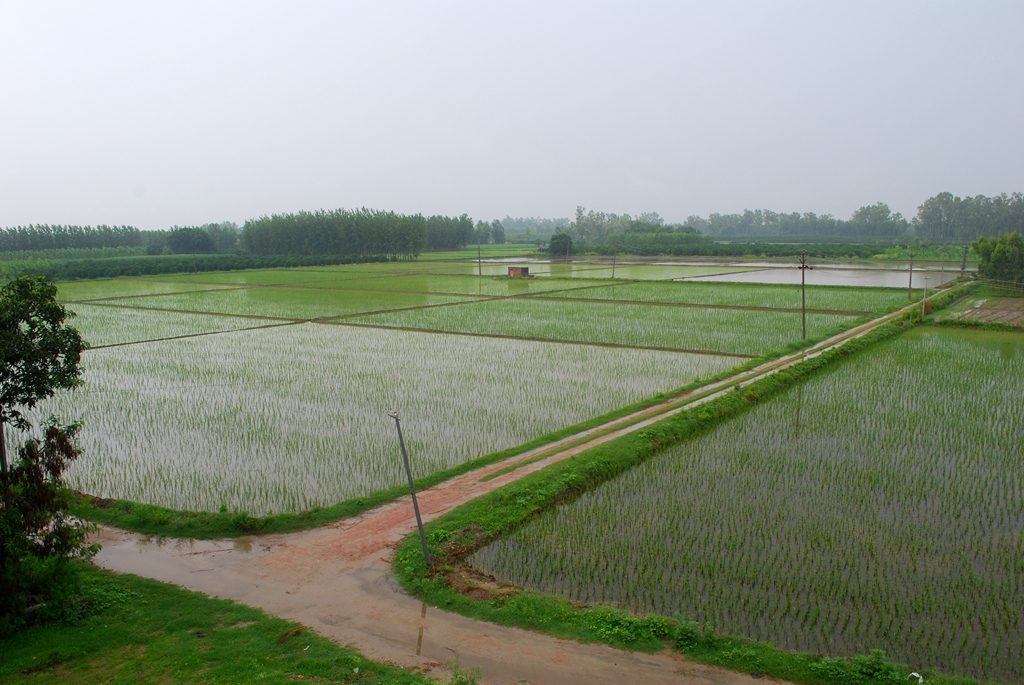
Nyaga identified irrigation development as one of the areas where Kenya could learn from India’s agricultural experience.
He said around 34 per cent of India’s land was irrigated, compared with approximately 4 to 5 per cent in Kenya. The difference reflects the scope for Kenya to expand irrigation infrastructure and reduce its dependence on rainfall for crop production.
Kenya is pursuing irrigation development under its National Irrigation Sector Investment Plan (NISIP). According to Nyaga, the country is interested in India’s experience in water harvesting, storage and irrigation systems as it works to increase agricultural production.
For rice farmers, dependable water supplies can support more reliable production, particularly where rainfall is insufficient or poorly distributed. Expanding irrigation can also create opportunities to increase the area under rice cultivation and improve the reliability of harvests, provided farmers have access to suitable land, water infrastructure and appropriate production support.
However, increasing irrigation coverage requires investment in water storage, distribution systems, maintenance and farm-level infrastructure. The benefits will also depend on how effectively irrigation schemes are managed and whether farmers can access water at a cost that makes production viable.
Kenya’s interest in India’s experience signals a search for approaches that can be adapted to local conditions rather than a simple transfer of farming practices from one country to another.
Rice imports leave Kenya with a substantial supply gap
Kenya’s rice consumption remains significantly higher than its domestic production, making imports an important source of supply.
Nyaga cited annual consumption of about 1.1 million metric tonnes and domestic production of approximately 300,000 metric tonnes. He said Kenya imports around 700,000 metric tonnes of rice each year to help meet demand.
The figures show why the government is looking at ways to increase domestic output. A larger local harvest could reduce the volume of rice Kenya needs to source from overseas, although the extent of any reduction would depend on production growth, consumer demand, quality and price competitiveness.
Increasing production will require more than expanding the area planted. Farmers also need access to suitable rice varieties, reliable water, quality seed, agronomic support and efficient post-harvest handling. Better milling and storage can help preserve quality and reduce losses between harvest and the market.
The government’s interest in India’s rice sector therefore extends beyond cultivation to the wider value chain, including processing and the use of by-products.
Kenya studies India’s rice processing and by-product model
During the visit to India, the Kenyan delegation toured Punjab Agro Food System to study its rice-processing model, particularly the utilisation of by-products generated during milling.
Nyaga said the delegation learned that broken rice could be processed into animal feed and that other rice by-products could also be put to productive use.
He said Kenya wanted to replicate aspects of the model at home, creating more value from rice production rather than treating milling by-products as waste.
Broken rice can have commercial uses where it meets the specifications required for particular products. Developing reliable markets for such by-products could give processors additional revenue streams and support other sectors, including livestock production.
For Kenya, the potential benefit would depend on the quantities of rice processed locally, the quality and availability of by-products, processing costs and demand from feed manufacturers and other buyers.
Developing this model would also require suitable equipment, reliable supply chains and investment in facilities capable of handling and processing by-products consistently.
The approach could help strengthen links between rice farming, milling and animal feed production. It would also provide an opportunity for Kenyan processors to examine how better utilisation of harvested rice can improve the overall economics of the value chain.
Indian rice varieties and production methods under consideration
Nyaga also highlighted opportunities for Kenya to learn from Indian rice cultivation, including the potential adoption of suitable Indian rice varieties.
Rice varieties differ in their growing duration, yield potential, grain characteristics, water requirements and suitability for different production environments. Any introduction or wider use of Indian varieties in Kenya would therefore need to consider local growing conditions and market preferences.
Farmers and processors need varieties that perform well in the relevant production areas while producing grain that consumers and buyers want. A variety that performs well under one country’s conditions may require evaluation before it is recommended for another environment.
Access to appropriate varieties, combined with improved irrigation and agronomic practices, could support efforts to increase local rice output. However, the source announcement did not identify specific Indian varieties that Kenya intends to introduce or provide a timetable for their adoption.
The next steps would depend on the relevant technical assessments, institutional arrangements and decisions by the agencies responsible for rice development.
Rice processing could create opportunities beyond the farm
The interest in India’s agro-processing model reflects a wider challenge for Kenyan agriculture: increasing production is only one part of improving the value farmers and businesses obtain from crops.
Rice moves through several stages before reaching consumers, including harvesting, drying, storage, milling, grading, packaging and distribution. Inefficiencies at any of these stages can affect grain quality, costs and the returns received by farmers and processors.
Investment in processing can support local businesses by creating demand for locally produced rice and opening opportunities to develop additional products from milling by-products.
For farmers, stronger domestic processing capacity could create more reliable routes to market if millers establish consistent purchasing arrangements. For processors, better utilisation of by-products could improve returns, provided there is sufficient demand and the cost of processing remains competitive.
Such developments would require coordination among farmers, irrigation scheme managers, seed suppliers, millers, feed manufacturers, traders and government agencies.
Oman highlights India’s role in rice supply
While Kenya is exploring how to strengthen domestic rice production, representatives from Oman highlighted India’s position as a major supplier to their market.
Salim Al-Siyabi, chief executive officer of Oman’s Old Bazaar Business LLC, said his company had imported rice for approximately 10 years and viewed the conference as an opportunity to connect with buyers, traders, millers and exporters.
He described India as an established and reliable source of rice for Omani buyers, pointing to the longstanding commercial relationship between the two countries.
Al-Siyabi also said international trade events offered opportunities to develop business relationships and explore new commercial arrangements. He noted the importance of reliable export arrangements amid global shipping challenges.
His remarks illustrated the importance of dependable supply chains in international rice trade, where buyers need to secure consistent supplies and exporters must manage transportation and delivery arrangements.
For Kenya, India’s role as a major rice supplier offers a relevant point of comparison as the country considers how to increase domestic production while continuing to rely on international markets to meet part of its demand.
What India’s experience could mean for Kenyan farmers
Kenya’s interest in Indian irrigation systems, rice varieties and processing models comes as the country seeks to narrow the gap between domestic production and consumption.
Expanding irrigation could help farmers reduce their exposure to unreliable rainfall, while suitable varieties and improved cultivation practices could support higher production where local conditions permit. Better processing and use of by-products could also create additional commercial opportunities beyond the sale of milled rice.
The impact will depend on how these ideas are translated into practical investments and programmes in Kenya. Irrigation infrastructure must be developed and maintained, varieties must be suitable for local conditions, and processors must have viable markets for rice and its by-products.
Farmers will also need access to reliable inputs, technical advice, finance and buyers offering commercially viable prices. Without these supporting conditions, improvements in irrigation or processing alone may not be sufficient to make domestic rice more competitive.
The discussions at the Bharat International Rice Conference 2026 indicate areas Kenya is interested in exploring, but they do not by themselves confirm that specific projects, technology transfers or rice variety introductions have been approved.
For now, the central challenge remains increasing domestic production while strengthening the systems that move rice from farms to consumers. Lessons from India could inform that effort, particularly in irrigation development, value addition and more efficient use of agricultural resources.
https://farmerstrend.co.ke/trending/kenya-eyes-indias-irrigation-and-rice-processing-models-to-cut-imports/https://farmerstrend.co.ke/wp-content/uploads/2026/10/Indias-Irrigation-and-Rice-Processing-Models.jpghttps://farmerstrend.co.ke/wp-content/uploads/2026/10/Indias-Irrigation-and-Rice-Processing-Models-150x150.jpg# Trendingagribusiness Kenya.,Agricultural technology,agricultural value addition,broken rice animal feed,food security in Kenya.,India rice farming,irrigation development,National Irrigation Sector Investment Plan,rice farming in kenya,rice imports Kenya,rice processing,rice production in Kenya,rice trade,rice varietiesKenya is looking to India's irrigation systems, rice varieties and processing models to increase rice production, reduce imports and strengthen food security.Kenya Eyes India's Irrigation and Rice Processing Models to Cut Rice Imports Kenya is looking to adopt India's irrigation practices, rice varieties and agro-processing models as the government...FarmersTrendjohn doefarmerstrend@gmail.comAdministratorFarmers Trend Ltd.










Leave a Reply