Rice Farming in Kenya 2026 – The Ultimate Goldmine Guide to High-Yield Paddy Production
Table of Contents
ToggleRice Farming in Kenya 2026: The Ultimate Commercial Blueprint for High-Yield Paddy Production
Rice farming in Kenya is one of the most reliable path to agricultural wealth for farmers in irrigation schemes across the country. While maize farmers in the Rift Valley grapple with fluctuating prices and unpredictable weather, a quiet revolution is taking place in the rice paddies of Mwea, Ahero, Bunyala, and West Kano. In 2026, every single kilogram of rice that comes off a well-managed paddy has a buyer before it even hits the dryer, and the profit margins are today attracting serious commercial investors who previously focused only on horticulture.

The national rice deficit stands at a staggering 1.3 million metric tons annually. Kenya consumes approximately 1.5 million metric tons of milled rice each year, but local production accounts for only 160,000 to 200,000 metric tons.
This enormous gap, currently filled by imports from Pakistan, India, and Vietnam, represents billions of shillings leaving the Kenyan economy. For the farmer, this deficit means that demand consistently outstrips supply. Consequently, prices remain remarkably stable even during peak harvest seasons. Unlike maize, where a good harvest can flood the market and crash prices, rice farming in Kenya operates in a perpetual sellers’ market where every grain finds a buyer.
The financial arithmetic of rice farming in Kenya has shifted dramatically in favor of the producer. A 90-kilogram bag of Komboka paddy sells for 6,000 to 8,000 shillings at the farm gate, while Basmati (Pishori) commands 8,000 to 11,000 shillings. When milled and branded under a farm label, that same bag transforms into 180 to 270 shillings per kilogram at retail, or up to 24,000 shillings per 90-kilogram equivalent.
With total production costs ranging from 45,000 to 60,000 shillings per acre, a farmer who achieves average yields walks away with 240,000 to 326,000 shillings in net profit from a single season. This is not subsistence agriculture. This is wealth creation on a scale that few other crops can match.
This masterclass article by Farmers Trend Limited provides a comprehensive commercial framework for rice farming in Kenya’s irrigation schemes. You will learn about the most profitable varieties for different ecological zones, the art of ratoon cropping for double harvests, precision water management techniques that reduce input costs significantly, and the post-harvest strategies that can increase your margins by 40 percent. The information comes from successful commercial growers like Peter Maina of Mwea, as well as from the latest KALRO research bulletins and field trials conducted across the country’s major irrigation schemes.
Success Spotlight
Peter Maina, a grower in Mwea Section 2, shifted half of his acreage from Basmati to Komboka in late 2025. By mastering the 20-centimeter ratoon cut and the “water seal” weed suppression technique, he harvested an extra 14 bags per acre in the off-season without buying a single new seed. “The ratoon crop is my ‘bonus’ salary,” Maina explains.“The first harvest pays for the land and the labor. The second harvest pays for my children’s school fees and the family’s medical expenses.” His experience demonstrates that rice farming in Kenya can be a generational wealth-building enterprise when approached with discipline, knowledge, and the right seed genetics.

Why Rice Farming in Kenya Is a Money-Making Opportunity in 2026
Understanding the scale of Kenya’s rice deficit requires looking at the numbers with a commercial lens. The country’s annual consumption stands at roughly 1.5 million metric tons of milled rice. Of this, local production accounts for only 160,000 to 200,000 metric tons.
The shortfall of over 1.3 million metric tons is met through imports, representing billions of shillings leaving the Kenyan economy each year. For the farmer, this deficit means that demand consistently outstrips supply. Consequently, prices remain strong even when many farmers harvest at the same time. Unlike maize, where a good harvest can flood the market and crash prices, rice farming in Kenya operates in a perpetual sellers’ market.
The government has responded to this deficit with a deliberate strategy of import tariffs and local production incentives. Specifically, the tariff on imported rice stands at 75 percent for grain originating outside the East African Community.
This protectionist measure makes local rice competitively priced despite its premium quality, giving a significant advantage to those engaged in rice farming in Kenya. In addition, the fertilizer subsidy program directly benefits rice farmers, who require significant nitrogen inputs for optimal tillering and grain filling. A 50-kilogram bag of DAP, which would cost 5,000 to 6,000 shillings on the open market, is available to registered farmers at just 2,500 shillings. This subsidy has transformed the cost structure of rice farming in Kenya, making it accessible to smallholders who previously could not afford adequate fertilization.
From a financial standpoint, the current pricing environment makes rice one of the most profitable cereal crops in Kenya. A 90-kilogram bag of paddy (unmilled rice) sells for 6,000 to 9,000 shillings depending on variety and quality. Milled rice marketed under a farm brand can fetch 200 to 300 shillings per kilogram at retail, translating to 18,000 to 27,000 shillings per 90-kilogram bag.
While milling reduces the weight by approximately 30 to 35 percent, the value addition more than compensates for the loss. Farmers who control their own milling and packaging capture the entire value chain, and this is where the real profits in rice farming in Kenya are found.
The geographical distribution of rice production is shifting as well. Mwea has historically produced 80 percent of Kenya’s rice, but the 2026 season is seeing significant expansion in Ahero, Bunyala, West Kano, and new irrigation schemes in Tana River and Kwale.
The KALRO varieties Kal Imara and Kalfine have proven particularly well-adapted to the saline and sandy conditions of the coastal lowlands. Meanwhile, Komboka continues to dominate the traditional highland schemes. This geographical diversification reduces the risk of localized crop failure and spreads the economic benefits of rice farming in Kenya to more regions, creating opportunities for farmers who previously had no access to this lucrative market.
| Factor | Mwea | Ahero/Bunyala | Coastal Lowlands |
|---|---|---|---|
| Soil type | Heavy clay | Clay loam | Sandy, saline |
| Water source | Nyamindi, Thiba rivers | Kano plains | Tana River, aquifers |
| Best varieties | Basmati, Komboka, Kal Gold | Komboka, Kalfine | Kal Imara, Kalfine |
| Average yield (bags/acre) | 25-35 | 22-30 | 18-25 |
| Main challenge | Land scarcity | Weed pressure | Salinity |

The Best Rice Varieties for Rice Farming in Kenya
Choosing the right seed variety is the most consequential decision a rice farmer in Kenya will make. It determines not only the volume of harvest but also the price per kilogram, the duration of the growing cycle, and the suitability for ratoon cropping.
The classic trade-off in rice genetics is between aroma and yield. High-aroma varieties like Basmati 370 (Pishori) command premium prices but produce fewer grains per acre. High-yield varieties like Komboka produce more grain but have a milder aroma that sells at a lower price point. Understanding this trade-off is essential for maximizing profitability in rice farming in Kenya.
Basmati 370, known to consumers as Pishori, remains the king of the premium market. Its elongated grains, strong popcorn-like aroma, and fluffy texture when cooked make it the preferred choice for hotels, restaurants, and upscale households.
A 90-kilogram bag of Basmati paddy fetches 8,000 to 11,000 shillings, significantly higher than other varieties. The trade-off is yield. Basmati 370 produces only 18 to 22 bags per acre under optimal management. Its tall stature makes it prone to lodging (falling over) when heavy rains or winds occur. Furthermore, it takes 120 to 130 days to mature, which limits the possibility of double cropping. Consequently, Basmati is best suited for farmers in Mwea and other highland schemes who have the patience to wait for premium prices and who have secure land tenure.
Komboka has emerged as the commercial farmer’s favorite for a simple reason: yield. This variety produces 28 to 35 bags per acre under good management, representing a 40 to 50 percent increase over Basmati. The grain has a pleasant aroma, though not as intense as Basmati, and it commands 6,000 to 8,000 shillings per 90-kilogram bag of paddy.
Komboka matures in 100 to 110 days and has a shorter, stiffer stalk that resists lodging. For farmers who sell to millers and processors rather than directly to consumers, Komboka offers the best return on investment. In addition, Komboka ratoons exceptionally well, making it the top choice for farmers who want to master double harvesting. For serious commercial rice farming in Kenya, Komboka is the variety to beat, and many experienced farmers are making the switch.
Looking beyond these two established varieties, the 2026 KALRO pipeline introduces four new contenders that deserve serious consideration for rice farming in Kenya.
Kalpaa is the speed king, maturing in just 85 to 95 days. This trait allows three crops per year in schemes with reliable water, dramatically increasing annual land productivity. The yield ranges from 20 to 25 bags per acre, and the grain has a mild aroma suitable for the mid-tier market.
For farmers in Ahero and Bunyala with good irrigation infrastructure who want to maximize the number of harvests per year, Kalpaa is worth exploring. The ability to plant three times annually can push annual per-acre revenue significantly higher than slower-maturing varieties.
Kalfine is the climate-resilient option, bred specifically for the hotter, drier conditions found in Ahero, Bunyala, and the coastal lowlands. It maintains good yields even when temperatures exceed 35 degrees Celsius and requires slightly less water than traditional varieties. The 22 to 28 bags per acre and 95 to 105 day maturity make it a solid commercial choice for farmers outside Mwea.
As climate change makes growing conditions more unpredictable, heat-tolerant varieties like Kalfine will become increasingly important for rice farming in Kenya.
Kal Imara addresses a specific but critical niche: saline and alkaline soils. Many irrigation schemes, particularly those near the coast and in the former lake beds of Western Kenya, suffer from soil salinity that kills sensitive crops. Kal Imara tolerates salt concentrations that would destroy Basmati or Komboka, producing 20 to 25 bags per acre in conditions where no other rice variety would survive.
For farmers in Tana River and Kwale, this variety is a game-changer, opening up land that was previously considered unsuitable for rice farming in Kenya.
Kal Gold is the aromatic powerhouse, bred to challenge Basmati’s dominance in the premium segment. It produces a very strong aroma, comparable to the best Pishori, while yielding 22 to 28 bags per acre. The grains are long and slender, the texture is excellent, and the maturity period of 105 to 115 days is shorter than Basmati. For farmers targeting high-end buyers who are willing to pay a premium for quality, Kal Gold is a compelling alternative that offers the best of both worlds: aroma and respectable yield.
| Variety | Aroma Level | Days to Mature | Yield per Acre (90kg bags) | Best Region | Market Price per Bag (KSh) |
|---|---|---|---|---|---|
| Basmati 370 (Pishori) | Very High | 120-130 | 18-22 | Mwea, highlands | 8,000-11,000 |
| Komboka | High | 100-110 | 28-35 | Mwea, Ahero, Bunyala | 6,000-8,000 |
| Kalpaa | Mild | 85-95 | 20-25 | All regions | 5,000-7,000 |
| Kalfine | Medium | 95-105 | 22-28 | Hot areas, Tana River | 5,500-7,500 |
| Kal Imara | Mild | 100-110 | 20-25 | Saline soils, coastal | 5,000-6,500 |
| Kal Gold | Very High | 105-115 | 22-28 | Mwea, highlands | 7,500-10,000 |
Mastering Ratoon Cropping for Double Harvests in Rice Farming in Kenya
One of the least understood but most profitable techniques in rice cultivation is ratoon cropping. After the main crop is harvested, the roots and stubble left in the field possess the remarkable ability to produce a second flush of tillers that grow into mature plants and set grain. This second crop, called the ratoon, does not require fresh seeds, nursery establishment, or transplanting labor.
The cost savings are substantial, and the additional yield represents pure profit for the farmer who masters the technique. For farmers serious about maximizing their returns from rice farming in Kenya, mastering ratoon cropping is the single most effective way to increase profitability without expanding land area or investing in additional inputs.
The physiological process behind ratoon cropping is a survival mechanism that has been harnessed by farmers for generations. After the main plant is cut, the axillary buds on the remaining stubble are released from apical dominance, which is the hormonal suppression of side shoot growth by the main stem.
These buds, which would have remained dormant under normal conditions, begin to sprout within 3 to 5 days after harvest. The new shoots feed on the existing root system, which already has access to water and nutrients throughout the soil profile. This established root network gives the ratoon crop a significant head start compared to a newly planted crop, which must spend energy developing roots before it can focus on top growth.
The key to successful ratoon management lies in the cutting height. Extensive field trials conducted by KALRO and successful farmers like Peter Maina have demonstrated that leaving 20 to 30 centimeters of stubble produces the best results.
Cutting too low removes too many axillary buds, reducing the number of shoots that can sprout and limiting the potential yield of the ratoon crop.
Cutting too high leaves excess biomass that shades the new shoots and competes with them for resources, also reducing overall productivity. The cut must be clean and even, which requires sharp harvesting blades and careful attention to the mowing height. A ragged cut damages the remaining tissue and can allow diseases to enter the plant.
After cutting, the field should be drained for 5 to 7 days to allow the stubble to dry slightly. This brief dry period signals to the plant that it has been stressed, triggering a strong regenerative response as the plant attempts to reproduce before conditions worsen.
The field is then re-flooded to a depth of 5 to 10 centimeters, and 50 kilograms of CAN fertilizer per acre is applied to fuel the rapid growth of the new shoots. The nitrogen in the fertilizer is essential because the new shoots need to grow quickly to reach maturity before the end of the growing season. The ratoon crop matures in 60 to 70 days, which is 30 to 40 percent faster than the main crop because the root system is already fully developed.
The yield of a well-managed ratoon crop ranges from 40 to 60 percent of the main crop. For a Komboka field that produced 30 bags in the main harvest, a ratoon crop could add 12 to 18 bags with minimal additional input costs. The savings on seeds, nursery labor, and transplanting alone amount to 25,000 to 35,000 shillings per acre. When multiplied across multiple acres, the financial impact of ratoon cropping is substantial. For a farmer with 5 acres, the savings on seeds and transplanting labor alone would be 125,000 to 175,000 shillings per season, in addition to the revenue from the extra grain.
Not all varieties ratoon equally well, and this is an important consideration when selecting seeds for rice farming in Kenya. Komboka and Kalfine are the top performers, reliably producing strong ratoon crops with good grain quality that commands respectable prices. Basmati 370 is a poor ratooner, producing weak shoots and low yields, and farmers should not rely on a second harvest from this variety. Kalpaa and Kal Gold have intermediate ratooning ability, producing moderate yields that may still be worthwhile depending on prevailing grain prices and the farmer’s management skill.
| Variety | Ratoon Yield (% of main) | Ratoon Quality | Recommended for Ratoon |
|---|---|---|---|
| Komboka | 50-60% | Excellent | Yes |
| Kalfine | 45-55% | Good | Yes |
| Kalpaa | 35-45% | Moderate | Maybe |
| Kal Gold | 30-40% | Moderate | Maybe |
| Basmati 370 | 20-30% | Poor | No |

Precision Water Management for Rice Farming in Kenya
Rice is unique among cereal crops in that its optimum growing environment involves standing water. The flooding serves multiple purposes: it suppresses weed germination, creates anaerobic soil conditions that favor rice root development, and provides a buffer against temperature fluctuations. However, the water must be managed with precision to avoid waste and to optimize plant health. The concept of precision water management in rice farming starts with the field itself, and poor water management is one of the most common reasons that farmers fail to achieve high yields.
Land leveling is the single most important engineering activity before planting. A paddy field that varies in elevation by more than a few centimeters will have water that pools in the low spots and leaves the high spots dry. The low spots suffer from excessive water depth, which stunts tillering and increases disease pressure. The high spots suffer from drought stress, which reduces grain filling and can cause the plants to flower prematurely. In either case, the result is lower yields and reduced profitability for the farmer. For serious rice farming in Kenya, investing in proper land leveling is essential.
Laser leveling is the gold standard for rice paddies. A laser transmitter mounted on a tripod at the edge of the field sends a reference beam to a receiver mounted on a scraper blade pulled by a tractor. As the tractor moves across the field, the blade automatically adjusts its height to maintain the desired grade. The result is a field that is level to within 2 to 3 centimeters, allowing uniform water distribution across the entire area. For serious rice farming in Kenya, laser leveling is a worthwhile investment that pays for itself within one or two seasons through higher yields and reduced water costs.
For farmers who cannot access laser leveling equipment, traditional land leveling with a wooden board pulled behind a tractor is an acceptable alternative. The process involves flooding the field, towing the leveling board across the surface, and allowing the soil to settle for several days before the next pass. Multiple passes are usually required to achieve acceptable leveling, and the results are not as precise as laser leveling. However, even basic leveling is better than no leveling at all.
Once the field is level, the water management protocol known as Alternate Wetting and Drying (AWD) can be implemented. AWD is a water-saving technique that reduces consumption by 15 to 25 percent without reducing yield. The principle is simple: rather than keeping the field continuously flooded, the farmer allows the water level to drop to 15 centimeters below the soil surface before re-flooding. This cycle of flooding and drying trains the rice roots to grow deeper in search of water and improves the plant’s tolerance to temporary drought. The result is a more resilient crop that produces good yields even when water is scarce.
| Growth Stage | Water Depth (cm) | Irrigation Frequency | Notes |
|---|---|---|---|
| Nursery (0-21 days after sowing) | 1-2 | Daily as needed | Keep seedbed moist but not flooded |
| Early vegetative (0-30 days after transplanting) | 2-5 | Every 2-3 days | Shallow water encourages root growth |
| Tillering (30-60 days after transplanting) | 5-10 | Maintain continuously | Deep water stimulates tiller production |
| AWD cycle (30-60 days) | 0 to -15 | Flood, then dry to -15cm | Alternate wetting and drying saves water |
| Flowering (60-80 days after transplanting) | 5-10 | Maintain continuously | Critical period, do not stress |
| Grain filling (80-100 days after transplanting) | 2-5 | Every 3-4 days | Reduce water as grain matures |
| Ripening (100-120 days after transplanting) | 0-2 | Drain 14 days before harvest | Dry field improves harvest efficiency |
Soil Fertility and Fertilizer Management for Rice Farming in Kenya
Rice has specific nutrient requirements that differ from other cereal crops because of the flooded conditions in which it is grown. When the field is flooded, the soil becomes anaerobic (oxygen-free), which changes how plants absorb nutrients and how soil microbes function. Understanding these dynamics is essential for successful rice farming in Kenya.
Nitrogen is the most important nutrient for rice production. It drives tillering (the production of side shoots), which directly determines the number of grain-bearing panicles per plant. A well-tillered rice plant can produce 15 to 25 panicles, each containing 100 to 200 grains. A poorly tillered plant produces 5 to 10 panicles, dramatically reducing yield.
The timing of nitrogen application is critical. Apply 50 kilograms of DAP per acre at transplanting to provide phosphorus for root development and a small amount of nitrogen for early growth. Then apply 100 kilograms of CAN per acre in two splits: 50 kilograms at active tillering (30 days after transplanting) and 50 kilograms at panicle initiation (60 days after transplanting).
Phosphorus is important for root development and early vigor. It is less available in flooded soils, so applying it before flooding is essential. DAP provides both nitrogen and phosphorus, making it an efficient choice for rice farming in Kenya. On phosphorus-deficient soils, yields can be reduced by 30 to 50 percent even when nitrogen is adequate.
Potassium is important for disease resistance, stalk strength, and grain quality. Apply 50 kilograms of MOP per acre at transplanting if your soil test indicates potassium deficiency. Symptoms of potassium deficiency include yellowing and browning of leaf tips, especially on older leaves.
Zinc deficiency is common in flooded rice soils, particularly in areas with high soil pH. Symptoms include stunted growth, reduced tillering, and brown spots on leaves. If zinc deficiency is suspected, apply 10 to 20 kilograms of zinc sulfate per acre at transplanting. This simple intervention can increase yields by 20 to 30 percent on affected soils.
| Nutrient | Function | Deficiency Symptoms | Application Rate | Timing |
|---|---|---|---|---|
| Nitrogen | Tillering, grain filling | Yellow leaves, poor growth | 100-120 kg N/ha | Split at 30 and 60 days |
| Phosphorus | Root development | Stunted growth, dark leaves | 60-80 kg P2O5/ha | At transplanting |
| Potassium | Stalk strength, disease resistance | Yellow leaf tips | 50-60 kg K2O/ha | At transplanting (if deficient) |
| Zinc | Enzyme function | Stunted growth, brown spots | 10-20 kg zinc sulfate/ha | At transplanting (if deficient) |

Integrated Weed and Pest Management for Rice Farming in Kenya
Weed pressure is one of the primary constraints to high rice yields, particularly in the first 30 days after transplanting. During this period, the rice seedlings are small and vulnerable, while weeds germinate rapidly in the warm, moist conditions of the paddy. The traditional solution of hand weeding is labor-intensive and increasingly expensive, with skilled workers demanding 500 to 800 shillings per day in major irrigation schemes. For larger farms, hand weeding is simply not economically viable.
The 2026 protocol for weed management relies on a combination of chemical control and cultural practices. The cultural practice is flooding. Maintaining a water depth of 5 to 10 centimeters during the first 30 days suppresses the germination of many weed species because their seeds cannot sprout under water. This technique, known as the “water seal,” is highly effective but requires a perfectly leveled field to avoid shallow areas where weeds can establish. In fields with poor leveling, the “water seal” technique is much less effective.
For chemical control, Pirata 100SC is the herbicide of choice for rice farmers in Kenya. This selective herbicide targets grassy and broadleaf weeds without damaging the rice crop. The application window is 3 to 5 days after transplanting, when the rice has established its roots but before the weeds have gained a foothold. The recommended rate is 200 to 300 milliliters per acre, applied into standing water of 2 to 5 centimeters. The field must not be drained for at least 5 days after application to allow the herbicide to be absorbed by the weeds.
For stubborn broadleaf weeds that survive the initial Pirata treatment, Highstop provides a second line of defense. Applied at 200 grams per acre 15 to 20 days after transplanting, Highstop targets the specific weed species that tolerate Pirata. The water depth should be maintained at 2 to 5 centimeters during application. This two-stage herbicide program can eliminate the need for hand weeding entirely on most farms.
The stem borer is the most economically damaging insect pest of rice in Kenya. The adult moth lays eggs on the rice leaves, and the hatching larvae bore into the stem, feeding on the internal tissues. Affected plants show a characteristic symptom called “dead heart” during the vegetative stage and “white head” during the grain filling stage. Infested stems break easily, and the grain does not fill properly. Severe infestations can reduce yields by 50 percent or more.
Management of stem borers relies on timely insecticide applications. The threshold for treatment is 5 to 10 percent of tillers showing signs of infestation. Pyrethroid and organophosphate insecticides are effective, but farmers should rotate between chemical classes to prevent the development of resistance. Biological control agents, including parasitic wasps that attack stem borer eggs, can be introduced as a long-term management strategy. Some farmers in Mwea have successfully reduced stem borer pressure by releasing Trichogramma wasps, which parasitize the eggs before they hatch.
The Quelea bird is a different kind of pest, one that operates on a scale that can be terrifying to witness. A flock of Quelea can number in the hundreds of thousands, descending on a rice field like a cloud and stripping the grain heads in a matter of hours.
In Mwea, the government conducts aerial spraying of Quelea roosting sites to reduce populations, but individual farmers must also take protective measures. Scare tactics including noise cannons, reflective tape, and drones are temporarily effective, but birds habituate quickly. Netting is the only reliable protection, but the cost of covering an entire acre with bird netting is prohibitive for most farmers. An alternative strategy is to stagger planting dates so that not all fields are at the vulnerable grain-filling stage at the same time. This spreads the damage and ensures that at least some fields escape unscathed.
| Pest | Damage Symptoms | Economic Threshold | Control Method |
|---|---|---|---|
| Stem borer | Dead heart, white head | 5-10% infested tillers | Insecticides, parasitic wasps |
| Quelea bird | Stripped grain heads | Any birds present | Scare tactics, netting, staggered planting |
| Rice weevil | Holes in stored grain | Any weevils present | Proper drying, hermetic storage |
| Leaf folder | Folded leaves with white streaks | 20-30% leaves affected | Insecticides (if severe) |
Post-Harvest Value Addition and Marketing for Rice Farming in Kenya
The journey from paddy to premium rice involves several processing steps, each of which adds value and creates an opportunity for the farmer to capture a larger share of the consumer’s shilling. The simplest option is to sell paddy directly to a miller. This is the least profitable option, but it is also the least demanding in terms of equipment and time. The price of paddy fluctuates with supply and demand, but a good farmer can expect 6,000 to 9,000 shillings per 90-kilogram bag depending on variety and quality. This option is best for farmers who need immediate cash and do not have access to milling equipment.
The next level of value addition is custom milling. Many irrigation schemes have small huller mills that process paddy for a fee of 100 to 200 shillings per bag. The miller removes the husk and polishes the grain, producing rice ready for cooking. The farmer can then sell this milled rice in bulk to wholesalers or directly to consumers. The price per kilogram of milled rice is 150 to 250 shillings, but the weight after milling is only 60 to 65 percent of the original paddy weight. Despite this weight loss, the value addition more than compensates, and farmers who use custom milling typically double their margins compared to selling paddy.
The highest level of value addition is branding and retail. Farmers who package their rice under their own label can sell directly to supermarkets, hotels, and consumers through online platforms. A 1-kilogram bag of branded rice retails for 200 to 300 shillings, compared to 150 to 200 shillings for unbranded rice from a bulk retailer. The difference of 50 to 100 shillings per kilogram goes directly to the farmer’s profit margin. For a farmer producing 30 bags of paddy (approximately 1,600 kilograms of milled rice), branding could add 80,000 to 160,000 shillings in additional revenue per season.
Successful farm brands in Mwea have proven that this model works. Labels such as “Pure Mwea Pishori” and “Komboka Gold” have built customer loyalty through consistent quality and attractive packaging. The key is quality control: only the best grains, properly polished and sorted, should go into branded bags. Broken grains, discolored grains, and foreign matter must be removed, either by hand sorting or by investing in a mechanical color sorter.
| Value Addition Level | Process | Revenue per 90kg paddy | Profit Increase |
|---|---|---|---|
| Sell paddy | None | 6,000-9,000 KSh | Baseline |
| Custom mill then bulk | Milling only | 12,000-18,000 KSh | 2x baseline |
| Brand and retail | Milling, grading, packaging | 18,000-27,000 KSh | 3x baseline |
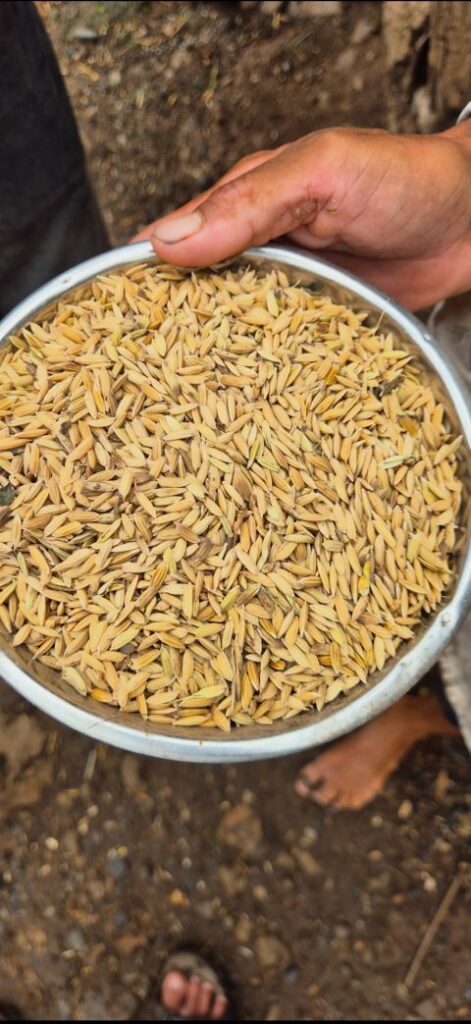
The 2026 Financial Audit for Rice Farming in Kenya
The economics of rice farming in Kenya are compelling, but they require careful attention to detail and disciplined cost management. The following budget presents a detailed breakdown for a one-acre Komboka crop, including all inputs and labor. The total cost of 51,500 shillings per acre assumes that the farmer owns or has access to land within an irrigation scheme and that the required infrastructure (canals, pumps) is in place.
| Cost Item | Quantity | Unit Price (KSh) | Total (KSh) |
|---|---|---|---|
| Certified seeds (Komboka) | 12 kg | 400 | 4,800 |
| DAP fertilizer (subsidized) | 50 kg | 2,500 | 2,500 |
| CAN fertilizer | 100 kg | 90 | 9,000 |
| Pirata 100SC herbicide | 250 ml | 200 | 200 |
| Highstop herbicide | 200 g | 500 | 500 |
| Pesticides (as needed) | 1 acre | 2,000 | 2,000 |
| Land preparation (tractor) | 1 acre | 8,000 | 8,000 |
| Nursery preparation | 0.1 acre | 2,000 | 2,000 |
| Transplanting labor | 10 people | 500 | 5,000 |
| Harvesting and threshing | 1 acre | 10,000 | 10,000 |
| Hauling to mill | 30 bags | 100 | 3,000 |
| Milling fee | 30 bags | 150 | 4,500 |
| Total Cost | 51,500 |
The revenue side of the equation depends on two variables: yield and price. A Komboka farmer at the average yield level of 30 bags per acre and an average milled rice price of 180 shillings per kilogram generates 291,600 shillings in gross revenue and 240,100 shillings in net profit. This represents a return on investment of nearly 500 percent, a figure that few other agricultural enterprises can match.
| Yield Level | Paddy Bags (90kg) | Milled Rice (kg) | Price per kg (KSh) | Gross Revenue (KSh) | Net Profit (KSh) |
|---|---|---|---|---|---|
| Low production | 25 | 1,350 | 150 | 202,500 | 151,000 |
| Average production | 30 | 1,620 | 180 | 291,600 | 240,100 |
| High production | 35 | 1,890 | 200 | 378,000 | 326,500 |
| Export quality | 35 | 1,890 | 250 | 472,500 | 421,000 |
Scaling up multiplies these returns. A farmer with 5 acres of Komboka at average yield and price would generate 1.2 million shillings in net profit per season. With two seasons per year (one main crop and one ratoon), the annual profit exceeds 2 million shillings. This is the scale at which rice farming becomes a wealth-generating enterprise rather than a subsistence activity, and it explains why more investors are turning their attention to rice farming in Kenya.
The ratoon crop deserves special attention in the financial analysis. For a Komboka field that produced 30 bags in the main harvest, a successful ratoon crop would add 12 to 18 bags. The additional revenue from these bags is 64,800 to 97,200 shillings at 180 shillings per kilogram for milled rice. The additional costs are minimal: a small amount of labor for harvesting and milling, perhaps 5,000 to 8,000 shillings total. The net profit from the ratoon crop is nearly 100 percent of the revenue, making it one of the most profitable activities in agriculture.

Frequently Asked Questions About Rice Farming in Kenya
How much does it cost to start rice farming in Kenya on one acre?
The total startup cost for one acre of rice ranges from 45,000 to 60,000 shillings. This includes certified seeds (12 kg at 400 KSh per kg), subsidized DAP fertilizer (2,500 KSh), CAN fertilizer (9,000 KSh), herbicides (700 KSh), land preparation (8,000 KSh), nursery preparation (2,000 KSh), transplanting labor (5,000 KSh), and harvesting and threshing (10,000 KSh). Milling adds another 4,500 shillings if you process the grain yourself. These costs can vary depending on location and the availability of subsidized inputs.
What is the most profitable rice variety for rice farming in Kenya?
For pure profit per acre, Komboka is the winner for most commercial farmers because it yields 28 to 35 bags per acre. While Basmati (Pishori) fetches a higher price per bag (8,000 to 11,000 KSh), its lower yield of 18 to 22 bags per acre means Komboka generates more total revenue. Additionally, Komboka ratoons extremely well, providing a second harvest with almost no extra cost. Kal Gold offers a middle ground with good aroma and 22 to 28 bags per acre, making it a good choice for farmers targeting premium markets.
When is the best time to plant rice in Kenya?
The optimal planting window varies by region. In Mwea, the main seasons are February to March and August to September. In Ahero and Bunyala, planting typically follows the irrigation schedule, with the long rains season starting in March and the short rains in October. Farmers with reliable irrigation can plant year-round, but aligning with the natural seasons reduces water pumping costs. For ratoon cropping, the main crop should be planted early enough in the season that the ratoon can mature before the dry season or before temperatures drop.
What is ratoon cropping and how does it work in rice farming in Kenya?
Ratoon cropping is the practice of harvesting a second crop from the stubble of the first crop. After the main harvest, the roots and stubble left in the field produce new shoots (tillers) that grow into mature plants and set grain. The second crop requires no new seeds, nursery, or transplanting, saving 25,000 to 35,000 shillings per acre. The ratoon yields 40 to 60 percent of the main crop and matures in 60 to 70 days. Not all varieties ratoon equally well; Komboka and Kalfine are the best performers.
Where can I buy certified rice seeds in Kenya?
Certified rice seeds are available from KALRO research stations in Mwea, Ahero, and Alupe. Farmers can also purchase from licensed agro-dealers in major rice-growing areas. Farmers Trend Ltd through its online Virtual Agrovet supplies certified Komboka, Basmati, and Kalpaa seeds to farmers across the country. Contact 0790509684 for current availability and pricing. Always buy certified seeds rather than saving seeds from your harvest, as saved seeds lose vigor and yield over time.
Is rice farming in Kenya profitable for small-scale farmers?
Yes, absolutely. A small-scale farmer with one acre can generate 240,000 to 326,000 shillings in net profit per season using Komboka variety at average yields. With two seasons per year (including a ratoon crop), annual profits can exceed 500,000



Leave a Reply