10 Secrets for Successful Cauliflower Farming in Kenya: 2026 Complete Grower’s Guide
For many Kenyan farmers, the search for a high-value, profitable crop ends with brassicas. Cauliflower farming in Kenya stands out as a premier choice for smallholder and large-scale growers looking to maximize earnings from their land. With consistent demand from urban markets, supermarkets, and hotels, mastering this crop can significantly boost your agricultural income. This 2026 complete guide by Farmers Trend Ltd. provides a step by step planting guide, covering all ecological conditions, costs, and the secrets to turning your shamba into a profitable venture.

Secret 1: Understanding the Right Climate and Season
What climate is best for cauliflower? Cauliflower thrives in cool, moist conditions. It performs best in temperatures between 15°C and 20°C. In Kenya, this makes the high-altitude regions (1,800 to 2,700 metres above sea level) like parts of Nakuru, Nyandarua, Kericho, and Kiambu ideal. However, with careful variety selection, it can be grown in medium-altitude areas during the cooler seasons.
What is the season for cauliflower? The primary growing seasons coincide with the cool, rainy periods. The main planting windows are:
- Long Rains Season: Transplant in March-April for a July-August harvest.
- Short Rains Season: Transplant in September-October for a December-January harvest.
Can I plant cauliflower in September? Can I sow cauliflower in September? Yes. September is an excellent month for sowing seeds in the nursery, aiming to transplant in October. This timing allows the crop to mature during the coolest months, reducing heat stress and the risk of buttoning (why are my cauliflowers all leaves and no head?), leading to higher quality heads.
Secret 2: Selecting the Perfect Variety
What is the secret to growing cauliflower? It starts with the seed. Choose a variety suited to your region and season.
- For Cooler Highlands: Traditional varieties like ‘Snowball Y’ or ‘White Dynasty’ yield large, solid heads over a longer season.
- For Warmer Areas/Off-Season: Heat-tolerant hybrids like ‘Sydney F1’ or ‘Sunset F1’ are crucial. They resist buttoning and mature faster.
- Seed Quantity: How much cauliflower seeds per acre? You need about 500 grams of hybrid seeds for an acre to raise seedlings for a population of 10,000 plants, accounting for nursery losses.
Secret 3: Step by Step Planting Guide: Nursery to Transplanting
- Nursery Establishment: Prepare a fine, raised seedbed 1m wide. Mix soil with well-decomposed manure. Sow seeds in shallow rows 10cm apart, cover lightly, and water gently. Mulch with dry grass and provide light shade.
- Seedling Care: Water twice daily. After 2 weeks, apply a light foliar feed. Seedlings are ready for transplanting at 4-6 weeks, when they have 4-6 true leaves.
- Land Preparation: Plough deeply and incorporate 20-30 tonnes of well-rotted manure per acre. This improves soil structure, water retention, and fertility.
- Transplanting: Transplant on a cloudy evening or during light rain. Water the seedlings thoroughly before and after lifting.
Secret 4: Optimal Spacing and Population
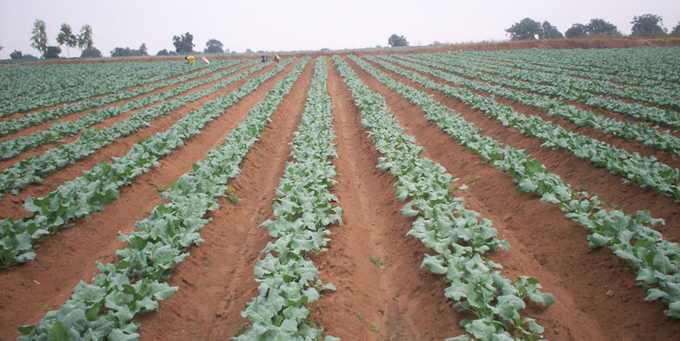
Spacing and population per acre: Correct spacing is non-negotiable for good head size and yield.
- For medium to large varieties, use a spacing of 60cm between rows and 45cm between plants.
- This gives you approximately 10,000 plants per acre.
- Ensure proper spacing to allow for air circulation, which reduces fungal disease pressure.
Secret 5: The Fertilizer and Watering Regime
Which fertilizer is best for cauliflower? What kind of fertilizer do you use on cauliflower?
Cauliflower is a heavy feeder. A balanced program is key.
- Basal Application: At transplanting, apply DAP (Diamonium Phosphate). It provides phosphorus for strong root establishment. Use about 200kg per acre, applied in the planting hole.
- Top-Dressing: 3-4 weeks after transplanting, apply CAN (Calcium Ammonium Nitrate) at 150kg per acre to promote vigorous leaf growth. A second top-dressing can be done as the head begins to form (about 2 weeks after the first).
- Micronutrients: Boron is critical. A deficiency causes brown, hollow stems. Apply Borax as a foliar spray according to label instructions.
How often should I water cauliflower?
Consistent moisture is the secret to tender heads and speeding up cauliflower growth. Does cauliflower need full sun or shade? It needs full sun but with consistent soil moisture.
- Water deeply at least twice a week during dry periods.
- Drip irrigation is ideal. Avoid overhead watering to prevent leaf diseases.
- Mulching conserves soil moisture and suppresses weeds.
Secret 6: Crop Management and Blanching
- Weeding: Keep the shamba weed-free, especially during the early growth stages.
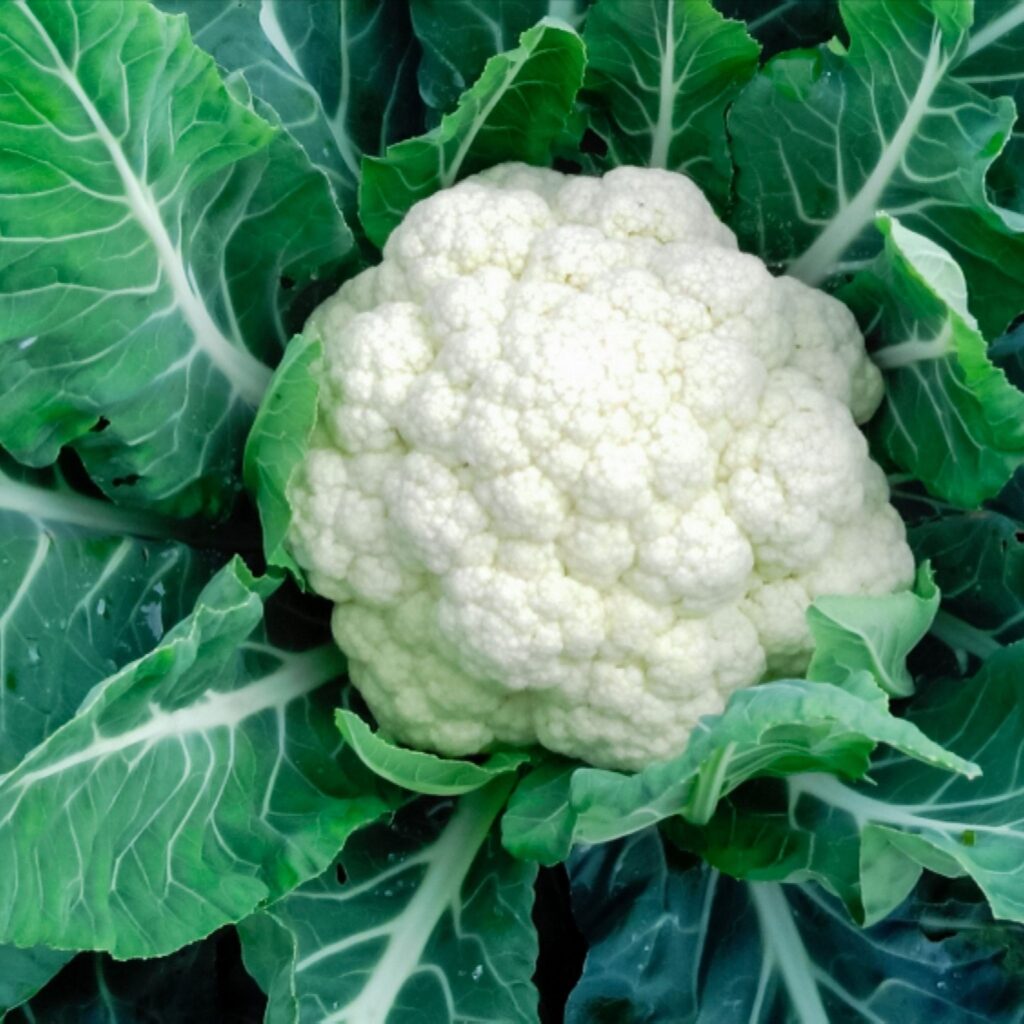
- Blanching: When the curd (head) is about the size of an egg, tie the outer leaves over it. This protects it from sunlight, ensuring it stays creamy white and not yellow or bitter.
- Companion Planting: What should not be planted near cauliflower? What should you not plant next to cauliflower? Avoid planting other brassicas (like cabbage, kale, broccoli, kohlrabi) immediately next to it. They compete for the same nutrients and attract the same pests and diseases. Practice crop rotation instead.
Secret 7: Pest and Disease Control
Common pests include aphids, diamondback moth, and cutworms. Diseases include black rot and downy mildew. Use integrated pest management: scout regularly, use recommended pesticides from your agro-vet only when necessary, and practice crop rotation. Healthy, well-spaced plants are more resistant.
Secret 8: Harvesting, Yield, and Post-Harvest
How many months does it take for cauliflower to grow? From transplanting, most varieties mature in 2 to 3 months (60-90 days), depending on the variety and weather.
How many cauliflowers will one plant produce? How many times can you harvest a cauliflower plant? Does cauliflower regrow after cutting?
One plant produces one primary head. It is a one-time harvest crop. The plant will not regrow a main head after cutting. You cannot harvest it multiple times like kale. However, you can harvest the tender leaves for consumption.
Harvest when the head is firm, compact, and reaches its expected size. Cut the main stem with a sharp knife, leaving a few wrapper leaves.
Expected production in kgs per acre:
With good management and a population of 10,000 plants, assuming an 85% success rate and an average head weight of 0.8kg, you can expect:
8,500 heads x 0.8kg = 6,800 kg per acre.
Secret 9: Market, Price, and Profitability Analysis
How profitable is cauliflower farming in Kenya? What is the profit of cauliflower farming? Which farming is most profitable in Kenya? Which crop brings the highest profit?
Cauliflower is among the highest-profit vegetables per acre due to its market value. Let’s break down the numbers for 2026.
How much is cauliflower per kg in Kenya?
The price fluctuates. A conservative average farm-gate price is KSh 60 per kilogram. In peak urban markets, it can reach KSh 120-150 per kg.
Financial Breakdown for 1 Acre of Cauliflower (2026)
| COST COMPONENT | Details | Amount (KSh) |
|---|---|---|
| VARIABLE COSTS | ||
| Seeds (500g hybrid) | 18,000 | |
| Land Preparation & Manure | Ploughing, rotavation, 25T manure | 35,000 |
| Fertilizers | DAP, CAN, Foliar feeds (Boron) | 28,000 |
| Pesticides & Fungicides | 15,000 | |
| Irrigation | Water charges/system maintenance | 12,000 |
| Labour | Nursery, transplanting, weeding, tying, harvesting | 50,000 |
| Subtotal Variable Costs | 158,000 | |
| FIXED/OTHER COSTS | ||
| Tools & Sacks | 7,000 | |
| Transport to Market | 15,000 | |
| Contingency (5%) | 7,900 | |
| Subtotal Other Costs | 29,900 | |
| TOTAL COST OF PRODUCTION | 187,900 |
| REVENUE PROJECTION | ||
|---|---|---|
| Expected Yield | 6,800 kg | |
| Average Selling Price | KSh 60/kg | |
| TOTAL REVENUE | 408,000 | |
| GROSS PROFIT | Revenue – Total Cost | 220,100 |
*Note: This profit of KSh 220,100 per acre is a realistic projection. Efficient farmers can achieve higher yields and prices, pushing profits over KSh 300,000 per acre cycle (3-4 months). Compare this to how much you can earn from an acre of cabbage, which often ranges between KSh 120,000 – KSh 180,000 per cycle.*
Why are cauliflowers so expensive? The cost reflects the intensive labour, precise agronomic requirements, and relatively lower yields compared to hardier vegetables like kale.

Secret 10: Planning for Continuous Success
- Rotation: Do not plant cauliflower on the same land where other brassicas grew in the previous season. Rotate with legumes like beans or non-brassica vegetables.
- Record Keeping: Track your costs, inputs, and yields to refine your strategy each season.
- Market Linkages: Build relationships with buyers before harvest. Consider collective marketing with other farmers.
Bonus: Addressing Common Queries
- How many does one cauliflower feed? One medium head (about 0.8kg) can serve 4-5 people as a side dish.
- Container Growing: How many broccoli plants can I grow in a 5 gallon bucket? How many cabbage plants can I put in a a 5 gallon bucket? For cauliflower, which is larger, only one plant per 5-gallon bucket is advisable due to its extensive root system and nutrient needs.
- Which is the best month to plant cabbages in Kenya? While this guide focuses on cauliflower, cabbage follows similar seasonal patterns, with February-March and August-September being ideal for transplanting.
Conclusion
This guide to successful Cauliflower farming 2026 demonstrates that with knowledge, planning, and attention to detail, cauliflower farming in Kenya is a venture with remarkable returns. By implementing these ten secrets, from selecting the right September planting window to mastering the fertilizer regime and understanding the market maths, you are setting yourself up for a successful harvest. For the latest, location-specific advice, always consult your local agricultural extension officer or resources from the Ministry of Agriculture and Livestock Development. Take the step, invest in good seeds and management, and watch your shamba thrive.
https://farmerstrend.co.ke/trending/cauliflower-farming-in-kenya-profit-guide/https://farmerstrend.co.ke/wp-content/uploads/2026/02/GPqIDnTXMAADsKv-1024x1024.jpeghttps://farmerstrend.co.ke/wp-content/uploads/2026/02/GPqIDnTXMAADsKv-150x150.jpeg# TrendingCauliflower FarmingFor many Kenyan farmers, the search for a high-value, profitable crop ends with brassicas. Cauliflower farming in Kenya stands out as a premier choice for smallholder and large-scale growers looking to maximize earnings from their land. With consistent demand from urban markets, supermarkets, and hotels, mastering this crop can significantly...FarmersTrendjohn doefarmerstrend@gmail.comAdministratorFarmers Trend Ltd.










Leave a Reply