The Girolando Reality: Separating Fact from Fiction in Kenyan Dairy Farming 2026
Girolando Cows in Kenya: The Truth About Milk Production, Costs, and Profitability
Discover the truth about Girolando cows in Kenya. Real milk production, costs, disease resistance, and 5-year profitability analysis. KALRO-backed data on Girolando vs Friesian. Is the Girolando worth the price in Kenya? Find out now.
What Is a Girolando Cow?
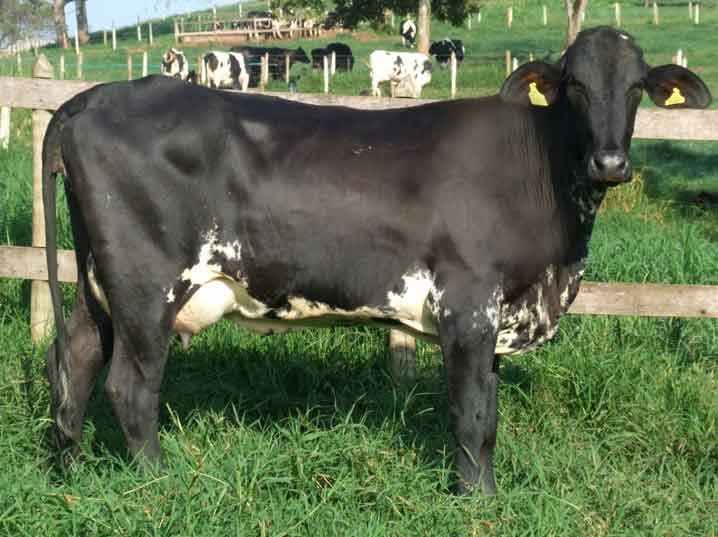
The Girolando is a synthetic dairy breed developed in Brazil through the systematic crossing of Holstein cattle, the world’s highest milk producers, with Gyr cattle, a heat-tolerant zebu breed from India. This deliberate genetic combination was created to solve a problem that plagues tropical dairy farmers worldwide: European dairy breeds struggle to survive and produce in hot, humid conditions where diseases are rampant.
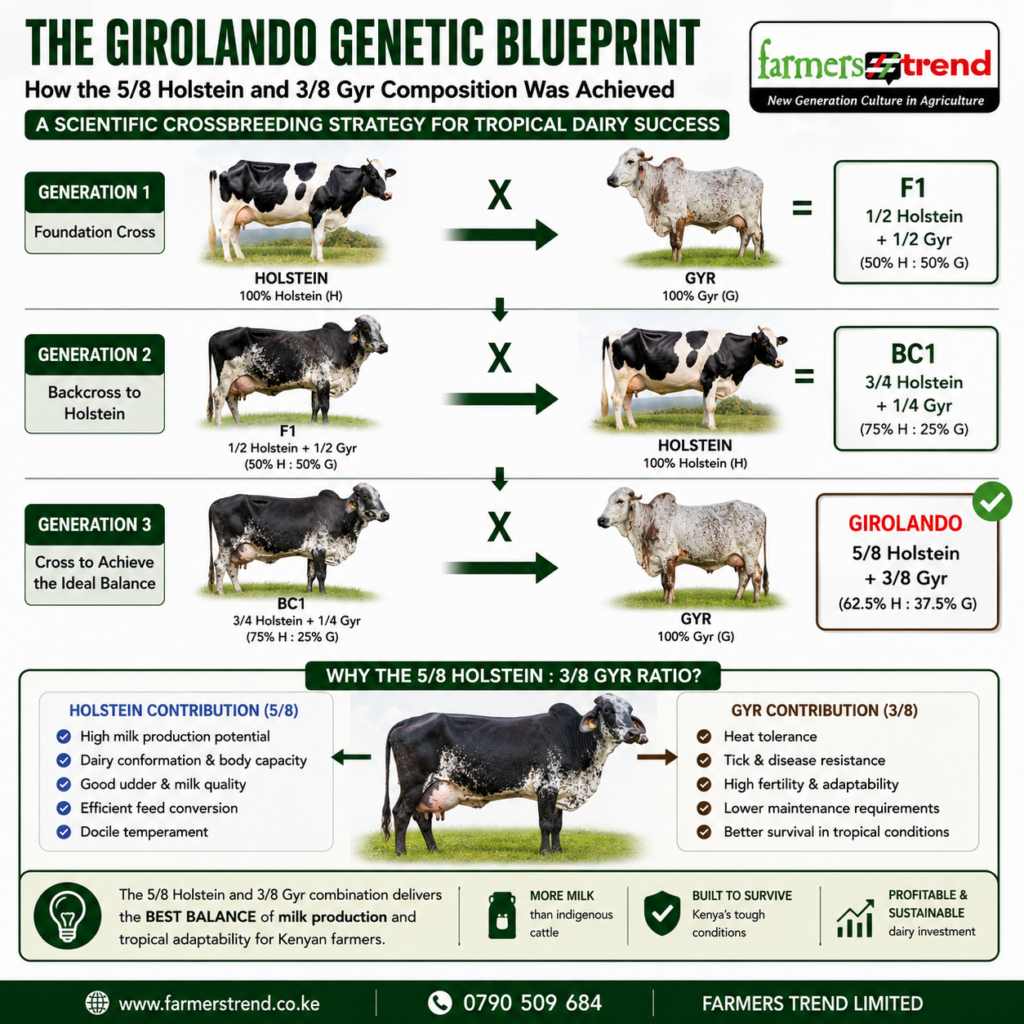
The breed’s name is derived from “Gir,” the Brazilian spelling of Gyr, and “Holando,” referring to Holstein. The result is an animal that carries 5/8 Holstein genetics and 3/8 Gyr genetics. This precise ratio was achieved through decades of selective breeding, with each generation carefully evaluated for both production and adaptation traits.
In Kenya, the Girolando arrived through a government-backed initiative that imported embryos from Brazil, aiming to transform the country’s dairy sector. The Kenya Animal Genetic Resources Centre has been at the forefront of this effort, working with KALRO to evaluate the breed’s performance under local conditions. The arrival of over 350 embryos, with plans for 1,600 more, signals a significant shift in our national breeding strategy.
The Girolando is not a zebu breed, nor is it a European breed. It is a composite, a deliberate blend designed to capture the milk production of the Holstein and the survivability of the Gyr. Its physical appearance reflects this blend. The animals are typically red and white, though black and white and solid red varieties exist. They possess the slight hump and dewlap characteristic of zebu breeds, yet their frame is more dairy-like than indigenous cattle. Body weight ranges from 550 to 650 kilograms, similar to a Friesian but with a more robust, heat-tolerant build.
The breed’s history is instructive. Brazil, like Kenya, was dominated by zebu cattle for centuries. The introduction of Holstein genetics in the early 1900s created crossbred animals that outperformed pure zebus but lacked the production of pure Holsteins. The Brazilian dairy sector spent decades refining these crosses, establishing breeding programmes that selected for both milk production and tropical adaptation. Today, 90 percent of the milk produced in Brazil comes from Girolando cattle.
This is not a breed created in a laboratory or developed through marketing hype. It is the product of genuine genetic improvement, refined over generations in conditions remarkably similar to what Kenyan farmers face. The Girolando is the embodiment of “tropical dairy genetics,” a term that has become increasingly important as climate change threatens traditional dairy systems.
Why Kenyan Farmers Are Buying Girolando Cattle
Kenyan farmers are purchasing Girolando cattle for the same reason Brazilian farmers embraced them: survival and profitability. Pure-bred Friesians, while capable of high production in temperate climates, struggle in Kenya’s equatorial conditions. The heat stress, tick-borne diseases, and nutritional challenges that characterise our dairy systems take a heavy toll on these European breeds.
The numbers tell a compelling story. A Friesian cow in Kenya produces an average of 16 to 17 litres per day in formal sector herds, but fertility rates are often below 50 percent, and mortality can be significant. The cost of maintaining a Friesian through heat stress, repeated inseminations, and disease treatments eats into the milk revenue. Many farmers find that their Friesians are simply not profitable, despite the breed’s genetic potential.
The Girolando offers an alternative. Its ability to maintain milk production during hot periods, its tick resistance, and its superior fertility translate directly to a more profitable enterprise. The breed produces less than a Friesian in temperate conditions, but it produces more in tropical conditions. This is a distinction that many farmers overlook, seduced by the production numbers from Europe or America that are impossible to replicate here.
The national context makes the Girolando particularly attractive. The Kenya Dairy Board’s 2024 cost of production study found that the average daily milk yield per cow across all breeds and systems is 9 litres. Zero-grazing farmers achieve 12.3 litres. Even the formal sector, with its better management and inputs, averages only 16 to 17 litres per cow per day. Against this backdrop, the Girolando’s realistic 14 to 25 litres per day represents a significant improvement.
Farmers are also attracted by the Girolando’s lower maintenance costs. The breed’s disease resistance means fewer veterinary bills and lower mortality rates. Its heat tolerance means fewer production losses during the dry seasons that cripple Friesian herds. Its fertility means more calves, which can be sold or raised to expand the herd. These benefits compound over time, creating a more sustainable and profitable dairy enterprise.
The economics are particularly compelling for smallholder farmers. Kenya’s dairy sector is dominated by smallholders, many with only one or two cows. These farmers cannot afford the high veterinary costs and production losses that Friesians often bring. The Girolando, with its reduced input requirements and improved survivability, aligns better with the resources available to these farmers.
The emotional appeal is also significant. Kenyan farmers have watched their neighbours lose Friesians to East Coast Fever, seen their own herds struggle through droughts, and calculated the costs of repeated failed inseminations. The Girolando offers hope, a breed that can survive and produce without the endless cycle of interventions that Friesians demand.
Can Girolando Cows Produce 70 Litres of Milk Per Day in Kenya?
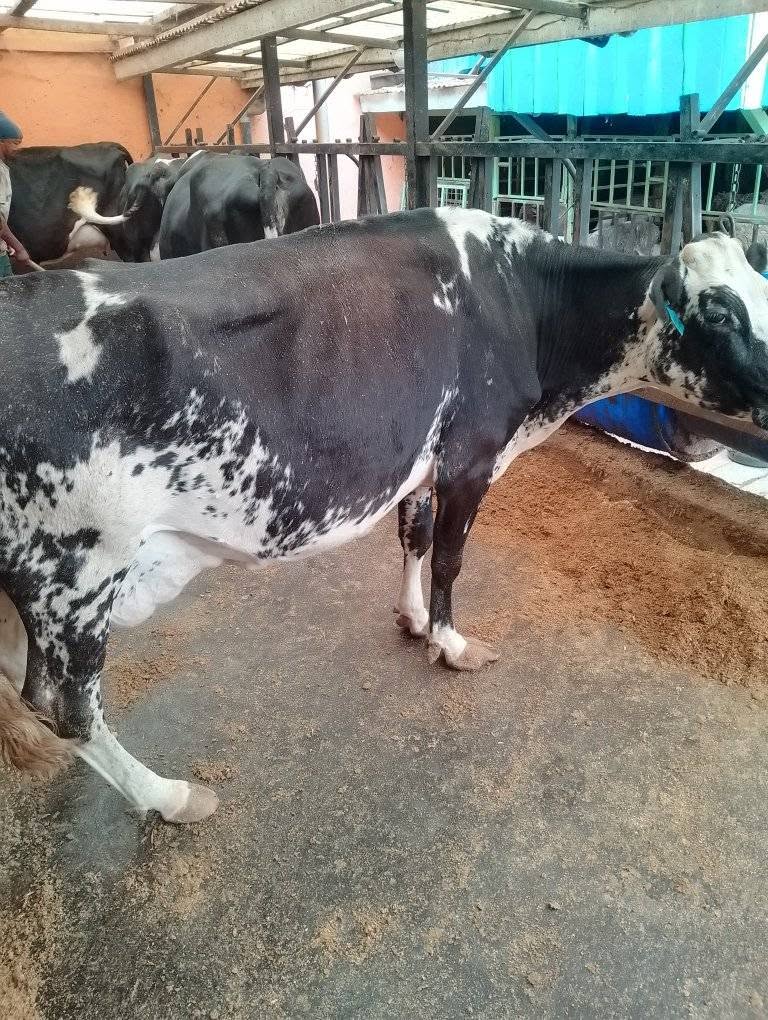
The short answer is no. The viral claims of 70-litre daily yields are biologically impossible for a Girolando, particularly within the context of Kenya’s forage-based systems. Let us examine why with clinical precision.
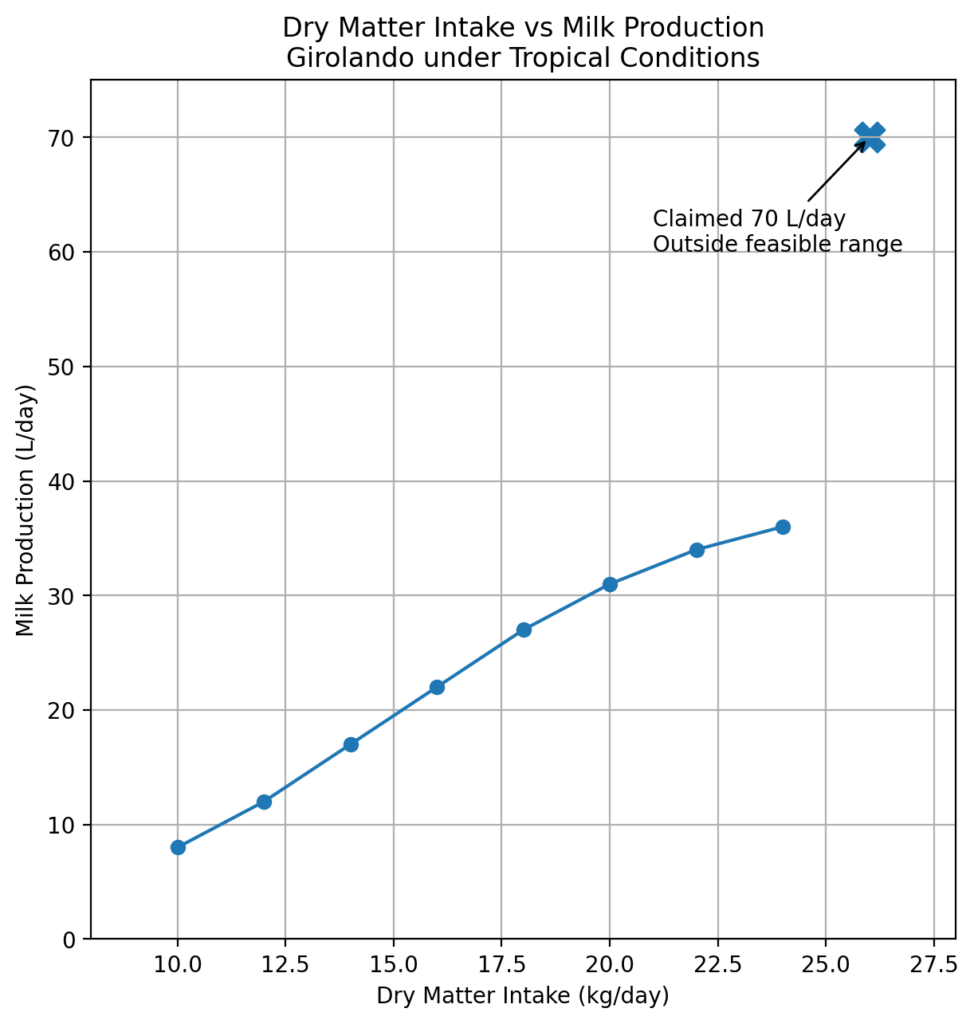
- First, consider the genetic ceiling. The Girolando carries only 62.5 percent Holstein genetics. Even under optimal conditions in Brazil, where the breed has been refined over decades, the maximum reported daily production is 35 litres. This figure represents the absolute upper limit achieved with intensive feeding, advanced management, and optimal conditions that most Kenyan farmers cannot replicate.
- Second, consider the metabolic demands. Each litre of milk contains approximately 0.7 megajoules of energy. A cow producing 70 litres daily requires nearly 50 megajoules of net energy for lactation alone, before accounting for maintenance, activity, and growth. The dry matter intake required to support this production level would exceed 25 kilograms per day. Even with the highest quality total mixed ration, a cow’s physical digestive capacity limits intake to approximately 4 percent of body weight. A 600-kilogram Girolando can physically consume no more than 24 kilograms of dry matter daily.
- Third, consider the feed quality available in Kenya. Kenyan forages have lower digestibility and protein content than the feeds used in Brazil’s intensive systems. Napier grass, the staple forage, contains approximately 10 to 14 percent crude protein and 50 to 60 percent digestibility when well-managed. At this quality, the cow cannot physically consume enough dry matter to meet the energy demands of high production. The shortfall must be made up with expensive concentrates, which most farmers cannot afford.
- Fourth, consider the environmental constraints. Heat stress reduces feed intake and milk production. Even the Girolando, with its superior heat tolerance, suffers some production loss during the hottest periods. The 70-litre claim assumes constant cool temperatures, a condition that simply does not exist in most of Kenya.
- Fifth, consider the economic reality. To even approach 70 litres, a farmer would need to invest heavily in high-quality concentrates, mineral supplements, and veterinary care. The feed alone for a 70-litre cow would be astronomical. The cost of production would likely exceed the milk price, making the exercise financially destructive.
The biological constraints are clear. The Girolando simply does not possess the mammary gland capacity or the hormonal drive for 70-litre production. This is not a failure of the breed; it is the biological trade-off that makes the Girolando survivable in tropical conditions. The same traits that confer heat tolerance and tick resistance also cap the maximum production potential.
The viral claims are dangerous because they set farmers up for disappointment. When a cow that cost KES 600,000 produces 15 litres rather than 70, the farmer blames the breed, the seller, or themselves. They may sell the cow at a loss, abandoning the Girolando altogether. This hurts not just individual farmers but the entire dairy sector, which needs the Girolando’s proven benefits to succeed.
What KALRO, KAGRC and Brazilian Research Say
The authoritative bodies that have evaluated the Girolando consistently present a measured picture of the breed’s capabilities. None support the 70-litre claims. Instead, they emphasise realistic expectations and proper management.
KALRO, Kenya’s leading agricultural research organisation, has been evaluating the Girolando under local conditions. Their preliminary findings indicate that the breed shows significant promise for Kenyan conditions, with good milk production, improved heat tolerance, and enhanced disease resistance. However, their published recommendations emphasise the need for realistic performance expectations. The breed will not transform dairy farming overnight, and it requires proper management to deliver its genetic potential.
The Kenya Animal Genetic Resources Centre has been central to the Girolando importation and evaluation programme. Their work involves genetic evaluation, progeny testing, and performance recording to identify the best animals for Kenyan conditions. They caution against unrealistic expectations, emphasising that the Girolando’s success depends on management, nutrition, and health protocols. The breed is a tool, not a miracle.
The Brazilian experience is instructive. Brazil’s dairy sector has been working with the Girolando for over a century. The data from Brazil shows that well-managed Girolando cows produce an average of 3,600 kilograms of milk per lactation over 305 days, based on two daily milkings. The top-performing herds in intensive systems achieve 4,500 to 5,000 kilograms per lactation. Daily yields average 12 to 18 litres, with exceptional animals reaching 25 to 30 litres for brief periods.
Brazilian research on the Girolando has been extensive. The breed has been the subject of genetic evaluations, feed efficiency studies, and disease resistance assessments. The conclusion across decades of research is consistent: the Girolando is the optimal dairy breed for tropical conditions, balancing production and adaptation better than any other breed. However, the production figures consistently fall within the 12 to 30-litre range, not the 70-litre fantasy.
Embrapa, Brazil’s agricultural research corporation, has published extensively on the Girolando. Their work demonstrates that the breed’s feed conversion efficiency, health traits, and reproduction parameters are superior to pure Holsteins in tropical conditions. However, they also note that the breed’s production potential is lower than Holsteins in temperate conditions. This is a trade-off that must be understood.
The international consensus is clear. The Girolando is a specialised tropical dairy breed that outperforms other breeds in tropical conditions. It does not match the production of Holsteins in Europe or North America. It does not produce 70 litres under any circumstances. These are the facts that must guide Kenyan farmers’ decisions.
The Science Behind Milk Production in Tropical Climates
Milk production in tropical climates is governed by a different set of biological and environmental constraints than production in temperate regions. Understanding these constraints is essential to evaluating the Girolando’s potential.
Heat Stress
Heat stress is the single greatest challenge to dairy production in Kenya. When the temperature-humidity index exceeds 72, the cow begins to experience stress. Feed intake declines, milk production drops, and fertility suffers. The Girolando’s zebu genetics confer superior heat tolerance through several mechanisms.
The breed has a higher sweating rate than European breeds, allowing more efficient evaporative cooling. Its sleek coat reflects solar radiation better than the thick coat of a Friesian. Its lower metabolic heat production means less internal heat to dissipate. These traits allow the Girolando to maintain feed intake and milk production during hot periods when Friesians are struggling.
Nutrient Metabolism
The metabolism of tropical dairy cattle differs from temperate breeds. The Girolando’s digestive system is more efficient at extracting nutrients from fibrous forages. This is a crucial advantage in Kenya, where forage quality varies dramatically with the seasons.
However, the Girolando also has higher maintenance requirements than European breeds in cool conditions. The breed’s metabolic rate, while lower than zebus, is higher than Holsteins. This means that in cool conditions, the Girolando requires more feed for maintenance, leaving less energy for milk production. This is why the breed performs better in tropical conditions, where its adaptation traits outweigh its higher maintenance costs.
Lactation Physiology
Milk production is regulated by a complex hormonal system. The primary hormones involved in lactation are prolactin, growth hormone, and the glucocorticoids. Heat stress disrupts this hormonal balance, reducing milk production. The Girolando’s zebu genetics provide some protection against this disruption, but not complete immunity.
Environmental Factors
The tropical environment poses challenges beyond heat. Tick-borne diseases, internal parasites, and seasonal forage quality variation all affect milk production. The Girolando’s resistance to these challenges is a significant advantage. However, no breed is immune, and proper management remains essential.
The science is unequivocal. Dairy cattle in tropical environments cannot match the production of their counterparts in temperate zones. The Girolando is bred to maximise production within these constraints, not to transcend them. The 70-litre claim is a denial of biology itself.
Understanding the 5/8 Holstein and 3/8 Gyr Cross
The Girolando’s genetic composition is not accidental. The 5/8 Holstein and 3/8 Gyr ratio was achieved through a systematic breeding programme that balanced milk production with tropical adaptation. Understanding this ratio is essential to appreciating the breed’s value.
The Holstein Contribution
Holstein genetics contribute milk production, dairy conformation, and high feed conversion efficiency. The 5/8 Holstein portion provides sufficient genetic potential for milk yields that are significantly higher than zebu cattle. It also contributes desirable udder characteristics, milk quality, and a docile temperament.
The Holstein influence is visible in the Girolando’s frame, udder conformation, and growth rate. The breed is larger than indigenous cattle, with a more dairy-like body structure. This reflects the Holstein contribution.
The Gyr Contribution
Gyr genetics contribute heat tolerance, tick resistance, and fertility. The 3/8 Gyr portion provides the adaptation traits that make the breed successful in tropical conditions. Gyr cattle are naturally resistant to tick-borne diseases through a combination of behavioural and immunological mechanisms. They also have lower metabolic rates, reducing the heat load on the animal.
The Gyr influence is visible in the Girolando’s hump, dewlap, and sleek coat. The breed’s resistance to tick-borne diseases and its ability to maintain feed intake during heat stress both reflect the Gyr contribution.
The Crossbreeding Strategy
The 5/8 and 3/8 ratio was achieved through a series of crosses. The initial cross between a Holstein and a Gyr produced an F1 animal with 50 percent Holstein and 50 percent Gyr genetics. This animal was then backcrossed to a Holstein to produce an animal with 75 percent Holstein and 25 percent Gyr genetics. The final cross produced the 5/8 and 3/8 ratio that characterises the Girolando.
This ratio was chosen because it balances production and adaptation. Higher Holstein percentages yield more milk but sacrifice adaptation. Higher Gyr percentages improve adaptation but reduce milk production. The 5/8 and 3/8 ratio is the sweet spot, delivering the best of both breeds.
The implications for Kenyan farmers are significant. The Girolando’s 5/8 Holstein genetics mean it can produce more milk than indigenous cattle or other crossbreds. Its 3/8 Gyr genetics mean it can survive and reproduce in tropical conditions. This is why the breed is gaining popularity across Kenya’s dairy sector.
Girolando vs Friesian Milk Production in Kenya
The comparison between Girolando and Friesian production in Kenya is not straightforward. Production depends on management, feed quality, and environmental conditions. However, general patterns are emerging.
Production in Zero-Grazing Systems
In zero-grazing systems with adequate feeding and management, the Girolando produces 14 to 25 litres per day. The Friesian produces 16 to 17 litres per day in similar conditions. The Girolando’s advantage is not in peak production but in consistency. It maintains production during hot periods when Friesians decline. It also has fewer days open and shorter calving intervals, meaning more milk over its lifetime.
Production in Pasture-Based Systems
In pasture-based systems, the differences are more pronounced. The Girolando’s ability to utilise fibrous forages and its resistance to parasites give it a clear advantage. Friesians struggle on low-quality forage and suffer from parasite burdens. The Girolando produces 8 to 15 litres per day on pasture, while Friesians often produce less than 10 litres and suffer from poor fertility.
Production Over the Lactation Cycle
The lactation curve of the Girolando is more persistent than the Friesian. Peak production occurs later, and production declines more slowly. This means more milk in the later stages of lactation, when Friesians have already declined significantly. The persistent production reduces the seasonal variation in milk supply, helping farmers maintain a consistent income.
Production Over the Cow’s Lifetime
The Girolando’s fertility and health advantages translate to more lactations per cow. Friesians in Kenya typically have 3 to 4 lactations before they are culled. Girolandos often have 5 to 7 lactations. The additional lactations mean more total milk per cow, offsetting the lower daily production.
Girolando vs Friesian Production Comparison in Kenyan Systems
| Parameter | Girolando (Zero-Grazing) | Friesian (Zero-Grazing) | Girolando Advantage |
|---|---|---|---|
| Daily milk yield | 14–25 litres | 12–17 litres | +2–8 litres |
| Lactation length | 305 days | 280 days | +25 days |
| Calving interval | 12–14 months | 14–18 months | -2–4 months |
| Lactations per cow | 5–7 | 3–4 | +2–3 |
| Lifetime milk yield | 20,000–30,000 kg | 12,000–18,000 kg | +8,000–12,000 kg |
Feed Requirements for High Milk Production
The Girolando’s genetic potential can only be realised with adequate feeding. The breed is not a low-input animal; it requires quality forage and adequate concentrates to produce at its best.
Forage Management
Forage forms the foundation of the diet. Establish high-quality forages such as Napier grass, Rhodes grass, or desmodium. Harvest at the correct stage of growth, when the leaf-to-stem ratio is high and digestibility is optimal. Use silage and hay to bridge the dry season gap.
The Girolando’s ability to utilise lower-quality forage is an advantage, but it is not a licence to neglect forage management. Quality forage is essential for rumen health, nutrient intake, and milk production.
Concentrate Feeding
Concentrates are essential for high milk production. A Girolando producing 15 litres daily requires 4 to 6 kilograms of high-quality dairy meal, depending on the forage quality. The meal should contain 16 to 18 percent crude protein and balanced minerals.
The concentrate-to-milk conversion ratio is approximately 1:1. This means 1 kilogram of concentrate yields 1 litre of milk. This conversion ratio makes concentrate feeding economical when milk prices are high. However, as concentrate prices rise, the economics change.
Table: Girolando Feed Requirements by Production Level
| Daily Milk Yield | Dry Matter Intake | Forage Requirement | Concentrate Requirement | Water Requirement |
|---|---|---|---|---|
| 10 litres | 12.5 kg | 9–10 kg | 2–3 kg | 50–60 litres |
| 15 litres | 14.5 kg | 9–10 kg | 4–5 kg | 60–70 litres |
| 20 litres | 16.5 kg | 9–10 kg | 6–7 kg | 70–80 litres |
| 25 litres | 18.5 kg | 8–9 kg | 8–10 kg | 80–90 litres |
| 30 litres | 20.5 kg | 8–9 kg | 10–12 kg | 90–100 litres |
Mineral Supplementation
Minerals are essential for milk production, reproduction, and health. Calcium, phosphorus, and magnesium are critical for milk synthesis. Trace minerals such as zinc, copper, and selenium support immune function and reproduction. Provide a balanced mineral supplement, preferably through the dairy meal or a free-choice mineral block.
Water Requirements
Water is the most important nutrient. A lactating Girolando requires 60 to 100 litres of water daily, depending on production and temperature. Water must be clean and accessible at all times. During hot periods, water requirements increase.
The feed system must be tailored to the Girolando’s production level and the seasonal forage availability. This requires careful planning and monitoring. The investment in feeding is the most important factor in realising the breed’s potential.
Disease Resistance and Heat Tolerance
The Girolando’s disease resistance and heat tolerance are its most valuable traits. These traits are not just theoretical; they translate directly to lower veterinary costs and improved profitability.
Tick-Borne Disease Resistance
East Coast Fever is the single greatest threat to cattle in Kenya. The Girolando’s zebu genetics confer significant resistance to ECF. While the breed is not immune, it is less susceptible and more likely to recover from infection. This translates to lower mortality and reduced treatment costs.
The resistance mechanism is complex. Zebu cattle have a more robust immune response to Theileria parva, the parasite that causes ECF. They also have behavioural traits that reduce tick attachment. The Girolando’s 37.5 percent Gyr genetics provide these advantages.
Heat Tolerance
The Girolando’s heat tolerance is a critical advantage in Kenya’s climate. The breed’s ability to maintain feed intake and milk production during hot periods is superior to Friesians. This means fewer production losses during the dry seasons and a more consistent milk supply throughout the year.
The heat tolerance mechanisms include a higher sweating rate, lower metabolic heat production, and a sleek coat that reflects solar radiation. The Girolando also has a more efficient respiratory system, reducing the respiratory stress of hot weather.
Other Disease Resistance
The Girolando shows resistance to other tropical diseases including anaplasmosis, babesiosis, and heartwater. These diseases affect pure-bred Friesians, causing production losses, veterinary costs, and mortality. The Girolando’s resistance to these diseases is a significant economic advantage.
Management Implications
The Girolando’s disease resistance is not immunity. The breed still requires vaccination, parasite control, and regular health monitoring. However, the intensity of management required is significantly lower than for Friesians. This translates to lower veterinary costs and reduced labour requirements.
The heat tolerance means less stress on the animal, particularly during the hot afternoons. This reduces the need for expensive cooling systems and allows the breed to thrive in environments where Friesians would struggle.
Table: Disease and Heat Tolerance Comparison
| Trait | Girolando | Friesian | Advantage |
|---|---|---|---|
| ECF resistance | Moderate | Poor | Girolando |
| Anaplasmosis resistance | Moderate | Poor | Girolando |
| Heartwater resistance | Moderate | Poor | Girolando |
| Heat tolerance | High | Low | Girolando |
| Reproductive performance | Good | Poor | Girolando |
| Veterinary costs | Low | High | Girolando |
| Mortality rate | Low | High | Girolando |
Calf Management
Calf management is the foundation of a successful dairy enterprise. The Girolando calf requires the same careful management as any dairy calf, but its hybrid vigour gives it a head start.
Colostrum Management
The first 6 hours of life are critical. The calf must receive 4 to 6 litres of high-quality colostrum from its dam. This colostrum is essential for the transfer of maternal antibodies, providing immunity against diseases. The colostrum should be fed at body temperature, preferably within 2 hours of birth.
Milk Feeding
After the colostrum phase, feed whole milk or high-quality milk replacer at 10 to 15 percent of body weight daily. The milk should be divided into two or three feedings and fed warm. Clean, sanitised equipment is essential to prevent scours.
Starter Feed Introduction
Introduce high-quality calf pellets and soft, palatable hay from week 2. The starter feed should contain 18 to 20 percent crude protein and be free from mould. The calf should have constant access to fresh water.
Weaning
Wean at 8 to 12 weeks when the calf is consuming at least 1 kilogram of starter feed daily for three consecutive days. Gradual weaning reduces stress. The calf should have at least doubled its birth weight at weaning.
Table: Girolando Calf Growth Benchmarks
| Age | Body Weight | Daily Gain | Feed Intake | Management Focus |
|---|---|---|---|---|
| Birth | 35–40 kg | – | Colostrum | Colostrum within 6 hours |
| 1 month | 50–55 kg | 0.5–0.6 kg | 0.5 kg starter | Milk feeding, starter introduction |
| 2 months | 65–70 kg | 0.5–0.6 kg | 1 kg starter | Milk feeding, starter increase |
| 3 months (weaning) | 80–85 kg | 0.5–0.6 kg | 1.5 kg starter | Weaning, forage introduction |
| 6 months | 120–130 kg | 0.6–0.7 kg | 2 kg concentrate | Growth, vaccination |
| 12 months | 200–220 kg | 0.6–0.7 kg | 2–3 kg concentrate | Breeding preparation |
| 24 months (calving) | 350–400 kg | – | 5–6 kg concentrate | First calving, lactation start |
Health Management
Vaccinate according to the KALRO schedule. Deworm regularly, with faecal monitoring. Control ticks and internal parasites. Maintain clean, dry pens with adequate ventilation. A robust health programme is essential to prevent diseases and ensure optimal growth.
The investment in calf management pays dividends over the cow’s lifetime. A well-reared calf grows into a more productive and profitable cow.
Five-Year Profit Analysis
The economic case for the Girolando is best understood through a detailed five-year profit analysis. This analysis examines the costs and returns associated with the breed compared to a Friesian.
Initial Investment
The initial investment for a grade Girolando cow ranges from KES 300,000 to 600,000. This includes the purchase price, transport, and initial veterinary checks. The Friesian costs a similar amount, but the Girolando’s lower mortality and veterinary costs improve the return on investment.
Annual Costs
The annual costs for a Girolando include feed, veterinary care, labour, and other inputs. The feed costs are slightly higher for the Girolando when high production is pursued. However, the veterinary costs are significantly lower due to the breed’s disease resistance. The total annual cost is lower for the Girolando.
Annual Revenue
The annual revenue for a Girolando is higher due to its higher milk production, longer lactation, and lower mortality. The breed also produces more calves, which can be sold or raised to expand the herd. The total annual revenue is higher for the Girolando.
Profitability
The profitability of the Girolando is significantly higher than the Friesian. The 5-year cumulative margin for the Girolando is KES 610,000 compared to KES 363,000 for the Friesian. This represents a difference of KES 247,000 over 5 years, a substantial sum for any farmer.
Table: 5-Year Financial Comparison – Girolando vs Friesian
| Item | Girolando | Friesian | Girolando Advantage |
|---|---|---|---|
| Purchase price | 400,000 | 400,000 | 0 |
| Annual milk revenue | 207,000 | 165,600 | +41,400 |
| Annual feed cost | 72,000 | 60,000 | -12,000 |
| Annual veterinary cost | 8,000 | 18,000 | +10,000 |
| Annual mortality cost | 5,000 | 15,000 | +10,000 |
| Annual net margin | 122,000 | 72,600 | +49,400 |
| 5-year net margin | 610,000 | 363,000 | +247,000 |
Sensitivity Analysis
The financial advantage of the Girolando varies with milk price, production level, and cost inflation. At a milk price of KES 50 per litre, the annual margin increases to KES 217,000 for the Girolando. At KES 40 per litre, the margin is KES 167,000. The Girolando remains more profitable across a range of scenarios.
Break-Even Analysis
The Girolando farmer breaks even on the initial investment within 2.5 to 3 years, compared to 4 to 5 years for the Friesian. The faster payback period reduces financial risk and improves cash flow.
The economic case for the Girolando is compelling. The breed’s lower maintenance costs and higher productivity translate directly to higher profitability for Kenyan farmers.
Is the Girolando Worth the Price in Kenya?
The Girolando’s current price in Kenya ranges from KES 300,000 to 600,000, comparable to high-quality Friesians. The question of whether this price is justified depends on the farmer’s objectives, resources, and management capacity.
For the Commercial Farmer
For the commercial farmer with good management and adequate resources, the Girolando is worth the price. The breed’s lower veterinary costs, higher fertility, and improved heat tolerance translate to higher profitability. The faster payback period reduces financial risk and improves cash flow.
For the Smallholder Farmer
For the smallholder farmer with limited resources, the Girolando is also worth the price. The breed’s disease resistance reduces the need for expensive veterinary interventions. Its heat tolerance reduces production losses during dry seasons. Its fertility means more calves, which can be sold or raised to expand the herd.
For the New Farmer
For the new farmer entering dairy farming, the Girolando is an excellent choice. The breed’s robustness and disease resistance reduce the risk of catastrophic losses. Its higher profitability improves the chances of success.
The Price Justification
The Girolando’s price is justified by its performance. The breed delivers higher milk production, lower veterinary costs, and better fertility than the Friesian. These benefits compound over the cow’s lifetime, making the initial investment worthwhile.
However, the price must be considered in the context of the farmer’s management capacity. A Girolando that is poorly managed will not deliver its genetic potential. The investment in the cow must be matched by investment in feed, health, and management.
The Girolando’s price is a reflection of its value. It is not a cheap option, but it is a profitable one. The breed’s proven performance in tropical conditions makes it a wise investment for Kenyan farmers.
Where to Buy Genuine Girolando Genetics in Kenya
The success of the Girolando in Kenya depends on the availability of genuine, high-quality genetics. Several sources are available to farmers.
The Kenya Animal Genetic Resources Centre
KAGRC is the government agency responsible for genetic improvement and conservation. They have been central to the Girolando importation and evaluation programme. They offer semen and embryos from proven Girolando bulls. Their genetics have been evaluated for performance and adaptation.
KALRO
KALRO conducts research on the Girolando and offers breeding stock to farmers. Their animals have been evaluated for production and health traits. They provide technical support and advice.
Commercial Breeders
Several commercial breeders in Kenya are now offering Girolando cattle. These include large-scale operations and smaller breeders. It is essential to verify the breeder’s reputation and the quality of their animals.
What to Look For
When buying a Girolando, look for the following:
- Registration and pedigree documentation
- Performance records including milk production, fertility, and health
- Physical conformation including udder, feet, and legs
- Health status including vaccination and parasite control
- Breeder’s reputation and technical support
Red Flags
Avoid breeders who:
- Make extravagant claims about production
- Provide no documentation or records
- Have poor animal condition
- Have a reputation for selling sick or low-quality animals
- Are unwilling to provide references or technical support
The Girolando Reality: A Final Assessment
The Girolando represents a genuine genetic breakthrough for Kenya’s dairy sector. Its ability to produce higher milk yields while surviving the tropical challenges that decimate pure-bred Friesians is well documented and now being proven in Kenya. The breed’s arrival signals a significant shift in our national breeding strategy.
However, the opportunity demands responsible management. The 70-litre claims must be rejected as the fantasy they are. The realistic 14 to 25-litre range, while modest compared to the viral hype, represents a significant improvement over the national average. More importantly, this production is sustainable, achievable with appropriate inputs, and profitable for the smallholder farmer.
The Girolando is not a miracle breed. It is a carefully developed genetic package designed specifically for the conditions we face. It produces less than a pure Holstein in temperate zones, but it produces more in our climate. It requires investment in feeding and management, but it yields returns that make that investment worthwhile.
The data is clear. The Girolando under proper management in Kenya will produce 14 to 25 litres per day, with a lactation yield of 4,270 to 7,625 kilograms over 305 days. This production level is achievable with good forage management, adequate concentrate feeding, and proper disease control.
The viral claims of 70 litres are not just false; they are dangerous. They set farmers up for disappointment, they drive unrealistic purchasing decisions, and they undermine confidence in what is genuinely a valuable genetic resource.
For the Kenyan farmer considering the Girolando, the path forward is clear. Buy from reputable sources with proven genetics. Invest in the infrastructure for proper feeding and management. Commit to the veterinary protocols that protect your investment. Understand the production range and plan your finances accordingly.
The Girolando reality is that it will not produce 70 litres, but with proper management, it will transform your dairy enterprise into a sustainable, profitable operation. The opportunity is here. Let us seize it, responsibly.
For the breeder and the industry, the Girolando demands honesty. Market the breed based on its genuine advantages, not on fantasy production claims. Support farmers with the technical knowledge and inputs they need to succeed. Build a dairy sector based on reality, not hype.
The genetics are here. The evidence is clear. The opportunity is now. Kenya’s dairy future is not in chasing the impossible; it is in embracing the achievable. The Girolando is the breed that makes that future possible.
https://farmerstrend.co.ke/trending/girolando-cows-in-kenya/https://farmerstrend.co.ke/wp-content/uploads/2026/07/The-Girolando-Reality-Separating-Fact-from-Fiction-in-Kenyan-Dairy-Farming-2026.jpghttps://farmerstrend.co.ke/wp-content/uploads/2026/07/The-Girolando-Reality-Separating-Fact-from-Fiction-in-Kenyan-Dairy-Farming-2026-150x150.jpg# TrendingGirolando Cows in Kenya: The Truth About Milk Production, Costs, and Profitability Discover the truth about Girolando cows in Kenya. Real milk production, costs, disease resistance, and 5-year profitability analysis. KALRO-backed data on Girolando vs Friesian. Is the Girolando worth the price in Kenya? Find out now.What Is a Girolando...FarmersTrendjohn doefarmerstrend@gmail.comAdministratorFarmers Trend Ltd.




Leave a Reply