How to Choose the Best Dairy Goat for High Milk Production in Kenya: A Complete Buyer’s Guide
Choosing the right dairy goat is the single most important decision you’ll make before starting or expanding a dairy goat enterprise. Learn how to identify high-producing goats, compare the best dairy breeds in Kenya, avoid costly buying mistakes, and select animals that will remain productive for many years.
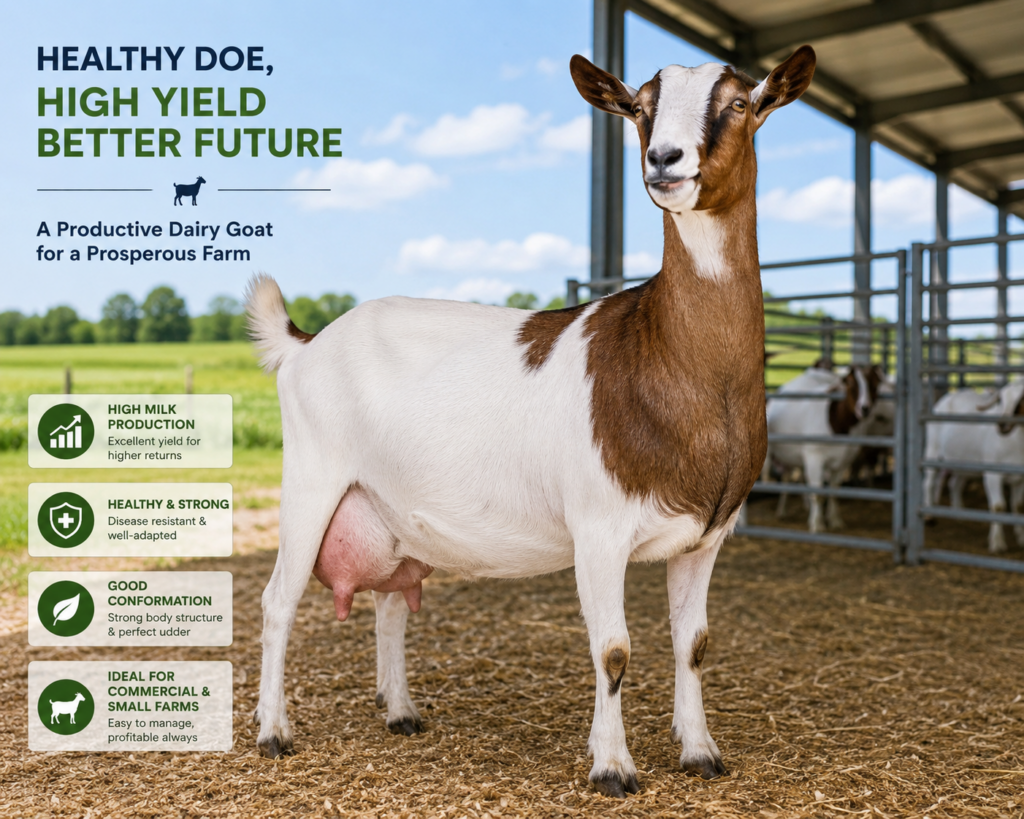
Introduction
Every successful dairy goat farm begins with one crucial decision: choosing the right animals. While proper feeding, housing, disease control, and breeding management all influence milk production, none of these factors can compensate for poor genetics or an unsuitable breed. A goat that lacks dairy potential will never become a high producer, regardless of how much money is spent on feed or veterinary care. Conversely, a well-bred dairy goat with sound health and good conformation can provide years of profitable milk production when managed correctly.
Unfortunately, many first-time farmers make purchasing decisions based on appearance rather than performance. They are attracted to the biggest animal in the market, the goat with the most striking coat colour, or the one offered at the lowest price. Others rely entirely on the seller’s claims without asking for production records, inspecting the animal carefully, or understanding the characteristics of different dairy breeds. These mistakes often lead to disappointment, as the goat produces far less milk than expected or develops health and reproductive problems soon after purchase.
Experienced dairy farmers approach buying differently. They understand that selecting a dairy goat is not simply purchasing livestock—it is investing in the future productivity of the farm. Every doe contributes not only through the milk she produces but also through the genetics she passes to future generations. A carefully selected breeding herd becomes more productive with each kidding season, while poor purchasing decisions can reduce profitability for many years.
This guide explains, in detail, how to identify a high-quality dairy goat before handing over your money. Whether you are buying your first doe or expanding an established commercial herd, the principles discussed here will help you make informed decisions based on proven indicators of productivity rather than guesswork.
Why Choosing the Right Dairy Goat Matters
Purchasing a dairy goat is unlike buying many other farm inputs. Feed is consumed within days, fertilizer is used within a season, and veterinary medicines solve immediate health problems. A dairy goat, however, becomes part of your farming enterprise for many years. During her productive life she may produce thousands of litres of milk and several generations of offspring. The quality of that single purchase therefore influences your farm’s income long after the initial investment has been recovered.
A good dairy goat is valuable because she converts forage into a consistent supply of nutritious milk while producing healthy kids that can either expand your herd or generate additional income through sales. In contrast, a poorly selected animal often becomes an expensive liability. She consumes the same feed as a superior goat, occupies the same housing space, and requires the same veterinary care, yet produces significantly less milk. Over time, these hidden costs accumulate and reduce the profitability of the entire enterprise.
Many experienced farmers emphasize that the cheapest goat is not always the most economical purchase. A low-priced animal with poor genetics or chronic health issues may cost far more in lost production than a healthy, genetically superior doe purchased at a higher price. When evaluating potential purchases, it is therefore more useful to think in terms of lifetime productivity rather than initial purchase price.
The importance of selecting the right goat becomes even greater in Kenya, where climatic conditions, feed availability, and management systems vary considerably from one region to another. A breed that performs exceptionally well in the cool highlands of Nyeri or Nyandarua may struggle under the hotter conditions found in lower-altitude counties. Matching the animal to the production environment is therefore just as important as selecting a breed known for high milk yields.
Ultimately, successful dairy goat farming begins long before the first litre of milk is produced. It begins with understanding what makes an excellent dairy animal and recognizing those characteristics before making a purchase.
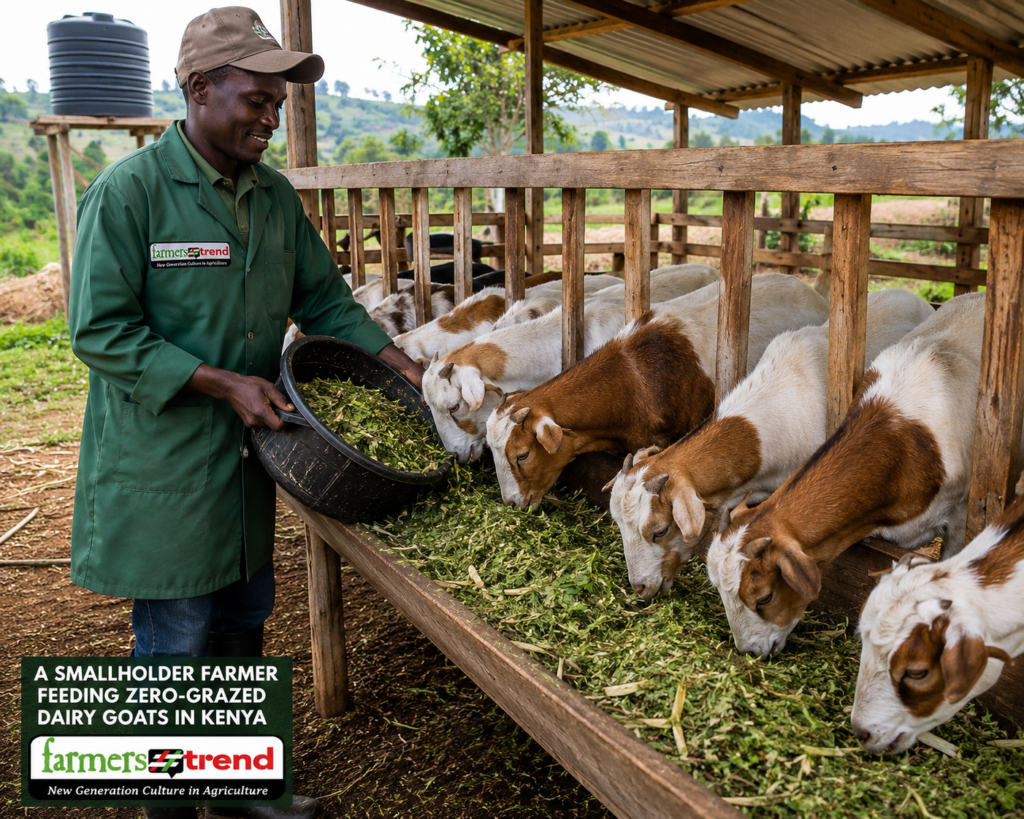
The Growing Importance of Dairy Goat Farming in Kenya
Over the past two decades, dairy goat farming has evolved from a relatively small agricultural enterprise into one of the fastest-growing livestock sectors in Kenya. This growth has been driven by increasing consumer demand for goat milk, rising land pressures that favour smaller livestock species, and growing recognition that dairy goats can provide an attractive source of income for both smallholder and commercial farmers.
Unlike dairy cattle, goats require comparatively little space, making them particularly suitable for farmers operating on small parcels of land. A well-managed dairy goat enterprise can be established on acreage that would be insufficient for a profitable dairy cow operation. This advantage has made goats especially popular in densely populated agricultural regions where land subdivision has reduced farm sizes over successive generations.
The nutritional qualities of goat milk have also contributed to increasing demand. Goat milk is rich in protein, calcium, phosphorus, potassium, and essential vitamins. Its naturally smaller fat globules and different protein structure make it easier for many people to digest compared with cow’s milk. While goat milk should not be considered a medical treatment, these characteristics have helped create a growing market among health-conscious consumers, families with young children, and niche dairy processors producing cheese, yoghurt, and other value-added products.
From an economic perspective, dairy goats offer farmers multiple income streams. Milk sales provide regular cash flow, while surplus kids can be sold for breeding or meat production. Manure contributes to soil fertility, reducing expenditure on chemical fertilizers, while breeding stock from high-performing animals often commands premium prices in the marketplace. These combined benefits explain why many farmers now view dairy goats not merely as livestock but as an integrated farming enterprise capable of generating income throughout the year.
However, achieving these benefits depends heavily on starting with the right foundation. The difference between an average dairy goat and an exceptional one can amount to hundreds of litres of milk over a single lactation. Across several years of productive life, that difference translates into a substantial variation in farm income. Selecting the right animal is therefore not simply about improving production—it is about maximizing the long-term profitability and sustainability of the entire enterprise.
Understanding Dairy Goat Breeds: Choosing the Right Breed for Your Farm
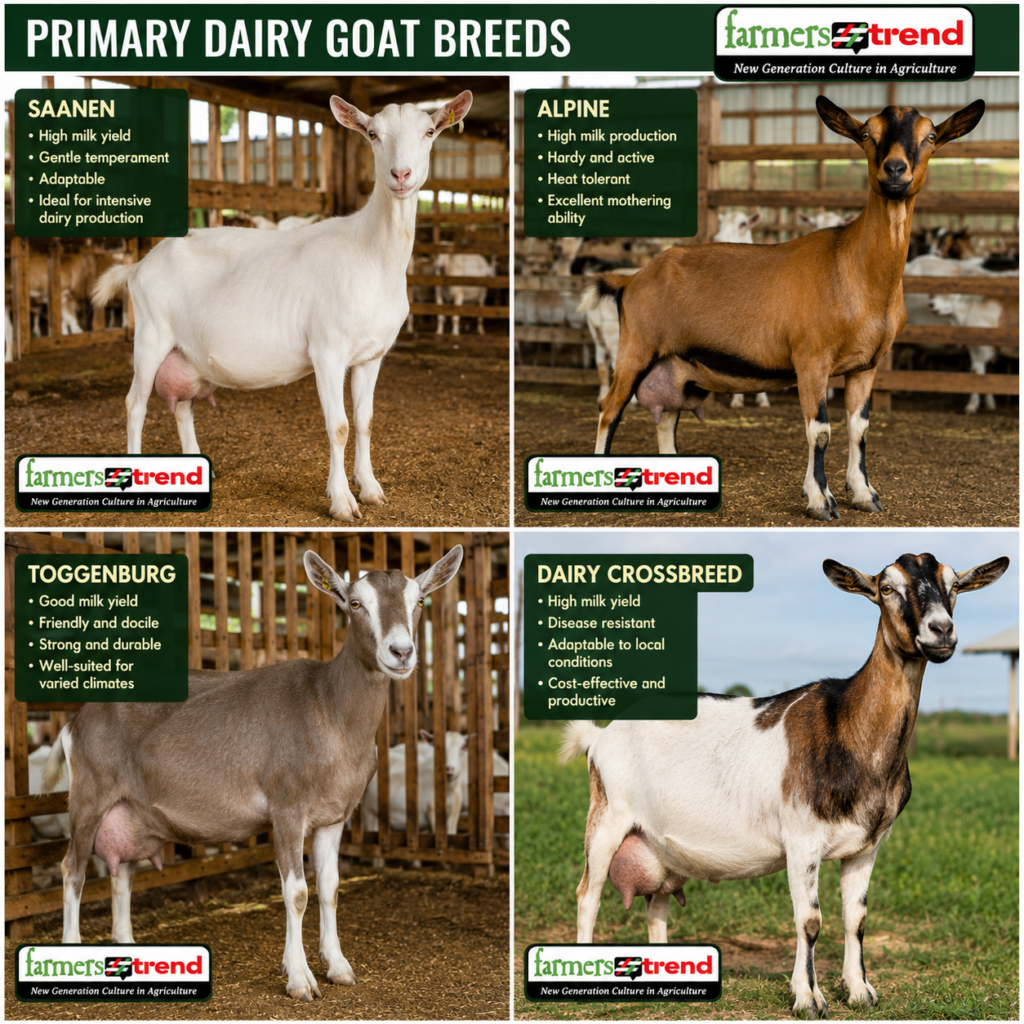
One of the first decisions every dairy goat farmer must make is selecting the breed that best matches their farming conditions and production goals. This decision is far more important than many beginners realize. While management practices such as feeding, housing, and healthcare have a significant influence on milk production, they cannot completely overcome the genetic limitations of an unsuitable breed. A goat bred primarily for meat production will never equal the milk output of a true dairy breed, no matter how well it is managed.
This is where many farmers make costly mistakes. They hear that a particular breed produces large quantities of milk and assume it is automatically the best choice for their farm. In reality, every dairy breed has strengths and weaknesses. Some thrive in cool, high-altitude regions, while others cope better with warmer conditions. Some demand intensive feeding and careful management, whereas others are more forgiving and continue producing reasonably well even under less-than-ideal conditions.
Before discussing how to inspect an individual goat, it is essential to understand the characteristics of the major dairy breeds found in Kenya. Choosing the right breed provides the foundation for everything that follows.
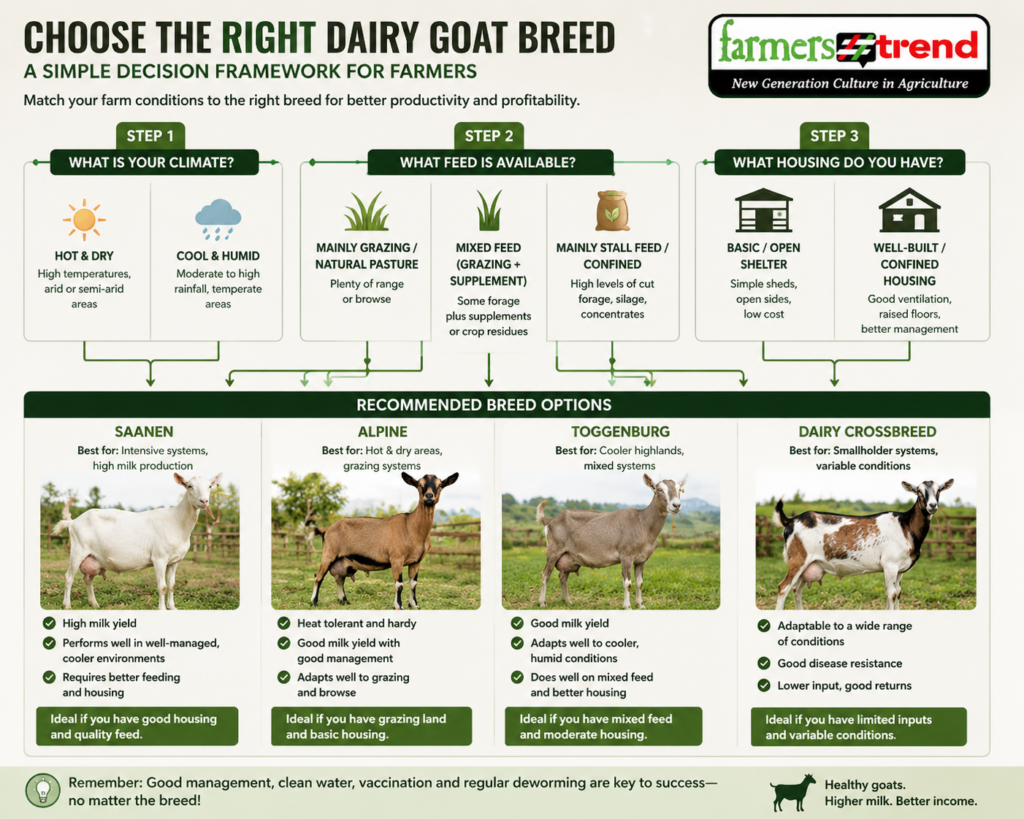
The Saanen Goat: The World’s Leading Dairy Breed
If there is one breed that has earned a reputation for exceptional milk production across the world, it is the Saanen goat. Originating from the Saanen Valley in Switzerland, this breed has become the benchmark against which many other dairy goats are measured. It is widely used in commercial dairy operations because of its impressive milk yield, calm temperament, and excellent dairy conformation.
At first glance, the Saanen is easy to recognize. Most animals have a white or cream-colored coat, although slight variations in shading are common. They possess upright ears, a refined head, and a large-framed body designed for efficient milk production rather than meat. Their appearance reflects decades of selective breeding aimed at maximizing dairy performance.
The greatest strength of the Saanen lies in its remarkable milk-producing ability. Under excellent management, mature does commonly produce between three and five litres of milk each day, with outstanding animals exceeding this level during peak lactation. Over the course of a lactation, annual production may reach 800 to 1,000 litres. Such performance explains why many commercial dairy farms around the world rely heavily on Saanen genetics.
However, these impressive figures often create unrealistic expectations among new farmers. Buying a Saanen does not automatically guarantee high milk production. Genetics establish the animal’s potential, but management determines how much of that potential is realized. Without high-quality forage, balanced concentrates, adequate mineral supplementation, clean water, and effective disease control, even the best Saanen genetics will fail to produce exceptional milk yields.
Climate is another important consideration. The breed evolved in a cool European environment and performs best under moderate temperatures. In Kenya, Saanens generally thrive in highland regions such as Nyeri, Nyandarua, Kiambu, Kericho, and parts of Uasin Gishu, where cooler weather reduces heat stress. In hotter lowland areas, milk production often declines as animals struggle to regulate body temperature.
For farmers capable of providing intensive management, the Saanen remains one of the finest dairy breeds available. For those with limited resources or challenging climatic conditions, however, other breeds may offer better overall profitability despite producing slightly less milk.
The Alpine Goat: Combining Productivity with Adaptability
The Alpine goat has earned its reputation not simply because it produces large quantities of milk, but because it performs consistently across a wide range of environments. Developed in the mountainous regions of France, the breed has adapted to varying climatic conditions and has become one of the most widely distributed dairy goats in the world.
Unlike the Saanen, which is predominantly white, Alpine goats display remarkable diversity in coat colour and patterns. Shades of brown, black, grey, white, and combinations of these colours are common. While colour has no influence on milk production, the distinctive appearance of Alpine goats often makes them attractive to farmers.
From a production perspective, Alpines generally yield between three and four litres of milk per day under good management. Although this is slightly lower than the highest-producing Saanens, many farmers consider the difference insignificant when compared with the breed’s superior adaptability.
One reason for this popularity is the Alpine’s physical strength. The breed possesses strong legs, durable hooves, and excellent mobility, enabling it to perform well under grazing and semi-intensive production systems. Farmers frequently report fewer foot problems and greater longevity compared with more specialized dairy breeds.
Alpines also display impressive reproductive performance. Healthy does are fertile, kid regularly, and often produce twins. Combined with consistent milk production, this reproductive efficiency contributes significantly to the long-term profitability of the herd.
Perhaps the Alpine’s greatest advantage is balance. Rather than excelling in only one characteristic, it performs well across many areas. It produces high volumes of milk, adapts to different climates, reproduces efficiently, and tolerates management variations better than many highly specialized dairy breeds. For farmers seeking dependable production without extremely intensive management, the Alpine represents an excellent choice.
The Toggenburg Goat: Reliability and Hardiness
The Toggenburg is among the oldest recognized dairy goat breeds in the world. Originating from Switzerland, it has earned a reputation for reliability rather than record-breaking milk production. While it may not match the highest yields of elite Saanens, its consistency under practical farming conditions has made it a favourite among many Kenyan farmers.
The breed is instantly recognizable by its chocolate-brown coat and distinctive white facial stripes extending from above the eyes to the muzzle. White markings also appear on the legs, ears, and tail, giving the breed a striking and unmistakable appearance.
Under good management, Toggenburg does typically produce between two and a half and three and a half litres of milk each day. Although these figures are slightly lower than those achieved by Saanens or Alpines, they remain more than sufficient for profitable dairy production when supported by efficient management.
Where the Toggenburg truly excels is resilience. Farmers often describe the breed as forgiving because it continues producing reasonably well even when conditions are less than perfect. It tolerates fluctuations in feed quality better than some specialized dairy breeds and generally demonstrates good resistance to common management-related challenges.
This resilience makes the Toggenburg particularly attractive to smallholder farmers who may not always have access to premium feeds or highly specialized housing. While proper management remains essential, the breed’s adaptability provides an additional margin of safety that many producers appreciate.
Another advantage is longevity. Healthy Toggenburg does often remain productive for many years, reducing replacement costs and increasing lifetime profitability. Their calm temperament also makes them easy to handle, an important consideration for family farms where livestock management is shared among household members.
Dairy Crossbreeds: Practical Solutions for Kenyan Conditions
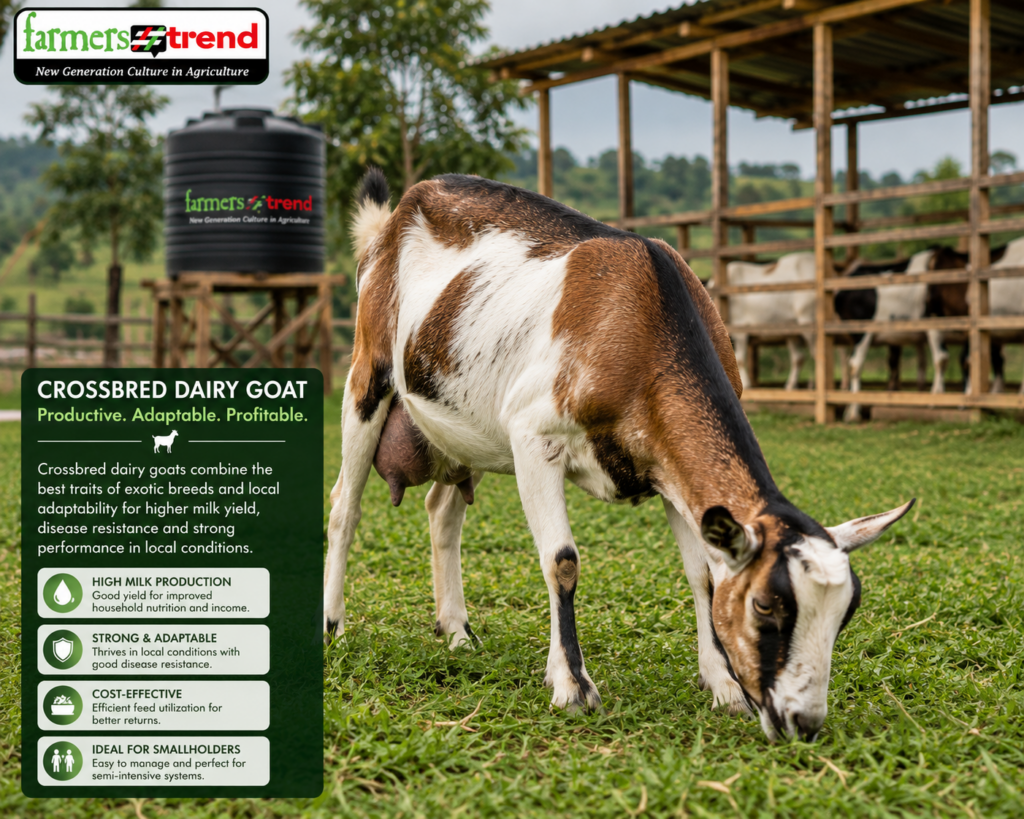
Although purebred dairy goats receive much of the attention, crossbreeding has become one of the most successful strategies for improving dairy production in Kenya. By combining the superior milk-producing ability of exotic dairy breeds with the hardiness of indigenous goats, breeders have developed animals that perform exceptionally well under local conditions.
The principle behind crossbreeding is straightforward. Indigenous goats have evolved over generations to survive local diseases, parasites, climatic stress, and variable feed resources. Exotic dairy breeds contribute the genetic potential for higher milk production. When these strengths are combined through carefully planned breeding programmes, farmers often obtain animals capable of producing respectable milk yields while maintaining excellent adaptability.
This does not mean every crossbreed is automatically superior. The quality of the breeding programme remains extremely important. Crosses produced without careful selection can be highly variable in both appearance and performance. For this reason, farmers should always purchase crossbred animals from reputable breeders who maintain accurate breeding and production records.
Well-bred crosses often produce between two and three litres of milk daily under ordinary farm conditions. Although this is lower than the maximum production of elite purebred animals, many crossbreeds compensate through lower veterinary costs, improved fertility, greater heat tolerance, and better survival rates. When these factors are considered together, the overall profitability of a well-managed crossbreed can equal—or even exceed—that of a more demanding purebred herd.
For many Kenyan farmers, especially those operating under semi-intensive systems, crossbreeds represent an excellent balance between productivity, resilience, and management requirements.
Which Dairy Goat Breed Is Best?
This is perhaps the most common question asked by new dairy goat farmers, yet it has no single answer.
The best dairy goat is not necessarily the one capable of producing the most milk under perfect conditions. Instead, it is the breed that performs most efficiently under your specific farming system.
A commercial farmer in Nyandarua with access to irrigated fodder, balanced concentrates, veterinary support, and modern housing may achieve excellent returns from high-producing Saanens. A smallholder farmer in Machakos relying primarily on natural browse and seasonal fodder may find that a hardy crossbreed delivers better long-term profitability despite producing less milk per day.
Successful livestock farming has always been about matching genetics to management. The most profitable animal is rarely the one with the highest theoretical production. It is the one whose genetic potential aligns closely with the resources available on the farm.
Before purchasing any dairy goat, therefore, farmers should evaluate not only the animal itself but also their own ability to provide the environment in which that animal can thrive. Only when breed, climate, nutrition, healthcare, and management work together does a dairy goat reach its full productive potential.
How to Identify a High-Quality Dairy Goat: Evaluating Body Conformation and Dairy Character
Selecting the right dairy breed is only the first step. Once you have decided whether a Saanen, Alpine, Toggenburg, or well-bred crossbreed best suits your farm, the next challenge is choosing the individual animal. This is where many buyers make expensive mistakes. They focus on colour, size, or even the friendliness of the goat while overlooking the physical characteristics that truly determine long-term milk production.
Experienced dairy farmers rarely rush this stage. Instead, they observe each animal carefully, watching how it stands, walks, breathes, and interacts with the rest of the herd. They understand that the body of a dairy goat tells a story about its health, productivity, and genetic potential. While no single physical trait guarantees exceptional milk production, a combination of desirable characteristics significantly increases the likelihood of purchasing a profitable animal.
A thorough physical examination should always be conducted before discussing price. Once money changes hands, hidden defects become your responsibility.
Understanding Dairy Conformation
The term conformation refers to the overall physical structure of an animal. In dairy production, conformation is not about beauty or show-ring appearance; it is about functionality. Every part of a dairy goat’s body should contribute to efficient milk production, reproductive performance, and longevity.
A productive dairy goat must consume large amounts of forage, convert those nutrients efficiently into milk, carry a heavy udder comfortably, move easily while grazing, and remain productive through multiple lactations. These demands require a body specifically designed for dairy production.
When evaluating conformation, avoid concentrating on a single body part. Instead, assess how the entire animal is put together. A goat may have an excellent udder but weak legs. Another may have outstanding body capacity but poor feet. Successful selection involves balancing all these characteristics rather than searching for perfection in only one area.
The First Impression: Observe Before You Touch
One of the most valuable habits experienced livestock buyers develop is observing animals from a distance before beginning a close inspection.
Stand quietly and watch the goat move naturally around the pen. Observe how confidently it walks, how it interacts with other goats, and whether it appears alert and comfortable. Healthy dairy goats are naturally curious. They respond to movement, investigate unfamiliar people, and remain aware of their surroundings. A goat that isolates itself from the herd, appears unusually dull, or struggles to move may already be showing early signs of illness.
Pay particular attention to posture. A healthy dairy goat stands squarely on all four legs with its back relatively level and its head held confidently. Reluctance to bear weight on one leg, stiffness when walking, or an arched back may indicate pain, injury, or chronic foot problems.
This initial observation often reveals problems that become less obvious once the animal is restrained.
Body Size Is Not the Same as Dairy Potential
Many first-time buyers believe the biggest goat in the market must also be the best producer. This assumption leads to some of the most expensive purchasing mistakes.
Large body size alone does not guarantee high milk production. An oversized goat carrying excess body fat may actually produce less milk than a moderately sized animal with excellent dairy genetics. Likewise, some exceptional dairy goats appear relatively lean because much of the energy they consume is directed toward milk production rather than fat storage.
Instead of looking for sheer size, focus on balance. A quality dairy goat should appear long, deep-bodied, feminine, and well-proportioned. Every part of the animal should fit together harmoniously without appearing coarse or excessively heavy.
Remember that dairy animals are bred to convert nutrients into milk, not muscle. They should therefore look different from meat goats, which are intentionally selected for heavy muscling and compact bodies.
The Ideal Dairy Frame
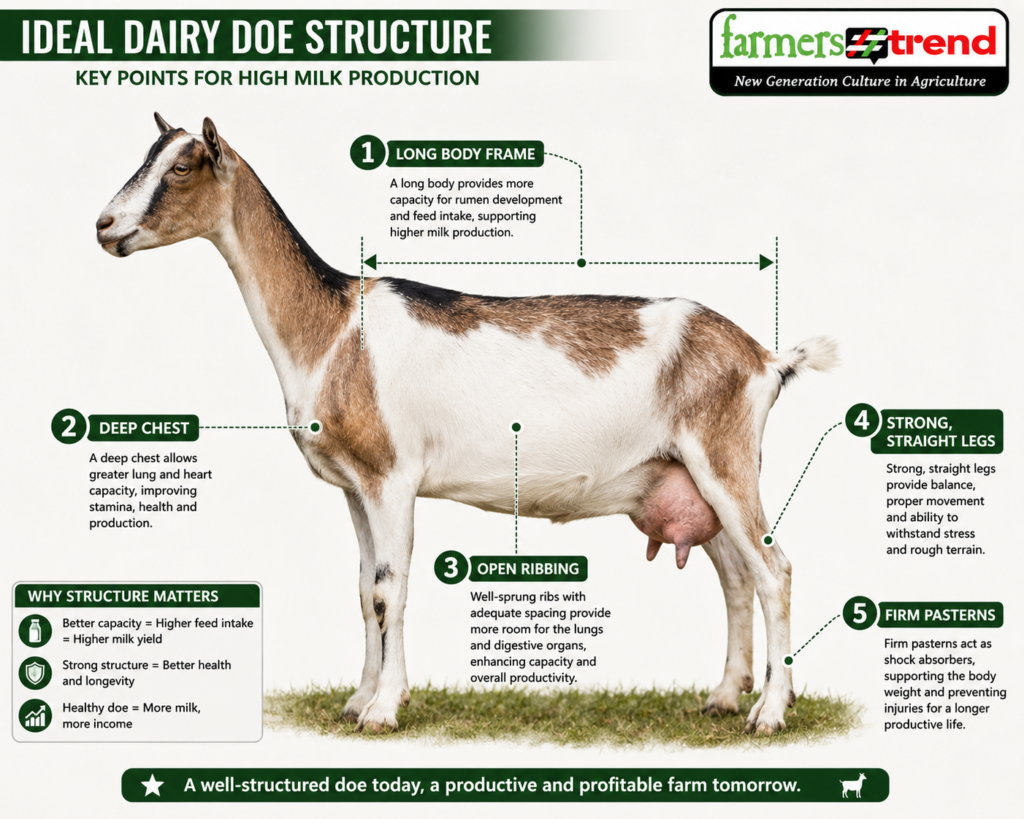
One of the clearest indicators of future productivity is the overall frame of the goat. Dairy goats require adequate internal capacity to consume and digest large quantities of forage every day. This requires a body that is long rather than short, deep rather than shallow, and open rather than compact.
A long body provides more space for the digestive system and reproductive organs while also supporting better udder attachment. Deep-bodied animals generally have greater feed capacity, allowing them to consume enough nutrients to sustain high levels of milk production throughout lactation.
Viewed from the side, an excellent dairy goat should display a smooth, flowing outline. The neck should blend naturally into the shoulders without appearing excessively thick. The back should remain reasonably straight and strong, while the loin should be broad enough to support pregnancy and lactation without weakness.
When viewed from above, the animal should gradually widen from the shoulders toward the hips. This widening indicates good body capacity and provides adequate room for kidding.
The Importance of Chest Capacity
One area frequently overlooked by inexperienced buyers is chest width.
A broad, well-developed chest indicates adequate room for the heart and lungs. These organs play a critical role in maintaining the high metabolic demands associated with milk production. Dairy goats producing several litres of milk each day require efficient circulation and oxygen delivery throughout the body.
Narrow-chested animals often appear refined, but excessive narrowness may indicate poor constitution and reduced stamina. Such goats may struggle to maintain high milk production over long lactations or recover slowly from illness.
When viewing the goat from the front, the chest should appear reasonably wide without becoming excessively coarse.
Ribs: A Window into Dairy Capacity
Experienced dairy judges often pay close attention to the ribs because they provide valuable information about body capacity.
In a productive dairy goat, the ribs should be long, well spaced, and slightly angled backward rather than tightly packed together. This openness creates additional room for the rumen, the largest compartment of the goat’s stomach, where forage is fermented into nutrients used for milk production.
A goat with tightly packed, flat ribs generally has less digestive capacity than one with well-sprung, open ribs. Since milk production depends heavily on feed intake, larger digestive capacity often translates into greater production potential.
It is important, however, to distinguish between natural body depth and abdominal swelling caused by parasites or digestive disorders. A healthy rumen produces balanced body depth rather than excessive bloating.
Strong Legs and Feet: The Foundation of Productivity
Milk production places enormous physical demands on a dairy goat. Every day she must walk to feed, water, and grazing areas while carrying increasing udder weight as lactation progresses. Weak legs or poor feet reduce mobility, decrease feed intake, and eventually lower milk production.
For this reason, experienced buyers devote considerable attention to the animal’s legs.
Viewed from both the front and rear, the legs should appear straight and correctly aligned. The knees should not turn inward or outward excessively, while the hocks should remain strong without appearing swollen.
The pasterns—the area immediately above the hoof—should remain firm and slightly flexible. Weak pasterns cause the animal to sink toward the ground, increasing strain on joints and making movement more difficult.
Observe the goat walking over several metres if possible. The movement should appear smooth, balanced, and effortless. Short, stiff strides or obvious limping should immediately raise concerns.
Inspecting the Hooves
Healthy hooves are essential for productive dairy goats, yet they are often ignored during purchasing decisions.
Lift each foot carefully if the owner allows. The hooves should be clean, evenly shaped, and free from cracks, foul-smelling discharge, or excessive overgrowth. Long, neglected hooves suggest poor management and may hide chronic lameness problems.
Overgrown hooves alter the animal’s posture and walking pattern, placing additional stress on joints and reducing grazing efficiency. Regular hoof trimming is a basic management practice, so neglected feet may indicate that other aspects of animal care have also been overlooked.
Healthy hooves reflect not only the condition of the goat but also the management standards of the farm where it originated.
Dairy Character: What Makes a Goat Look Like a Dairy Goat?
Perhaps the most difficult concept for beginners to understand is dairy character. Unlike body measurements that can be taken with a tape measure, dairy character is the overall impression that an animal gives when viewed as a whole.
A dairy goat should appear refined rather than coarse. The neck is usually long and slender, the shoulders smooth, and the skin relatively thin and supple. Bone should be strong but not excessively heavy. The animal should appear alert, feminine, and energetic.
This refined appearance reflects generations of selection for milk production rather than muscle development. Energy consumed by dairy goats is directed toward producing milk instead of building large amounts of body tissue.
In contrast, goats bred primarily for meat production usually appear thicker through the shoulders, neck, and hindquarters. Their heavier muscling is desirable for meat production but often indicates reduced dairy specialization.
Learning to recognize dairy character takes experience, but once understood, it becomes one of the most valuable skills a dairy goat farmer can develop.
By the time you finish evaluating body conformation, you should already have a strong indication of whether the goat possesses the structural qualities needed for a productive life. However, no matter how impressive the body appears, one part of the animal deserves even closer attention than all the others combined. For a dairy farmer, the udder is the engine of the enterprise. A perfectly built goat with a poorly formed udder will never reach her full potential, while an average-looking doe with an exceptional udder may become the most productive animal in the herd.
Evaluating the Udder: The Most Important Part of a Dairy Goat
If there is one part of a dairy goat that deserves more attention than any other, it is the udder. Experienced dairy farmers often say, “You don’t buy the goat—you buy the udder.” While this may sound like an exaggeration, there is a great deal of truth behind it. The udder is the factory that produces the milk, and its structure has a direct influence on milk yield, milking efficiency, udder health, and the productive lifespan of the doe.
Many first-time buyers spend several minutes admiring the body of a goat but only glance briefly at the udder before making a purchase. This is a costly mistake. An animal may possess excellent genetics, a strong body frame, and good health, yet still become a disappointing producer because of poor udder conformation. Likewise, a well-attached, healthy udder often indicates years of careful breeding for dairy performance.
Learning to evaluate the udder is therefore one of the most valuable skills any dairy goat farmer can acquire.
Why Udder Conformation Matters
Milk production is not determined solely by the amount of milk an udder can hold. Equally important is how well the udder is attached to the body, how efficiently it can be milked, and whether it is likely to remain healthy throughout repeated lactations.
As a doe ages, the udder becomes heavier with each lactation. Poorly attached udders gradually sag under this weight, making them more susceptible to injury, contamination, and mastitis. Once these structural problems develop, they are almost impossible to correct.
Good udder conformation, on the other hand, allows a doe to produce milk comfortably over many years. Strong attachments support the udder close to the body, reducing strain on ligaments while protecting the teats from injury. Such animals are generally easier to milk, whether by hand or machine, and they remain productive longer than goats with weak udder structure.
For this reason, experienced breeders place enormous emphasis on udder quality when selecting replacement breeding stock.
Inspect the Udder Before and After Milking
Whenever possible, examine the goat both before and after milking.
A full udder reveals its carrying capacity, symmetry, and attachment strength. After milking, you can assess how completely the udder empties and whether any abnormal lumps, hard areas, or swelling remain.
Unfortunately, many sellers present goats immediately after milking because the udder appears smaller and hides structural defects. If possible, arrange your visit before the usual milking time or ask the owner not to milk the goat beforehand.
Seeing the udder in its natural, full condition provides far more useful information.
A Well-Attached Udder Is Essential
The first thing to examine is how the udder attaches to the body.
A high-quality dairy goat should have an udder that blends smoothly into the abdomen rather than hanging loosely beneath it. The rear attachment should be wide and high, extending upward between the hind legs. This broad attachment distributes the weight of the udder evenly and provides strong support throughout lactation.
From the side, the front attachment should appear firmly connected to the body without forming a noticeable pocket where dirt and moisture can accumulate. Weak front attachments often allow the udder to swing excessively as the goat walks, increasing strain on supporting ligaments.
The udder should appear balanced rather than pendulous. Excessive sagging not only increases the risk of injury but also makes milking more difficult and exposes the teats to contamination from mud, manure, and vegetation.
Strong attachments are particularly important because they cannot be improved through feeding or management. They are largely inherited and should therefore influence breeding decisions as much as milk production itself.
Symmetry: Both Halves Should Match
A healthy udder consists of two separate halves divided by a strong median suspensory ligament. Each half functions independently, producing milk through its own glandular tissue.
When inspecting the udder from behind, both halves should appear nearly equal in size and shape. Minor differences are normal, particularly if kids have favoured one teat over the other, but major imbalances should raise concerns.
A noticeably larger half may indicate previous mastitis, injury, blocked milk ducts, or chronic damage to one side of the udder. In severe cases, one half may stop producing milk altogether.
Symmetry also contributes to milking efficiency. Evenly developed halves usually empty more uniformly, reducing the risk of residual milk that can encourage bacterial growth.
The Importance of the Median Suspensory Ligament
Although many new farmers have never heard of it, the median suspensory ligament is one of the most important structures in the dairy udder.
This strong ligament runs down the centre of the udder, separating the two halves while supporting their weight. A healthy ligament creates a clearly defined groove between the halves of the udder.
As goats age, weak ligaments gradually stretch under the increasing weight of repeated lactations. The udder loses its definition, begins to hang lower, and eventually becomes pendulous.
Such udders are more difficult to milk, more prone to injury, and generally have shorter productive lives.
When purchasing breeding stock, always favour goats with strong, well-defined median ligaments.
Evaluating Teat Size and Placement
The teats deserve just as much attention as the udder itself.
Ideally, each teat should be medium-sized, cylindrical, and positioned vertically beneath each half of the udder. They should point slightly downward, making them comfortable to grasp during hand milking.
Teats that point outward, inward, or forward may complicate milking and increase the likelihood of incomplete milk removal.
Extremely small teats are frustrating to milk by hand, particularly for commercial farmers managing several animals each day. Conversely, excessively large teats may indicate structural abnormalities or previous injury.
Extra teats, commonly called supernumerary teats, occasionally occur in goats. While small, non-functional extra teats may not significantly affect production, large or functional accessory teats can interfere with milking and are generally considered undesirable in breeding animals.
Good teat placement becomes even more important if the farm intends to adopt machine milking in the future.
Feel the Udder Carefully
Visual inspection alone is not enough. With the owner’s permission, gently examine the udder using your hands.
Healthy udder tissue should feel soft, pliable, and uniformly textured. It should not contain hard knots, thickened areas, excessive heat, or painful swellings.
A healthy udder feels almost sponge-like when full and becomes softer after milking.
Hard lumps or localized swelling may indicate previous infections, scar tissue, or chronic mastitis. These conditions often reduce milk production permanently, even if the goat appears healthy.
Always handle the udder gently. Rough examination causes unnecessary discomfort and may make the animal difficult to evaluate.
Check the Milk Yourself
Never rely solely on the seller’s description of milk production.
Ask permission to milk a small quantity from each teat into a clean container or onto a strip cup. Observe both the ease of milk flow and the appearance of the milk.
Normal milk should flow freely and appear smooth, clean, and free from abnormalities. It should not contain blood, watery fluid, pus, flakes, or clots.
Any abnormal appearance should immediately raise suspicion of mastitis or another udder disorder.
If possible, compare the flow from both teats. Significant differences between the two sides may indicate blockage or damage within one half of the udder.
Recognizing the Early Signs of Mastitis
Mastitis is one of the most costly diseases affecting dairy goats. It reduces milk production, alters milk quality, shortens productive life, and increases veterinary costs.
Unfortunately, some goats with chronic mastitis show few obvious external signs.
During your examination, look for:
- An unusually hot udder compared with surrounding tissue.
- Pain or discomfort when the udder is touched.
- Hard or swollen sections within one half of the udder.
- Milk containing flakes, clots, or watery secretions.
- One side of the udder producing significantly less milk than the other.
- Scar tissue or permanently shrunken halves.
Any of these findings warrant caution. Even if the goat appears otherwise healthy, chronic mastitis can permanently reduce milk production and may spread infectious organisms to the rest of your herd.
Purchasing such an animal often creates more problems than it solves.
Observe the Goat During Milking
Whenever possible, watch the owner milk the goat rather than simply examining the animal afterward.
This provides valuable information that cannot be obtained through physical inspection alone.
Observe whether the goat stands quietly or becomes restless. A calm doe is easier to milk and generally causes fewer management problems.
Watch the speed of milk flow, the amount of milk produced, and how completely the udder empties. Healthy dairy goats usually milk out smoothly without excessive effort.
This simple observation often reveals far more about the goat’s practical value than any verbal claims made by the seller.
Don’t Ignore the History Behind the Udder
An excellent-looking udder should always be supported by good production history.
Ask questions such as:
- How many times has the doe kidded?
- What was her highest daily milk yield?
- How long does she remain in milk after kidding?
- Has she ever suffered from mastitis?
- Has she required veterinary treatment for udder problems?
- Have her daughters shown good udder quality?
A reputable breeder should be willing to answer these questions openly. Hesitation, vague responses, or conflicting information should encourage further investigation before making a purchase.
A beautifully attached udder is only one part of the picture. Even the best udder cannot compensate for poor health, hidden disease, or weak genetics. Before deciding to buy any dairy goat, the next step is to conduct a comprehensive health assessment. Many diseases are not immediately obvious, but subtle signs—visible in the eyes, coat, breathing, movement, and overall condition—can reveal whether a goat is likely to become a productive member of your herd or an expensive veterinary case waiting to happen.
How to Assess the Health of a Dairy Goat Before Buying
No matter how impressive a dairy goat appears on the outside, never make a purchasing decision without conducting a thorough health assessment. A healthy goat is the foundation of a productive dairy enterprise, while an unhealthy animal can quickly become a financial burden through reduced milk production, expensive veterinary treatments, reproductive problems, and the risk of introducing infectious diseases into your herd.
Many diseases do not announce themselves dramatically. In fact, goats are remarkably good at masking illness. As prey animals, they have evolved to conceal signs of weakness because sick individuals are more vulnerable to predators. By the time obvious symptoms appear, the disease may already be advanced. This means that a buyer must learn to recognize the subtle warning signs that distinguish a healthy goat from one that may be hiding an underlying problem.
A careful health assessment should never be rushed. Spend time observing the animal before touching it, then carry out a systematic examination from head to tail. If possible, ask the seller about the goat’s medical history and compare their answers with what you observe. A healthy goat should not only look healthy but also have records and management practices that support its condition.
Begin by Observing the Goat from a Distance
Before handling the goat, spend several minutes watching it in its normal environment. This simple step often reveals valuable information that may be missed during a physical examination.
Healthy goats are naturally alert, curious, and active. They constantly observe their surroundings, respond to unfamiliar sounds, and interact confidently with other members of the herd. Even while resting, they remain attentive and are quick to stand when approached.
A goat that appears dull, depressed, or unusually isolated from the rest of the herd deserves closer scrutiny. While temporary fatigue or stress may occasionally explain such behaviour, persistent lethargy often indicates illness. Similarly, goats that remain standing with their heads lowered for long periods or repeatedly grind their teeth may be experiencing pain or discomfort.
Observe how the animal moves around the enclosure. Does it walk confidently, or does it hesitate? Does it keep pace with the rest of the herd, or does it lag behind? Healthy movement reflects healthy joints, muscles, and overall vitality.
The behaviour of the entire herd can also provide clues. If several animals appear thin, coughing, or inactive, it may indicate poor management or an infectious disease affecting the farm.
Bright Eyes Reveal a Great Deal About Health
Experienced livestock farmers often say that you can judge much of an animal’s health simply by looking into its eyes. While this statement is not entirely literal, the eyes do provide valuable information.
A healthy dairy goat should have bright, clear, and alert eyes. They should appear moist without excessive tearing or discharge. The goat should focus on movement around it and react naturally when approached.
Cloudy eyes, excessive tearing, swelling around the eyelids, or thick discharge may indicate infection, injury, or nutritional deficiencies. Such conditions require careful investigation before purchase.
Another important examination involves the colour of the lower eyelid. Gently pull down the lower eyelid to expose the inner membrane. In healthy goats, this tissue should be a healthy pink colour. Pale or almost white membranes often suggest anaemia, which is frequently caused by heavy internal parasite infestations such as the barber’s pole worm (Haemonchus contortus).
This simple technique, commonly known through the FAMACHA system, has become an important tool for assessing parasite burdens in small ruminants. Although it should not replace laboratory testing, it provides a useful indication of whether further investigation is needed.
Examine the Nose and Muzzle
A healthy goat’s nose should be clean and slightly moist without excessive discharge.
Clear moisture around the nostrils is usually normal, particularly during cool weather. Thick mucus, yellow or green discharge, blood, or persistent crusting around the nostrils may indicate respiratory disease or infection.
Listen carefully as the goat breathes. Normal breathing should be quiet and effortless. Wheezing, coughing, rattling sounds, or open-mouth breathing should never be ignored. Respiratory diseases can spread rapidly within a herd and often require lengthy treatment.
The muzzle should also appear smooth and free from sores, ulcers, or unusual growths. Lesions around the lips or mouth may indicate contagious conditions such as Orf, which can spread to other animals and even infect humans through broken skin.
Inspect the Mouth and Teeth
The mouth provides valuable information about both health and age.
Healthy gums should be pink, moist, and free from ulcers or unusual swelling. The teeth should meet properly, allowing the goat to graze and chew efficiently. Goats with damaged or misaligned teeth often struggle to consume enough feed to maintain good body condition and high milk production.
Take time to examine the lower incisors carefully. Worn, broken, or missing teeth reduce grazing efficiency and often indicate advanced age. Since milk production generally declines as goats grow older, understanding the condition of the teeth helps determine whether the animal is likely to remain productive for several more years.
The mouth should also be free from foul odours, excessive salivation, or painful swelling, all of which may signal dental disease or oral infections.
A Healthy Coat Reflects Good Management
One of the easiest indicators of overall health is the condition of the goat’s coat.
Healthy dairy goats usually have smooth, clean, glossy hair that lies flat against the body. The coat should appear uniform without excessive hair loss, bald patches, or crusted skin.
A dull, rough coat often indicates nutritional deficiencies, heavy parasite burdens, chronic disease, or poor management. External parasites such as lice and mites may cause intense itching, leading goats to rub against fences or walls until patches of hair are lost.
Run your hands gently through the coat while examining the skin underneath. Look for wounds, abscesses, swellings, ticks, lice, or evidence of fungal infections. Although many skin conditions can be treated, they often indicate broader management issues that should influence your purchasing decision.
Assess the Goat’s Body Condition
Body condition provides a clearer picture of nutritional status than body weight alone.
A common mistake among inexperienced buyers is assuming that a fat goat is automatically healthy. In reality, excessive fat can reduce fertility, complicate kidding, and increase metabolic disorders. At the opposite extreme, an extremely thin goat may suffer from malnutrition, parasites, chronic illness, or poor management.
Instead of looking for extremes, aim for moderation.
A healthy dairy goat should feel firm and well-muscled without carrying excessive fat. The backbone and ribs should be detectable beneath the skin but should not appear sharply prominent. The hips should not protrude dramatically, nor should thick fat deposits cover the entire body.
Veterinarians often assess this using the Body Condition Score (BCS), which ranges from one (extremely thin) to five (obese). Most productive dairy does perform best between a BCS of 2.5 and 3.5, depending on the stage of lactation.
Learning to evaluate body condition helps distinguish healthy dairy goats from animals that merely appear large because of excess fat or bloating.
Check for External Parasites
Parasites are among the most common health problems affecting goats in tropical environments.
Carefully inspect areas where parasites commonly hide, including under the tail, around the ears, beneath the jaw, and between the legs. Separate the hair and examine the skin closely.
Ticks appear as attached, blood-feeding parasites and may transmit serious diseases. Lice are smaller but often cause intense irritation, hair loss, and poor body condition. Heavy infestations usually indicate inadequate parasite control on the farm.
While external parasites can generally be treated, their presence should encourage buyers to ask detailed questions about the farm’s deworming and parasite management programme.
Look for Signs of Internal Parasites
Internal parasites are far more difficult to detect than external ones, yet they often cause greater economic losses.
Common warning signs include chronic weight loss despite good appetite, pale eyelids, swelling beneath the jaw (commonly known as “bottle jaw”), rough hair coat, diarrhoea, and reduced milk production.
Ask the seller how frequently the herd is dewormed, which products are used, and whether faecal egg counts are performed to monitor parasite burdens. Responsible farmers generally rotate deworming products only when necessary and combine treatment with pasture management to reduce parasite resistance.
A vague response such as “we deworm occasionally” should prompt caution.
Evaluate the Goat’s Appetite
If possible, observe the goat while it is feeding.
Healthy dairy goats are enthusiastic eaters. They browse actively, chew steadily, and show interest in fresh forage or concentrates.
Poor appetite may indicate illness, dental problems, digestive disorders, or stress. Likewise, goats that chew slowly, repeatedly drop feed from the mouth, or stop eating after only a short period deserve further examination.
The ability to consume large quantities of feed is directly linked to milk production. A goat that cannot eat efficiently cannot produce milk efficiently.
Ask for Vaccination and Treatment Records
Physical examination provides only part of the picture. A responsible dairy farmer also keeps accurate health records.
Before completing any purchase, ask to see documentation covering vaccinations, deworming schedules, veterinary treatments, kidding history, and previous illnesses. These records demonstrate not only the health of the individual goat but also the management standards of the farm.
Be cautious if the seller relies entirely on memory or provides inconsistent answers about previous treatments. Good breeders understand the importance of record keeping and are usually proud to share it with prospective buyers.
Health records also become invaluable once the goat joins your own herd, allowing continuity in vaccination schedules and disease prevention programmes.
A healthy dairy goat should leave you with confidence rather than uncertainty. If you have doubts about the animal’s condition, it is often wiser to walk away than to gamble on an expensive purchase. There will always be another goat for sale, but recovering from the financial and disease-related consequences of introducing an unhealthy animal into your herd can take years.
Determining the Age of a Dairy Goat: Why Age Matters Before You Buy
Age is one of the most overlooked factors when purchasing a dairy goat, yet it has a direct influence on milk production, reproductive performance, longevity, and ultimately the return on your investment. Many buyers assume that a large goat is an older and therefore more productive animal, while a smaller goat is considered too young. In reality, body size varies considerably between breeds, nutrition, and management systems. A well-fed one-year-old doe may appear larger than a poorly managed three-year-old, making visual estimation unreliable.
Unscrupulous sellers sometimes take advantage of inexperienced buyers by claiming that an ageing doe is “just entering her prime” or presenting an old breeding buck as a young, vigorous sire. Unless you know how to estimate age yourself, you risk paying premium prices for an animal whose most productive years are already behind it.
Fortunately, dairy goats reveal their approximate age through one of the most reliable indicators available: their teeth.
Why Age Is So Important
A dairy goat’s productive life follows a predictable pattern. Young does spend their early months growing and developing. After reaching breeding age, they begin producing milk following their first kidding. Milk production usually increases over the next several lactations before gradually declining as the animal ages.
This means that buying a goat at the wrong stage of its life can significantly affect profitability.
A very young doe may require months of feeding before producing any milk, while an elderly doe may only have one or two productive lactations remaining. Understanding where an animal falls within this cycle helps you determine whether the asking price represents good value.
Age also affects breeding. Younger animals generally recover more quickly after kidding, adapt better to new environments, and contribute valuable genetics to future generations. Older animals, while often experienced mothers, may experience declining fertility and increased health challenges.
Rather than asking, “How old is this goat?” experienced buyers ask, “How many productive years can this goat still give me?” The answer to that question is far more valuable.
The Science Behind Ageing Goats by Their Teeth
Like many grazing animals, goats replace their temporary (milk) teeth with permanent teeth at fairly predictable ages. By examining the lower front incisors, you can estimate age with reasonable accuracy until the animal reaches full maturity.
Goats have no upper front incisors. Instead, they possess a hard dental pad against which the lower incisors press while grazing. Because of this unique arrangement, only the lower front teeth are used for age estimation.
To examine the teeth, gently restrain the goat and lift its upper lip while lowering the bottom lip. This exposes the row of lower incisors, allowing you to observe which teeth are permanent and which remain temporary.
The procedure takes only a few seconds but provides valuable information that can prevent expensive mistakes.
Kids: Birth to One Year
Young kids are born with temporary teeth, often called milk teeth. These teeth are small, narrow, and remarkably white.
Throughout the first year of life, all eight lower incisors remain temporary. At this stage, the goat is still developing physically and has not yet reached full maturity.
Although female kids may be bred once they reach the appropriate body weight, experienced farmers avoid breeding solely based on age. A doe should be well developed before becoming pregnant, as breeding undersized animals can stunt growth and increase kidding complications.
When purchasing replacement stock, many farmers choose doelings between eight and twelve months of age because they adapt easily to new farms and offer many years of future production.
One Pair of Permanent Teeth: Approximately One Year
At around twelve to fifteen months of age, the central pair of temporary incisors is replaced by larger permanent teeth.
These new teeth are noticeably broader and stronger than the surrounding milk teeth, making them easy to identify.
A goat with one pair of permanent incisors is generally entering adulthood. Depending on body condition and management, many does at this stage are approaching or have recently experienced their first kidding.
For buyers seeking young breeding animals with long productive futures, this is often an attractive age.
Two Pairs of Permanent Teeth: Around Two Years
By approximately two years of age, the second pair of permanent incisors erupts alongside the first.
At this stage, the goat is becoming fully mature both physically and reproductively.
Many dairy does begin reaching impressive milk yields during their second lactation, provided they have received proper nutrition and healthcare.
For commercial dairy farmers, two-year-old does often represent excellent value because they combine youthful vigour with proven production potential.
Three Pairs of Permanent Teeth: Around Three Years
By the third year, three pairs of permanent incisors have usually erupted.
At this stage, many dairy goats are entering the most productive phase of their lives. Their bodies have reached full maturity, reproductive performance is well established, and milk production often peaks during the third or fourth lactation.
Farmers purchasing healthy three-year-old does with verified production records are often acquiring animals capable of several more years of profitable milk production.
However, this is also the stage where management history becomes increasingly important. A well-managed three-year-old goat may outperform a neglected two-year-old despite being older.
A Full Mouth: Approximately Four Years
By around four years of age, all eight lower incisors have been replaced by permanent teeth.
This is commonly referred to as a full mouth.
A healthy full-mouth doe is often in the prime of her productive life. If she possesses excellent genetics, strong udder conformation, and a history of consistent milk production, she may continue performing at a high level for several years.
Many commercial breeders actually prefer purchasing mature does with full mouths because their production history is already well established. Unlike younger animals, there is less uncertainty about their genetic potential.
Estimating Older Goats
Once all permanent teeth have erupted, estimating exact age becomes more difficult.
Instead of counting newly erupted teeth, buyers examine wear patterns.
As goats age, the teeth gradually become shorter, wider, and more worn. Spaces may begin to appear between adjacent incisors, while some teeth become chipped, loose, or even missing.
An older goat often has noticeably flattened teeth that no longer meet the dental pad efficiently. This reduces grazing ability, making it difficult for the animal to consume enough forage to sustain high milk production.
Extremely worn or missing teeth are strong indicators that the goat has reached the later stages of its productive life.
Teeth Alone Do Not Tell the Whole Story
Although dentition is an excellent guide, it should never be used in isolation.
Nutrition, grazing conditions, and genetics all influence the rate at which teeth wear down. Goats grazing on rocky terrain or consuming abrasive feeds often show greater tooth wear than animals raised under softer grazing conditions.
This means that two goats of similar age may display slightly different dental wear.
For this reason, experienced buyers always combine dental examination with other observations, including body condition, udder quality, production records, and general health.
The Best Age to Buy a Dairy Doe
The ideal age depends largely on your farming objectives.
If your goal is to build a breeding herd from the ground up, purchasing healthy doelings can be a wise long-term investment. They are generally less expensive, adapt readily to new environments, and provide many years of future productivity. The trade-off is patience, as they require time before entering full milk production.
For farmers seeking immediate milk income, does that have recently completed their first or second kidding are often the most practical choice. At this stage they have demonstrated their ability to conceive, kid successfully, and produce milk, while still having many productive years ahead.
Mature does between two and five years of age frequently offer the best balance between proven performance and remaining productive lifespan. Their milk yields are easier to verify, their udder quality can be assessed accurately, and their reproductive history provides valuable insight into future performance.
Very old does should only be purchased under exceptional circumstances, such as acquiring valuable genetics from a highly reputable breeder. Even then, buyers should recognize that future production and breeding potential are naturally declining.
Don’t Trust Age Claims Without Evidence
One of the most common mistakes inexperienced buyers make is accepting the seller’s estimate of age without verification.
Statements such as “She’s only two years old” or “He has only served one season” should always be supported by evidence. Ask to see breeding records, kidding records, or registration documents if available. Compare those records with the condition of the teeth and the overall appearance of the animal.
Reputable breeders usually maintain accurate records because they understand their importance in breeding and herd management. Sellers who avoid questions or provide inconsistent answers should encourage caution.
Remember, you are not simply buying today’s milk production. You are investing in several years of future productivity. Verifying age helps ensure that your investment has the greatest possible opportunity to generate returns.
Verifying Milk Production: Never Buy Promises—Buy Proof
After examining the breed, body structure, udder, health, and age of a dairy goat, there remains one question that ultimately determines whether the animal is worth its asking price:
Can it actually produce the amount of milk the seller claims?
This is where many farmers make expensive mistakes. Sellers often advertise impressive milk yields because they know that milk production commands higher prices. Claims such as “This goat gives five litres a day” or “She is my best producer” sound convincing, but without evidence, they are simply marketing statements.
Successful dairy farmers rarely purchase animals based on verbal promises. Instead, they ask for proof.
Milk production can be measured, recorded, and verified. If a breeder has invested years in developing high-producing dairy stock, they should also have records demonstrating that performance. In fact, reputable breeders are often proud to show buyers production records because they understand that documented performance adds value to their animals.
Whenever possible, ask to see milk recording records from previous lactations. These records should indicate daily production, peak milk yield, length of lactation, and kidding dates. Even simple handwritten records maintained consistently over several years provide more confidence than unsupported verbal estimates.
If records are unavailable, request permission to observe the goat during milking. Watching the animal being milked allows you to verify not only the quantity of milk produced but also the ease of milking, udder health, and the goat’s temperament. A calm doe that stands quietly throughout milking is generally much easier to manage than one that kicks, lies down, or constantly moves.
Milk production should also be interpreted realistically. A goat producing four litres of milk shortly after kidding will naturally produce less several months into lactation. Honest breeders understand this and explain where the animal currently is within its lactation cycle rather than quoting peak production figures as though they occur every day of the year.
Understanding the stage of lactation helps you evaluate whether the reported milk yield is reasonable.
The Importance of Pedigree and Genetics
One outstanding goat may provide excellent milk production, but an outstanding bloodline can transform an entire herd.
Genetics determine the potential that management later develops. A goat born from generations of high-producing dairy animals is much more likely to become an excellent producer than one with unknown ancestry, even when both receive identical feeding and healthcare.
For this reason, serious dairy farmers pay close attention to pedigree.
A pedigree is essentially the family history of an animal. It identifies its parents, grandparents, and sometimes several generations beyond. More importantly, it allows buyers to evaluate whether desirable traits such as milk production, udder quality, fertility, longevity, and disease resistance are consistently passed from one generation to the next.
When purchasing breeding stock, ask questions such as:
- How much milk did the dam produce during her last lactation?
- How productive were the granddam and other female relatives?
- Has the sire produced daughters with good udders and high milk yields?
- Are there any known hereditary defects within the bloodline?
These questions reveal far more than the appearance of the individual goat standing in front of you.
Good breeders know the strengths and weaknesses of their bloodlines. They can explain why particular breeding decisions were made and provide realistic expectations for future offspring.
Buying from Reputable Breeders
The source of the goat is often just as important as the goat itself.
A reputable breeder invests considerable time and resources into nutrition, health management, breeding selection, and record keeping. Such farmers understand the long-term value of maintaining their reputation and are generally transparent about both the strengths and limitations of their animals.
By contrast, animals purchased through informal livestock markets or from unknown traders often come with little or no production history. While excellent goats can occasionally be found in these markets, the risk of purchasing animals with hidden health problems, poor genetics, or inaccurate age claims is considerably higher.
Before making a purchase, visit the farm if possible.
Observe the overall management of the herd.
Are the housing facilities clean?
Do the goats appear healthy?
Are feeding systems organized?
Are young kids thriving?
Do multiple animals display good body condition and well-developed udders?
The condition of the entire herd often reflects the management philosophy of the breeder. Healthy, uniform animals suggest a carefully managed breeding programme, while widespread health problems or poor body condition may indicate underlying management deficiencies.
A reputable breeder should also be willing to answer questions patiently rather than rushing the sale. Farmers who become defensive when asked about production records, vaccination history, or breeding information deserve careful consideration before any money changes hands.
Common Mistakes Farmers Make When Buying Dairy Goats
Every year, many farmers lose significant amounts of money because they repeat the same avoidable mistakes. Understanding these common errors can save both time and investment.
Perhaps the most frequent mistake is buying based on appearance alone. A large, attractive goat may seem impressive, but without good dairy genetics and proven production, appearance means very little.
Another common error is allowing price to become the deciding factor. Bargain animals often become expensive animals once poor milk production, veterinary treatments, and replacement costs are considered. Paying slightly more for a healthy, proven dairy goat is usually far more economical over its productive lifetime.
Some buyers fail to inspect the udder carefully, only discovering after purchase that one half no longer produces milk because of previous mastitis. Others neglect to check the teeth and unknowingly purchase ageing does whose productive years are almost over.
Another mistake is introducing newly purchased goats directly into the existing herd. Even apparently healthy animals should be quarantined for several weeks while their health is monitored. This simple precaution reduces the risk of introducing infectious diseases and parasites to the rest of the farm.
Finally, many beginners purchase animals without considering whether they can provide adequate feeding, housing, and healthcare. Even the finest dairy goat cannot perform well under poor management. Successful dairy farming begins with matching the quality of the animal to the farmer’s ability to meet its nutritional and management needs.
A Practical Checklist Before You Buy
Before making your final decision, pause and ask yourself a series of practical questions.
Is the breed suitable for your climate and farming system?
Does the goat have a strong dairy frame with sound legs and healthy feet?
Is the udder well attached, symmetrical, and free from signs of mastitis?
Are the eyes bright, the coat healthy, and the body condition appropriate?
Does the estimated age match the seller’s claims?
Can the seller provide production records or demonstrate current milk yield?
Are vaccination, deworming, and breeding records available?
Does the goat come from a reputable breeder with a healthy herd?
Most importantly, would you feel confident introducing this animal into your own breeding programme?
If the answer to any of these questions is uncertain, take more time. Livestock purchases should never be rushed.
Frequently Asked Questions About Choosing a Dairy Goat
Choosing a dairy goat is a significant investment, and it is natural to have questions before making a purchase. Whether you are a first-time farmer or an experienced livestock producer looking to improve your herd, understanding the answers to the most common questions can help you avoid costly mistakes and make informed decisions. The following questions address many of the concerns farmers have when selecting dairy goats in Kenya.
1. Which dairy goat breed produces the most milk?
Among the dairy goat breeds commonly kept in Kenya, the Saanen is generally regarded as the highest milk producer. Under excellent management, a mature Saanen doe can produce between three and five litres of milk per day, with exceptional animals exceeding this level during peak lactation. Over a full lactation, some well-managed Saanens may produce between 800 and 1,000 litres of milk.
However, it is important to understand that breed alone does not determine production. Milk yield depends on genetics, nutrition, health, housing, and management. A poorly fed Saanen will often produce less milk than a well-managed Alpine, Toggenburg, or quality crossbreed. Therefore, farmers should focus on selecting healthy animals with proven production records rather than relying solely on breed reputation.
2. Which dairy goat breed is best for beginners?
For many beginner farmers, a well-bred Alpine, Toggenburg, or dairy crossbreed is often a better choice than a pure Saanen. These goats tend to be more adaptable to varying climatic conditions and are generally more forgiving when management is not perfect.
Crossbreeds, especially those developed by crossing improved dairy breeds with indigenous goats, combine good milk production with greater resistance to diseases, parasites, and heat stress. They also adapt better to local feeding systems and usually require less intensive management.
Beginners should focus on learning proper feeding, housing, breeding, and healthcare before investing in highly specialized dairy animals that demand excellent management to achieve their full production potential.
3. At what age should I buy a dairy goat?
The ideal age depends on your farming objectives.
If you want immediate milk production, purchase a healthy doe that has recently completed her first or second kidding. These animals have already demonstrated their ability to breed successfully and produce milk while still having many productive years ahead.
If your goal is to establish a breeding herd, buying well-grown doelings between eight and twelve months of age can be an excellent long-term investment. Although they require more time before producing milk, they adapt well to new environments and offer a longer productive lifespan.
Very old goats should generally be avoided unless they possess exceptional genetics and their production history clearly justifies the investment.
4. How can I tell if a dairy goat is healthy before buying?
A healthy dairy goat should appear alert, active, and curious. Its eyes should be bright and clear, while the coat should be smooth, clean, and glossy. The animal should walk comfortably without limping, breathe normally without coughing or wheezing, and maintain a moderate body condition.
The udder should be soft, symmetrical, and free from lumps or swelling. The lower eyelids should have a healthy pink colour rather than appearing pale, which may indicate anaemia caused by internal parasites.
Buyers should also ask to see vaccination records, deworming history, and previous veterinary treatments. Health records provide valuable information that cannot be obtained through physical examination alone.
5. Should I buy a purebred or a crossbred dairy goat?
There is no universal answer because the best choice depends on your farming system.
Purebred dairy goats generally have greater genetic potential for milk production and are preferred by commercial breeders interested in maintaining specific bloodlines. However, they usually require better nutrition, housing, and healthcare to achieve their full potential.
Crossbred dairy goats often produce slightly less milk but compensate through better adaptability, improved heat tolerance, stronger disease resistance, and lower management requirements. For many smallholder farmers in Kenya, these advantages make crossbreeds a more profitable option over the long term.
Rather than asking which is better, ask which is more suitable for your climate, budget, and management capacity.
6. How important are production records when buying a dairy goat?
Production records are among the most reliable indicators of future performance. While appearance provides useful information about health and conformation, records demonstrate what the animal has actually achieved.
A reputable breeder should be able to provide information about previous milk yields, kidding dates, lactation length, breeding history, and veterinary treatments. These records allow buyers to compare the seller’s claims with documented performance.
If records are unavailable, ask to observe the goat during milking. Watching the milking process provides valuable insight into milk yield, udder health, and temperament.
Never rely solely on verbal promises when making an investment that may influence your farm for many years.
7. How much should I expect to pay for a quality dairy goat?
The price of a dairy goat varies depending on breed, age, production history, pedigree, pregnancy status, and the reputation of the breeder. High-quality registered breeding stock with proven milk records naturally commands higher prices than unregistered or unproven animals.
While it may be tempting to choose the cheapest goat available, experienced farmers understand that purchase price represents only a small portion of the animal’s lifetime value. A healthy, productive goat often generates far more income than a cheaper animal with poor genetics or chronic health problems.
Instead of asking, “Which goat costs the least?” ask, “Which goat offers the best return on my investment over the next five to eight years?”
8. Should I quarantine a newly purchased dairy goat?
Yes. Every newly purchased goat should be quarantined before joining your existing herd, regardless of how healthy it appears.
A quarantine period of approximately two to four weeks allows you to monitor the animal for signs of illness, treat any parasites if necessary, and reduce the risk of introducing infectious diseases to the rest of your livestock.
During quarantine, observe appetite, body temperature, manure consistency, breathing, and general behaviour. Consult a veterinarian if any health concerns arise before integrating the goat into the main herd.
Skipping quarantine can result in disease outbreaks that affect every animal on the farm.
9. Can I judge a dairy goat simply by its appearance?
Appearance provides useful information, but it should never be the only basis for making a purchase.
An attractive goat with excellent body conformation may still have poor genetics, low milk production, or hidden health problems. Likewise, an average-looking animal may possess outstanding production records and exceptional breeding value.
The best purchasing decisions combine several factors, including breed, body structure, udder quality, health status, age, production records, pedigree, and breeder reputation.
Successful dairy farmers evaluate the complete animal rather than relying on first impressions.
10. What is the biggest mistake people make when buying dairy goats?
Perhaps the greatest mistake is allowing emotion to replace careful evaluation.
Many buyers become attached to an animal because of its colour, size, or low price without thoroughly examining its health, udder, teeth, production records, or breeding history. Others allow themselves to be persuaded by exaggerated claims that cannot be verified.
Successful dairy farming is built on informed decisions rather than impulse purchases.
Before buying any goat, take your time. Ask questions, inspect the animal carefully, request documentation, and compare several goats before making your final choice. Walking away from a questionable purchase is often the smartest financial decision a farmer can make.
Conclusion
Choosing a dairy goat is one of the most important decisions you will make as a livestock farmer. The quality of the animals you introduce into your herd will influence milk production, breeding success, veterinary costs, and farm profitability for many years. While feeding, housing, and healthcare play essential roles in dairy production, they cannot compensate for poor genetics or unsuitable breeding stock. The foundation of every successful dairy goat enterprise is selecting the right animals from the very beginning.
Throughout this guide, we have explored the essential factors that distinguish an exceptional dairy goat from an average one. We have examined the strengths of the major dairy breeds found in Kenya, explained how body conformation influences productivity, discussed the importance of a healthy and well-attached udder, outlined the key signs of good health, and demonstrated how to estimate age accurately using the teeth. We have also highlighted the value of production records, pedigree information, and buying from reputable breeders who maintain high management standards.
Perhaps the most important lesson is that no single characteristic determines whether a dairy goat will be profitable. High milk production results from a combination of superior genetics, good health, sound physical structure, proper nutrition, effective disease control, and consistent management. Evaluating only one of these factors while ignoring the others increases the risk of making an expensive mistake.
Patience is one of the greatest assets a livestock farmer can possess. Never feel pressured to purchase the first goat you see or to accept claims that cannot be verified. Visit several farms, compare animals carefully, ask detailed questions, inspect records, and if necessary, seek advice from experienced dairy goat farmers or livestock extension officers. A few extra hours spent evaluating an animal can save years of lost production and unnecessary expenses.
Finally, remember that buying the right dairy goat is only the beginning. Once the animal arrives on your farm, its future performance will depend on the care it receives. Providing balanced nutrition, clean housing, adequate water, regular vaccinations, parasite control, proper breeding management, and accurate record keeping will allow the goat to express its full genetic potential. The best dairy goats are not only born—they are also well managed.
By applying the principles outlined in this guide, you will be better equipped to identify productive dairy goats, avoid common purchasing mistakes, and build a herd that delivers consistent milk production, healthy offspring, and sustainable profits. In dairy goat farming, informed decisions made today become the foundation of tomorrow’s success.
https://farmerstrend.co.ke/livestock-farming/goat-farming/the-best-dairy-goat-for-high-milk-production-in-kenya/https://farmerstrend.co.ke/wp-content/uploads/2026/07/A-smallholder-farmer-in-Kenya-feeding-zero-grazed-dairy-goats-in-a-elevated-wooden-pen-setup-1024x819.pnghttps://farmerstrend.co.ke/wp-content/uploads/2026/07/A-smallholder-farmer-in-Kenya-feeding-zero-grazed-dairy-goats-in-a-elevated-wooden-pen-setup-150x150.pngGoat Farming# TrendingLivestock FarmingAgriculture Kenya,Alpine Goats,Alpine goats Kenya,best dairy goat breeds in Kenya,best dairy goat for beginners,biosecurity,body condition score,breeding stock,buying dairy goats in Kenya,Concentrates,dairy conformation,dairy enterprise,dairy farming,dairy goat breeds,dairy goat buying checklist,dairy goat conformation,dairy goat farming,dairy goat farming Kenya,dairy goat health,dairy goat management,dairy goat prices in Kenya,dairy goat production records,dairy goats for sale Kenya,dairy goats Kenya,deworming,farm management,feed conversion,forage,genetics,Goat Breeding,goat farming,goat milk production,high milk producing goats,hoof trimming,how to buy a dairy goat in Kenya,How to choose a dairy goat,how to choose high milk producing goats,how to identify a good dairy goat,how to inspect a dairy goat before buying,kidding,kidding interval,lactation,livestock farming,Livestock Management,Mastitis,milk yield,mineral supplementation,parasite control,pedigree,profitable dairy goat breeds in Kenya,profitable dairy goat farming,purebred vs crossbred dairy goats,reproductive performance,rumen health,Saanen Goats,Saanen goats Kenya,signs of a healthy dairy goat,smallholder farming,teat placement,Toggenburg Goats,Toggenburg goats Kenya,udder attachment,VaccinationChoosing the right dairy goat is the single most important decision you'll make before starting or expanding a dairy goat enterprise. Learn how to identify high-producing goats, compare the best dairy breeds in Kenya, avoid costly buying mistakes, and select animals that will remain productive for many years.Introduction Every successful...FarmersTrendjohn doefarmerstrend@gmail.comAdministratorFarmers Trend Ltd.









Leave a Reply