Agroecology Farming in Kenya: Ex-MP Replaces Chemicals with Rabbit Urine and Neem on 60-Acre Farm
Agroecology farming in Kenya is being demonstrated on a 60-acre farm that uses rabbit urine, neem, and tithonia to replace synthetic pesticides and fertilisers for sustainable production.
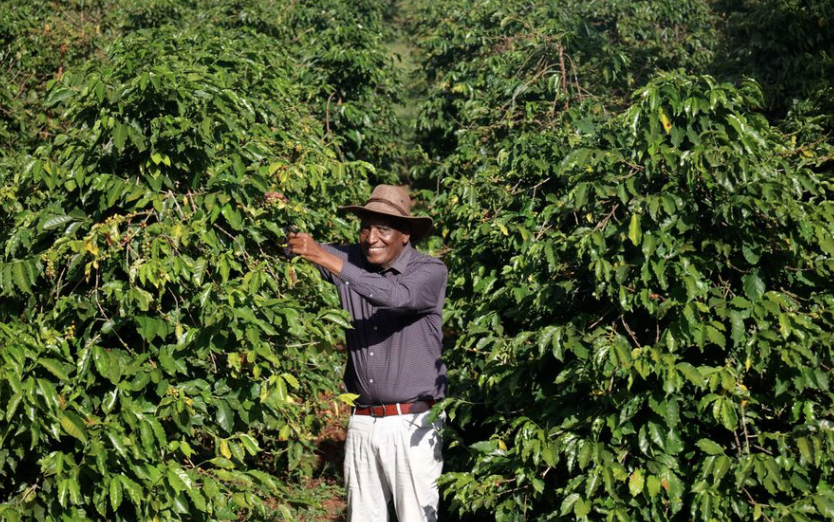
At Mr Nduati Kariuki’s farm, located about six kilometres off the Thika Super Highway in Kabati, Murang’a County, farming activities bustle across the expansive property, demonstrating decades of leadership experience and a deep commitment to sustainable agriculture.
The 60-acre farm, home to Kenya Vineyards Limited, has become a model for promoting sustainable farming methods amid worsening climate shocks. While many farmers continue to rely heavily on synthetic fertilisers and chemicals to boost production, Mr Nduati has embraced a different path rooted in traditional and sustainable agricultural practices.
At the centre of his approach is agroecology, a farming system that integrates environmentally friendly and sustainable practices.
“The debate on food security and hunger can be addressed through agroecology if it is fully embraced and properly explored,” says the former Murang’a County Speaker (2013 – 2022).
Murang’a was the first county in Kenya to pass and enact an agroecology policy (2023), even before the National Government launched the National Agroecology Strategy in 2024.
The legislation was passed under Mr Nduati’s leadership during his tenure as county speaker. Having also served as Assistant Minister for Agriculture and Finance, Nduati has remained at the forefront of promoting agroecology in the country.
“It is a critical policy which, if fully implemented not only at the county level but also nationally, can help bridge the country’s food deficit,” he says.
Other counties that have since aligned their agricultural strategies with the National Agroecology Strategy 2024–2033 include Vihiga, Kiambu, West Pokot and, most recently, Nakuru.
At his farm, Mr Nduati is practically demonstrating the principles of agroecology. He says the sustainable farming practices adopted on the farm have significantly reduced the use of synthetic fertilisers and chemicals.
His journey into agroecology, he explains, was inspired by visits to farms in Europe, where he observed a growing consumer shift toward organically produced food. According to him, consumers in developed countries are increasingly avoiding chemically grown produce, even as those same countries export agrochemicals to Africa.
He warns that unless African countries act carefully, they risk degrading their soils and ecosystems while also losing access to export markets increasingly rejecting chemically produced agricultural exports.
Having served in the country’s leadership positions at different levels, he says he foresaw a future in which key export crops such as coffee, tea, and horticultural produce could face restrictions in international markets due to chemical residues. This realisation, he adds, pushed him to champion the development of an agroecology policy in Murang’a County.
“In 2022, I personally initiated the drafting of the county’s agroecology policy, working closely with the County Assembly’s technical team and consulting experts in sustainable agriculture,” he explains.
The former Makuyu Member of Parliament tells Climate Action that agroecology goes beyond organic farming, incorporating climate adaptation, biodiversity conservation, soil restoration and healthy food production.
“African soils have been depleted by overuse of synthetic fertilisers that destroy soil microorganisms. We must rebuild soil life,” he says.
While he is not entirely opposed to fertiliser use, Mr Nduati advocates for reducing dependence on imported synthetic inputs and increasing reliance on locally available organic alternatives, especially for small-scale farmers.
Integrated farming system
On his farm, Nduati has significantly reduced chemical use and replaced it with biological and organic pest and soil management systems. Instead of synthetic pesticides, fungicides and herbicides, the farm uses extracts from tithonia, neem (mwarubaini), sisal and rabbit urine to control pests and diseases.
Kenya Vineyards Limited farm manager John Munyiri Wagura explains how the system works in practice. The farm keeps rabbits, pigs, dairy goats and chickens, forming a closed-loop system where waste is recycled into farm inputs.
“We collect rabbit urine and use it as both a foliar spray and pest repellent. It contains nitrogen and uric acid, which help repel insects while improving leaf greenness and plant growth,” Mr Wagura says.
He adds that tithonia and neem extracts are also used as natural pesticides, while sisal-based preparations help in pest deterrence.
“Rabbit urine is collected from specially designed rabbit hutches where the urine is trapped and stored for use in crop production,” He told Climate Action during an interview at the farm in Kabati.
The farm grows a wide range of organically managed crops, including coffee, avocado, macadamia, bananas, pawpaw, maize, sweet potatoes, cassava and a variety of vegetables such as capsicum, cabbages, lettuce, tomatoes, spinach, carrots, onions and indigenous vegetables like managu, terere, saga, murenda and kunde. It has also introduced dragon fruit, which is thriving in Murang’a’s warmer lower zones. Onions are also key in repelling pests.
Mr Wagura who also has a background in agriculture, notes that the farm also demonstrates vertical gardening through sack gardens and hanging systems, showing how even households with limited land especially in urban setups can produce food sustainably. To support livestock nutrition, the farm produces azolla and duckweed, fast-growing aquatic plants used as protein-rich feed for fish, rabbits, pigs and poultry. “We call them free protein because they are ready in about seven days,” Wagura explains.
Animal waste is further processed using Black Soldier Fly (BSF) larvae, which convert organic waste into nutrient-rich fertiliser within about 45 days. The resulting frass (manure) is used to enrich soils across the farm.
Soil regeneration and climate resilience
According to Mr Wagura, organic farming on the farm is defined by the elimination of synthetic pesticides, herbicides, fungicides and fertilisers, replaced by biological inputs and on-farm resource recycling.
“We are not just feeding crops; we are restoring soil health and microbial life,” says the farm manager.
The farm relies on a borehole and a dam for irrigation, with solar-powered pumps distributing water across the fields. It also hosts two fish ponds capable of holding up to 10,000 fish each, further integrating aquaculture into the system.
Mr Nduati admits that it is still early to provide full comparative production data since the farm recently transitioned fully into agroecology circular economy.
“The crops are visibly healthy and vigorous. I believe the system is a potential long-term solution to farming challenges farmers face,” he told Climate Action in an exclusive interview.
He argues that wider adoption of agroecology could reduce Kenya’s dependence on imported farm inputs, improve public health outcomes and lower household medical costs linked to chemical exposure in food systems.
The former Speaker also raises concerns about soil erosion and environmental degradation in Kenya, recalling that rivers such as Chania were once clean but are now heavily polluted due to erosion and poor land management practices. He criticises the post-independence abandonment of bench terracing, saying it contributed to severe soil loss in hilly areas.
Amid worsening climate change impacts, which continue to strain agriculture and livestock production across sub-Saharan Africa, agroecology is emerging as a critical alternative. The approach promotes biodiversity, healthy soils, natural pest control and reduced reliance on synthetic chemicals, combining scientific and indigenous knowledge to build resilient food systems.
Despite its promise, inefficiencies in agricultural systems still lead to significant post-harvest losses, estimated at nearly 40 per cent before food reaches consumers, driven by poor logistics and storage, pushing up urban food prices while reducing farmers’ incomes.
Mr Nduati urges leaders to use public platforms not only for politics but also to educate communities on agriculture, climate change and soil conservation, with the involvement of technical experts. Even as he champions agroecology, he says sustainable farming methods can significantly help address the country’s youth unemployment crisis because the sector offers diverse opportunities across the agricultural value chain.
“Agriculture remains one of the most underutilised opportunities due to negative perceptions of farming. Young people must rethink agriculture. Agroecology and agribusiness can provide dignified and sustainable livelihoods.”
His farm also hosts local and international visitors who tour its demonstration units before being served meals prepared from farm produce.
By: Sammy Waweru











Leave a Reply