Macadamia Farming in Kenya 2026 – The Murang’a 20 Revolution Guide to High-Yield Production
The Murang’a 20 Revolution: Navigating the Commercial Frontiers of Macadamia Farming in Kenya
The macadamia sector in Kenya has undergone a fundamental transformation over the past decade, shifting from a scattered backyard crop to a highly organized export commodity that now supports over 200,000 farmers across the central highlands and eastern regions.
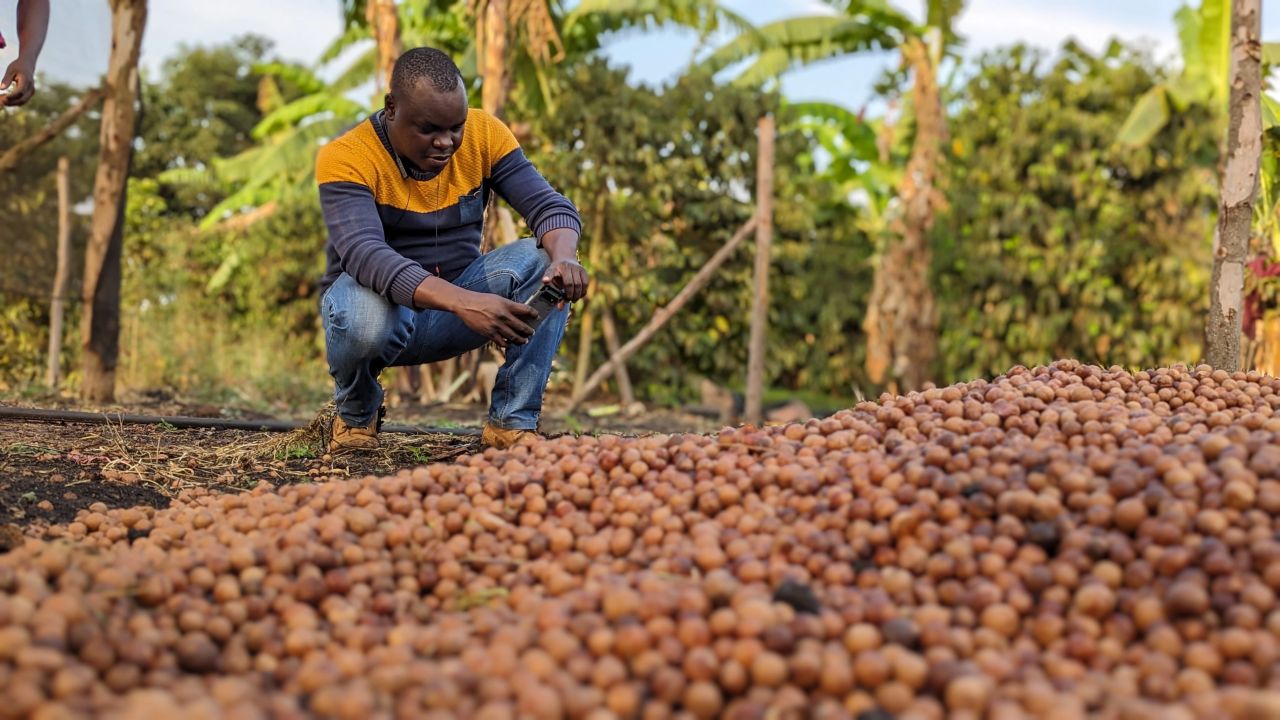
The Agriculture and Food Authority (AFA) has tightened regulations, the Kenya Plant Health Inspectorate Service (KEPHIS) has enforced strict nursery certification, and exporters have raised their quality standards. In this new environment, the choice of variety determines success or failure, and the Murang’a 20 (MRG-20) has emerged as the undisputed king of the export market.
Macadamia farming in Kenya has become a serious business for farmers who understand the long-term nature of the investment. A farmer who plants MRG-20 seedlings today will wait 3 to 4 years for the first harvest, but once the trees start producing, they will keep producing for 40 to 50 years. Each mature tree yields 70 to 80 kilograms of nuts in shell annually, and with 125 trees per acre, the gross revenue potential reaches 1.2 to 2 million shillings per acre at full production. The waiting period is long, but the returns justify the patience.
This feature by Farmers trend Limited examines the commercial frontiers of macadamia farming in Kenya, focusing specifically on the MRG-20 variety that has captured the attention of exporters and large-scale growers. We will explore the genetics, the agronomic protocols, the pest management strategies, and the financial projections that define success in this industry. The information comes from nursery operators, certified growers, export processors, and regulatory bodies.

The 2026 Resurgence of the Macadamia Sector
Macadamia farming in Kenya has experienced a remarkable resurgence since the lifting of the harvesting ban in February 2026, and the industry now operates under strict AFA regulations that protect both farmers and exporters. The harvest window runs from February to May, and any nuts picked outside this window are rejected by processors because they lack the oil content required for international markets. This regulatory framework has stabilized prices and improved the reputation of Kenyan macadamia globally.
The socio-economic impact of macadamia in Central Kenya cannot be overstated, and counties like Murang’a, Kiambu, Nyeri, Kirinyaga, Embu, and Meru have seen significant poverty reduction due to nut farming. Farmers who previously struggled with low-value crops have converted their land to macadamia orchards, and the income from a single mature tree can exceed the annual earnings from a quarter acre of maize. The processing and export value chain employs thousands of workers in sorting, cracking, drying, and packaging facilities.
The role of the AFA in regulating the industry has been crucial, and the authority now enforces a strict harvesting calendar that protects farmers from price crashes during glut periods. The ban on importing seedlings from unverified sources has also reduced the spread of diseases, and the requirement for nursery certification has ensured that farmers receive true-to-type planting material. These regulations have made macadamia farming in Kenya a more predictable and profitable enterprise.
| Year | Growth Stage | Expected Yield per Tree | Management Requirement |
|---|---|---|---|
| 1-3 | Establishment | 0 kg | Regular watering, mulching, weed control |
| 4 | First harvest | 2-5 kg | Light pruning, pest monitoring |
| 5 | Early production | 10-15 kg | Fertilizer application, pest control |
| 6 | Increasing yield | 20-30 kg | Canopy management, regular feeding |
| 7+ | Full production | 70-80 kg | Annual pruning, consistent nutrition |
Genetics and Procurement: The 350 KSh Murang’a 20 Investment
The Murang’a 20 variety, commonly referred to as MRG-20, was developed through rigorous selection by the Kenya Agricultural and Livestock Research Organization (KALRO) specifically for Kenyan conditions, and it has since become the preferred choice for export markets due to its high kernel recovery rate. Unlike older varieties like KMB-3 or Kirinyaga-15, which produce smaller kernels and lower oil content, the MRG-20 consistently delivers kernel recovery of 33 to 35 percent, which is the threshold that international buyers demand.
The best macadamia variety in Kenya for commercial production is unequivocally the MRG-20, and farmers who plant this variety achieve significantly higher returns than those who plant traditional varieties or unverified seedlings. The kernel recovery rate is the single most important metric for exporters because it determines how much saleable nut meat is obtained from each kilogram of in-shell nuts. A variety with 35 percent kernel recovery produces 350 grams of nut meat from every kilogram of in-shell nuts, while a variety with 30 percent kernel recovery produces only 300 grams.
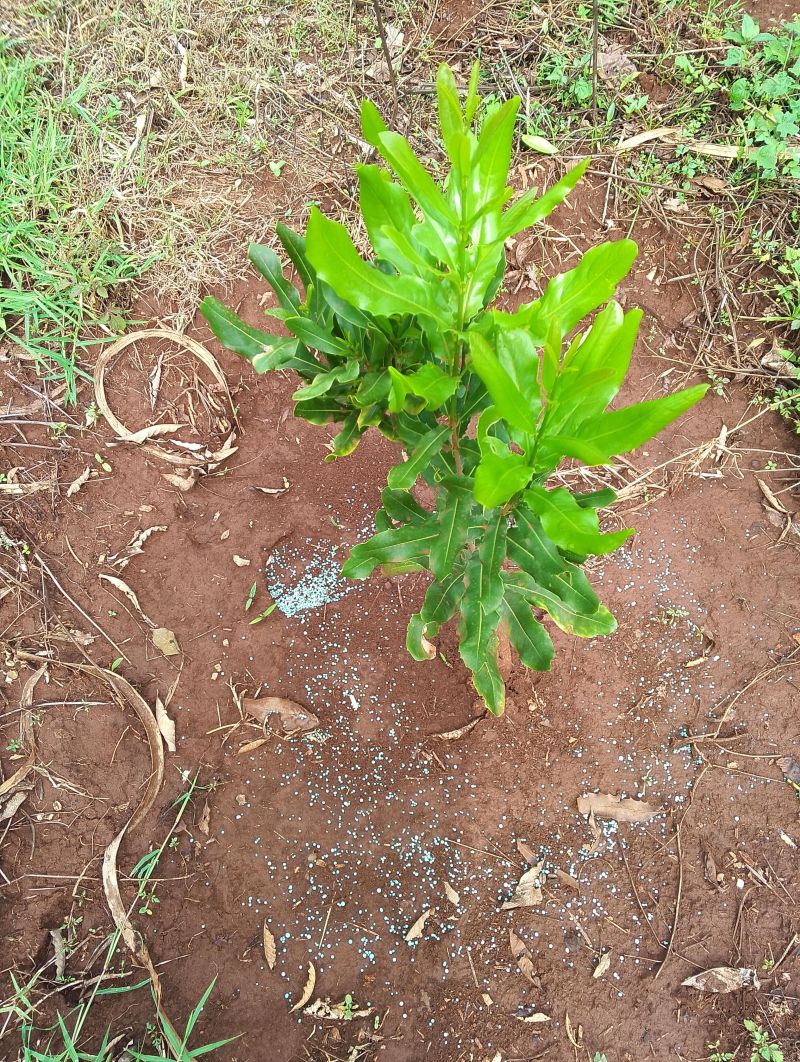
Certified Murang’a 20 (MRG-20) seedlings at Farmers Trend cost 350 shillings, and this price represents a strategic entry point for commercial growers who want to establish high-value orchards. The seedlings are grafted onto hardy rootstocks that provide drought tolerance and disease resistance, and each tree is tagged with a KEPHIS certification number that guarantees its genetic authenticity. Farmers who purchase uncertified seedlings from roadside sellers risk planting inferior varieties that may never achieve export-grade quality.
The procurement process should involve careful planning because a farmer needs approximately 125 seedlings per acre based on the recommended spacing of 7.5 meters by 7.5 meters. The total seedling cost for one acre is 43,750 shillings, which is a significant investment but one that pays back multiple times over the 40 year life of the orchard. Farmers who plant on larger scale can negotiate bulk discounts with nurseries like Farmers Trend, and the cost per seedling drops to 330 shillings for orders exceeding 500 trees.
| Cost Item | Quantity | Unit Price | Total |
|---|---|---|---|
| Certified MRG-20 seedlings | 125 | 350 KSh | 43,750 KSh |
| Land preparation | 1 acre | 15,000 KSh | 15,000 KSh |
| Manure (20kg per hole) | 2,500 kg | 3,000 KSh/ton | 7,500 KSh |
| DAP fertilizer | 25 kg | 130 KSh/kg | 3,250 KSh |
| Drip irrigation system | 1 acre | 60,000 KSh | 60,000 KSh |
| Mulch materials | 1 acre | 10,000 KSh | 10,000 KSh |
| Labor (planting, mulching) | 15 days | 500 KSh/day | 7,500 KSh |
| Total First-Year Investment | 147,000 KSh |

Agronomic Protocols: Soil Science and the High-Yield Planting Grid
Macadamia farming in Kenya requires specific ecological conditions for optimal growth, and the ideal altitude range is 1,500 to 1,850 meters above sea level with temperatures between 20 and 25 degrees Celsius. The tree is sensitive to frost and cannot tolerate waterlogged soils, so farmers in high-altitude areas like Limuru and Kinangop must select sites with good air drainage to prevent cold damage during the winter months.
The soil requirements for macadamia are precise, and the tree thrives in deep, well-drained volcanic loams with a pH of 5.0 to 6.5. Soils that are too acidic require lime application before planting, and soils that are too alkaline may cause nutrient deficiencies that reduce yields. Farmers should conduct a soil test at least six months before planting, and the results will guide the application of lime, manure, and phosphorus fertilizers.
The commercial spacing for macadamia orchards has evolved over the years, and the current recommendation is 7.5 meters by 7.5 meters, which gives 125 trees per acre. This spacing allows each tree to develop a full canopy without competing with neighbors, and it also provides enough room for tractor access during spraying and harvesting operations. Some farmers experiment with high-density spacing of 5 meters by 5 meters for 175 trees per acre, but this requires more intensive pruning and management.
The planting hole should measure 60 centimeters wide, 60 centimeters deep, and 60 centimeters long, and the topsoil should be mixed with 20 kilograms of well-rotted manure and 200 grams of DAP fertilizer. The hole should be backfilled and allowed to settle for two weeks before planting, which prevents the seedling from sinking too deep after watering. The graft union must remain above the soil level to prevent rot and to ensure that the tree does not produce rootstock shoots.
The best month to plant macadamia is June to July, which is the dormancy period when the tree has no leaves and is not actively growing. Planting during dormancy reduces transplant shock and allows the roots to establish before the next growing season begins. Farmers with irrigation can plant at any time of year, but they must protect young trees from dry season heat.
Orchard Management: Pruning, Nutrition, and Integrated Pest Control
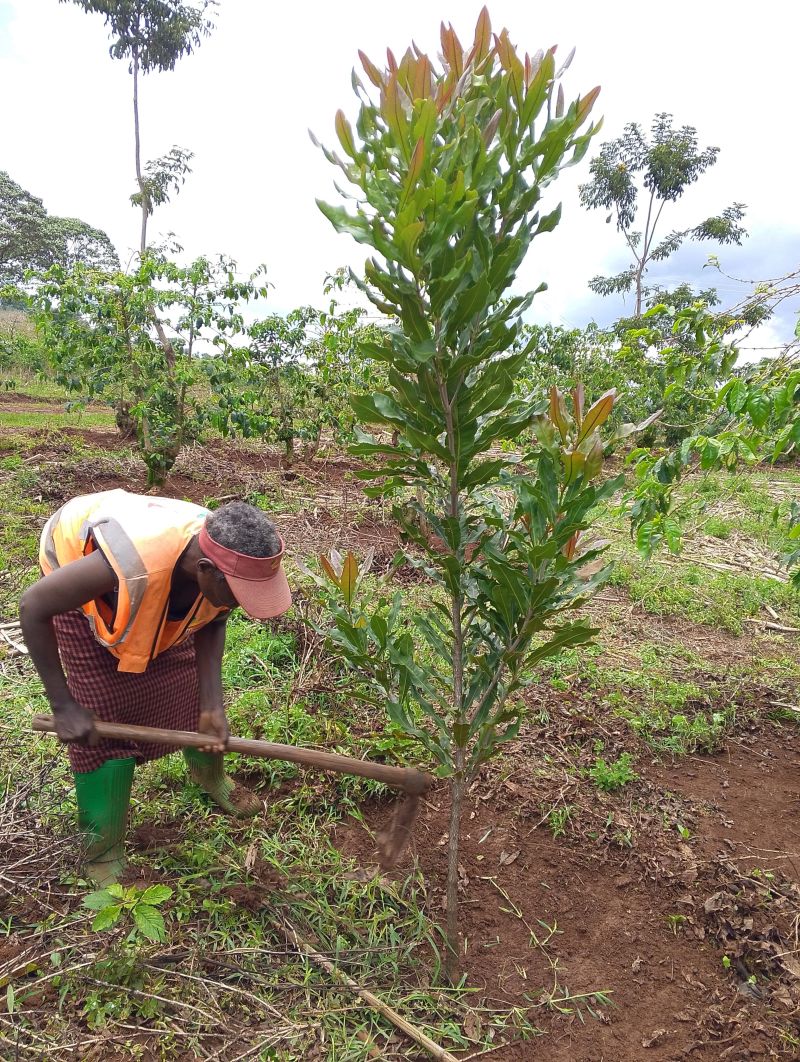
Pruning is an essential practice in macadamia farming in Kenya because it shapes the tree and directs energy into productive wood, and the open vase system is the standard method for commercial orchards. The central leader should be removed, and 3 to 4 scaffold branches should be selected to form the main structure of the tree. Branches that cross each other or grow inward should be removed, and the canopy should be kept open to allow light penetration.
Pruning should be done during dormancy, ideally in June to July, and farmers should remove 20 to 30 percent of the growth from the previous year. Dead, diseased, or damaged wood should be removed as soon as it is noticed, and all cuts should be made at 45 degree angles to promote healing. Neglected trees become overcrowded and produce nuts only on the outer branches, which significantly reduces total yield.
The fertilizer program for macadamia varies with tree age, and young trees need different nutrients than mature trees. For trees aged 1 to 3 years, apply 100 grams of CAN per tree twice yearly at the start of the rains and 200 grams of NPK 17:17:17 per tree once yearly. For trees aged 4 years and older, apply 500 grams of CAN per tree twice yearly and 1 kilogram of NPK 17:17:17 per tree once yearly. Apply 20 to 30 kilograms of well-decomposed manure per tree every two years to maintain soil organic matter.
Stink bugs are the biggest pest in macadamia farming in Kenya because they pierce the nut shell and suck the kernel, causing the nut to drop prematurely or develop off-flavors. Control stink bugs with pheromone traps that attract the male insects, and apply recommended insecticides when populations exceed threshold levels. Nut borers are another serious pest because the larvae tunnel into the nuts and feed on the kernel, and fallen nuts should be collected and destroyed to break the pest cycle.
The Export Value Chain: From Farm-Gate to Global Nut Markets
The macadamia price per kg in Kenya 2026 ranges from 130 to 200 shillings depending on the quality, the kernel recovery rate, and the time of sale. Farmers who sell during the peak harvest season from February to May receive lower prices because supply is high, while farmers who store their nuts and sell during the off-season receive premium prices. Exporters like Kakuzi PLC and Exotic EPZ pay higher prices for nuts that meet strict quality standards, including kernel recovery above 33 percent and moisture content below 10 percent.
The journey from farm-gate to global nut markets involves several intermediaries, and farmers who understand the value chain can capture more value. The nuts are first sorted and graded at the farm level, then transported to cracking facilities where the shells are removed. The kernels are dried to reduce moisture content, then sorted by size and color before being packed for export. The primary export markets are China, Europe, and the United States, where macadamia nuts are used in confectionery, baking, and as a premium snack.
The role of Kakuzi PLC in the macadamia sector cannot be overstated, because the company operates one of the largest processing facilities in Kenya and works directly with smallholder farmers through outgrower schemes. Farmers who supply to Kakuzi receive training on agronomy, pest control, and post-harvest handling, and they benefit from guaranteed prices and timely payments. Other exporters like Exotic EPZ and Nutty Naturals also provide market access for farmers who can supply consistent volume and quality.
| Year | Yield per Tree (kg) | Total Yield (kg) | Price/kg | Gross Revenue | Net Profit |
|---|---|---|---|---|---|
| 1-3 | 0 | 0 | 150 | 0 | -147,000 |
| 4 | 3 | 375 | 150 | 56,250 | -90,750 |
| 5 | 12 | 1,500 | 160 | 240,000 | 149,250 |
| 6 | 25 | 3,125 | 170 | 531,250 | 440,500 |
| 7 | 50 | 6,250 | 180 | 1,125,000 | 1,034,250 |
| 8 | 70 | 8,750 | 190 | 1,662,500 | 1,571,750 |
| 9 | 80 | 10,000 | 200 | 2,000,000 | 1,909,250 |
| 10+ | 80 | 10,000 | 200 | 2,000,000 | 1,909,250 |
Financial Forecasting: The Million-Shilling Acre Audit
The profitability of macadamia farming in Kenya becomes apparent when the initial establishment costs are weighed against the long-term revenue potential, and the numbers show a 286 percent return on investment over a five-year horizon. The first-year investment of 147,000 shillings per acre covers seedlings, land preparation, manure, fertilizer, irrigation, and labor, and this cost is recovered by year 5 when the trees begin producing commercial yields.
The macadamia yield per acre at full production reaches 8,750 to 10,000 kilograms annually, and at an average price of 180 shillings per kilogram, the gross revenue ranges from 1.57 to 1.8 million shillings. The annual maintenance costs after year 5 are approximately 50,000 to 70,000 shillings per acre for fertilizer, pest control, pruning, and harvest labor, so the net profit per acre reaches 1.5 to 1.7 million shillings.
Farmers who plant on larger scales benefit from economies of scale, because the cost per seedling drops with bulk orders and the labor costs per acre decrease as operations become more efficient. A 10-acre orchard requires an initial investment of 1.47 million shillings, but the annual net profit at full production exceeds 15 million shillings. This level of return justifies the investment for serious agribusiness investors.
The macadamia price per kg in Kenya has stabilized in 2026 after years of volatility, and the AFA regulations have prevented the price crashes that used to occur during harvest season. Farmers who store their nuts in hermetic bags and sell during the off-season can achieve prices above 200 shillings per kilogram, and this strategy adds another 10 to 15 percent to their annual revenue.

Next Step for Macadamia Farming in Kenya
Macadamia farming in Kenya is a long-term investment that rewards patience and technical precision, and the Murang’a 20 variety offers the best return on investment for commercial growers. Certified MRG-20 seedlings from Farmers Trend cost 350 shillings each, and a well-managed acre with 125 trees yields 80 kilograms per tree at full production. The farm-gate price ranges from 130 to 200 shillings per kilogram, and the net profit exceeds 1.5 million shillings per acre annually.
The best time to plant is June to July during the dormancy period, and farmers should prepare the land, install drip irrigation, and conduct soil testing before ordering seedlings. The AFA harvesting calendar must be respected, and nuts should never be picked from the tree but allowed to fall naturally to ensure maturity and oil content.
For certified Murang’a 20 seedlings at 350 KSh, site suitability audits, and the 2026 Macadamia farming in Kenya PDF guide, contact Farmers Trend Ltd at 0790509684. The team can also advise on orchard establishment, pest control, and market linkages with exporters like Kakuzi PLC and Exotic EPZ. The farmers who planted MRG-20 trees a decade ago are now harvesting millions of shillings worth of nuts every season, and their trees will keep producing for another 40 years. The time to start is now.
https://farmerstrend.co.ke/crops/macadamia-farming/macadamia-farming-in-kenya-2026-muranga-20-guide/https://farmerstrend.co.ke/wp-content/uploads/2026/04/1757142888239-1024x576.jpeghttps://farmerstrend.co.ke/wp-content/uploads/2026/04/1757142888239-150x150.jpegMacadamia Farming# TrendingAFA macadamia harvest calendar,Best macadamia variety in Kenya,Export macadamia market Kenya,Farmers Trend macadamia seedlings,macadamia farming in kenya pdf,Macadamia price per kg in Kenya 2026,Macadamia tree spacing 7.5m x 7.5m,Macadamia yield per acre,MRG-20 kernel recovery,Murang'a 20 macadamia seedlingsThe Murang'a 20 Revolution: Navigating the Commercial Frontiers of Macadamia Farming in Kenya The macadamia sector in Kenya has undergone a fundamental transformation over the past decade, shifting from a scattered backyard crop to a highly organized export commodity that now supports over 200,000 farmers across the central highlands and...FarmersTrendjohn doefarmerstrend@gmail.comAdministratorFarmers Trend Ltd.

Leave a Reply