Scientists Introduce Two New Potato Varieties to Kenya’s National Potato Variety List
Scientists have released two new potato varieties, Malaika and Glen, to Kenya’s National Variety List, offering resistance to potato cyst nematode and boosting farmer yields.
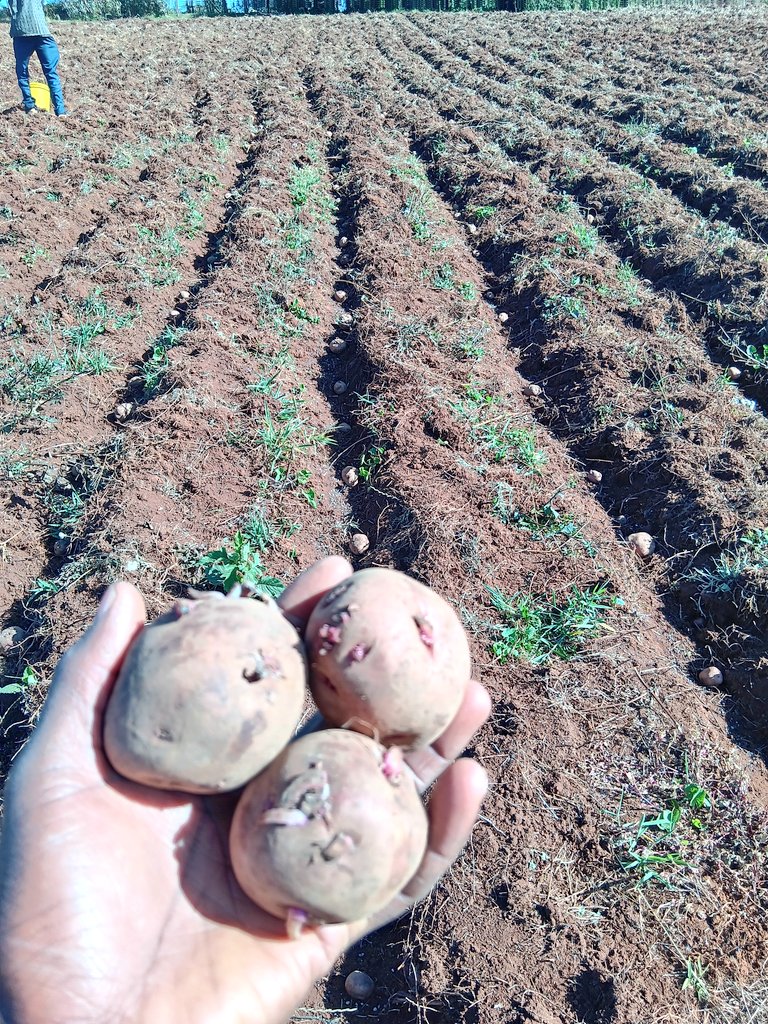
Scientists from The James Hutton Institute in Dundee, Scotland, have introduced two new potato varieties to Kenya, marking a major step in addressing one of the most serious threats facing the country’s potato sector. The varieties have now been officially included in Kenya’s National Variety List after years of testing, collaboration, and approval.
The project was conducted in partnership with the University of St Andrews, the International Institute of Tropical Agriculture (IITA), the International Potato Centre (CIP), the International Centre of Insect Physiology and Ecology (icipe), the Kenya Plant Health Inspectorate Service (KEPHIS), and Seeds2B. This wide-ranging collaboration combined expertise from different institutions to ensure that the varieties introduced would not only be scientifically sound but also practically suited to the needs of Kenyan farmers.
The two varieties, Malaika and Glen, have already gone through Kenya’s National Potato Trials and received approval from processors in the country. Malaika was named after the daughter of a farmer who played a significant role during the early stages of field trials, a tribute to the contributions of local farmers to the success of the project. Glen, on the other hand, reflects the Scottish heritage of the breeding work that made these varieties possible.
Both Malaika and Glen were originally bred through a joint effort between Greenvale AP and Hutton Scientific Services. They were developed with a dual focus in mind: combining traits that Kenyan growers prefer, while also offering resistance to one of the most devastating pests affecting potato farming in the region, the potato cyst nematode (PCN). PCN is a microscopic parasitic pest that attacks potato roots, restricting growth and drastically reducing yields. The pest has been spreading in Kenya and has already caused significant losses for farmers, threatening both household incomes and national food security.
Professor John Jones, Senior Scientist at The James Hutton Institute, highlighted the importance of the achievement. He explained that the release of these two varieties is the result of many years of research and the collaboration of scientists, plant breeders, the Kenyan government, seed suppliers, and farmers. He noted that this milestone reflects a shared commitment to delivering practical solutions that meet the real needs of growers in the region.
Danny Coyne, Senior Scientist at the International Institute of Tropical Agriculture (IITA), emphasized the wider importance of the development. He described potato cyst nematode as a major pest not only in Kenya but across the broader region, one that severely affects a key food and income crop. He said that the introduction of Malaika and Glen is a significant breakthrough because it directly addresses the urgent needs of farmers, improves crop yields, and strengthens food security.
Potato is the second most important food crop in Kenya after maize. It plays a critical role in both the national diet and the economy. According to industry figures, the potato sector supports approximately 2.5 million people across the value chain, ranging from smallholder farmers and traders to transporters and processors. The sector generates an estimated 500 million dollars annually, making it a cornerstone of agricultural production in the country. For this reason, any innovation that improves yields, increases resilience, and supports farmers has wide-reaching economic and social benefits.
Research conducted during the project revealed some of the main challenges and priorities for Kenyan smallholder farmers. Farmers expressed the need for varieties with low dormancy, which means the potatoes can be replanted soon after harvest rather than requiring long storage periods. Many also requested fast-cooking potatoes to reduce fuel use, given that energy costs remain a significant household burden. Reliability, resilience to pests, and consistent yields were also highlighted as essential qualities. Malaika and Glen were developed with these farmer needs in mind, making them more practical for adoption.
At present, seed sourcing remains one of the biggest barriers to productivity in Kenya’s potato sector. Around 90 percent of farmers rely on seed saved from their own farms or sourced from neighbors. Only about 6 percent purchase certified seed from accredited suppliers. This reliance on uncertified seed contributes to the spread of pests and diseases, while also reducing yields. By introducing new varieties through formal seed systems, the project hopes to encourage more farmers to shift toward certified, higher-quality planting materials.
To support large-scale adoption, the project has partnered with Kisima Seeds to handle distribution to the commercial sector. In addition, the Syngenta Foundation Farmers’ Hubs will work with smallholder farmers by multiplying healthy seeds and providing advisory services. These hubs will serve as local centers for information, training, and access to planting materials, helping to bridge the gap between scientific research and farmer practice.
The James Hutton Institute continues to be recognized as a global leader in potato research and breeding. Its work focuses not only on increasing productivity but also on developing varieties with resilience to environmental stresses such as disease outbreaks and temperature extremes. With the release of Malaika and Glen, the Institute, together with its partners, has provided a practical solution to a pressing agricultural challenge in Kenya. These varieties also hold potential for wider adoption in neighboring countries, many of which are facing similar threats from potato cyst nematode.
The introduction of Malaika and Glen is more than a scientific milestone. It is an investment in the future of potato farming in Kenya and a contribution to the livelihoods of millions of people who depend on the crop. By combining scientific innovation with farmer needs, the project demonstrates how international collaboration can produce solutions that directly strengthen food security in Africa.
READ ORIGINAL POST HERE
https://farmerstrend.co.ke/trending/scientists-introduce-two-new-potato-varieties-to-kenyas-national-potato-variety-list/https://farmerstrend.co.ke/wp-content/uploads/2025/08/GjpvodTXwAAnxmR.jpghttps://farmerstrend.co.ke/wp-content/uploads/2025/08/GjpvodTXwAAnxmR-150x150.jpg# TrendingPotato varietiesScientists have released two new potato varieties, Malaika and Glen, to Kenya’s National Variety List, offering resistance to potato cyst nematode and boosting farmer yields.Scientists from The James Hutton Institute in Dundee, Scotland, have introduced two new potato varieties to Kenya, marking a major step in addressing one of...FarmersTrendjohn doefarmerstrend@gmail.comAdministratorFarmers Trend Ltd.


Leave a Reply