Lucerne Farming in Kenya 2026 – The Complete Commercial Guide to High-Protein Fodder Production
Lucerne Farming in Kenya: The 2026 Guide to Fodder Independence and Commercial Success
The cost of dairy meal has pushed many Kenyan farmers to the edge because a 50-kilogram bag now sells for 3,500 to 4,500 shillings, and many small-scale farmers cannot afford to feed their cows properly while also covering other farm expenses.

Milk production has dropped across the country, incomes have fallen sharply, and some farmers have sold their animals while others have switched to goats or reduced their herd sizes. But a solution exists right on the farms across the highlands, and that solution is lucerne, a high-protein fodder crop that can transform the economics of dairy farming when managed properly.
Lucerne is not a new crop in Kenya because farmers in Kiambu, Nakuru, and Uasin Gishu have grown it for decades, but only recently has it become a commercial goldmine as the demand for high-protein fodder has exploded across the country.
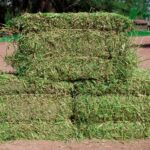
Dairy farmers are desperate for quality hay to feed their zero grazing cows, and the price per bale now ranges from 600 to 900 shillings depending on the season and the quality of the hay.
This feature by Farmers Trend Ltd. investigates the economics of lucerne farming in Kenya based on interviews with successful growers, agronomists, and livestock nutritionists, and we have analyzed the 2026 market data to break down the costs, the yields, and the profits for farmers who want to enter this business.

The 2026 Fodder Crisis and the Lucerne Solution in Kenya
The dairy sector is bleeding money because input costs have risen faster than milk prices, and a farmer with five cows spends nearly 150,000 shillings per year on dairy meal alone. Many farmers have sold their animals because they could not afford the feed bills, while others have switched to goats or zero grazing with alternative feeding strategies. But some farmers have found a different path, and they have turned to lucerne farming in Kenya as a way to reduce their dependence on expensive commercial feeds.
Lucerne offers a cheaper source of protein because a well-managed acre produces 10 to 15 tons of dry matter annually, and that amount of hay is enough to feed five cows for a full year.
The cost of producing that hay is a fraction of the cost of buying commercial feed, and the savings are enormous for farmers who have their own land and water resources. Consider the math carefully because a dairy cow needs 4 to 5 kilograms of protein supplement per day, and at current prices that costs 40 to 50 shillings per day. Replace that supplement with 5 kilograms of good lucerne hay, and the daily cost drops to 20 to 25 shillings while the cow produces the same amount of milk.
But the benefits of lucerne farming in Kenya go beyond cost savings because cows fed lucerne produce milk with higher butterfat content, which attracts premium prices from processors. These cows also have fewer health problems, they conceive faster, and their overall herd performance improves significantly. That is why more farmers are investing in lucerne farming in Kenya, and the trend is accelerating as dairy meal prices continue to rise.
The market for lucerne hay is strong and growing because dairy farmers in Kiambu, Murang’a, Nyeri, Nakuru, Kericho, and Uasin Gishu buy lucerne hay from growers when they do not have enough land to grow their own fodder.
Zero grazing farmers in urban and peri-urban areas are the biggest buyers because they have no land at all for fodder production, and they rely entirely on purchased hay and concentrates. The price per bale ranges from 600 to 900 shillings depending on the season, with prices highest during the dry months from January to March and July to September when grass hay is scarce, and lowest during the rainy seasons when there is more fodder available.
| Cost Item | Without Lucerne | With Lucerne | Savings |
|---|---|---|---|
| Daily meal per cow | 120 KSh | 40 KSh | 80 KSh |
| Annual meal cost | 43,800 KSh | 14,600 KSh | 29,200 KSh |
| Milk production per cow | 10 liters | 14 liters | +4 liters |
The table above shows how a farmer with 5 cows can save nearly 150,000 shillings per year on dairy meal costs by feeding home grown lucerne, while also getting more milk from the same animals, and the total benefit exceeds 200,000 shillings per year when milk production increases are included.
Genetics and Investment: The 3,500 KSh Seed Path to Quality
Lucerne farming in Kenya starts with the seed because not all seeds are equal, and cheap seeds from unknown sources often fail to produce profitable stands. These cheap seeds have low germination rates, they carry weed seeds that contaminate the field, and they produce low yields that do not justify the investment. The money saved at purchase is lost many times over in poor performance and early stand failure, so buying quality seeds is essential for commercial success.
Premium certified lucerne seeds at Farmers Trend Virtual Agrovet cost 3,500 shillings per kilogram, and this price reflects the intensive production process that ensures high quality. The seeds have germination rates of 85 to 95 percent, they are free from weed seeds and diseases, and they are selected from varieties that perform well in Kenyan conditions. The investment pays back within the first harvest because the uniform stand produces high yields for 4 to 6 years.
The recommended seed rate is 5 to 8 kilograms per acre depending on the planting method, and broadcasting requires 8 kilograms while drilling requires 5 to 6 kilograms. The seed cost per acre ranges from 17,500 to 28,000 shillings, which is the biggest single expense in the first year of lucerne farming in Kenya. But this is an investment that yields returns for half a decade, and the annual cost per year drops to 3,500 to 5,600 shillings when spread over the life of the stand.

Why are certified seeds so expensive? The production process is intensive because mother plants are selected for yield and disease resistance, the fields are inspected regularly, and the seeds are cleaned and tested before they are sold. All of this costs money, but for commercial farmers, the premium is worth it because you cannot build a profitable business on cheap, unreliable seeds that fail to establish properly.
| Variety Name | Dormancy Rating | Target Cuts per Year | Crude Protein % | Best Regions |
|---|---|---|---|---|
| Hunter River | 8 | 8-10 | 18-22 | Central highlands |
| Magna 7 | 8 | 8-10 | 18-22 | Rift Valley |
| SARDI 10 | 9 | 10-12 | 20-24 | Irrigated lowlands |
| Sequel | 9 | 10-12 | 20-24 | All regions with irrigation |
The best lucerne varieties in Kenya include Hunter River, Magna 7, SARDI 10, and Sequel, and each variety has different strengths for different conditions. Hunter River and Magna 7 are non-dormant varieties that perform well in medium altitude areas like Kiambu, Murang’a, Nyeri, and parts of Nakuru, and they produce 8 to 10 cuts per year with protein content of 18 to 22 percent. SARDI 10 and Sequel are more vigorous and produce higher yields in good conditions with irrigation, and they are especially suitable for farmers who have reliable water sources and can irrigate during dry periods.
Variety Selection: Non-Dormant Rules for Kenyan Conditions
Lucerne varieties are classified by dormancy rating, which describes how the plant responds to cold temperatures and short day lengths. Dormant varieties stop growing during cold weather, and they are suited for temperate climates like Europe and North America where winters are harsh. Non-dormant varieties grow year-round, and they are perfect for Kenya because the temperatures rarely drop low enough to stop growth.
Non-dormant varieties have ratings of 8 to 10, and they produce 8 to 12 cuts per year under good management with adequate water and fertility. These varieties recover quickly after harvesting, and they tolerate the warm nights and variable rainfall of the Kenyan highlands. Dormant varieties produce only 4 to 6 cuts per year in Kenyan conditions, and they are not commercially viable here because the yield difference is too large.
Hunter River is a popular non-dormant variety that yields 8 to 10 cuts per year, and the protein content is 18 to 22 percent when cut at the right stage. This variety performs well in central Kenya and the Rift Valley, and it has good tolerance to moderate drought conditions. Magna 7 is another excellent choice that has similar yields and better disease resistance, especially against downy mildew and leaf spot.
SARDI 10 and Sequel are newer varieties that have dormancy ratings of 9, and they produce 10 to 12 cuts per year under irrigation with proper fertility management. The protein content reaches 20 to 24 percent, which is higher than older varieties, and these are the top choices for farmers with reliable water sources. Talk to your local agricultural officer before buying because they can advise on which variety suits your specific area based on altitude, rainfall, and soil type.
Soil Chemistry: The Non-Negotiable pH Range for Lucerne Farming in Kenya
Lucerne is picky about soil, and it demands well-drained soils with a neutral pH between 6.5 and 7.5 for optimal growth and persistence. When the soil pH falls below 6.0, the crop struggles to establish and maintain itself because the roots cannot absorb nutrients properly. Growth slows down significantly, the root system becomes shallow and weak, and disease pressure increases as the plants become stressed. The stand dies out within two years when planted in acidic soils, and the investment is wasted.
Many Kenyan highland soils are acidic, especially in tea zones and former forest areas where the pH often drops below 5.5. These soils are perfect for pyrethrum and potatoes, but they are death for lucerne because the aluminum and manganese become toxic to the roots at low pH. You must test your soil before planting, and the test costs 2,000 to 5,000 shillings per sample depending on the laboratory.
Soil testing is money well spent because the test tells you the pH, nutrient levels, and organic matter content, and it also recommends how much lime to apply to raise the pH to the correct range. Lime takes time to work because it needs at least three months to react with the soil particles, so you should apply it during the dry season and incorporate it deeply into the soil. Then you must wait patiently because planting too soon after liming wastes the lime and the crop will still fail.
This waiting period is the most common mistake in lucerne farming in Kenya because farmers rush to plant without correcting the pH, the crop fails, and they blame the seeds instead of the soil. Do not make this mistake because the seeds are not the problem when the soil chemistry is wrong, and no amount of fertilizer can fix a pH that is too low for lucerne to grow.

Land Preparation: The Fine Seedbed Protocol for Lucerne Farming in Kenya
Lucerne seeds are tiny because a single seed weighs only a few milligrams, and it has limited energy reserves to push through the soil after germination. If you plant the seed too deep, it cannot reach the surface before running out of energy, and the seedling dies underground. If you plant it too shallow, it dries out before the roots can establish, and the seedling dies from lack of water. The seedbed must be fine and firm to give the seeds the best chance of survival.
Start with deep ploughing to 20 to 25 centimeters depth, which breaks up any compacted layers and allows the roots to penetrate deeply later. Then harrow two or three times to break the clods and level the surface, creating a smooth seedbed that is free from large lumps. Remove all weeds, especially perennial grasses like couch grass and kikuyu grass, because these grasses will compete with the young lucerne seedlings and are very difficult to control once the lucerne is established.
If you have a serious perennial grass problem, consider spraying with glyphosate and waiting 2 to 3 weeks before ploughing, because this gives the chemical time to kill the roots. After ploughing, roll the field with a light roller to firm the seedbed and create good soil-to-seed contact, which improves moisture transfer to the seeds.
Rhizobium Inoculation: The Nitrogen Fixation Secret
Rhizobium inoculation is absolutely essential for lucerne farming in Kenya because lucerne is a legume that forms a partnership with specific bacteria that live in root nodules. These bacteria take nitrogen gas from the air, which the plant cannot use, and convert it into ammonia, which the plant can use for growth. This process is called nitrogen fixation, and it provides the plant with all the nitrogen it needs without any fertilizer application.
If the right bacteria are not present in your soil, the lucerne will not fix nitrogen, and it will need expensive nitrogen fertilizer to grow properly. Applying nitrogen fertilizer to lucerne actually reduces nitrogen fixation because the plants become lazy and stop forming nodules, and it wastes your money. The inoculant contains the specific Rhizobium meliloti bacteria that lucerne needs, and it is sold as a powder or peat based product.
Mix the inoculant with the seeds just before planting, following the instructions on the packet carefully because different products have different application rates. The inoculated seeds should be planted within 24 hours because the bacteria can die if the seeds get too hot or too dry. Some farmers also apply a sticking agent or a sugar solution to help the inoculant stick to the seeds better, and this improves the success rate of the inoculation.
Farmers Trend Virtual Agrovet stocks biofix inoculant 150g at 1,450Ksh
Planting Methods and Seed Rates for Lucerne Farming in Kenya
You can plant lucerne by broadcasting the seeds by hand or by using a seed drill to plant in rows, and each method has its own advantages and disadvantages. Broadcasting is simpler and faster, especially for small scale farmers who do not have access to a seed drill, but it uses more seed at 8 kilograms per acre and the stand may be uneven. Drilling in rows uses less seed at 5 to 6 kilograms per acre, and the rows make it easier to weed and harvest because you can walk between the rows without stepping on the plants.
The row spacing should be 30 to 45 centimeters for drilled lucerne, with wider spacing for drier areas and closer spacing for areas with good rainfall or irrigation. Plant the seeds at a depth of 1 to 2 centimeters, which is about the thickness of your thumb, because deeper planting reduces germination while shallower planting exposes the seeds to birds and sun. After planting, roll the field with a light roller to press the soil around the seeds, which improves soil contact and moisture retention.
| Planting Method | Seed Rate per Acre | Advantages | Disadvantages |
|---|---|---|---|
| Broadcasting | 8 kg | Fast, no special equipment | Uneven stand, more seed |
| Drilling | 5-6 kg | Uniform stand, less seed | Needs seed drill |
| Row spacing 30cm | 6 kg | Good weed control, high yield | More labor for planting |
| Row spacing 45cm | 5 kg | Easy harvesting, good air flow | Lower plant population |
The best time to plant lucerne is at the start of the rains, typically March to April for the long rains and October to November for the short rains, because the natural moisture helps the seeds germinate and the seedlings establish quickly. With irrigation, you can plant at any time of year, but avoid planting during the coldest months of June to August because the seedlings grow slowly and weeds may overtake them. The soil temperature should be above 15 degrees Celsius for good germination.

Irrigation Engineering and Water Management
Lucerne needs consistent moisture for high yields, and irrigation is necessary in semi-arid zones to achieve the maximum 8 to 10 cuts per year. Drip irrigation is the most efficient method for lucerne farming in Kenya because it delivers water directly to the root zone and keeps the foliage dry, which reduces the incidence of leaf diseases like downy mildew and leaf spot. Sprinkler irrigation also works well for lucerne, but it uses more water because some water evaporates before reaching the ground, and it can promote leaf diseases if the foliage stays wet for long periods.
The total water requirement for lucerne is 500 to 800 millimeters per year depending on the climate and the number of cuts you take, and during dry periods you should apply 25 to 30 millimeters of water per week. This amount of water is equivalent to 250,000 to 300,000 liters per hectare per week, so you need a reliable water source and a pump that can deliver that volume. The soil should be moist but not waterlogged because lucerne roots are deep and can access water from lower soil layers, but they cannot survive in saturated soil where oxygen is limited.
The root system of lucerne can grow 2 to 3 meters deep in good soils, which allows the plants to access water from deep in the profile during dry periods. This deep rooting is one of the reasons why lucerne is more drought tolerant than many other fodder crops, but the roots need to reach that depth first, which takes time. Young lucerne plants are more sensitive to drought than established stands, so you must water them regularly during the first year.
Nutrient Management for High Yield Lucerne Farming in Kenya
Phosphorus is the most important nutrient for lucerne farming in Kenya because it supports root development and helps the plants persist for 4 to 6 years. Apply DAP fertilizer at 100 to 150 kilograms per acre at planting, and apply another 50 to 100 kilograms per acre after each year of production. Soils that are low in phosphorus produce thin stands that die out quickly because the roots cannot develop properly, and the plants cannot access water from deep in the profile.
Potassium is also very important, especially on sandy soils where potassium leaches out quickly with heavy rain or irrigation. Apply potassium chloride or potassium sulphate at 50 to 100 kilograms per acre every year because potassium helps the plants resist disease and recover quickly after cutting. Potassium also improves the quality of the hay by increasing the protein content and digestibility, so it is worth the investment.
Nitrogen fertilizer is not needed for lucerne because the plants fix their own nitrogen from the air when the correct rhizobium bacteria are present in the soil. Applying nitrogen fertilizer to lucerne actually reduces nitrogen fixation because the plants become lazy and stop forming nodules, and it wastes your money. However, if you did not inoculate your seeds or if the inoculant failed for some reason, the plants will be yellow and stunted and may need a small amount of nitrogen to get established.
Sulfur and boron are micronutrients that are sometimes deficient in Kenyan soils, and a soil test will tell you if your soil is missing these elements. Sulfur is important for protein synthesis, and boron is important for root growth and nodule formation, so you should apply them as part of your fertilizer program if the soil test shows deficiency.
Weed Control in Lucerne Farming in Kenya
Weeds are the biggest challenge in the first 3 to 4 months after planting because the lucerne seedlings are small and grow slowly while the weeds germinate quickly and compete for light, water, and nutrients. Perennial grasses like couch grass and kikuyu grass are especially problematic because they spread by runners and are very hard to remove once they become established. You must control perennial grasses before planting, ideally by spraying with glyphosate and then waiting 2 to 3 weeks before ploughing.
Annual weeds can be controlled by mowing the field regularly, and you should mow when the weeds are taller than the lucerne while setting the mower high enough to cut the weeds but not the lucerne. The lucerne will grow faster than the weeds after each mowing because it has a deep root system, and eventually the weeds will be shaded out by the dense lucerne canopy. You can also use selective herbicides for broadleaf weeds, but check with your agricultural extension officer first because some herbicides can damage lucerne.
Once the lucerne is established, it competes very well with weeds because the dense canopy shades the soil and prevents weed seeds from germinating. A healthy lucerne stand suppresses most annual weeds, but perennial grasses can still be a problem, and there are no selective herbicides that kill perennial grasses without damaging lucerne. If perennial grasses invade your lucerne field, you may need to renovate the field by ploughing and replanting.
| Weed Type | Control Method | Timing |
|---|---|---|
| Perennial grasses | Glyphosate | Before planting |
| Annual broadleaf weeds | Mowing or herbicides | First 3 months |
| Annual grasses | Mowing | First 3 months |
| Established weeds | Dense lucerne canopy | After canopy closes |
Pest and Disease Management in Lucerne Farming in Kenya
Aphids are the most common pest in lucerne farming in Kenya, and there are several species that attack lucerne including the pea aphid, the blue alfalfa aphid, and the spotted alfalfa aphid. These small insects cluster on the stems and the undersides of leaves where they suck plant sap, and heavy infestations cause the leaves to curl and turn yellow. Control aphids with neem oil or insecticidal soap, and encourage natural predators like ladybugs and lacewings by avoiding broad spectrum insecticides that kill them. Some lucerne varieties have resistance to aphids, so ask your seed supplier about resistant varieties when you buy your seeds.
Leafhoppers cause a condition called hopperburn, where the leaves turn yellow and the tips die back because the adults and nymphs feed on the sap. The damage looks like a white speckling on the leaves, and severe infestations can kill young plants while established plants will have reduced yields. Control leafhoppers with appropriate insecticides if the population is high, but try to cut the field early if the infestation is caught late because cutting removes the food source.
Lucerne weevils are another pest that can cause serious damage because the larvae eat the leaves and can defoliate a field quickly if the population is high. The adults also feed on the leaves and stems, and control weevils with insecticides when the damage is first seen. Cutting the field early removes the food source and breaks the pest cycle, and it also removes the eggs that are laid on the stems.
Fungal diseases like downy mildew and leaf spot occur during wet weather when the foliage stays wet for long periods, and good air circulation from proper spacing and weed control reduces disease pressure. Resistant varieties are available for some diseases, so ask your seed supplier about disease resistance when choosing a variety. Avoid cutting when the foliage is wet because the open wounds allow fungi to enter the plants.
Harvesting Logistics and Hay Processing for Lucerne Farming in Kenya
The first cut comes 75 to 90 days after planting, and subsequent cuts come every 28 to 35 days depending on the weather and the variety you planted. Cut when the lucerne is at 10 to 20 percent flowering because this is when the protein content is highest and the digestibility is best for livestock. Cutting earlier gives higher protein content but lower total yield because the plants have not reached full size, while cutting later gives higher yield but lower protein content because the plants put more energy into stems and flowers. The 10 percent flowering stage is the best balance for most commercial farmers.
Cut the lucerne 5 to 10 centimeters above the ground, leaving enough stubble for the plants to regrow quickly because cutting too low damages the crowns where the new shoots come from. This damage reduces the lifespan of the stand, and cutting too high leaves too much stem in the field and reduces the yield of the next cut because there are fewer growing points left.
Hay processing requires careful curing to preserve the leaves, which contain most of the protein and are the most valuable part of the plant. Lucerne leaves shatter easily when the hay is too dry, so you need to handle the hay gently during curing. Cut the lucerne in the morning after the dew has dried, and leave it in the field to wilt for 1 to 2 days. Turn the hay once or twice to ensure even drying, but avoid turning it when it is very dry because the leaves will fall off.
Bale the hay when the moisture content is 15 to 18 percent, because hay that is too wet will mold in storage and may catch fire if the internal temperature gets too high. Hay that is too dry will have lost most of its leaves during baling and will have low protein content, so a moisture meter is a good investment for commercial hay producers because it takes the guesswork out of baling.
2026 Establishment and Annual Maintenance Budget
Here is a 2026 budget for establishing one acre of lucerne using certified seeds from Farmers Trend.
| Cost Item | Quantity | Unit Price | Total |
|---|---|---|---|
| Certified lucerne seeds | 6 kg | 3,500 KSh | 21,000 KSh |
| Rhizobium inoculant | 1 packet | 500 KSh | 500 KSh |
| Land preparation | 1 acre | 8,000 KSh | 8,000 KSh |
| Lime (if needed) | 500 kg | 10 KSh/kg | 5,000 KSh |
| DAP fertilizer | 100 kg | 130 KSh/kg | 13,000 KSh |
| Drip irrigation system | 1 acre | 60,000 KSh | 60,000 KSh |
| Labor (planting, weeding) | 15 days | 500 KSh/day | 7,500 KSh |
| Weed control (herbicides) | 1 acre | 3,000 KSh | 3,000 KSh |
| Total First-Year Investment | 118,000 KSh |
Here is the annual maintenance cost after the first year for lucerne farming in Kenya.
| Cost Item | Quantity | Unit Price | Total |
|---|---|---|---|
| DAP fertilizer | 50 kg | 130 KSh/kg | 6,500 KSh |
| Potassium fertilizer | 50 kg | 100 KSh/kg | 5,000 KSh |
| Irrigation operation | 1 acre | 15,000 KSh | 15,000 KSh |
| Labor (harvesting, baling) | 8 cuts | 5,000 KSh/cut | 40,000 KSh |
| Weed control | 1 acre | 5,000 KSh | 5,000 KSh |
| Total Annual Costs | 71,500 KSh |
Revenue Projections for Lucerne Farming in Kenya
A well-managed irrigated acre of lucerne produces 8 to 10 cuts per year, with each cut yielding 150 to 200 bales of 15 kilograms each. The total number of bales per acre per year is 1,200 to 2,000, and at an average price of 750 shillings per bale, the gross revenue ranges from 900,000 to 1.5 million shillings per acre per year.
| Cuts per Year | Bales per Cut | Price per Bale | Revenue per Cut | Annual Revenue |
|---|---|---|---|---|
| 8 | 150 | 750 | 112,500 | 900,000 |
| 9 | 175 | 750 | 131,250 | 1,181,250 |
| 10 | 200 | 750 | 150,000 | 1,500,000 |
The net profit per acre per year after subtracting the annual maintenance cost of 71,500 shillings ranges from 828,500 to 1,428,500 shillings. The first year profit is lower because of the establishment costs of 118,000 shillings, but from year 2 onward the returns are very good and the investment pays for itself multiple times over the 4 to 6 year life of the stand.
Next Step for Lucerne Farming in Kenya
Lucerne farming in Kenya is a profitable enterprise for farmers who have irrigation and good soil, and the returns are better than most other fodder crops. Certified seeds cost 3,500 shillings per kilogram from Farmers Trend, and the seed rate is 5 to 8 kilograms per acre depending on your planting method. A well-managed stand produces 8 to 10 cuts per year, yielding 1,200 to 2,000 bales annually, and each bale sells for 600 to 900 shillings.
The best time to plant is at the start of the rains, but with irrigation you can plant at any time of year, and you should prepare a fine seedbed, test your soil pH and apply lime if needed, inoculate your seeds with rhizobium bacteria, and plant at 1 to 2 centimeters depth. Cut at 10 percent flowering for the best protein content, and cure the hay properly to preserve the leaves for maximum nutritional value.
For soil testing, irrigation system installation, and the 2026 Lucerne farming in Kenya PDF guide, contact Farmers Trend Ltd at 0790509684. Premium certified lucerne seeds are available at 3,500 shillings per kilogram at the Murang’a and Nairobi offices, and the team can also advise you on the best variety for your specific area based on your altitude, rainfall, and soil type.
The farmers who have invested in lucerne are now saving thousands of shillings on dairy meal every month, and their cows are producing more milk than before while their feed costs have dropped significantly. The initial investment pays for itself within the first year, and the remaining years are pure profit, so you can do the same with the right planning and management. The time to start your lucerne farming in Kenya journey is now.
https://farmerstrend.co.ke/crops/lucern-farming/lucerne-farming-in-kenya-guide/https://farmerstrend.co.ke/wp-content/uploads/2026/04/Lucerne-Farming-1024x570.jpeghttps://farmerstrend.co.ke/wp-content/uploads/2026/04/Lucerne-Farming-150x150.jpegLucern Farming# TrendingAlfalfa farming in Kenya,Dairy feed cost reduction Kenya,Farmers Trend lucerne seeds,Lucerne cutting schedule,Lucerne farming in Kenya PDF,Lucerne hay price per bale,lucerne seeds price in kenya,lucerne yield per acre in kenya,Non-dormant lucerne varieties,Rhizobium inoculation for lucerneLucerne Farming in Kenya: The 2026 Guide to Fodder Independence and Commercial Success The cost of dairy meal has pushed many Kenyan farmers to the edge because a 50-kilogram bag now sells for 3,500 to 4,500 shillings, and many small-scale farmers cannot afford to feed their cows properly while also...FarmersTrendjohn doefarmerstrend@gmail.comAdministratorFarmers Trend Ltd.


Leave a Reply