Climate Smart Farming in Makueni Kenya Helps Farmers Thrive Despite Erratic Rains
Climate smart farming in Makueni Kenya is transforming drylands. Farmers using ripping and zai pits now harvest six bags of maize instead of two, reducing dependence on relief food.
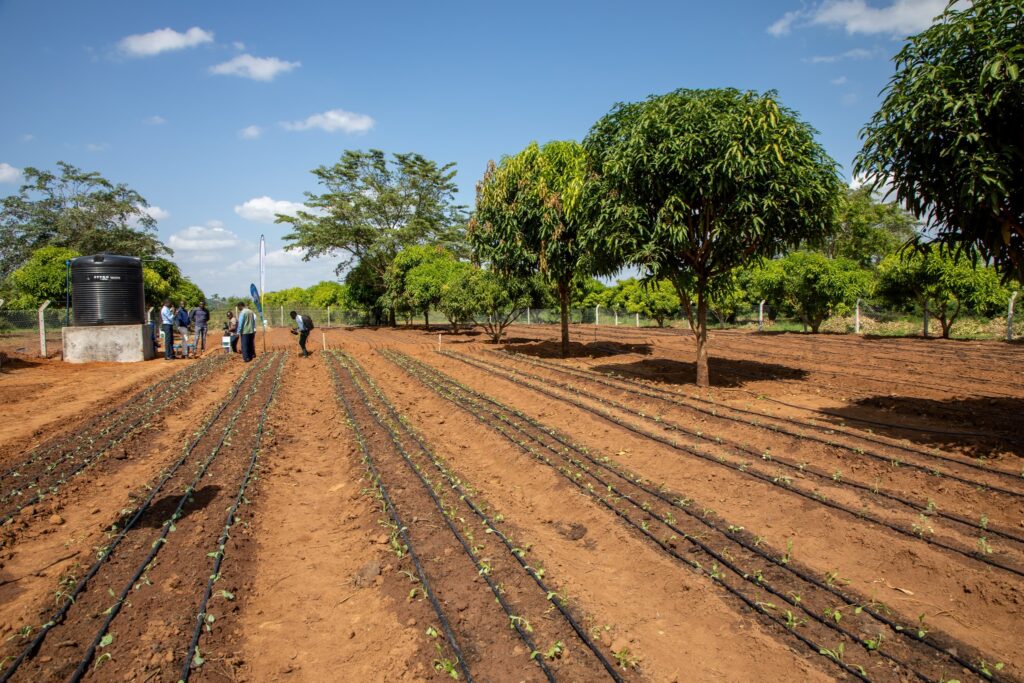
Farmers in Makueni County are proving that drylands can become productive food-producing zones. They are achieving this through the adoption of climate-smart agricultural technologies. For decades, communities in areas such as Makindu relied heavily on relief food whenever prolonged drought struck. Today, that story is changing.
Farmers are now embracing several technologies. These include ripping, zai pits, mulching, crop diversification, and climate and weather advisories.
These practices help improve production and strengthen resilience against climate shocks. The farmers are among the beneficiaries of the World Bank-funded Accelerating Impacts of CGIAR Climate Research for Africa (AICCRA) project. This project helps communities access and adopt agricultural technologies.
How Climate Smart Farming Transformed One Farmer’s Life
Josephine Mwende is a farmer in Makindu. Her determination to become food secure was shaped by a painful experience during a severe drought. Years ago, a neighbour was responsible for compiling a list of households eligible for relief food. That neighbour prioritised herself and other families while excluding Mwende’s household, despite their desperate situation.
“Although my neighbour was rich, she listed herself as the number one beneficiary, followed by other neighbours, while my name was completely missing,” Mwende says.
Her attempts to seek help from local authorities yielded little support. “This experience was not only painful and shameful, but also transformative. Every time I hear about relief food distribution, I go straight to my farm and start working,” she says.
Today, Mwende is among many farmers applying climate smart farming in Makueni Kenya. These practices are helping households produce food despite increasingly unpredictable rainfall patterns. Her farm now features maize, bananas, cowpeas, citrus fruits, guavas and other crops. This diversity showcases the growing potential of climate-resilient agriculture in Kenya’s drylands.
Ripping Technology Is Transforming Soil and Harvests
Another farmer, Rebecca Kioko, says ripping has been one of the most transformative technologies on her farm. Ripping breaks hard soil pans beneath the surface. This allows rainwater to penetrate deeper into the ground. The moisture remains available to crops for longer periods.
“Before ripping, my cowpea crops would only survive between April and June. Now the soil stores moisture much longer, and crops can continue using water and yielding up to October or even beyond,” Kioko explains.
Kioko says the technology has significantly increased productivity on her farm. “I used to harvest about two bags of maize, but now I expect to harvest six bags from the same piece of land,” she says.
The growing adoption of climate smart farming in Makueni Kenya is helping farmers adapt to erratic rainfall. It improves soil health and conserves moisture. It also reduces dependence on food aid. With climate change making droughts more frequent and severe, these technologies are emerging as practical solutions for enhancing food security and livelihoods in Kenya’s dryland counties.
Women’s Sacco Leads the Way in Scaling Innovations
At the centre of this transformation is Kimatwa Women’s Sacco. This farmer-led cooperative has emerged as a key platform for scaling agricultural innovations in Makueni and neighbouring areas. The Sacco works closely with scientists and experts from the Alliance of Bioversity International and CIAT. Sacco members have become champions and ambassadors of climate smart farming in Makueni Kenya.
The cooperative has established a demonstration farm at the Makindu ASK showground. Here, farmers showcase technologies and practical lessons learned through AICCRA. “We requested to be allocated space at the ASK grounds so that we can amplify the reality of smart technologies to farmers beyond our Sacco members,” says Teresa Ngonze, chairperson of Kimatwa Women’s Sacco.
Through the Sacco, farmers access affordable agricultural loans, training, and technical support. These resources are needed to adopt and scale climate-smart technologies. Ngonze adds that agricultural loans are offered at a reducing balance interest rate of two per cent. A credit committee ensures funds are invested in farming activities and repaid on time.
“The impact has been visible. Membership has grown from 600 to 870 farmers as more community members witness the benefits of the technologies. As community members learn from our farmers, they not only adopt the technologies but also join the Sacco, so we grow together as a community,” says Ngonze.
Why Investing in Dryland Agriculture Matters
According to Robert Zougmoré, principal scientist at the Alliance of Bioversity International and CIAT and director of AICCRA, drylands are increasingly becoming important contributors to crop production and food security. “While Asals are often associated with livestock keeping, they are increasingly becoming significant towards crop production and subsequent food security, thanks to technologies,” Zougmoré says.
However, he says adoption rates for suitable agricultural technologies remain low at about 30 per cent. This is due to technical, economic and sociocultural barriers. Zougmoré points out the need to actively involve women and youth in technology adoption. He notes that doing so could double or even triple agricultural output.
The growing interest in climate smart farming in Makueni Kenya has also attracted support from development partners and policymakers. They are seeking sustainable solutions to food insecurity and climate change.
Viviana Perego, technical team lead for AICCRA at the World Bank, noted the importance of investing in agricultural research and innovation. “Each one US dollar invested in agricultural research delivers $10 in return at present value,” she says.
She stressed that investment in agricultural systems is essential for improving food and nutrition security while strengthening climate resilience. Perego further called for stronger collaboration among governments, the private sector, development partners, researchers and farmers.
As climate pressures intensify across Africa’s drylands, the experience of farmers in Makindu demonstrates a powerful truth. With access to the right technologies, climate information, financing and partnerships, communities can move beyond dependence on relief food.
They can build resilient, productive agricultural systems. Climate smart farming in Makueni Kenya is proof that drylands can feed the nation. The farmers have shown the way. Others are watching and learning. The transformation has begun.
https://farmerstrend.co.ke/trending/climate-smart-farming-in-makueni-kenya/https://farmerstrend.co.ke/wp-content/uploads/2026/06/Climate-Smart-Farming-in-Makueni-Kenya.jpghttps://farmerstrend.co.ke/wp-content/uploads/2026/06/Climate-Smart-Farming-in-Makueni-Kenya-150x150.jpg# TrendingClimate smart farming in Makueni Kenya is transforming drylands. Farmers using ripping and zai pits now harvest six bags of maize instead of two, reducing dependence on relief food.Farmers in Makueni County are proving that drylands can become productive food-producing zones. They are achieving this through the adoption of...FarmersTrendjohn doefarmerstrend@gmail.comAdministratorFarmers Trend Ltd.



Leave a Reply