Passion Fruit Farming Kenya: Dieback Disease and Soaring Prices KSh 200 per Kilo, But Coca-Cola Partnership and New Varieties Offer Hope
Passion fruit farming is at a critical crossroads. A devastating disease known as dieback is ravaging orchards in Central and Eastern Kenya, causing losses of 50 to 100 percent in some areas . At the same time, a severe shortage of passion fruits has driven prices to KSh 200 per kilogram in Nairobi markets. But there is hope. The Kenya Agricultural and Livestock Research Organization (KALRO) is commercialising three new high-yield varieties in partnership with Coca-Cola and other stakeholders. This guide covers everything you need to know about passion fruit farming Kenya.
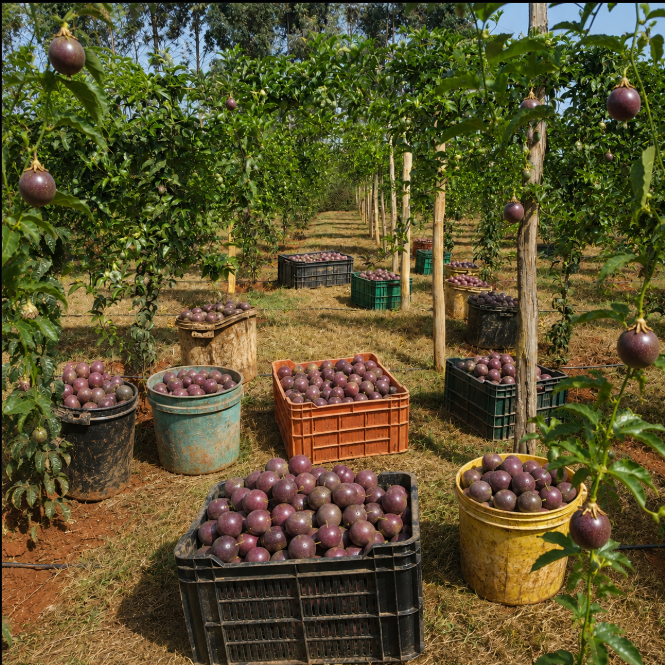
Passion fruit farming Kenya offers significant opportunities for farmers who understand the current challenges. With dieback disease threatening production and prices soaring to KSh 200 per kilo, passion fruit farming Kenya is at a turning point. The new KALRO varieties and the Coca-Cola partnership are creating new opportunities for passion fruit farming Kenya.
What You Need to Know
Passion fruit farming Kenya is at a critical crossroads. The sector faces a serious threat from dieback disease, which is responsible for devastating yield losses of 50 to 100 percent across Central and Eastern Kenya. Many farmers have already lost their entire orchards to this disease, which scientists are still struggling to understand and control. The disease has become so severe that it now causes over 70 percent of total fruit losses in the country, threatening the livelihoods of thousands of farmers who depend on passion fruits for their income.
The crisis in passion fruit farming Kenya has been compounded by a severe shortage of passion fruits in the market, driving prices to record highs. Passion fruits now sell at KSh 200 per kilogram in Nairobi, with the price increasing by a staggering 267 percent between June 2025 and June 2026. A 57kg bag costs Sh5,104 in Nairobi, with prices varying across regions. The shortage stems from poor short rains that stopped immediately after flowering in key growing areas like Makueni, the spread of dieback disease, and some farmers selling to Ugandan traders offering slightly higher prices.
Despite these challenges, hope is emerging for passion fruit farming Kenya. The Kenya Agricultural and Livestock Research Organization (KALRO) has introduced three new varieties: KPF 4, KPF 11, and KPF 12. These varieties are drought tolerant, disease resistant, and produce 12-16 tonnes per 2.5 acres, twice the yield of common purple passion fruit. They resist fusarium wilt, brown spot, woodiness viruses, and nematodes. KALRO has already propagated 30,000 seedlings for distribution across Eastern, Central, and parts of Rift Valley provinces, with each seedling costing Sh30.
The new varieties have attracted significant commercial interest for passion fruit farming Kenya. Coca-Cola has committed to buying passion fruit concentrates from intermediaries, creating a reliable market for farmers. The partnership includes Equity Bank providing loans and Sunny Processors extracting concentrates for Coca-Cola. Soft drink companies currently import concentrates from South Africa due to insufficient local supply, creating a significant opportunity for farmers who can produce high-quality passion fruits.
The financial returns from passion fruit farming Kenya are compelling. A hectare can yield 15 to 20 tonnes, earning farmers up to one million shillings, compared to maize which earns Sh35,000 to Sh60,000 per acre. A kilogram sells for Sh80 to Sh100, giving farmers triple the earnings of maize. The crop matures in just one year, delivering quick returns. Farmers like James Kiriago now earn Sh5,500 per 50kg bag after abandoning coffee, while Charles Mureithi has over 1200 vines and Joseph Gatama sells Sh3,500 worth of fruits every two weeks from 250 trees. Passion fruit farming Kenya offers a path to prosperity for those who adopt the new varieties and follow best practices.
The Dieback Disease: A Growing Threat to Passion Fruit Farming Kenya
A new disease known as dieback is threatening to reverse the gains made by passion fruit farming Kenya. The disease has baffled scientists and is wiping out entire crops in days.
What is Dieback?
Dieback is a disease complex caused by multiple pathogens, including Fusarium, Phytophthora, Alternaria, and Ascochyta . It is a recently emerged disease that is highly virulent and causing 100 percent orchard loss within a short time. Like a burning cigarette, leaves, shoots and stems slowly turn into a black powdery dust and fall off. Slowly the whole crop succumbs.
This disease is a major threat to passion fruit farming Kenya. According to a joint survey conducted by the Kenya Agricultural Research Institute (KARI) and the Department of Agricultural Sciences and Technology at Kenyatta University, dieback disease on passion fruits has increasingly reduced yields by 50-100 percent.
The Scale of the Problem in Passion Fruit Farming Kenya
Francis Kiaraho, a farmer in Laikipia County, lost 100 passion fruit trees to the disease, representing a Sh10,000 loss in investments. The disease causes over 70% of total fruit losses in the country.
“Unless quick steps are taken, this disease will diminish passion fruits farming in this region with devastating results. Majority of the farmers in Laikipia rely on fruits for their incomes especially with the sunny weather experienced all the year round,” lamented Francis Kiaraho, a farmer in Dimkon village in Laikipia County.
Affected Areas in Passion Fruit Farming Kenya
The disease is a major threat to passion fruit farming Kenya in Central and Eastern Kenya. The major passion fruit growing areas affected include Thika, Murang’a, Nyeri, Kirinyaga, Embu and Meru counties in the Mt Kenya region. In Rift Valley, the crop does well in Nakuru and Baringo counties. Other regions where passion fruits thrive include Kakamega, Kisii, Taita-Taveta, Kwale and Kilifi counties.
How the Disease Spreads in Passion Fruit Farming Kenya
Growers have reported increased dieback severity in times of drought, which suggests linkage to climate change effects. Some agronomic practices, such as pruning without disinfecting the tools can accelerate its spread. The disease is most severe when pathogens are inoculated in combinations of 3 and 4.
Current Control Measures
Proper field maintenance practices reduced disease incidence and severity (12% and 1.6 respectively) in Meru B while poor maintenance yielded high levels (55% and 4.0 respectively) in Mathioya. None of the fungicides evaluated was curative. Plants treated with Ridomil MZ had a low severity score (2.1), while those treated with Milraz had a higher score (2.7). Water stress increased severity.
What Farmers Can Do
- Sterilize pruning tools: The disease can spread through pruning tools. Disinfect your tools between plants to prevent transmission.
- Improve soil health: Mavuno and TSP fertilizers boosted plant growth leading to lower disease scores of 2.2 and 2.3, respectively, as compared to the control (2.92).
- Practice crop rotation: Avoid planting passion fruit in the same soil repeatedly.
- Monitor regularly: Early detection is critical. Inspect your orchard at least weekly.
- Avoid water stress: Water stress increased severity, suggesting that the lower the amount of water/rainfall available to a plant, the higher the dieback severity.
Grafting as a Solution for Fusarium Wilt
Farmers can control the lethal fusarium wilt disease with a 100 per cent deadly rate by grafting purple and yellow passion plants to obtain a hybrid. The disease, which is caused by a fungus, attacks stems and leaves and causes death of the entire plant within four to 14 days. In Kenya, the disease has led to drop in production of passion fruits from 46,628 metric tonnes in 2015 to 31,571 metric tonnes as of 2018 according to the Horticultural Crops Directorate.
Morris Koome, a farmer in Meru for instance found out that the yellow passion fruit more tolerant to the disease than the purple one and through grafting he found out that they hybrid is less susceptible to wilting. While grafting, Koome uses the yellow root stalk and the purple variety scion. “One passion stem gives between five and 10 kilos per week when the plant is at its peak. With proper management practices such as weeding and grafting, I harvest up to 15 kilos a week from the same stem,” said Koome. Koome, who propagates and sells the seedlings to farmers at Sh50 each says that one requires at least 1,000 stems to cover one acre.
Soaring Prices: KSh 200 per Kilo Due to Passion Fruit Shortage
A severe shortage of passion fruits has pushed prices to record highs across major towns in Kenya. This shortage is affecting passion fruit farming Kenya significantly.
Current Price Trends
- A 57kg bag of passion fruit costs Sh5,104 in Nairobi .
- Nakuru is the second highest market after Nairobi buying the 57kg passion fruits at Sh5,100 .
- Malindi is buying the same quantity at Sh4,500 while Mombasa is paying Sh5,000 on wholesale .
- At retail, passion fruits are now selling at Sh200 per kilogram .
- The wholesale cost difference between the highest and the lowest market is threefold .
- Kenya’s passionfruit price increased 267% between June 2025 and June 2026 .
Why the Shortage?
Poor Short Rains: A lack of adequate rainfall during the October–November–December short-rains season has sharply reduced fruit supply . In Makueni where passion fruits are grown, the rains stopped immediately after flowering. The crops were stressed and production was very low .
Disease: Dieback disease has reduced yields by 50-100 percent in affected areas.
Farmers Selling to Ugandan Traders: Most farmers in Eldoret where there is a rise in adoption of passion farming, are opting to sell their produce to traders from the neighbouring country on offer of a slightly higher price . This is risky, as the traders may buy on a one-off time leading farmers to a lack of market in the subsequent rounds of harvest.
“The farmers deny local traders who are more consistent in market and can buy their produce all time and sell the fruits to outsiders who are unpredictable and this may affect them in future,” said Simon Kirima, owner and operations manager at Kery’s Kool Fresh Produce.
The Impact of the Shortage
The shortage has affected both indigenous vegetables and common staples such as sukuma wiki and cabbage, which form the basis of most urban meals. Soft drink companies like Coca Cola are importing concentrates from South Africa due to insufficient local supply.
The Coca-Cola Partnership and New Varieties Bring Hope to Passion Fruit Farming Kenya
There is hope for passion fruit farming Kenya. The Kenya Agricultural and Livestock Research Organization (KALRO) is commercialising three new high-quality passion fruit varieties in a partnership with buyers Coca Cola and other stakeholders.
The New Varieties
The three varieties known as KPF 4, KPF 11 and KPF 12 were developed over 20 years of research to give farmers better returns for the fruit. They are hybrids of natural crosses of the coastal yellow varieties and purple variety.
Key features of the new varieties:
- Drought tolerant: They can withstand dry conditions better than existing types .
- Higher yields: A farmer can harvest 12-16 tonnes per 2.5 acres, twice the yield of the common purple passion fruit.
- Better quality: The new varieties are sweet, bigger, and juicier .
- Disease resistance: They are resistant to fusarium wilt, brown spot, woodiness viruses, and nematodes.
- Prolonged shelf life: They take time before they shrivel and lose moisture.
Availability and cost:
- KALRO has propagated 30,000 seedlings for distribution in Eastern, Central and parts of Rift Valley provinces.
- A vegetatively propagated seedling costs Sh30, while a gram of seeds costs Sh60.
The Coca-Cola Partnership
Coca-Cola has offered to buy passion fruit concentrates from intermediaries, creating a guaranteed market for farmers growing these new varieties.
The partnership includes:
- Equity Bank: Providing loans to passion fruit farmers.
- Sunny Processors: Extracting concentrates for sale to Coca-Cola.
- KALRO: Providing the new disease-resistant varieties.
According to Henry Kinyua of Technoserve, this is good news to thousands of farmers pegging their hopes on the product at a time when the country’s production capacity is below the market demand.
Why This Partnership Matters
The demand for passion fruit in the local and international market is still unmet . Soft drink companies are importing passion fruit concentrates majorly from South Africa due to insufficient local supply . This creates a significant opportunity for farmers who can produce high-quality passion fruits.
The passion fruit breeding programme is also being supported by the Bill & Melinda Gates Foundation. A previous five-year project funded by the Gates Foundation, which targeted 54,000 passion fruit and mango farmers, failed because they never produced enough fruit to sustain Coca Cola’s local demand. The new varieties are designed to address this production gap.
Market Opportunities and Profitability in Passion Fruit Farming Kenya
Passion fruit farming Kenya offers strong financial returns for farmers. The crop delivers a quick financial return because it takes only one year for the crop to mature.
Income Potential
A hectare of land can yield 15 to 20 tonnes of the produce enough to earn farmers up to one million shillings compared to maize which earns between Sh35,000 to Sh60,000 per acre. If a farmer sells a kilo of passion at Sh70 for instance, he/she will earn 1.05m from one ha with a yield of 15 tonnes .
Farmer Success Stories:
James Kiriago, a farmer from Nyamira County, abandoned coffee for passion fruit farming and is now earning Sh5,500 per 50kg bag of the fruit. He grew one passion fruit seedling outside his home in Magwagwa for domestic consumption. In three months, it yielded more than 500 fruits, which he sold to traders collecting fruits for sale in Kisumu.
“When the traders came unexpectedly to buy from the fruits after they were shown my farm by some brokers, I had ‘too little’ to offer them as their demand was big. This is the time I realized the worth of the fruit and I decided to pursue it,” said Kiriago.
A 50kg bag of passion farming retails at Sh3,800 in Nairobi, Mombasa and Nakuru, Sh3,100 in Kisumu, Sh2,850 in Eldoret and Sh4,560 in Malindi.
Charles Mureithi, a high school teacher and a fruit farmer in Laikipia, has over 1200 passion vines. A quarter of his household spend is catered for by proceeds from passion fruits sales. Joseph Gatama, a bishop with a local church, has 250 passion trees on his three-acre farm. Every two weeks, he sells Sh3,500 worth of passion fruits.
Exporter Contracts:
A Kiambu based exporter, Peris Kiarii, is contracting farmers to supply her with purple passion fruits due to shortage of the produce in the market. She buys the produce at between Sh60 and Sh80 compared to the current market price of Sh50. Grade one passion fruit delivered to Nairobi ranges from Sh120 to Sh140 per kilo.
Price Trends
On ordinary supply, a kilo of the passion fruits sells at about Sh80. The increased demand coupled with better prices, with a kilo of passion fruit retailing between Sh80 and Sh100, makes passion fruit farming a viable venture. It can give farmers triple earnings as opposed to crops like maize, which is mostly grown by smallholder farmers.
Growing Conditions and Best Practices
To succeed in passion fruit farming, you must understand the crop’s requirements and follow best practices.
Climate and Soil
The crop does well in regions with rainfall of over 1200mm well distributed throughout the year. Irrigation is recommended in areas with rainfall levels below 1200mm.
Light to heavy sandy loams of medium texture with good drainage are most suitable. Passion fruits do well in a pH range of 5.5 to 6.5.
Soil testing: Soil testing costs Sh1,500 per sample. This tests nutritional analysis, pH, and organic carbon matter.
Land Preparation
Land preparation is done two to three months before planting with hard pan within 80cm being broken.
Planting
At planting, make holes measuring 45cm wide and 45cm deep spaced at 1.8m between passion fruit seedlings and two meters between rows.
Manure and Fertilizer
Apply at least 10kg of well-rotted manure to the plants and mix with the soil.
Apply 125g or triple super phosphate (TSP) or diammonium phosphate (DAP) per hole. One bag of DAP costs between Sh2500 to Sh3,000 in the market.
Two weeks after planting, apply calcium ammonium nitrate (CAN) at the rate of 125g per plant.
Supporting Structure
Since passion fruit is a climber, the plant needs support. Dig holes to a depth of 50cm with a spacing of six meters apart along the passion seedling rows. Use poles with a height of 2.7m long.
Pruning
Pruning in passion fruits is done to remove overgrown growth and keep the vines under control. It encourages new growth through removal of weak and dead part. This eases pest and disease management.
Weeding
Regularly weed the plants to remove unwanted plants which may act as hosts for diseases such as mosaic viruses. It also minimizes nutrient competition among plants.
Pest Control
One of the challenges faced by passion fruit farmers is application of pesticides on the crop as they have to conform to the European Union market requirements on export of the produce. The maximum residue level for the crop is set at 0.01 and more than half of the farmers have been unable to meet the set standard.
Common Questions About Passion Fruit Farming
What is dieback disease in passion fruit farming Kenya?
Dieback is a disease complex caused by multiple pathogens including Fusarium, Phytophthora, Alternaria, and Ascochyta. It causes leaves, shoots and stems to slowly turn into a black powdery dust and fall off, eventually killing the entire plant .
What are the new KALRO varieties for passion fruit farming Kenya?
KPF 4, KPF 11, and KPF 12 are new passion fruit varieties developed over 20 years of research. They are drought tolerant, disease resistant, and yield 12-16 tonnes per 2.5 acres .
How much can I earn from passion fruit farming Kenya?
A hectare of passion fruit can yield 15 to 20 tonnes, earning farmers up to one million shillings. A kilo retails between Sh80 and Sh100 .
Where can I buy KPF seedlings for passion fruit farming Kenya?
KPF seedlings are available at various KALRO offices across the country at Sh30 per piece.
Does Coca-Cola buy passion fruits from passion fruit farming Kenya?
Coca-Cola has offered to buy passion fruit concentrates from intermediaries, creating a guaranteed market for farmers .
Why are passion fruit prices high in passion fruit farming Kenya?
A severe shortage caused by poor short rains and dieback disease has driven prices to KSh 200 per kilogram in Nairobi . Kenya’s passionfruit price increased 267% between June 2025 and June 2026.
How do I control dieback disease in passion fruit farming Kenya?
Proper field maintenance, sterilizing pruning tools, avoiding water stress, and using fertilizers like Mavuno and TSP can help reduce disease severity. None of the fungicides evaluated was curative.
Can I get loans for passion fruit farming Kenya?
Yes. Equity Bank is providing loans to passion fruit farmers as part of the KALRO-Coca-Cola partnership.
What is the best time to plant passion fruit in passion fruit farming Kenya?
Plant at the start of the rainy season when the soil is moist. Avoid planting during drought periods.
How long does it take for passion fruit to mature in passion fruit farming Kenya?
Passion fruit takes only one year to mature and start producing fruit.
What is grafting and how does it help in passion fruit farming Kenya?
Grafting purple passion on yellow passion rootstock controls fusarium wilt with a 100% deadly rate. The yellow rootstock is more tolerant to soil-borne diseases including nematodes and fusarium wilt.
What are the export markets for passion fruit farming Kenya?
Kenya exports passion fruit to Brazil, Colombia, Zambia, Zimbabwe, Holland, France, United Kingdom, United Arab Emirates, Germany and Belgium.
The Path Forward
Passion fruit farming Kenya faces significant challenges. Dieback disease is causing devastating losses, and a severe shortage has driven prices to record highs. But there is hope. The new KALRO varieties and the Coca-Cola partnership offer a path forward for farmers who are willing to invest in quality production.
The dieback disease is a serious threat that requires careful management. Proper field maintenance, tool sterilization, and avoiding water stress are essential. None of the fungicides currently in use are curative, so prevention is critical.
The market opportunity is clear. Coca-Cola is actively seeking local suppliers, and the demand for passion fruit in the local and international market is still unmet. Farmers who adopt the new KALRO varieties and follow best practices can tap into this lucrative market.
Passion fruit farming Kenya can deliver quick returns. It takes only one year for the crop to mature. A hectare can yield 15 to 20 tonnes, earning farmers up to one million shillings. With the right approach, passion fruit farming Kenya can be a profitable and sustainable venture.
Choose Farmers Trend for your passion fruit farming journey. We offer grafted purple passion fruit seedlings at KSh 100 each, providing you with high-quality, disease-resistant planting material to establish a productive orchard. Our support does not end at purchase. We provide free agronomy support to guide you through planting and farm management, ensuring your passion fruit farm thrives. We deliver countrywide across Kenya and offer export delivery for our international clients.
Whether you need a few seedlings for your home garden or are planning a commercial passion fruit farm, Farmers Trend is your trusted partner. To place your order for grafted purple passion fruit seedlings at KSh 100 each, call or WhatsApp us on 0724 559 286 or 0790 509 684. You can also visit our website at farmerstrend.co.ke or email us at info@farmerstrend.co.ke.




Leave a Reply