Purple Tea in Kenya Gains New Push as Equity Targets South Rift Farmers
- Purple tea in Kenya is gaining new export opportunities as Equity Bank links specialty tea producers with European buyers and promotes value addition.

Equity Bank is building on the success of a lucrative French offtake agreement for Murang’a purple tea to win over South Rift farmers, promising up to ten times the current market value by linking local specialty tea directly to European retail shelves.
Speaking during a customer engagement tour of Kericho and Bomet counties, Equity Bank Kenya Managing Director Moses Nyabanda revealed that the lender is actively brokering international market linkages to shield farmers from price stagnation and shrinking bonuses.
The strategy hinges on transitioning farmers from exporting raw bulk tea to processing specialty brands that can be sold directly to premium global buyers through bank facilitated offtake agreements and origin branding.
“Tea that you sell now at the auction fetches about $2.30 a kilo. We have been able to work with a tea factory in Murang’a as a pilot, placing specialty tea directly in the retail markets in France,” Mr. Nyabanda told a gathering of farmers and business leaders in Bomet. “They were able to get at least 10 times more than what you get. That is where we are losing value as tea farmers in Kenya, and as Equity, we want to carry all our farmers to do that.”

The bank is using a recent landmark deal as its blueprint. Following an agreement signed during the Africa Forward Summit, Equity facilitated a direct offtake deal between Murang’a based Gatanga Industries Limited and Palais des Thés, a leading French specialty tea house.
In June this year, the Murang’a purple tea made a high profile debut at the iconic Hôtel de Crillon in Paris. Showcasing the ultimate premium value addition, chefs from the Élysée Palace even used the Kenyan Grand Cru tea selected by Palais des Thés to create infused dark chocolate for the G7 Summit.
This success relies heavily on Geographical Indication (GI) and origin branding, a model the bank wants to bring to the South Rift as Kenya actively advances efforts to secure formal GI status for its specialty teas.
Speaking during the tea’s unveiling in Paris, Equity Group Managing Director and CEO Dr. James Mwangi noted that Kenyan tea needs a “distinct sub identity and strong geographical identity” to complete the journey from a commodity to a premium product.
Echoing this strategy in Bomet, Mr. Nyabanda explained how origin branding unlocks value. “The trick was just to geographically identify the tea,” he said. “Because of your elevation, you sit at more than 2,000 meters, which means you can have very distinct flavours. How do we help craft a story around Bomet tea and help you place it in an international market?”

“For a century, we have sold the leaf and allowed others to sell the cup. Now we are going to sell the cup,” added Kagiso Moloi, Commercial Director, Equity Bank Kenya Limited, addressing the Kericho business community. Noting that the western tea belt produces 68 percent of the national output, he revealed that the bank plans to host international buyers in the region this November to facilitate more direct linkages. “If purple tea from Murang’a can sit on the shelf of Paris tea houses, what exactly is stopping Kericho?”
The push for direct European market access is part of a broader strategy by the tier one lender to de risk its agricultural portfolio by encouraging crop diversification, value addition, and climate resilience. To protect farmers from climate related shocks, Mr. Nyabanda highlighted the rollout of affordable crop insurance to cushion agribusinesses against extreme weather events such as El Niño.
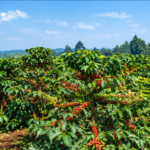
Beyond tea, the bank is deploying capital to emerging coffee and avocado value chains in the region. However, local leaders warn that successfully scaling these new cash crops will require heavy investments in modern farming technology.
“There is no way we can do business in agriculture and remain in the stone age period. We need to move with technology,” said Caleb Mutai, a representative of a local coffee cooperative in Bomet, challenging the bank to finance agritech solutions.
The bank is already seeing uptake in this diversification drive. John Osiemo Momanyi, Director of Avelax Coffee Services in Bomet, noted that flexible financing from the bank has enabled him to establish a certified coffee nursery and a pulping station. He is now seeking further capital to import machinery for packaging and branding local coffee.
Beyond targeting European shelves, the lender is also utilizing its regional footprint to open up cross-border trade, offering to link scaling South Rift agribusinesses with ready markets in Uganda and the high-margin Democratic Republic of Congo (DRC).
https://farmerstrend.co.ke/trending/purple-tea-in-kenya-equity-bank-south-rift/https://farmerstrend.co.ke/wp-content/uploads/2026/09/Ernestea-tea-1024x683.jpghttps://farmerstrend.co.ke/wp-content/uploads/2026/09/Ernestea-tea-150x150.jpg# TrendingPurple tea in Kenya is gaining new export opportunities as Equity Bank links specialty tea producers with European buyers and promotes value addition.Equity Bank is building on the success of a lucrative French offtake agreement for Murang'a purple tea to win over South Rift farmers, promising up to...FarmersTrendjohn doefarmerstrend@gmail.comAdministratorFarmers Trend Ltd.









Leave a Reply