Coffee Prices Surge to Sh975/kg While Tea Faces New Levy: What Kenyan Cash Crop Farmers Need to Know in 2026
Coffee prices surge to Sh975 per kilogramme in the latest official farm data, and tea farmers face a levy dispute in the same year. The Economic Survey 2026 from the Kenya National Bureau of Statistics records the 2025 coffee export price at Sh975 per kilogramme, up 35.9 percent from 2024. The survey puts the tea export price at Sh286 per kilogramme, down 5.2 percent.
These two numbers shape your next decision. A kilogramme of coffee earned 3.4 times the price of a kilogramme of tea in 2025. Tea still earns more foreign exchange for Kenya, with Sh187 billion in exports against Sh52 billion for unroasted coffee. Your farm earns by the kilogramme and by the acre, so the price gap matters more to you than the national total.
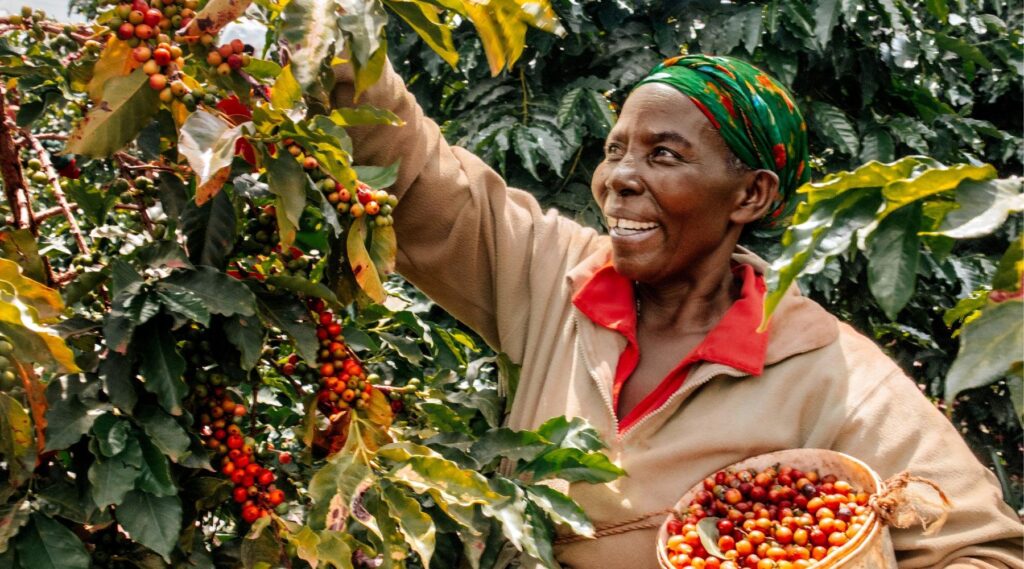
Tea farmers also deal with the Tea (Levy) Regulations, 2026. The Tea Board of Kenya started collecting a 0.8 percent levy on tea exports on 01/05/2026. The High Court in Machakos then restrained the board from enforcing the levy, and the board suspended collection in a notice dated 27 October 2026. The court case continues.
This guide explains each development in plain terms. You get the price data, the tea levy timeline, the latest coffee auction results, an income table for one acre of coffee, the cost of seedlings, and seven moves to make during the short rains. Farmers Trend Limited also lists the coffee seedlings on sale for planting now.
Why Coffee Prices Surge to Sh975 Per Kilogramme in the Official Data
Where the Sh975 Figure Comes From
The Kenya National Bureau of Statistics publishes the Economic Survey each year. The 2026 edition covers calendar year 2025. Reports of the survey show the coffee export price at Sh975 per kilogramme, up 35.9 percent. Coffee production rose from 49.5 thousand tonnes in the 2023/24 season to 51.4 thousand tonnes in 2024/25.
The survey links slower farm growth in 2025 to uneven rainfall, with some areas too wet and others too dry. Tea production fell by about 8 percent. Sugarcane output dropped 24.7 percent and wheat output dropped 18.2 percent. Coffee output grew in the same period.
Read the Sh975 figure with care. This is the average export price of clean coffee in 2025. Your cherry payment is lower, because the clean coffee price pays for milling, marketing and cooperative costs. The Sale 1 auction report for the 2026/27 season converts Sh758 per kilogramme of clean coffee into about Sh117 per kilogramme of cherry. Plan your farm budget on cherry prices, not on the headline number. The coffee prices surge in the data reflects export sales, and your cherry payment follows later in the chain.
Coffee Price Versus Tea Price in 2025
The table below sets the two crops side by side, using figures from the Economic Survey 2026 as reported by Kenyan Wall Street and other outlets.
| Measure | Coffee | Tea |
|---|---|---|
| Export price per kilogramme, 2025 | Sh975 | Sh286 |
| Price change from 2024 | Up 35.9 percent | Down 5.2 percent |
| Production trend | 51.4 thousand tonnes in 2024/25, up from 49.5 thousand tonnes | Down about 8 percent in 2025 |
| Export earnings, 2025 | Sh52 billion (unroasted coffee) | Sh187 billion |
Tea earns more in total because Kenya ships far more tea than coffee. Coffee earns more per kilogramme. Divide Sh975 by Sh286 and you get 3.4. For a farmer with a fixed piece of land, the price per kilogramme and the yield per tree decide the income.
What the 2026/27 Coffee Auctions Show
Prices at the Nairobi Coffee Exchange sit below the 2025/26 peak. The 2025/26 season averaged US$339 per 50 kilogramme bag over 42 sales, according to Kilimo News, with 47.4 million kilogrammes traded. The new season opened lower and has climbed slowly since.
| Auction | Date | Average price per 50 kg bag | Clean coffee per kg |
|---|---|---|---|
| Sale 40, 2025/26 | 15 September 2026 | Sh40,931 | Sh819 |
| Sale 1, 2026/27 | 6 October 2026 | US$293 | Sh758 |
| Sale 5, 2026/27 | 3 November 2026 | US$296 | Sh765 |
| Sale 6, 2026/27 | 10 November 2026 | US$301 | Sh782 |
At Sale 6, buyers paid Sh932 million for 19,359 bags, based on Sacco Review and Kenya News Agency reports. Certified coffee earned better prices than uncertified lots. The Sh975 figure is the 2025 average. Current clean coffee prices sit near Sh760 to Sh780 per kilogramme, which is still more than 2.6 times the 2025 tea export price.
What Made Coffee Prices Surge in 2025 and 2026
A Global Supply Slump Lifted Kenyan Prices
Short world supply set the price. The Agriculture and Food Authority recorded Kenyan coffee selling at Sh1,025 per kilogramme in September 2025, as the Nation reported. This was 10 percent above August and 62 percent above September 2024, when the price stood at Sh633. Direct sales to overseas buyers averaged US$443.5 per 50 kilogramme bag in the quarter, up from US$273.76 a year earlier.
Specialty buyers added pressure at the top end. Online trading sessions run by the African Coffee Trade Fair pushed the top lot price to US$120 per kilogramme in 2026, offered by Ngacha Coffee Estate in Kirinyaga County. The first online trade in 2024 topped out at US$35 per kilogramme. Treat these prices as a ceiling for small estate lots with excellent cup scores. Your cherry price follows the auction average.
Supply Is Recovering and Prices Are Softening
The World Bank October 2026 Commodity Markets Outlook, as summarised by Kursiv, forecasts Arabica falling from US$8.47 per kilogramme in 2025 to US$7.35 in 2026 and US$7.20 in 2027. Robusta falls from US$4.86 to US$3.85 in 2026. The United States Department of Agriculture forecasts record world output of 189.7 million 60 kilogramme bags for 2026/27, helped by a Brazilian harvest of 71.9 million bags.
Kenyan auctions already show the shift. The opening 2026/27 sales sit 11 to 14 percent below the 2025/26 season average of US$339 per bag. Prices remain high by Kenyan history. Plan for a price above the levels of the last decade but drifting lower, not for a repeat of the 2025 peak.
Kenyan Reforms Put More Money in Your Hands
Prices explain part of the story. Payment rules explain the rest. The Coffee Act, signed into law in March 2026, allows farmers to sell through the Nairobi Coffee Exchange, direct sales and international exchanges, according to Food Business Africa. The new Direct Settlement System pays farmers within five days of delivery. Farmers receive at least 80 percent of sale proceeds, and service providers share the other 20 percent, The Star reported in June.
The Coffee Cherry Advance Revolving Fund gives seasonal finance. As of June 2026 the fund had paid Sh14.5 billion to 668,414 farmers, with an average advance of Sh21,758, according to a July report in The Star. Cherry payments in Kirinyaga ran from Sh104 to Sh157.40 per kilogramme in April, with an average of Sh139 per kilogramme.
President William Ruto told farmers in June 2026 the average payment stands at Sh158 per kilogramme and the government plans to lift this to between Sh250 and Sh300 in the coming years. The Coffee Directorate projects national output to rise 13.3 percent to about 850,000 bags in 2025/26, up from 750,000 bags. Kenya once produced more than 128,000 tonnes a year, so room to grow remains.
The New Tea Levy Explained
What the Tea (Levy) Regulations, 2026 Say
The Tea Board of Kenya issued the Tea (Levy) Regulations, 2026 under Section 53 of the Tea Act, 2020. The regulations appear as Legal Notice No. 56 of 2026. Gazettement came on 1 April 2026 and the levy took effect on 01/05/2026, as The Star explained.
Two charges apply. Exporters pay 0.8 percent of the auction value or customs value on direct tea sales. Importers pay 100 percent of the import value on every consignment of made tea brought in for local consumption. The Kenya Revenue Authority collected the export levy upfront on behalf of the board. The board expected the levy to raise Sh1.2 billion a year.
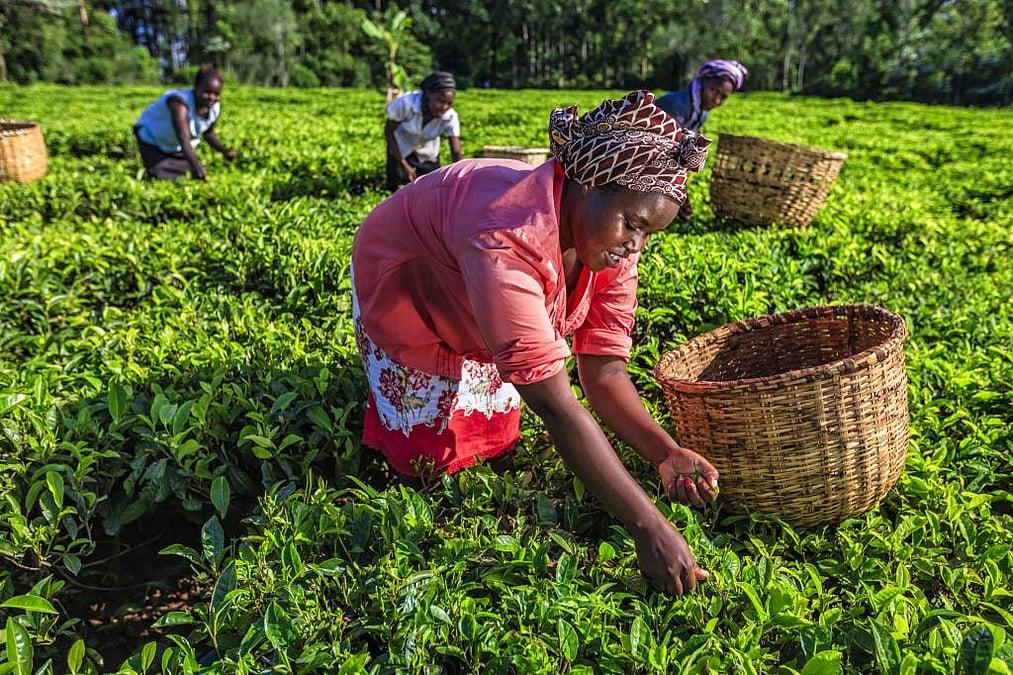
The levy replaces an earlier system scrapped in 2016. The government says the money funds tea marketing, research, infrastructure, value addition and regulation. The board describes the fund as ring-fenced, so all collections stay inside the tea sector.
Run the numbers on your own tea. At the 2025 export price of Sh286 per kilogramme, 0.8 percent equals about Sh2.29 per kilogramme of made tea. At the 2026 auction average of about Sh295, the levy equals about Sh2.36. Exporters pay this charge at the point of export.
Who Pays and Who Does Not
The Tea Board of Kenya and the Ministry of Agriculture state farmers, factories, domestic traders, aggregators and value-added tea businesses do not pay the levy. Agriculture Cabinet Secretary Mutahi Kagwe told farmers in Kirinyaga in July 2026 the levy falls on tea buyers and funds new export markets, research on improved varieties, climate resilience and value addition.
Farmers disagree on the end result. They argue a charge on exporters lowers the price bids at the Mombasa auction, and lower bids reach your payment slip. The court petition makes the same claim and says the economic burden is alleged to pass to small-scale farmers through reduced proceeds.
Why Farmers Object
Objections came from several counties. Murang’a farmers opposed the levy in June and warned the cost moves down the value chain. Farmers from Ndima Tea Factory in Kirinyaga held a crisis meeting and linked the levy to falling demand at the Mombasa auction. Kericho farmers, led by Governor Erick Mutai, asked the board to withdraw the levy in July. A speaker at the Kericho meeting said Rwanda had overtaken Kenya in payments to farmers for the first time.
Buyer behaviour added weight to the complaints. Reports in Nation Media coverage on Zawya said traders moved toward Burundi and Rwanda tea because the levy made Kenyan tea the most expensive at the sale. Supporters of the levy say the money builds new markets. Both sides agree the final effect depends on auction demand.
The Court Order and Timeline
| Date | Event |
|---|---|
| 1 April 2026 | Regulations gazetted as Legal Notice No. 56 of 2026 |
| 01/05/2026 | Levy takes effect and the Kenya Revenue Authority starts collection |
| 19/05/2026 | Nine tea factories ask the High Court to freeze the levy, in a case before Justice Roselyn Aburili |
| June 2026 | Murang’a and Kirinyaga farmers oppose the levy |
| July 2026 | Kericho farmers ask for withdrawal |
| 27 October 2026 | Tea Board of Kenya suspends collection and asks the Kenya Revenue Authority to stop |
| 19 November 2026 | Court mention for directions on the petition |
Justice Josephine Mongare of the Machakos High Court issued interim conservatory orders on a petition by the Mazingira Greens Party of Kenya, filed through chairman John Bunei. The petition challenges Regulation 4, which sets the 0.8 percent export levy. The petition names the Tea Board of Kenya, the Agriculture Cabinet Secretary and the Attorney General as respondents, with the Kenya Tea Development Agency as an interested party. The petition also says tea growers were left out of public participation.
The Tea Board of Kenya notice, reported by The Standard, says the board suspended the demand and collection of the levy on tea exports and imports with immediate effect. The suspension stays in force until the board says otherwise, subject to further court orders.
What Happens Next
The orders are temporary and do not decide the case, as Nairobi Law Monthly noted. The court mentioned the petition on 19 November 2026 for directions. A published outcome of the mention was not available when this guide was written, so watch Tea Board of Kenya notices and your factory board for the next step. Treat the levy as paused, not repealed.
What the Tea Levy Means for Your Green Leaf Payment
Your payment slip tells the real story. KTDA factories declared 2025/26 bonus rates from Sh12.50 to Sh50 per kilogramme of green leaf, and more than 700,000 small-scale farmers received payments. Rukuriri Tea Factory in Embu declared Sh50 per kilogramme, down from Sh57.50 the year before. Mungania declared Sh43.80 and Kathangariri declared Sh40, according to The Standard.
Factory directors weighed several costs when they set the rates. Food Business Africa lists weaker green leaf deliveries, higher petroleum costs, shipping disruptions and concern over the 0.8 percent export levy. Factories received 1.0947 billion kilogrammes of green leaf in the first 11 months of the financial year. The Standard bonus coverage says the export levy further hurt the tea industry.
Market data gives a mixed picture. Tea farmers earned Sh55 billion from exports by late June 2026, and local tea fetched an average of US$2.28, about Sh295, per kilogramme across the first 24 sales of the year, according to The Star. The World Bank expects tea prices to ease 2 percent in 2026 after a decline in 2025, with a gradual recovery in 2027, in the April 2026 beverage price review. Tea prices stayed broadly stable in the third quarter of 2026 and edged lower in November, Eastleigh Voice reported.
Take two steps this week. Collect your last 12 months of monthly payment slips and your bonus statement. Divide your total tea income by the kilogrammes you delivered. This gives you your true income per kilogramme, and this number is the base for every decision below.
Coffee or Tea: Which Pays Your Farm More?
Income From 1,000 Coffee Trees
A coffee prices surge only helps your farm when yield and cost control keep pace. One acre planted at 2 metres by 2 metres holds about 1,000 coffee trees. The table shows gross cherry income at three yields and three cherry prices. The prices come from the data above: Sh117 per kilogramme from the Sale 1 conversion, Sh139 from the Kirinyaga April payout, and Sh158 from the national average the President quoted.
| Cherry per tree | Total cherry | Income at Sh117 per kg | Income at Sh139 per kg | Income at Sh158 per kg |
|---|---|---|---|---|
| 3 kg | 3,000 kg | Sh351,000 | Sh417,000 | Sh474,000 |
| 5 kg | 5,000 kg | Sh585,000 | Sh695,000 | Sh790,000 |
| 8 kg | 8,000 kg | Sh936,000 | Sh1,112,000 | Sh1,264,000 |
These figures are gross income before costs. Fertiliser, labour for pruning and picking, pest control and transport reduce the net. Yield per tree is the biggest swing factor, so good husbandry pays. An older survey of 140 coffee estates, listed in the FAO AGRIS database, found Ruiru 11 yields 70 to 100 percent higher than traditional varieties.
Cash Flow and Risk
Tea pays every month, and coffee pays by harvest. Under the Direct Settlement System, coffee payment arrives within five days of delivery, and the Cherry Advance Fund gives seasonal finance. Tea needs steady picking all year. Coffee needs peak labour at harvest and careful pruning after harvest.
Time matters too. Coffee trees need about two to three years before the first real crop. Your tea plot pays today. Farmers Trend Limited recommends keeping productive tea and adding coffee on a separate plot, so your income stays steady while the coffee matures. A quarter acre of 250 trees costs Sh17,500 in non-grafted seedlings or Sh37,500 in grafted seedlings, which is a small test of your site.
Should You Plant Coffee Now? Check Your Site First
The short rains give soil moisture for planting, and many coffee zones in Murang’a, Kirinyaga, Nyeri, Embu, Kiambu and Meru are wet now. Check four site conditions before you buy seedlings.
First, check altitude. Arabica coffee does best between about 1,400 and 2,000 metres above sea level. Second, check rainfall. Aim for 1,000 to 1,800 millimetres a year, well spread. Third, check soil depth and drainage. Coffee roots need deep, well-drained soil, and waterlogged ground kills young trees. Fourth, check soil acidity. Coffee prefers a pH of about 5.2 to 6.2. Tea prefers more acidic soil, so a soil test before planting on a former tea plot saves money.
Farmers Trend Limited advises a soil test at an accredited laboratory before you order. A test costs far less than replacing 1,000 dead seedlings. Your county agriculture office and the Coffee Research Institute at Ruiru also give site advice.
Pick the Right Coffee Seedlings
Grafted Ruiru 11
Ruiru 11 is a hybrid developed by the Coffee Research Institute. Grafted Ruiru 11 joins the improved shoot to a strong rootstock. The Nation reported Coffee Research Institute director Elijah Gichuru describing the grafted plant as deep-rooted and resistant to leaf rust and coffee berry disease, with production costs about 30 percent lower. The variety also allows closer spacing and more trees per acre. Farmers Trend Limited sells certified grafted Ruiru 11 coffee seedlings at KSh 150 each.
Non-Grafted Ruiru 11
Non-grafted Ruiru 11 carries the same disease resistance at a lower price. Farmers Trend Limited sells these seedlings at KSh 70 each. Choose them when you plant a large area on a tight budget or when you want to test a plot before you expand.
Non-Grafted Batian
Batian is a Coffee Research Institute variety with resistance to coffee berry disease and leaf rust and a cup profile valued by buyers. Farmers Trend Limited sells non-grafted Batian seedlings at KSh 70 each. Many farmers plant a block of Batian beside Ruiru 11 to spread risk across two varieties.
| Seedling | Price each | Cost for 250 trees | Cost for 1,000 trees |
|---|---|---|---|
| Grafted Ruiru 11 | KSh 150 | KSh 37,500 | KSh 150,000 |
| Non-grafted Batian | KSh 70 | KSh 17,500 | KSh 70,000 |
| Non-grafted Ruiru 11 | KSh 70 | KSh 17,500 | KSh 70,000 |
Compare seedling cost with expected income. At 5 kilogrammes of cherry per tree and Sh139 per kilogramme, 1,000 trees earn Sh695,000 in a year. Seedlings costing Sh150,000 repay in the first full crop. Seedlings are a small share of the total cost over the life of the orchard, so buy certified plants from a trusted nursery.
How to Plant and Manage Coffee for Higher Yields
Prepare the Land and the Holes
Clear the plot and mark the rows across the slope to slow soil erosion. Dig holes 60 centimetres wide and 60 centimetres deep. Keep the topsoil and subsoil in separate heaps. Farmers Trend Limited advises mixing the topsoil with 20 kilogrammes of well-rotted manure and 100 grams of phosphate fertiliser, then refilling the hole a month before planting.
Plant During Good Soil Moisture
Plant when the soil is wet and rain is expected. Remove the seedling bag without breaking the root ball. Set the plant at the same depth as in the nursery. Firm the soil around the stem and mulch with dry grass, leaving a gap at the stem. Water young plants if rain stops for more than two weeks.
Use a spacing of 2 metres by 2 metres for Ruiru 11. Research by the Coffee Research Foundation tested Ruiru 11 at densities from 1,600 to 4,800 trees per hectare. This range includes about 2,500 trees per hectare, which matches the 2 by 2 metre spacing.
Train on a Single Stem
Pruning shapes the yield. The same Coffee Research Foundation study found training Ruiru 11 on two stems reduced the first two crops compared with a single stem. Train your trees on one stem. Remove suckers early and cut dead or crossing branches after each harvest.
Feed, Weed and Protect
Apply manure each year and follow a fertiliser plan based on your soil test. Weed around the trees by hand and keep mulch in place to hold moisture. Resistant varieties still need field checks. Walk your rows every two weeks and look for stem borer, scale insects and mealybugs. Ask your extension officer before you spray any product.
Harvest, Record and Deliver
Pick only ripe red cherry. Sort out green and overripe berries, because buyers pay for quality. Deliver to your cooperative or marketing agent on the day of picking. Record the weight, the date and the payment for every delivery. These records let you compare income per tree across seasons. Stakeholders are pushing for rules to curb cherry theft, as Citizen Digital reported in November, so guard your crop near harvest.
7 Best Moves for Kenyan Cash Crop Farmers in 2026
1. Know Your Real Tea Income Per Kilogramme
Use your payment slips and your bonus statement. Add every payment for the year and divide by your delivered green leaf. Compare the number with your cost of picking, fertiliser and transport. This tells you which tea plots earn money and which plots do not.
2. Keep Productive Tea Plots
Do not uproot healthy tea because of one levy dispute. The levy is paused, the World Bank expects tea prices to recover gradually in 2027, and tea pays every month. Replace only old or low-yield bushes after you check their income.
3. Plant Coffee on a Separate Plot
Start with a quarter acre or a full acre on land with the right altitude, rainfall and soil. Plant during the short rains while soil moisture is good. A separate plot keeps your tea income steady and gives you a clean comparison between the two crops.
4. Buy Certified Seedlings
Choose certified seedlings from a registered nursery. Ask for the variety name, the age of the plant and the nursery address. Resistant varieties such as Ruiru 11 and Batian cut your spraying cost. A cheap uncertified seedling costs more when the tree fails in year three.
5. Join a Cooperative on Direct Settlement
Choose a cooperative or marketing agent paying within five days and accepting cherry advance requests. Ask for the last three seasons of payment records. Ask how deductions are calculated. A transparent society protects your share of the sale price.
6. Budget With Cherry Prices, Not Headlines
The Sh975 figure is an export price for clean coffee. Budget with cherry prices from Sh117 to Sh139 per kilogramme and test a lower price as well. If your plan works at Sh100 per kilogramme, a higher price becomes extra income.
7. Track Court Notices and Price Outlooks
Read Tea Board of Kenya notices after the 19 November mention. Watch the weekly Nairobi Coffee Exchange results each Tuesday. Check the next World Bank Commodity Markets Outlook in April 2027. Adjust your plot sizes when the numbers change.
Risks to Plan For
Price risk comes first. The World Bank expects Arabica prices to fall again in 2026 and 2027, and Kenyan auctions already sit below the last season average. A farmer who borrowed to plant at 2025 prices carries more risk than a farmer who plants with savings.
Weather risk comes second. The Economic Survey 2026 links slower farm growth in 2025 to uneven rainfall. Mulch, shade trees and windbreaks protect young coffee. Irrigation helps in the dry months when budget allows.
Governance risk sits in cooperatives. Reforms are moving, yet weak management of a society still delays payment. Attend society meetings, read the accounts, and ask for payment records.
Policy risk affects tea. The levy case is open. A final ruling in favour of the Tea Board of Kenya restores a 0.8 percent export charge. A ruling against the board ends the levy in the present form. Plan for both outcomes.
Frequently Asked Questions About Coffee Prices and the Tea Levy
Do coffee farmers receive Sh975 per kilogramme?
No. Sh975 is the 2025 average export price of clean coffee in the Economic Survey 2026. Farmers receive a cherry price after milling, marketing and cooperative costs. Recent reports show cherry payments between Sh104 and Sh158 per kilogramme.
Is the tea levy deducted from farmers?
The Tea Board of Kenya says farmers do not pay the levy, and exporters and importers pay at the border. Farmers and the court petitioner argue the cost passes down through lower auction proceeds.
Is the tea levy still in force?
Collection stopped after the Tea Board of Kenya notice of 27 October 2026, which followed a High Court order. The regulations are not repealed. The case continues, so check board notices for updates.
How many coffee seedlings fit on one acre?
A 2 metre by 2 metre spacing gives about 1,000 trees per acre. Your extension officer adjusts the number for slope and variety.
How much do coffee seedlings cost?
Farmers Trend Limited sells grafted Ruiru 11 at KSh 150 each, non-grafted Batian at KSh 70 each and non-grafted Ruiru 11 at KSh 70 each. One thousand non-grafted seedlings cost KSh 70,000.
Why did coffee prices surge in Kenya?
Short world supply pushed prices to record levels in 2025, and the Agriculture and Food Authority recorded Sh1,025 per kilogramme in September 2025. Kenyan reforms in payment and marketing also lifted farmer returns. World supply is now recovering, so prices are softening.
Which variety suits my farm?
Ruiru 11 and Batian both resist coffee berry disease and leaf rust. Grafted Ruiru 11 suits farmers who want a strong root system. Non-grafted seedlings suit larger plots on a tight budget. A mix of both varieties spreads risk.
When do coffee trees start to bear?
Most trees give a first light crop after two to three years and reach full production over the next few years. Good pruning, feeding and mulching speed this process.
Order Coffee Seedlings From Farmers Trend Limited
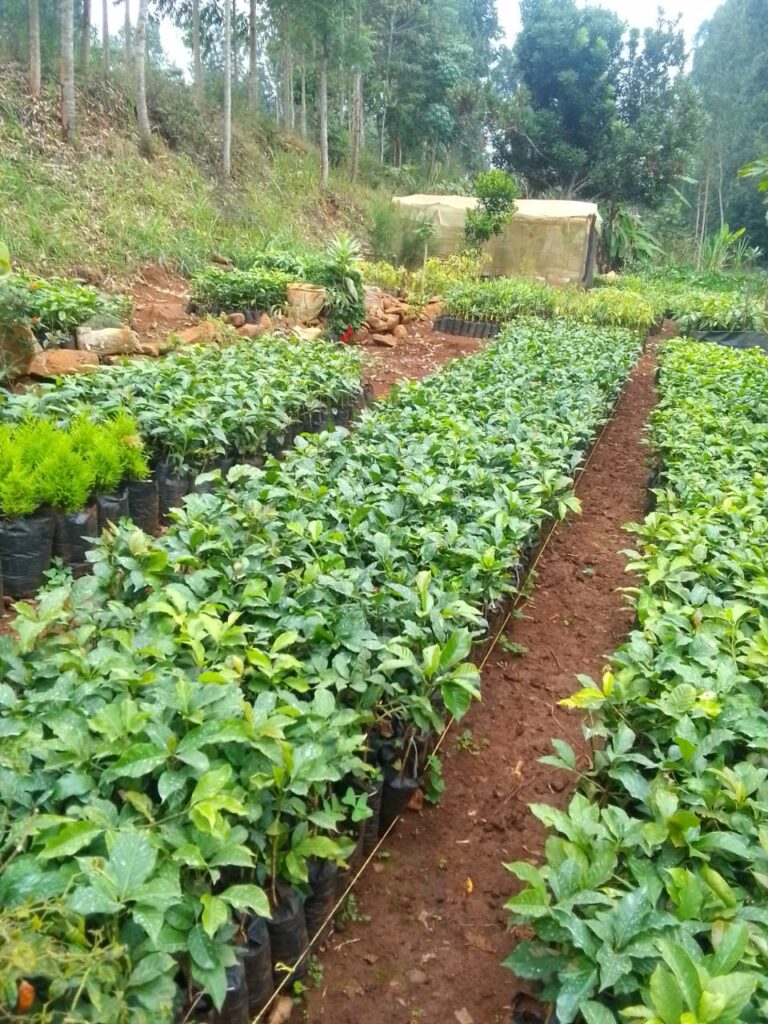
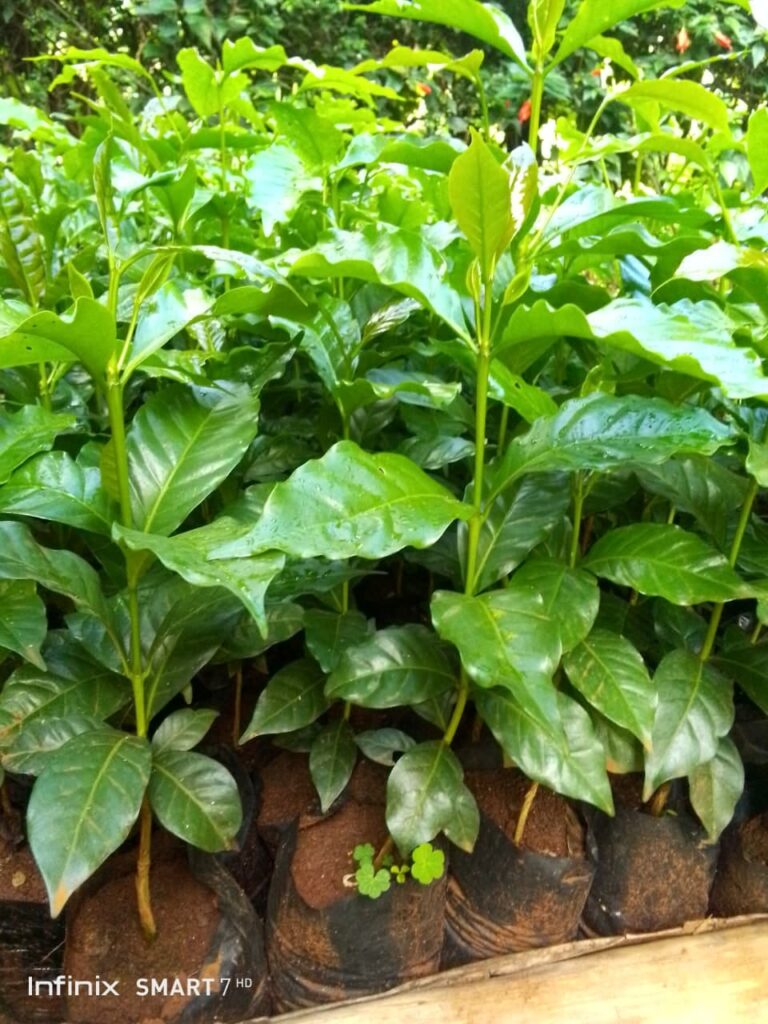
Good news for coffee farmers. Farmers Trend Limited has quality coffee seedlings available now. Take advantage of the rains and establish or expand your coffee farm while soil moisture is favourable for planting.
| Seedling | Price each |
|---|---|
| Grafted Ruiru 11 | KSh 150 |
| Non-grafted Batian | KSh 70 |
| Non-grafted Ruiru 11 | KSh 70 |
Visit the Farmers Trend Limited nurseries in Murang’a, along the Nairobi-Embu Highway near Kwa Samaki, or in Nairobi at Muthaiga, next to the Golf Course. Call or WhatsApp 0790 509 684 to place your order. Countrywide delivery is available.
|
|
See the full product page for certified grafted Ruiru 11 coffee seedlings, or email info@farmerstrend.co.ke with your acreage and location.
What Your Farm Should Do Next
The numbers point in one direction. The coffee prices surge took the export price to Sh975 per kilogramme in 2025, and current auction prices of Sh760 to Sh780 per kilogramme still sit well above tea. Reforms pay farmers within five days, and cherry payments now run from about Sh104 to Sh158 per kilogramme. Tea farmers face pressure from lower bonuses, a levy case without a final ruling and a soft price outlook until 2027.
Your best response is a measured one. Keep your productive tea. Calculate your real income per kilogramme. Test your soil, plant a clean block of certified coffee during the short rains, and record every cost and every payment. After one full crop, your own numbers will show whether to expand coffee or stay with tea. Farmers Trend Limited stands ready with certified seedlings and nursery advice in Murang’a and Nairobi.
https://farmerstrend.co.ke/trending/coffee-prices-surge-sh975-kg-tea-levy/https://farmerstrend.co.ke/wp-content/uploads/2026/11/HK9qeKSijcz2Jt7bNFWpFxqy7qn341UuRwXNxDYPvBPWDasVUHdfBrDeHK0BCJxf1fvGvMGxQIRMfwATwxrk5HkKy1G31dsBtTye0HWkIZBRiqeTLWzAu0cTgDS29_fjSCBpHU3XKGe7ciMvHu5B4wn1qzLGkcZMHFWnggbQoSzLBo5H315BAdgP18NWl7MW-1024x569.jpghttps://farmerstrend.co.ke/wp-content/uploads/2026/11/HK9qeKSijcz2Jt7bNFWpFxqy7qn341UuRwXNxDYPvBPWDasVUHdfBrDeHK0BCJxf1fvGvMGxQIRMfwATwxrk5HkKy1G31dsBtTye0HWkIZBRiqeTLWzAu0cTgDS29_fjSCBpHU3XKGe7ciMvHu5B4wn1qzLGkcZMHFWnggbQoSzLBo5H315BAdgP18NWl7MW-150x150.jpg# TrendingCoffee FarmingIn cropsTea FarmingCoffee prices surge to Sh975 per kilogramme in the latest official farm data, and tea farmers face a levy dispute in the same year. The Economic Survey 2026 from the Kenya National Bureau of Statistics records the 2025 coffee export price at Sh975 per kilogramme, up 35.9 percent from...FarmersTrendjohn doefarmerstrend@gmail.comAdministratorFarmers Trend Ltd.







Leave a Reply