Why Kenya Is One of the World’s Leading Producers and Exporters of Tea
Discover why Kenya ranks among the top tea producers and exporters globally, thanks to ideal growing conditions, smallholder farmers, and world-class processing methods.

When you think of Kenya, images of wildlife, scenic landscapes, and athletic champions might come to mind. But there’s another story — one brewed quietly in the green highlands of the country: tea. Kenya is not only among the top producers of tea globally, but it also leads in the export of black tea by volume. What’s behind this dominance? It comes down to a mix of natural conditions, institutional support, farmer participation, and a focus on quality.
Let’s break it down step by step.
1. Ideal Climate and Geography
Kenya’s tea-growing regions are located in areas with some of the best natural conditions for tea in the world. Most tea farms sit at altitudes ranging between 1,500 and 2,700 meters above sea level. These high altitudes mean cooler temperatures, which slow the growth of tea bushes and help concentrate the flavor in the leaves.
Rainfall is another crucial factor. Tea plants thrive in areas with consistent, well-distributed rainfall throughout the year — about 1,200 to 1,400 mm annually — which Kenya’s highlands receive in abundance. Regions like Kericho, Nandi Hills, and parts of Mount Kenya benefit from rich volcanic soils that are deep, well-drained, and full of nutrients ideal for tea cultivation.
Kenya’s location on the equator also plays a key role. Unlike many other tea-producing countries that are restricted to specific harvest seasons, Kenya’s equatorial position allows for continuous harvesting all year round. That translates to consistent supply and better productivity.
2. Strong Institutional and Government Support
Behind Kenya’s success in tea isn’t just nature — it’s also policy and planning. The Tea Board of Kenya oversees regulations, marketing, and development strategies for the tea sector. Then there’s the Kenya Agricultural and Livestock Research Organization (KALRO) and the Tea Research Foundation of Kenya (TRFK), which focus on research and development.
These institutions have helped farmers access improved planting materials, including high-yield and disease-resistant clones. They’ve also supported training programs, research into pest and disease control, and efforts to adapt to climate change. The result is not only more tea but better quality tea.
3. The Power of Smallholder Farmers
You might think the big tea estates drive Kenya’s tea production, but that’s only part of the story. Over 600,000 smallholder farmers grow tea in Kenya. These farmers contribute close to 60% of the country’s total tea production.
They are usually organized into cooperatives and managed under the Kenya Tea Development Agency (KTDA), which handles everything from extension services to processing and marketing. This setup helps farmers, even those with just a few acres, to access markets and benefit from economies of scale.
It also allows for quality control. Since farmers bring their green leaf to central processing factories under KTDA’s oversight, the final product meets uniform standards, helping to maintain Kenya’s global reputation for quality tea.
4. Quality and Processing Methods
Kenyan tea is especially known for its CTC (Crush, Tear, Curl) black tea, which is processed using a method that creates small, hard pellets of tea ideal for quick brewing. CTC tea has a strong flavor, bright color, and is particularly valued by international blenders.
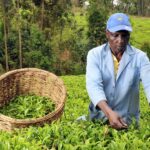
During processing, only the top two leaves and a bud are plucked — this is the part of the tea bush that produces the highest quality liquor. Most of the plucking is done by hand, which helps to maintain leaf integrity.
Once harvested, the tea leaves go through a detailed process: withering to reduce moisture, rolling or CTC to crush the leaves and start oxidation, fermentation to develop flavor, drying to stop oxidation, and finally, sorting and grading. The processed tea is then sold either through direct contracts or at the Mombasa Tea Auction — one of the largest tea trading hubs in the world.
5. Exports and Global Markets
Kenya exports over 95% of its tea production. This makes it one of the few countries where the local consumption of tea is a small part of total output. Key export destinations include Pakistan, Egypt, the United Kingdom, Sudan, and the UAE. Interestingly, markets like China and India — both major tea producers themselves — are increasingly importing Kenyan tea for blending purposes due to its strong flavor profile.
The Mombasa Tea Auction plays a central role in Kenya’s tea trade. Held weekly, it brings together hundreds of buyers and sellers, providing a transparent, centralized platform for pricing and trading. This auction has helped ensure that Kenyan tea reaches global buyers efficiently and competitively.
6. The Tea Planting Process in Kenya
Tea farming in Kenya is a systematic process that starts long before the first leaf is plucked.
- Nursery Stage: Tea is mostly propagated through cuttings (also called clones) instead of seeds. These cuttings are selected for high yield, drought tolerance, and resistance to pests and diseases.
- Land Preparation: Before planting, land is cleared, tilled, and enriched with compost or organic matter. In sloping areas, terraces are built to prevent erosion and conserve water.
- Planting: Tea bushes are planted in rows with specific spacing to allow sunlight and air circulation. Mulching is often used in early stages to retain moisture and suppress weeds.
- Maintenance: Farmers weed regularly, apply nitrogen-rich fertilizers, and prune the tea bushes every 3–4 years to maintain shape and vigor. Integrated pest management practices are used to minimize chemical use.
- Harvesting: Plucking is done every 7 to 14 days. Only the top shoot — two leaves and a bud — is picked, since this is where the best flavor and aroma are found.
- Processing: Immediately after harvesting, the leaves are transported to nearby tea factories where they are processed quickly to maintain freshness and quality.
7. Sustainability Efforts and Industry Challenges
As the tea industry grows, so do concerns about sustainability. Kenya has seen a push toward more environmentally friendly farming practices. Some farms are adopting organic methods, using rainwater harvesting, planting shade trees, and integrating solar power into their processing factories.
Certification programs like Fair Trade and Rainforest Alliance are also helping promote ethical labor standards and environmentally responsible farming. These certifications can give Kenyan tea an edge in international markets where consumers are increasingly looking for sustainable products.
However, challenges remain. Climate change is already affecting rainfall patterns and causing longer dry spells, which in turn lowers yields. Price fluctuations on the international market can hurt farmers’ earnings, especially smallholders. There’s also the issue of rising costs for inputs like fertilizer and transport, which eat into profit margins.
Final Thoughts
Kenya’s leadership in the global tea industry isn’t just about growing a lot of tea. It’s about growing good tea, in the right conditions, with the support of well-organized systems and farmers who understand their craft. From the cool hills of Kericho to the bustling auctions in Mombasa, every stage of Kenya’s tea story reflects careful planning, tradition, and adaptability.
For anyone interested in agricultural development, rural livelihoods, or global trade, the Kenyan tea sector offers a case worth studying — and appreciating with every cup.
Article Credit: FAITH VASTY | LinkedIn
https://farmerstrend.co.ke/trending/why-kenya-is-one-of-the-worlds-leading-producers-and-exporters-of-tea/https://farmerstrend.co.ke/wp-content/uploads/2025/05/1748457507431-1024x682.jpghttps://farmerstrend.co.ke/wp-content/uploads/2025/05/1748457507431-150x150.jpg# TrendingTea FarmingCTC tea Kenya,KALRO tea research,Kenya tea exports,Kenya tea production,Kenya tea quality,Kenyan black tea,Kenyan tea clones,Kericho tea farms,KTDA tea farmers,Mombasa tea auction,Nandi Hills tea,smallholder tea farmers Kenya,sustainable tea farming Kenya,Tea Board of Kenya,tea export markets Kenya,tea farming in kenya,tea growing regions Kenya,tea industry Kenya,tea planting Kenya,tea processing KenyaDiscover why Kenya ranks among the top tea producers and exporters globally, thanks to ideal growing conditions, smallholder farmers, and world-class processing methods.When you think of Kenya, images of wildlife, scenic landscapes, and athletic champions might come to mind. But there’s another story — one brewed quietly in the...FarmersTrendjohn doefarmerstrend@gmail.comAdministratorFarmers Trend Ltd.






Leave a Reply