How to Achieve 10+ Tonnes per Acre on Your Hass Avocado Farm: The Essential Guide to Orchard Management and Yield Optimization
Hass avocado yield per acre decides how much money your orchard returns every year. Field reports in Kenya put a mature Hass tree near 60 kg, about 300 fruits. At 100 trees to the acre, this gives 6 tonnes. A 10 tonne orchard needs 100 kg from each of those trees.
The gap between 60 kg and 100 kg comes from management. Seedlings, spacing, feeding, water, bees and pruning each add kilograms or remove them. Farmers Trend Limited built this article from research by KALRO, FAO, the University of California and field trials in Australia, Israel and Colombia. You get tables, numbers and a year by year plan.

Read the seven steps in order. Then mark the steps your orchard misses.
What 10 Tonnes Per Acre Means for Your Hass Avocado Farm
Ten tonnes per acre equals 24.7 tonnes per hectare. Compare this figure with real benchmarks before you set your target.
| Benchmark | Tonnes per hectare | Tonnes per acre |
|---|---|---|
| Kenya smallholder field estimate (MOALF SHEP PLUS) | 7.9 to 9.9 | 3.2 to 4.0 |
| Kenya national average (FAO data, 2023) | 16.2 | 6.6 |
| Industry average for bearing trees (FAO, Australia) | 7 | 2.8 |
| Better growers in favourable areas (FAO) | 20 | 8.1 |
| California high density Hass trial, 3 year average | 16.4 | 6.7 |
| Highest recorded commercial season, Australia (FAO) | 50 | 20.2 |
| Your target | 24.7 | 10 |
Figures differ by source, so trust your own records. Weigh every crate in every season and write down the total for each tree.
Ten tonnes sits above the 20 tonnes per hectare which well managed groves hold year after year. Treat 10 tonnes per acre as your top target. The best orchards reach this level in peak seasons. FAO records one Australian commercial season at 50 tonnes per hectare, which is 20 tonnes per acre. A 10 tonne season is within reach. A 10 tonne orchard in every season needs all seven steps done well.
The Tree Arithmetic Behind 10 Tonnes Per Acre
Yield per acre equals trees per acre multiplied by kilograms per tree. Work out both numbers before you plant.
| Spacing | Trees per acre | Kg per tree for 10 tonnes | Fruits per tree at 200 g |
|---|---|---|---|
| 7 m by 7 m | 82 | 122 | 610 |
| 6 m by 6 m | 112 | 89 | 446 |
| 5 m by 7 m | 116 | 86 | 431 |
| 5 m by 5 m | 162 | 62 | 309 |
Counts are gross trees per acre before paths. A tree at 60 kg falls short at every spacing in the table. At 6 m by 6 m you need 89 kg per tree, about 50 percent above the field report. Spacing, pruning and pollination each get a full step below for this reason.
Step 1: Choose a Site Built for High Hass Avocado Yield Per Acre
KALRO places avocado growing in Kenya between about 1,500 and 2,100 metres above sea level. Hass does well in the highlands of Murang’a, Kiambu, Nyeri, Meru and Kisii. The tree prefers a climate without sharp seasonal swings.
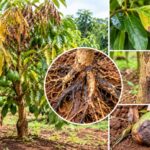
Drainage matters more than any other site factor. Phytophthora root rot is the most serious disease of avocado worldwide, according to the University of California. The fungus thrives where soil holds water. Walk your site after a heavy rain. Mark each spot where water stands for more than a day. Fix these spots with drains or mounds, or leave them unplanted.

Dig a pit 1 metre deep and read the soil layers. A hard layer below the topsoil stops roots and holds water. Rip through compacted layers before you plant. KALRO advises deep initial cultivation for faster root growth. Clear Kikuyu grass and other aggressive perennial weeds from the whole plot.
Send a soil sample to a laboratory before you buy seedlings. The results tell you the lime, phosphorus and potassium your soil needs. Plan your water source at the same time. A Hass orchard in a dry spell needs water from the first year.
Plan roads, a pack area and a water point inside the block. Crates, hives and harvest teams need access to every row. Mark roads before you stake rows, because a road cut through a planted block removes trees and the yield they carry.
Step 2: Start With Certified Grafted Hass Seedlings
Your seedlings set the base for Hass avocado yield per acre over the next decades. A weak graft or a diseased root wastes land, labour and fertiliser.
Check four things on every seedling. The graft union must be fully healed, with no gap and no swelling. The stem must stand straight. The roots must be white and free of coils. The leaves must show no spots or curling. Reject any bag with wilted leaves or a rotten smell.
Certification matters for root rot. The University of California tells growers to buy certified disease-free nursery stock. Nurseries which rely only on fungicides produce plants with no symptoms but with infection which develops after planting. Ask your nursery how the nursery controls Phytophthora before you pay.
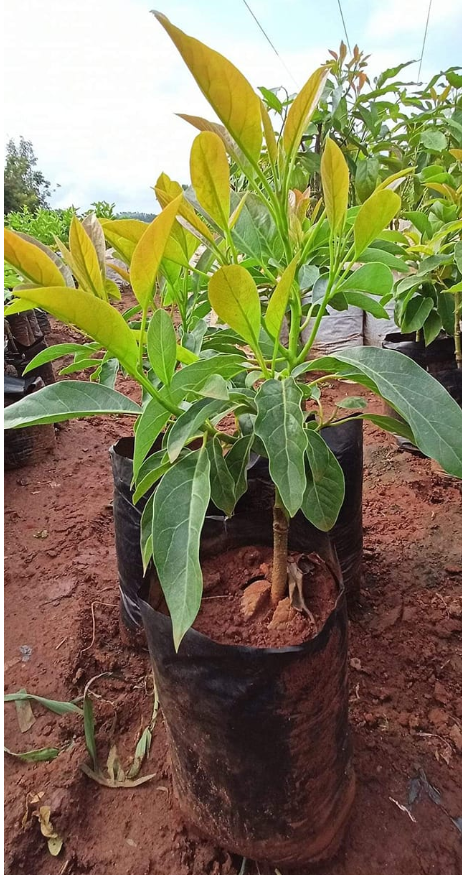
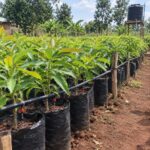
Farmers Trend Limited sells certified, grafted Hass avocado seedlings with fully healed grafts, hardened and ready for planting at KSh 250 each. Hardened seedlings have adjusted to full sun and wind in the nursery, so they suffer less shock in your field. You collect from the Murang’a or Nairobi nursery, or you order countrywide delivery. Farmers Trend Limited also gives free agronomy support when you establish and manage your orchard.
Order certified grafted Hass avocado seedlings online from Farmers Trend Limited.
Work out your seedling cost early. At KSh 250 each, 82 trees cost KSh 20,500 and 112 trees cost KSh 28,000. Order 5 percent extra to replace failures in the first season.
Step 3: Set Spacing for Higher Hass Avocado Yield Per Acre
Spacing sets the ceiling of your Hass avocado yield per acre. KALRO recommends 7 m by 7 m for Hass, which gives 204 trees per hectare, or about 82 trees per acre. Many farms plant 5 m by 7 m and hold about 116 trees per acre. Smallholders on one acre often choose 6 m by 6 m.
| Spacing | Trees per acre | Pruning work | Suits |
|---|---|---|---|
| 7 m by 7 m | 82 | Light for the first 8 years | Larger farms with limited labour |
| 6 m by 6 m | 112 | Start in year 3 | One acre plots |
| 5 m by 7 m | 116 | Start in year 3 | Farms with rows for access |
| 5 m by 5 m | 162 | Heavy from year 3 | Only with strict pruning every year |
Light decides yield. Hass flowers and sets fruit on the outside of the canopy. Gary Bender, a University of California farm advisor, reports overgrown trees fruit only in the first 1 to 2 metres from the canopy edge. Seeka, a New Zealand avocado company, gives these figures in grower training material. A cylinder shaped tree in high density rows has 91 percent productive canopy. A dome shaped tree in a low density orchard has 20 percent.
High density gives early yield only when you prune. Without pruning, neighbouring canopies shade each other and fruit moves to the tops of the trees. A California trial of high density Hass averaged 14,662 pounds per acre a year, about 6.7 tonnes, against a goal of 11,000 pounds. Choose 7 m by 7 m if you lack labour. Choose 6 m by 6 m or 5 m by 7 m if you commit to pruning twice a year.
Dig and fill the planting hole
Dig holes 60 cm by 60 cm by 60 cm a month before planting. Keep the topsoil and subsoil in separate heaps. Mix the topsoil with 20 kg, one debe, of decomposed farm yard manure. KALRO gives this rate in its avocado factsheet. Add the phosphate fertiliser your soil test recommends.
Plant on a low mound so the graft union stays above the soil. Water the seedling well after planting. Whitewash the stem on the same day, as Step 7 explains.
Step 4: Feed Your Orchard With a Hass Avocado Fertiliser Programme
Fruit carries nutrients out of your orchard at every harvest. A tree which bears 100 kg needs those nutrients back. An underfed tree drops flowers and small fruit, so feeding sets your Hass avocado yield per acre as much as spacing does.
Nitrogen is the most important nutrient in avocado, says KALRO. University of California extension reports Hass needs 1.5 to 2.0 pounds of actual nitrogen per tree per year, about 0.7 to 0.9 kg. Calcium ammonium nitrate carries 26 to 27 percent nitrogen. A mature tree at this rate takes about 2.5 to 3.5 kg of calcium ammonium nitrate a year.
| Tree age | Nitrogen per tree per year | Calcium ammonium nitrate per tree per year (about) |
|---|---|---|
| Year 2 | 57 g | 210 g |
| Year 3 | 113 g | 420 g |
| Years 4 to 5 | 230 to 340 g | 850 g to 1.3 kg |
| Year 6 onward | 680 to 910 g | 2.5 to 3.5 kg |
The table follows California schedules for avocado, with the mature rate set for Hass. California research notes Hass uses up to twice the nitrogen of Fuerte, so treat the young tree figures as a floor. Confirm every rate with a soil test and a leaf test. Soil in Murang’a differs from soil in Meru. A rate which suits your neighbour wastes money or starves your trees, so rely on your laboratory reports.
Split the feeding and match the timing to the crop
Never apply the full yearly amount at one time. KALRO advises feeding at the onset of each long and short rains. Use three or four splits across the year. University of California advice for fertigated Hass divides nitrogen into 6 to 9 applications.
Timing affects yield. Dr Carol Lovatt of the University of California, Riverside, tested application dates in a Hass orchard. Trees fed nitrogen, phosphorus and potassium in July and August out-yielded trees given double doses in November or April over three years. The lesson for Kenya is to feed during fruit set and early fruit growth. Ask your agronomist to match your schedule to the flowering date in your zone.
Use a leaf test to set your rates
Take leaf samples once a year at the same growth stage. A Hass leaf with 2.0 to 2.2 percent nitrogen is sufficient. Below 1.8 percent is low. Above 2.8 percent is excess. The California Department of Food and Agriculture links excess nitrogen to flesh discoloration after harvest, so do not over apply.
Phosphorus and potassium matter too. KALRO lists rates of calcium ammonium nitrate, DSP and muriate of potash for each tree age in its avocado production factsheet. California growers apply zinc when leaf tests show a gap. Let the laboratory report decide these additions.
Add manure and mulch
The Ministry of Agriculture SHEP PLUS programme recommends 4 tonnes of compost per acre for avocado, based on soil results. Spread manure under the canopy and keep manure off the trunk. Cover the soil with 10 to 15 cm of coarse mulch. The University of California advises 4 to 6 inches. Mulch feeds soil organisms which compete with Phytophthora and reduces evaporation from the root zone.
Step 5: Water Your Hass Orchard Without Waterlogging
The avocado tree has a shallow root system. KALRO advises frequent, light irrigation. Water stress during flowering, fruit set and fruit growth costs you fruit. Silber and colleagues studied Hass in Israel because a heavy fruit load makes the tree sensitive to water at these stages.
Fruit drop shows why. About 1.3 million flowers, buds and fruitlets drop from a single heavily laden Hass tree, and only 1 percent of fruitlets reach maturity, according to the same study. Every stress adds to the loss, so protect water supply and feeding through the whole fruiting period. This protection links directly to Hass avocado yield per acre.
A large Kenyan avocado grower reports a crop water requirement of about 7,500 cubic metres per hectare each year for mature trees. This equals about 3,000 cubic metres per acre. Rain supplies part of this volume. The same grower applies 1,500 cubic metres of irrigation per hectare in an average year, about 600 cubic metres per acre. Your numbers change with your rainfall and soil, so record rainfall and irrigation for each block.
Install drip lines or micro-sprinklers. Micro-sprinklers wet the root zone only, which is how Kakuzi irrigates young trees. Check your water quality. Avocado is sensitive to salt, and irrigation specialists advise water below 1.5 dS/m electrical conductivity. Dig 20 cm into the soil before each watering. Hold water if the soil clumps in your hand and feels cool.
Prevent root rot before infection starts
Appropriate irrigation is the single most critical practice for managing root rot, says the University of California. Read the University of California root rot guidelines for the full programme.
Take these steps in your orchard to protect Hass avocado yield per acre. Plant on mounds where drainage is poor. Apply gypsum at 20 g per square metre under the canopy after planting, as AVOCO, a New Zealand avocado company, advises. Mulch every year, with the mulch kept away from the trunk. Use only certified disease-free seedlings.
Watch the leaves. Small, pale or yellow leaves with brown tips in wet soil signal root rot. Sparse foliage and little new growth confirm the problem. Call your agronomist at the first sign, because Phytophthora spores persist in soil for years.
Step 6: Raise Fruit Set With Bees and Pollenisers
An avocado tree carries thousands of flowers and sets few fruits. Plant Health Australia reports about three fruits from one thousand flowers. Research in New Zealand and Spain shows hand pollination lifts fruit set from below 0.3 percent to about 5 percent. Better pollination is the fastest way to raise Hass avocado yield per acre once your trees reach fruiting age.
Bees do this work. A trial in Popayán, Colombia, used six year old Hass trees on one hectare plots. Plots with six hives per hectare gave 46.2 kg of fruit per tree. Plots with four hives gave 38.2 kg. Plots with no hives gave 21.6 kg. Read the Colombian honey bee density study for the full results.
Israeli work shows the same pattern. Two hives per hectare lifted yield 3.5 times over orchards with no hives. A third hive per hectare added 20 to 38 percent. New Zealand growers use 4 to 10 hives per hectare. California advisors recommend 3 to 4 hives per acre. Use 3 to 4 hives per acre as your starting range.
| Source | Hives recommended | Per acre (about) |
|---|---|---|
| Israel trial | 2 to 3 per hectare | 0.8 to 1.2 |
| New Zealand growers | 4 to 10 per hectare | 1.6 to 4 |
| AVOCO, New Zealand | 6 to 8 per hectare | 2.4 to 3.2 |
| California advisors | 3 to 4 per acre | 3 to 4 |
| Colombia trial | 6 per hectare | 2.4 |
Move hives into the orchard when the first flowers open. Place them across the orchard, not in one corner. Keep a water source near the hives. Do not spray insecticide on open flowers. Compare the cost of a hive with the value of the extra fruit.
Plant pollenisers
Hass is a type A flower. KALRO advises mixing type A and type B varieties in an orchard so each type pollinates the other. Fuerte is a type B and sells well. The University of California plants pollenisers so each Hass tree sees a type B tree. Aim for a type B tree beside every Hass tree or in the next row. Ask your agronomist to confirm the best pattern for your spacing.
Step 7: Prune, Protect and Harvest to Hold Your Hass Avocado Yield Per Acre
Steps 1 to 6 build a high yield. Step 7 holds this yield. Pruning, trunk care, pest scouting and harvest timing decide whether you repeat a big crop or lose the next one.
Prune to keep light in the canopy
Tall trees fruit only at the top. They also cost more to pick. University of California trials kept Hass at 16 feet, 4.8 m, in a 20 foot by 20 foot spacing of 6 m. Height stays near four fifths of the row spacing. Cut trees at 14 feet, 4.5 m, to hold 16 feet. Bender reports this takes about 10 minutes per tree, twice a year.
Train a strong central leader in the first two years. Remove crossing branches and any limb which shades the one below. Prune after harvest, when the tree starts new growth. Keep your tools clean. Wash the blade with disinfectant between trees in any block with sick trees.
Whitewash trunks against sunscald
Sunscald kills bark on young trees which have few leaves to shade the trunk. The University of California advises whitewashing young trees at planting. Mix white latex paint and water in equal parts. Paint the trunk and main branches. Keep paint off the leaves.
Whitewash exposed branches on the day you prune. The California Avocado Commission warns of fast burn. Branches once in shade burn after a brief spell in full midday sun. Reapply when the wash wears off. A burnt young tree loses years of growth.
Scout for pests and clean the orchard
Walk each block every week. Check young leaves, flowers and fruit. SHEP PLUS describes avocado thrips as slender insects 1 to 2 mm long which scar the fruit skin. Scarred fruit loses grade and price. Record each pest and the date.
Remove diseased plant material from the orchard. Prune dead wood and bury or burn the dead wood away from the trees. Keep weeds out of the mulch ring. Clean orchard hygiene limits disease spread, and the work costs only labour.
Harvest at 24 percent dry matter and prevent alternate bearing
The Agriculture and Food Authority and the Horticultural Crops Directorate set a minimum of 24 percent dry matter for export Hass and Fuerte since 2022. Fruit below this level has lower oil content and bruises easily. Buyers in the European Union and the United Arab Emirates complained about immature Kenyan fruit before the rule.
Late harvest harms your next crop. Australian trials reported to the California Avocado Society found Hass harvested at 24 percent dry matter gave steady crops of 21 tonnes per hectare. Fruit left to 30 percent gave 18.5 tonnes with some alternate bearing. Australian research on carbohydrate reserves found harvest at 35 percent dry matter cut yield and started a cycle of heavy and light crops.
Alternate bearing means a heavy crop one year and a light crop the next. Nigel Wolstenholme of the University of KwaZulu-Natal names the problem a major challenge for growers and marketers. A study of about 3,000 California Hass trees found alternate bearing in most orchards. Adverse weather which cuts one crop starts the cycle. Prune, feed and harvest on schedule each year to flatten the swings.
Test dry matter before you harvest. Cut sample fruit from several trees and send them to a laboratory or to your buyer. Kakuzi PLC offered free maturity testing to smallholder avocado farmers when the 2023 season opened. Ask your buyer or the Horticultural Crops Directorate what testing is open to you this season.
A Year by Year Plan for 10 Tonnes Per Acre
Use this plan to track your orchard against each stage. The checks are planning targets, so adjust them with your agronomist.
| Stage | Main tasks | Check |
|---|---|---|
| Before planting | Soil test, drainage, deep ripping, holes, water source | Water source in place |
| Year 1 | Plant on mounds, whitewash, mulch, water in dry spells, clear weeds from rings | Survival above 95 percent |
| Year 2 | First nitrogen splits, train the central leader, plant pollenisers | Straight leader on each tree |
| Year 3 | First flowers, bring in bees, prune twice a year | First light crop, record kg per tree |
| Years 4 to 5 | Full feeding, yearly leaf test, hives each flowering | Leaf nitrogen 2.0 to 2.2 percent |
| Year 6 onward | Hold tree height, thin crowded limbs, harvest at 24 percent dry matter | Record kg per tree by block, aim for 86 to 122 kg per tree |
KALRO notes the avocado starts bearing within 3 years after transplanting. A South African study of an intensive orchard in Natal reported Hass as the most consistent bearer, with a crop of about 20 tonnes per hectare expected from the seventh or eighth year. Plan for patience in the first five years.
Keep Records to Prove Your Hass Avocado Yield Per Acre
Records turn guesses into numbers. Number every tree and give each block a letter. In each season write down the flowering date, hive dates, fertiliser type, rate and date, irrigation hours, rainfall, pruning date, harvest dates, dry matter results and kilograms per block.
Divide block kilograms by the number of trees. Compare the result with the targets in the second table. A block below 60 kg per tree needs a check of drainage first, then feeding, then pollination. A block above 80 kg per tree shows your programme works.
Weigh every crate at the farm gate and keep the buyer receipt with the same figure. Write down the cause of each loss, such as hail, wind, drought and fruit rejected for thrips scars. After three seasons, the records show which step adds the most kilograms on your farm.
What 10 Tonnes Per Acre Earns You
Your Hass avocado yield per acre multiplied by your price per kilogram gives gross income. Use the buyer price you have in writing, not a rumour. The table shows gross income at three example prices.
| Yield per acre | At KSh 30 per kg | At KSh 50 per kg | At KSh 70 per kg |
|---|---|---|---|
| 4 tonnes | KSh 120,000 | KSh 200,000 | KSh 280,000 |
| 6.6 tonnes | KSh 198,000 | KSh 330,000 | KSh 462,000 |
| 10 tonnes | KSh 300,000 | KSh 500,000 | KSh 700,000 |
The prices are examples only. Compare the rows. Moving from 4 tonnes to 10 tonnes raises gross income by KSh 180,000 at KSh 30 per kg and by KSh 420,000 at KSh 70 per kg. Seedlings for an acre cost KSh 20,500 to KSh 28,000 at KSh 250 each. Management decides the rest.
Mistakes Which Cap Your Hass Avocado Yield Per Acre
| Mistake | Effect | Fix |
|---|---|---|
| Planting in a waterlogged spot | Root rot and tree death | Drain, mound, apply gypsum |
| Buying uncertified seedlings | Disease enters your plot | Buy certified grafted Hass |
| Skipping pruning in dense planting | Shade and fruit only on top | Prune twice a year |
| Feeding once at planting | Low leaf nitrogen | Split feeding across the year |
| No bees at bloom | Low fruit set | Place 3 to 4 hives per acre |
| Late harvest | Alternate bearing | Harvest at 24 percent dry matter |
| Bare young trunks | Sunscald | Whitewash at planting |
Hass Avocado Yield Per Acre: Questions Farmers Ask
What is a good Hass avocado yield per acre in Kenya?
Field estimates from the Ministry of Agriculture SHEP PLUS programme give 3.2 to 4.0 tonnes per acre. FAO based national data give about 6.6 tonnes. Well managed orchards hold about 8 tonnes. Peak seasons in the best orchards reach 10 tonnes or more.
How many Hass avocado trees fit on one acre?
At 7 m by 7 m you plant about 82 trees. At 6 m by 6 m you plant about 112. At 5 m by 7 m you plant about 116. Choose the spacing you are able to prune.
When does a Hass tree start bearing?
KALRO reports bearing within 3 years after transplanting. Grafted seedlings from a certified nursery flower early. Full yield arrives after year 6.
Which fertiliser suits Hass avocado?
Nitrogen matters most. Use calcium ammonium nitrate in splits, manure each year and DSP and muriate of potash as your soil and leaf tests direct. A mature Hass tree needs 0.7 to 0.9 kg of nitrogen a year.
How many beehives does an acre need?
Start with 3 to 4 hives per acre during flowering. Place them when the first flowers open.
What dry matter does Hass need at harvest?
Kenya sets a minimum of 24 percent dry matter for export Hass. Test your fruit before you pick.
Where do you buy certified grafted Hass avocado seedlings in Kenya?
Farmers Trend Limited sells certified, grafted Hass avocado seedlings at KSh 250 each from its Murang’a and Nairobi nurseries, with countrywide delivery.
Build Your Hass Avocado Orchard for 10 Tonnes Per Acre
A 10 tonne orchard is built tree by tree. You start with a drained site and certified grafted seedlings. You plant at a spacing you are able to prune. You feed in splits, water without flooding, bring in bees, whitewash young trunks and harvest at 24 percent dry matter. Each step adds kilograms to your Hass avocado yield per acre. Skip one step and the numbers fall short.
Farmers Trend Limited supplies certified, grafted Hass avocado seedlings with fully healed grafts, hardened and ready for planting at KSh 250 each. The seedlings are available at the Murang’a and Nairobi nurseries, with countrywide delivery. Free agronomy support helps you establish and manage a productive orchard.
Call or WhatsApp 0790 509684 to order your seedlings and start your Hass avocado farm. Order online from the Farmers Trend Limited grafted Hass seedlings page.
Plant quality. Feed consistently. Manage your orchard. Harvest for profit!
https://farmerstrend.co.ke/trending/hass-avocado-yield-per-acre/https://farmerstrend.co.ke/wp-content/uploads/2026/11/833966599_1677935937178348_2595321723666519813_n-768x1024.jpghttps://farmerstrend.co.ke/wp-content/uploads/2026/11/833966599_1677935937178348_2595321723666519813_n-150x150.jpg# TrendingAvocado FarmingFruitsIn Fruitsavocado dry matter,avocado farming in kenya,avocado fertiliser programme,avocado orchard management,avocado pollination,avocado root rot,avocado spacing,farmers trend,grafted hass avocado seedlings,hass avocado farming,Hass avocado yieldHass avocado yield per acre decides how much money your orchard returns every year. Field reports in Kenya put a mature Hass tree near 60 kg, about 300 fruits. At 100 trees to the acre, this gives 6 tonnes. A 10 tonne orchard needs 100 kg from each of...FarmersTrendjohn doefarmerstrend@gmail.comAdministratorFarmers Trend Ltd.


Leave a Reply