Why Smallholder Farmers in East Africa Default on Loans Because of Timing and Not Disease
- Smallholder farmers in East Africa default on loans because of timing and not disease. This feature explains why credit must be shaped like the flock, repaid on the offtake day and mapped against the cash-in day before it is designed.
Why Smallholder Farmers in East Africa Default on Loans Because of Timing and Not Disease
Ask anyone what kills a farm business and they will almost always say the same thing. Disease. A bad strain of maize streak. Coffee berry disease wiping out a harvest. Newcastle disease sweeping through a poultry shed overnight. It is the dramatic answer, the one that makes headlines and fills extension manuals. It is also, more often than not, the wrong answer.
Spend enough time in the field across East Africa and a different truth emerges. The farmer’s biggest enemy is rarely disease. It is money that arrives at the wrong time. A farmer can survive a bad season. Farmers have been surviving bad seasons for generations. What they cannot survive is a loan that falls due before the harvest. Or a repayment schedule that assumes money is coming in when it is not. The real killer in smallholder agriculture is a timing mismatch between when cash leaves the farm and when it comes back in.
This is the lesson that keeps being relearned across the region. Smallholder farmers in East Africa default on loans not because they are dishonest or lazy. They default because the products were designed by people who did not understand the farm. Fix the timing and you fix the loan. It really is that simple.
The Flock Does Not Read a Bank Calendar
Spend time with poultry farmers in Uganda, Kenya or Tanzania and you will notice something that banks seem unable to see. The flock has its own rhythm. Chicks arrive. Feed is consumed daily. Vaccines are administered on a schedule. Birds reach market weight. They are sold. Money comes in. Then the cycle begins again.
The money that keeps this cycle alive has to move at the same pace. It cannot wait for a monthly repayment date that has nothing to do with when the birds are actually sold. It cannot be structured around a quarterly review that ignores the fact that feed must be bought every single week. It cannot assume that the farmer has income in months when there is no sale.
What I have learned across East Africa is that financing has to be shaped like the flock, not like a bank product. Short tenors that mature with the sale. Feed credit channelled through the distributor who already knows the farmer. Repayment tied to the offtake day rather than a fixed date on a calendar. When the money moves at the same rhythm as the birds, default rates fall and repeat orders rise. This is not theory. It is what happens when you stop designing credit in a boardroom and start designing it in a poultry shed.
The farmer does not need a lecture on financial inclusion. The farmer needs feed today and a repayment date that makes sense. That is the whole game. Everything else is decoration.
There is a reason this lesson keeps being relearned in different countries and different value chains. The people who design credit for smallholder farmers in East Africa rarely spend time on farms. They work from spreadsheets and policy documents. They assume that a loan is a loan, that a repayment date is a repayment date, and that the borrower will somehow make it work. The farm does not work that way. The farm has its own clock, and that clock does not care about your quarterly targets.
The flock is a useful teacher because it is unforgiving. If you do not feed the birds, they die. If you do not vaccinate them, they die. If you do not sell them at the right time, you lose money. There is no room for a repayment schedule that ignores these realities. The money has to move with the birds, or the whole thing collapses. This is the first principle of lending to smallholder farmers in East Africa. The product must fit the production cycle, not the other way around. Once you accept that, everything else follows.
The Problem With the Standard Loan
Most loans to smallholder farmers in East Africa are designed the way any other consumer or business loan is designed. There is a principal amount. There is an interest rate. There is a tenor, usually expressed in months. There is a repayment schedule, usually monthly or quarterly. The loan is disbursed, and the farmer is expected to repay according to the schedule.
The problem is that the schedule has nothing to do with the farm. A maize farmer who borrows in March and is expected to repay in June is being asked to repay before the harvest. A poultry farmer who borrows to buy chicks and feed is being asked to repay on a date that may fall before the birds are ready for market. A coffee farmer who borrows for inputs may be asked to repay during the dry season when there is no income at all.
When repayment is due and there is no money, the farmer has three choices. Borrow from someone else to pay the first loan. Sell assets, often at a loss. Or default. None of these options is good. The first traps the farmer in a cycle of debt. The second erodes the asset base. The third destroys the credit history and closes the door to future financing.
Most smallholder farmers in East Africa default on loans because of timing, not because they are unwilling to pay. Farmers want to repay. They understand that their ability to borrow again depends on repaying this time. But if the money is not there when the repayment is due, willingness does not matter. The loan goes into default, and everyone loses.
The lender loses money. The farmer loses access to credit. The distributor loses a customer. The whole supply chain suffers. And the story gets told that farmers are risky, that agriculture is too dangerous to lend to, that the sector is not bankable. None of that is true. The product was simply designed badly.
There is another problem with the standard loan. It assumes that the farmer has a single source of income and a single production cycle. In reality, most smallholders juggle several enterprises at once. They keep poultry, grow maize, tend a few coffee trees, maybe keep a cow or two. Each enterprise has its own rhythm. A loan that is tied to one enterprise but repaid from the income of another is a loan that is set up to fail.
The standard loan also tends to be inflexible. Once the repayment schedule is set, it is set. There is no room for a bad season, a disease outbreak, or a price crash. The farmer is expected to repay regardless. This inflexibility is one of the main reasons agricultural lending has such a poor reputation. The product does not bend, so the farmer breaks.
Map the Cash-Out Days Against the Cash-In Day
The practical advice is simple, even if it is rarely followed. Map the cash-out days against the cash-in day before you design the loan. This means sitting down with the farmer, or with the distributor or cooperative that works with the farmer, and understanding exactly when money leaves the farm and when it comes back in.
For a poultry farmer, cash goes out for chicks, for feed, for vaccines, for labour. Cash comes in when the birds are sold. The gap between the two can be weeks or months. The loan has to bridge that gap, not create a new one. For a coffee farmer, cash goes out for fertiliser, for pruning, for picking, for processing. Cash comes in when the coffee is sold, which may be months after the cherries were harvested.
For a dairy farmer, cash comes in daily or weekly from milk sales. The rhythm is different. A loan that works for a dairy farmer may not work for a coffee farmer. A loan that works for a poultry farmer may not work for a maize farmer. The point is not to design one product that fits everyone. The point is to design products that fit the specific rhythm of the specific farm.
This is not complicated work. It does not require sophisticated financial engineering. It requires sitting with the farmer and asking questions. When do you buy feed? When do you sell? When do you have money? When do you not? The answers will tell you how to design the loan.
Too many lenders skip this step. They design products in Nairobi or Kampala or Dar es Salaam and then try to sell them in the field. When the product does not fit, they blame the farmer. They say the farmer is not bankable. They say agriculture is too risky. They never say the product was wrong.
The mapping exercise also reveals something important. It shows that most farmers are not short of income over the course of a year. They are short of income at particular moments. The annual cash flow may be positive. The monthly cash flow may be negative for long stretches. A loan that is structured around the annual picture will fail. A loan that is structured around the monthly picture will succeed.
Feed Credit Through the Distributor
One of the most effective ways to align financing with the farm rhythm is to channel credit through the distributor who already knows the farmer. This is not a new idea. It is how agricultural input supply has worked in many places for decades. The distributor sells feed, seeds or fertiliser on credit, and the farmer repays after the harvest or after the birds are sold.
What is new is the recognition that this model can be formalised and scaled. Instead of the distributor carrying the credit risk on their own balance sheet, a financial institution can provide wholesale funding to the distributor, who then extends credit to farmers. The distributor knows the farmer. They know their history. They know whether they are likely to repay. They have a relationship that a bank branch in the capital city does not have.
This model reduces the cost of credit assessment. It reduces the risk of default because the distributor has better information. It reduces the transaction costs because the distributor is already interacting with the farmer regularly. And it aligns the credit with the input supply, so the farmer gets what they need when they need it.
The distributor also has an incentive to make sure the farmer succeeds. If the farmer fails, the distributor does not get paid. If the farmer succeeds, the distributor gets paid and the farmer comes back for more inputs next season. The interests are aligned. This is not charity. It is good business.
The distributor also has information that a bank does not. They know if the farmer is buying the right feed. They know if the farmer is expanding or shrinking. They know if the farmer has had a bad season. This information is valuable. It can be used to assess creditworthiness and to manage risk.
There is a further advantage. The distributor is already in the business of supplying inputs. Extending credit is a natural extension of that business. The distributor does not have to build a new branch network or hire new staff. They use the relationships and infrastructure they already have. This keeps costs down and makes the model viable in areas that a bank would consider too remote or too risky.
The model is not without risks. The distributor may not have the systems to manage credit properly. They may not have the capital to carry the credit for long periods. They may not have the skills to assess creditworthiness. These are real challenges. But they can be addressed through training, through technology, and through partnership with financial institutions that have the expertise the distributor lacks.
Repayment Tied to the Offtake Day
The most important element of farmer-friendly credit is repayment tied to the offtake day. This means the loan is repaid when the product is sold, not on a fixed date that has nothing to do with the farm.
For a poultry farmer, the offtake day is when the birds are collected or sold at market. For a coffee farmer, it is when the cherries are delivered to the cooperative or the mill. For a maize farmer, it is when the harvest is sold to the aggregator or the miller. The loan repayment should happen at that moment.
This can be structured in several ways. The buyer can deduct the loan repayment from the payment to the farmer and remit it to the lender. The farmer can receive the net amount after repayment. This removes the need for the farmer to remember to repay. It removes the risk that the farmer spends the money on something else. It ensures that repayment happens when the money is actually available.
This model is sometimes called value chain financing. It works because it aligns the interests of everyone involved. The farmer gets the inputs they need. The distributor gets paid. The buyer gets the product. The lender gets repaid. Everyone benefits. No one has to chase anyone for money.
The farmer also benefits from the discipline. When repayment is automatic, the farmer does not have to make a choice between repaying the loan and meeting another need. The repayment happens before the farmer sees the money. This removes the temptation to divert funds. It also removes the stress of remembering a due date.
There is a psychological benefit too. Farmers who repay through deduction often report feeling less anxious about credit. They do not lie awake worrying about a payment that is coming due. They know the repayment will happen when the sale happens. This peace of mind has value. It allows the farmer to focus on production rather than on financial stress.
The model also builds trust. When a farmer repays without difficulty, the lender gains confidence. When the lender gains confidence, they are willing to lend more. When the farmer can borrow more, they can invest more. This is how the relationship grows over time. It starts small and builds, season after season, based on a track record of successful repayment.
Why Default Rates Fall
When credit is structured this way, default rates fall. This is not surprising. When repayment is due at a time when the farmer has money, they repay. When repayment is due at a time when the farmer has no money, they cannot repay, no matter how willing they are.
The evidence from across East Africa supports this. Value chain financing models consistently show lower default rates than traditional agricultural lending. The reasons are not complicated. The credit is structured around the actual cash flow of the farm. The repayment is collected at the point of sale. The risk of diversion is reduced. The monitoring is built into the supply chain.
Repeat orders also rise. When farmers have a good experience with credit, they come back for more. They buy more inputs. They expand their operations. They become better customers. The lender benefits from the increased volume. The distributor benefits from the increased sales. The farmer benefits from the increased productivity. It is a virtuous cycle.
This is the opposite of what happens with traditional lending. With traditional lending, a default often ends the relationship. The farmer is blacklisted. The lender writes off the loan. Everyone loses. With value chain financing, a successful repayment builds the relationship. The farmer borrows again, buys more, sells more, repays more. The relationship deepens over time.
There is a wider benefit too. When default rates fall, the cost of credit falls. Lenders do not have to charge as much to cover their losses. This makes credit more affordable for farmers. More affordable credit means more farmers can access it. More farmers with access to credit means more investment, more production, more income. The whole sector benefits.
The Poultry Example
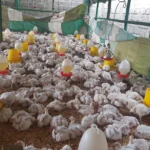
Poultry is a good example because the cycle is short and the rhythm is clear. A farmer buys day-old chicks. They need feed every day. They need vaccines at specific intervals. After four to eight weeks, depending on the type of bird and the market, they are ready for sale. The money comes in. The cycle starts again.
A loan that is structured around this cycle looks very different from a standard bank loan. It might be a 30-day or 45-day tenor, matching the growing period. It might be disbursed in tranches, with feed credit released week by week rather than all at once. It might be repaid on the day the birds are sold, with the buyer deducting the repayment and remitting it to the lender.
This is not complicated. It does not require sophisticated financial engineering. It requires understanding the farm and designing the product to fit. When that happens, the farmer gets what they need, when they need it. The lender gets repaid, when the money is there. Everyone wins.
The poultry farmer also has a natural hedge. If the birds are not ready, they are not sold. The loan is not due. The farmer does not have to worry about a repayment date that arrives before the birds are ready. The rhythm of the loan matches the rhythm of the flock.
There is one more thing about poultry that makes it a good model. The cycle is repeatable. A farmer who succeeds with one batch of birds will want to do another batch. And another. Each cycle builds on the last. The credit relationship grows with the flock. After a few cycles, the farmer may be able to borrow more, expand the shed, and increase the volume. The lender has a customer for life.
The Coffee Example
Coffee is a different example because the cycle is longer and the income is more seasonal. A coffee farmer needs inputs at the beginning of the season. They need labour for picking. They need processing. Then they wait. The coffee is sold months later. The money comes in all at once.
A loan that is structured around this cycle might have a tenor of six to nine months, matching the time from input purchase to sale. It might be disbursed at the beginning of the season and repaid after the sale. It might be channelled through the cooperative, which already collects the coffee and pays the farmer. The cooperative can deduct the repayment and remit it to the lender.
This is already happening in some places. Cooperatives that provide inputs on credit and deduct repayment from the coffee payment are essentially providing value chain financing. The model works because it aligns the credit with the crop cycle. The farmer gets the inputs when they need them. The repayment happens when the money is available.
The coffee farmer also benefits from the cooperative structure. The cooperative has records of the farmer’s production. It knows how much coffee the farmer delivers. It knows the quality. It knows the history. This information can be used to assess creditworthiness and to set credit limits. The farmer does not have to start from scratch with a bank that knows nothing about coffee.
The coffee example also shows why patience matters. A coffee tree takes years to mature. A farmer who plants new trees will not see a return for several seasons. A credit product that is designed for a one-season cycle will not work for a farmer who is investing in the long term. The product has to match the investment horizon as well as the cash flow.
What Goes Wrong Without This Alignment
When credit is not aligned with the farm rhythm, things go wrong. Farmers borrow for inputs but cannot repay when the loan is due because the harvest has not been sold. They borrow from informal lenders at high interest rates to repay the formal loan. They sell assets, often at a fraction of their value. They default, losing access to future credit.
The consequences go beyond the individual farmer. When smallholder farmers in East Africa default on loans, lenders become reluctant to lend to agriculture. They see agriculture as too risky. They prefer to lend to urban businesses or to consumers with regular salaries. The credit gap in agriculture widens. Farmers who need credit cannot get it. The sector stagnates.
This is the cycle that value chain financing is designed to break. By aligning credit with the farm rhythm, it reduces the risk of default. By reducing the risk of default, it makes agriculture more attractive to lenders. By making agriculture more attractive, it increases the flow of credit. By increasing the flow of credit, it enables farmers to invest and grow.
The alternative is what we see in many places today. Farmers who are forced to rely on informal lenders who charge exorbitant interest rates. Farmers who cannot invest in their farms because they cannot access credit. Farmers who remain trapped in a cycle of low productivity and low income. This is not a future anyone wants.
There is also a social cost. When farmers default, they often lose more than access to credit. They lose standing in their community. They lose the trust of their neighbours. They may lose land that has been in the family for generations. The consequences of a badly designed loan can last for years and affect an entire household.
The Role of Technology
Technology can play a role in making this work at scale. Mobile money makes it easier to disburse loans and collect repayments. Digital records make it easier to track farmer history and assess creditworthiness. Data analytics make it easier to predict cash flows and design products that fit.
But technology is not a substitute for understanding. A mobile loan that is still structured around a fixed repayment date is no better than a traditional loan. The technology has to be used to align the credit with the farm rhythm, not to impose a rhythm that does not fit.
Some of the most promising innovations in agricultural finance are those that use technology to enable value chain financing. Platforms that connect farmers, distributors, buyers and lenders can automate the flow of credit and repayment. When the farmer delivers the product, the platform can automatically deduct the repayment and credit the farmer’s account. This reduces transaction costs and makes the model viable at scale.
Technology can also help with monitoring. Sensors can track feed consumption. Mobile phones can record sales. Digital platforms can share information between the distributor, the buyer and the lender. This reduces the information asymmetry that makes agricultural lending risky. The lender can see what is happening on the farm in real time.
The danger is that technology becomes an end in itself. Lenders adopt a mobile platform and declare victory, even though the underlying product is still badly designed. The technology does not fix the timing mismatch. It only makes the mismatch happen faster. The starting point must always be the farm rhythm, not the technology.
What Lenders Need to Understand
Lenders who want to serve agriculture need to understand a few things. First, agriculture is not like other sectors. The cash flow is seasonal. The risks are different. The information is different. A one-size-fits-all approach does not work.
Second, the farmer is not the only source of information. The distributor knows the farmer. The cooperative knows the farmer. The buyer knows the farmer. These relationships can be used to assess creditworthiness and to collect repayment. The lender does not have to do everything alone.
Third, timing is everything. A loan that is structured around the farm rhythm will perform better than a loan that is not. The repayment date should be tied to the offtake day, not to a fixed calendar date. This is not a concession to the farmer. It is good business.
Fourth, the goal is not just to lend. The goal is to enable the farmer to succeed. When the farmer succeeds, the loan is repaid, and the farmer comes back for more. This is a long-term relationship, not a one-off transaction.
Lenders also need to understand that agriculture is not a monolith. A poultry farmer is different from a coffee farmer. A dairy farmer is different from a maize farmer. Each has a different rhythm. Each needs a different product. The lender who understands this will be able to design products that work.
Finally, lenders need to be patient. Building a portfolio of agricultural loans takes time. The returns may not be immediate. But over the long term, agriculture can be a profitable and sustainable market. The lenders who invest in understanding the sector will be the ones who benefit.
What Farmers Need to Understand
Farmers also need to understand a few things. First, credit is a tool. It can help you grow, but it can also trap you if it is not used wisely. Borrow only what you need, and only when you have a clear plan for repayment.
Second, the terms of the loan matter. A loan with a repayment date that does not match your cash flow is a loan that is likely to fail. Ask for terms that fit your farm rhythm. Do not accept a loan just because it is available. Ask questions. Understand what you are signing.
Third, your relationship with the distributor or cooperative is valuable. They know you. They can vouch for you. They can help you access credit that you could not get on your own. Treat them as partners, not just as suppliers.
Fourth, repayment is not just about the money. It is about your reputation. If you repay on time, you will be able to borrow again. If you default, you may not. Protect your reputation. It is one of your most valuable assets.
Farmers also need to be honest with themselves about their capacity to repay. It is easy to borrow. It is harder to repay. Before taking on credit, farmers should ask themselves whether the investment will generate enough income to cover the repayment. If the answer is not clear, they should think again.
There is one more thing. Farmers should not be afraid to negotiate. Lenders need customers. If the terms do not work, say so. If the repayment date does not match the harvest, say so. A good lender will listen. A lender who will not listen is not a lender you want to work with.
The Bigger Picture
The conversation about agricultural finance often focuses on the supply side. How can we get more credit to farmers? How can we reduce the risk? How can we make lending more profitable? These are important questions. But they miss something fundamental.
The problem is not just that there is not enough credit. The problem is that the credit that exists is often structured in a way that sets farmers up to fail. Aligning credit with the farm rhythm is not just a technical fix. It is a shift in mindset. It is a recognition that farmers are not like other borrowers. Their income is seasonal. Their cash flow is unpredictable. Their ability to repay depends on factors beyond their control.
When credit is designed with this in mind, it works. When it is not, it fails. The evidence is clear. The question is whether lenders are willing to change. Some are. They are seeing that value chain financing is not just good for farmers. It is good for business.
The bigger picture is that agriculture is the backbone of East Africa’s economy. Millions of people depend on it for their livelihoods. If farmers cannot access credit, they cannot invest. If they cannot invest, they cannot grow. If they cannot grow, the whole economy suffers. Getting credit right for smallholder farmers in East Africa is not just about helping farmers. It is about building a stronger, more prosperous region.
The Practical Advice
Map the cash-out days against the cash-in day before you design the loan. This is the single most important thing you can do. Sit down with the farmer. Understand the cycle. Identify when money goes out and when it comes in. Design the loan to bridge the gap, not to create a new one. Tie repayment to the offtake day, not to a fixed date.
This is not complicated. It does not require sophisticated models or expensive consultants. It requires listening to the farmer and designing a product that fits. Most smallholder farmers in East Africa default on loans because of timing, not because they are unwilling to pay. Fix the timing, and you fix the credit. Fix the credit, and you unlock the potential of East African agriculture.
The practical advice extends beyond the design of the loan. It includes the way the loan is delivered. It includes the way repayment is collected. It includes the way the farmer is supported. All of these things matter. A loan that is well-designed but poorly delivered will still fail. A loan that is well-delivered but poorly designed will also fail. The two must go together.
The Flock Knows
The flock knows when it is ready for market. The coffee tree knows when the cherries are ripe. The maize plant knows when the cob is ready for harvest. The farmer knows these things too. What the farmer often does not know is why the loan they were given assumes a different rhythm.
The answer is that the loan was designed by someone who did not understand the farm. It was designed around a bank calendar, not around the flock. It was designed to be convenient for the lender, not for the farmer. It was designed to fit a spreadsheet, not a season.
This is changing. Slowly, lenders are beginning to understand that agricultural finance has to be different. They are beginning to design products that fit the farm rhythm. They are beginning to work with distributors and cooperatives and buyers. They are beginning to tie repayment to the offtake day.
The farmers who benefit from this change will be the ones who can invest, grow and prosper. The lenders who embrace it will be the ones who build a profitable and sustainable business. The sector as a whole will benefit from increased productivity, increased incomes and increased resilience. The flock has always known the right rhythm. It is time for the money to learn it too.
https://farmerstrend.co.ke/trending/smallholder-farmers-in-east-africa-default-on-loans/https://farmerstrend.co.ke/wp-content/uploads/2026/09/Farmers-Default-on-Loan-1024x576.pnghttps://farmerstrend.co.ke/wp-content/uploads/2026/09/Farmers-Default-on-Loan-150x150.png# TrendingSmallholder farmers in East Africa default on loans because of timing and not disease. This feature explains why credit must be shaped like the flock, repaid on the offtake day and mapped against the cash-in day before it is designed.Why Smallholder Farmers in East Africa Default on Loans...FarmersTrendjohn doefarmerstrend@gmail.comAdministratorFarmers Trend Ltd.










Leave a Reply