Why Commercial Agriculture in Africa Must Move Beyond Survival Farming
- Commercial agriculture in Africa must move beyond survival farming by building stronger production, processing, finance and market systems.
Why Commercial Agriculture in Africa Must Move Beyond Survival Farming
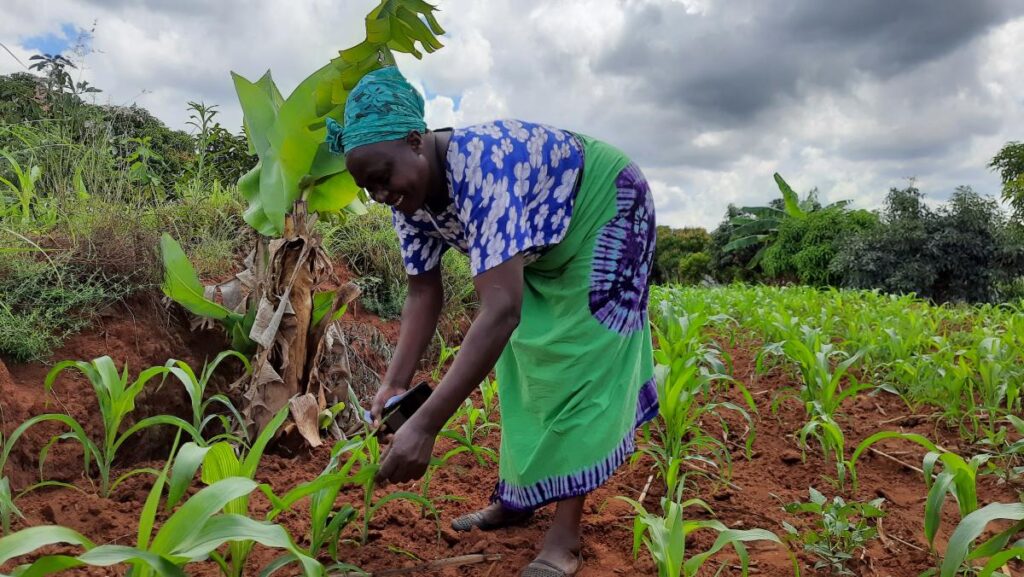
For much of Africa, farming has long been discussed in the language of livelihoods. Governments want rural households to have food and income. Development organisations want small farmers to increase production. Agricultural programmes distribute seed, fertiliser, livestock, equipment and training, often with the aim of helping households cope with rising costs and unreliable incomes. There is nothing wrong with supporting people who depend on agriculture. The problem is what happens when survival becomes the permanent definition of African farming.
A farmer cannot remain in a livelihood programme forever if the farm has the potential to become a business.
This is where the conversation around commercial agriculture in Africa needs to change. Farming is not only about producing food. It is also about supplying factories, retailers, exporters, hotels, schools, feed manufacturers and other businesses that depend on agricultural raw materials. Once farming is viewed from that perspective, the questions become different. What should the farmer produce? In what quantity? To which market? At what cost? How often can the product be supplied? What quality does the buyer require? What investment is needed before the first sale is made?
Those questions are rarely answered by telling a farmer to increase production.
They require a functioning agricultural system.
Survival farming and commercial farming are not the same thing
A farmer can grow crops every year and still operate mainly at survival level. The farm may produce enough food for the household, with a small surplus sold when school fees, medical expenses or other bills arise. Production decisions are often influenced by available cash, rainfall and what neighbouring farmers are planting. If prices are good, the farmer produces more. If prices collapse, the farmer reduces production.
That model makes sense for a household trying to manage uncertainty. It becomes a problem when policymakers expect the same production system to supply a growing urban population, support manufacturing and compete in export markets.
Commercial farming starts with a different mindset.
The farmer has to think about the farm as an enterprise. Land is an asset. Seed or planting material is an investment. Labour is a cost. Fertiliser, crop protection, irrigation, machinery, transport and finance all have to be accounted for. Production is planned around expected demand rather than simply around what the household needs or what happens to have a good price at the time of planting.
This does not mean commercial agriculture is limited to large farms.
A two-acre fruit farm supplying an organised buyer can be commercial. So can a small dairy farm supplying a cooperative that delivers milk to a processor every day. A group of small maize farmers supplying a feed manufacturer can form part of a commercial value chain even though each individual farm remains small.
The important difference is organisation.
A commercial farmer needs to know the economics of production. A commercial buyer needs to know the reliability of supply. Once those two interests are connected, the size of the individual farm becomes less important.
That is one reason Africa should be careful about equating commercial agriculture with large-scale farming. Large farms have their place, particularly in crops and enterprises requiring substantial capital, mechanisation or specialised infrastructure. But smallholder farmers also have a place in commercial value chains if the systems around them allow them to produce consistently and sell into organised markets.
The farm gate is where many business problems begin
Much of the agricultural economy downstream depends on what happens before harvest.
A processor needs raw materials. An exporter needs produce that meets a specification. A supermarket needs consistent quality and delivery. A feed mill needs grain and other ingredients. A dairy processor needs milk every day rather than a large volume once in a while.
Yet production across many African value chains remains fragmented.
Thousands of farmers may grow the same crop without coordinating varieties, planting dates, production standards or harvesting schedules. Some use improved seed while others use recycled seed. Some have irrigation and others depend entirely on rainfall. One farmer may apply fertiliser according to soil requirements while another applies little or none. The result is a market receiving agricultural products that vary widely in volume and quality.
The farmer is then blamed for poor quality. The trader is blamed for offering low prices. The processor is blamed for rejecting produce. The exporter is blamed for failing to pay enough.
Sometimes all three sides are responding to the same underlying problem.
Production was never organised around a clearly defined market.
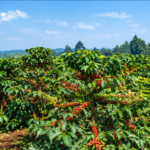
Consider a farmer establishing an orchard. The decision to plant trees is not the same as planting an annual crop. The farmer is committing land and capital for years. Variety selection, planting material, rootstock, spacing, irrigation, disease management and the eventual market all matter.
If the farmer chooses a variety because another farmer received a high price last season, the business is being built on incomplete information. By the time the orchard reaches meaningful production, market conditions may be different.
A commercial approach starts much earlier. The farmer needs to understand the market and production economics before putting trees in the ground.
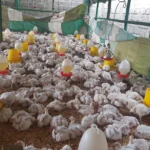
The same applies to livestock. Keeping more cattle does not automatically create a commercial beef industry. There has to be a system for breeding, feeding, animal health, identification, aggregation, transport, slaughter, quality control and market access.
A livestock buyer looking for thousands of animals needs to know where those animals will come from and whether they meet the required standards. A farmer needs to know what type of animal the market wants before investing heavily in breeding.
The market and the farm cannot be planned separately.
Why processors often struggle even when farmers are producing
Africa’s agricultural sector has an unusual problem. In some places, farmers struggle to find buyers while processing plants struggle to obtain enough raw materials.
A fruit factory may have modern equipment but operate for only part of the year because fruit supply is seasonal and poorly coordinated. A dairy processor may have capacity but receive less milk than it needs. A grain mill may face supply shortages after farmers reduce planting following a season of poor prices.
At the same time, farmers may be selling produce cheaply because it has to be moved quickly.
This is where value addition becomes more complicated than building a factory.
A processing plant does not create raw materials. It creates demand for them.
If a country wants more agricultural processing, it has to ask where the factory will obtain its supplies. Will farmers produce enough? Are they growing the right varieties? Is production spread across enough months? Can the produce reach the factory at a reasonable cost? Is there storage for periods when production exceeds processing capacity?
These questions are often left until after the investment has been made.
The result can be expensive equipment sitting idle while farmers continue selling raw produce in informal markets.
A stronger approach would begin with the supply base and work forward. Before a major processing investment is approved, there should be a serious assessment of the farmers, acreage, varieties, expected yields, harvesting periods and logistics supporting the facility.
This is not as attractive as announcing a new factory, but it is more important to the business.
Small farmers need markets, not endless projects
African farmers have been exposed to a large number of agricultural projects over the years. There have been programmes for seed, fertiliser, irrigation, dairy animals, poultry, horticulture, mechanisation, digital agriculture and many other areas.
The problem is not necessarily the number of programmes. It is whether the farmer can build a business after the programme ends.
A farmer may receive improved seed this season. What happens next year?
If the market is still uncertain, production costs remain high and the farmer has no access to finance, the intervention may improve one season without changing the underlying business.
Commercial agriculture requires continuity.
A farmer establishing a mango orchard needs planting material, technical advice, land preparation, water, crop management, finance and a market over several years. Providing one component does not solve the whole problem.
This is why private companies, farmer organisations, financial institutions and government agencies need to work around actual value chains rather than isolated activities.
Suppose a group of farmers wants to supply a fruit processor. The first conversation should not be about distributing seedlings. It should be about the market. What fruit does the processor need? Which varieties? How much? During which months? What quality standards apply? How far are the farms from the factory?
The answers determine what the farmers should plant.
Once that is known, the rest of the production system becomes easier to design.
This approach also reduces one of the biggest problems in African farming: producing first and searching for a market later.
The middleman is often doing a job somebody has to do
The word “middleman” is often used as though traders are an unnecessary part of agriculture.
The reality is more complicated.
A trader collecting produce from dozens of farmers is providing aggregation. Someone has to collect the produce. Someone has to sort it. Someone has to arrange transport. Someone has to find the buyer.
In many rural markets, traders have developed these systems because formal agricultural structures have not been able to do the job efficiently.
That does not mean farmers always receive fair prices. Lack of market information, weak bargaining power and poor transparency remain problems. But removing traders without replacing the services they provide would not solve the problem.
The better question is how to improve the relationship between farmers and buyers.
Farmer organisations can aggregate larger volumes. Processors can establish direct supplier relationships. Exporters can work with organised producer groups. Digital records can improve traceability and payments. Financial institutions can use transaction histories to understand agricultural businesses.
There is also an opportunity for professional aggregation companies to emerge around specific crops and livestock value chains.
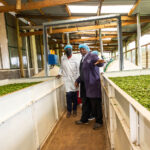
Once production is organised, agriculture becomes a business opportunity beyond farming itself. There is demand for transport, cold storage, packaging, machinery hire, irrigation services, quality planting material, animal health services and technical advice.
This matters because Africa’s employment challenge cannot be solved by asking everyone to become a farmer.
A young person may earn a better living operating a tractor service, running a seedling nursery, managing a cold room or aggregating fruit than by trying to cultivate a small plot without access to a reliable market.
Finance will remain difficult while agricultural businesses are hard to measure
Agriculture has always carried production risk, but one of the less discussed problems is the lack of reliable business information.
A bank assessing a manufacturing company can examine financial statements, sales records, assets, debts and cash flows. Agricultural businesses often have much less information available.
A farmer may know roughly how much was harvested last season but have no accurate record of the cost of production. Another may know the selling price but not the total amount spent on labour, inputs and transport.
That makes it difficult to establish whether an enterprise is actually generating a return.
The problem becomes bigger when thousands of small farms are involved.
Agricultural finance needs better information from the farm. Farmers need basic records showing acreage, inputs, labour, production, sales and prices. Farmer organisations need reliable records of members and deliveries. Aggregators need transaction histories. Processors need information about their supplier base.
None of this requires every farmer to become an accountant.
Basic records would already provide a better picture of the business.
Technology can make record keeping easier, but the objective should not be to introduce an application simply because it is digital. The technology needs to solve a real problem. If a farmer cannot access a market, a digital platform that records production without creating a buyer relationship has limited value.
The same applies to agricultural lending.
A digital credit score will not make an unprofitable farm profitable. It can, though, make a viable business easier to understand if the underlying records are accurate.
That distinction matters as Africa looks for more private capital for agriculture.
Investors need evidence.
Mechanisation and irrigation are business decisions
Productivity discussions often focus on improved seed and fertiliser, yet labour and water remain major constraints for many farmers.
A farmer who relies entirely on manual labour may struggle to expand acreage because planting, weeding and harvesting become increasingly expensive. A farmer who depends entirely on rainfall faces another form of uncertainty.
Mechanisation and irrigation can address both problems, but neither should be introduced simply because they sound modern.
The investment has to make economic sense.
A small farmer may not need to buy a tractor. Hiring machinery when needed may be more practical. A group of farmers may collectively create enough demand for a machinery service provider to operate in the area. Irrigation may make sense for a high-value crop but not for a low-margin enterprise where the additional cost cannot be recovered.
This is another reason commercial agriculture requires business thinking.
The right question is not whether farmers should mechanise or irrigate. It is whether the investment improves production enough to justify its cost.
Government has a role, but it cannot build the entire agricultural economy
Private investment will be central to the growth of commercial agriculture, but governments still have responsibilities that cannot simply be handed to businesses.
Rural roads affect transport costs. Electricity affects cold storage and processing. Water infrastructure affects irrigation and livestock. Agricultural research affects productivity. Extension services affect the adoption of better production methods. Disease surveillance affects livestock and crop markets. Standards and certification affect exports.
These are not minor issues.
A farmer producing for an export market can lose access to the buyer because of a disease outbreak or failure to meet a market requirement. A processor can struggle because poor roads increase the cost of collecting raw materials. An irrigation investment can fail because the water source was never properly assessed.
Government therefore has to provide an environment in which agricultural businesses can plan.
Policy stability matters as much as individual incentives. Agriculture often requires long-term investment. An orchard may take several years before reaching full production. Livestock breeding programmes require repeated cycles. Processing plants need years to recover capital. Investors cannot make sensible decisions if the rules affecting their businesses are unpredictable.
At the same time, government should be careful not to crowd out private businesses.
The public sector is better placed to provide infrastructure, regulation, research and public services. Farmers and companies should have room to produce, process, transport, finance and trade.
That division will not always be perfect, but it provides a more sustainable basis for growth than government trying to control every part of the value chain.
Commercial agriculture needs a different measure of success
Africa has often measured agricultural programmes by what was distributed or how many people were reached.
Those figures are useful, but they do not answer the most important commercial questions.
If farmers receive improved seedlings, what happens when the trees mature? If a processing plant is built, does it receive enough raw material to operate? If farmers are trained, does their productivity improve? If credit is provided, does the enterprise generate enough income to repay the loan? If an export market is identified, can producers supply the required quantity and quality year after year?
These questions shift attention from activities to results.
They also expose weaknesses that are easily hidden by impressive programme numbers.
A thousand farmers may attend a training programme, but if they cannot access inputs, finance or markets afterwards, the training has limited commercial value. A factory may have excellent machinery, but if it operates at low capacity because farmers cannot supply enough produce, the investment remains underused.
The agricultural sector needs to become more comfortable with these questions.
Success should ultimately be visible in production, farmer incomes, business growth, processing volumes, jobs, exports and the ability of enterprises to continue operating after external support ends.
Africa does not need to choose between smallholders and commercial farming
The debate is sometimes presented as a choice between smallholder farmers and large commercial farms.
It does not have to be.
Large farms can produce at scale and support industries requiring substantial capital and mechanisation. Smallholders can supply large volumes when they are organised into effective production and marketing systems. Cooperatives, aggregators and outgrower arrangements can connect the two parts of the agricultural economy.
The bigger issue is whether farmers have a commercial route from production to the market.
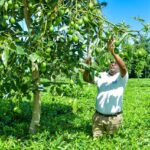
A farmer with a few acres of avocados needs quality planting material, agronomic support and a market. A larger orchard needs the same things, although the scale of the investment is different. Both need information about costs, expected production and market requirements.
The difference is not simply the number of acres.
It is the quality of the business system surrounding those acres.
That is why African agricultural policy should focus more on building functioning value chains. Where production, aggregation, processing, finance and markets are connected, small farms have a better chance of becoming sustainable businesses.
The next stage has to be about building agricultural industries
Africa has spent years discussing the potential of agriculture. The next stage requires more attention to the businesses that turn that potential into economic activity.
A farmer planting an orchard is making an investment. A company supplying seedlings is part of an agricultural industry. A transport company moving the fruit is another. A cold store is part of the same system. The processor, exporter, financial institution and retailer all depend on what happens at the beginning.
The value chain is therefore much bigger than the farm.
This wider view changes how agricultural development should be approached. Instead of asking only how many farmers can be reached, policymakers and businesses should ask how a particular value chain can become commercially viable.
Take a crop such as fruit. The process begins with choosing varieties suited to the intended market. Farmers need reliable planting material and technical support. Production needs water and appropriate inputs. Harvested fruit requires collection and handling. Some markets require grading, packaging and cold storage. Export markets require certification and logistics. Processing provides another outlet for fruit that does not meet fresh-market specifications.
Each stage creates a business.
If one is missing, the others feel the effect.
This is why commercial agriculture in Africa should not be reduced to the image of a farmer working on a large piece of land. It is an interconnected economy involving thousands of businesses and millions of transactions.
Moving beyond survival farming
The goal should not be to eliminate livelihood farming overnight. Millions of African households depend on agriculture, and food production will remain an essential part of rural economies.
The problem is allowing the livelihood model to become the ceiling.
Farmers who want to expand should have a path to do so. They should be able to obtain quality inputs, understand production costs, access finance, find markets and build relationships with buyers. They should have the information needed to decide whether a crop, livestock enterprise or orchard makes business sense before committing their limited capital.
Businesses on the other side of the value chain need the same certainty.
Processors need dependable suppliers. Exporters need producers who can meet specifications. Lenders need credible farm records. Investors need evidence of demand and supply. Government needs reliable agricultural data when designing policies and infrastructure.
These needs are connected.
If production is unpredictable, processing suffers. If processing is weak, farmers remain dependent on raw markets. If markets are uncertain, farmers hesitate to invest. If farmers do not invest, productivity remains low. If the sector remains difficult to measure, finance remains expensive or unavailable.
Breaking that cycle requires more than another agricultural project.
It requires a different way of organising the sector.
Commercial agriculture in Africa will grow when farming becomes easier to plan as a business and when the businesses around farming become strong enough to support production. Smallholders do not need to disappear. Traders do not need to disappear. Large farms do not need to disappear. Government does not need to disappear.
What needs to change is the way these parts connect.
The farmer should not have to plant first and start looking for a market at harvest. The processor should not build capacity before establishing whether enough raw material exists. The lender should not have to depend entirely on guesswork when assessing a farm. The investor should not have to rely on broad statements about Africa’s agricultural potential without being able to examine the numbers behind a particular opportunity.
That is the real move beyond survival farming.
Africa already has the farmers, consumers, land, businesses and markets needed to build larger agricultural industries. What is still missing in many value chains is the organisation required to bring them together.
Once that happens, agriculture can support much more than household survival. It can support processing plants, logistics companies, input businesses, financial services, manufacturers, exporters and thousands of jobs around them.
The question facing Africa is therefore no longer simply how to get more people to farm.
It is how to make farming worth investing in.
https://farmerstrend.co.ke/trending/commercial-agriculture-in-africa-survival-farming/https://farmerstrend.co.ke/wp-content/uploads/2026/09/Why-Commercial-Agriculture-in-Africa-Must-Move-Beyond-Survival-Farming-1024x577.jpghttps://farmerstrend.co.ke/wp-content/uploads/2026/09/Why-Commercial-Agriculture-in-Africa-Must-Move-Beyond-Survival-Farming-150x150.jpg# TrendingCommercial agriculture in Africa must move beyond survival farming by building stronger production, processing, finance and market systems.Why Commercial Agriculture in Africa Must Move Beyond Survival Farming For much of Africa, farming has long been discussed in the language of livelihoods. Governments want rural households to have food and...FarmersTrendjohn doefarmerstrend@gmail.comAdministratorFarmers Trend Ltd.






Leave a Reply