Maize vs Nyota Beans Farming in Kenya: A Comprehensive Profitability Analysis
- “Kenyan farmers: See detailed per-hectare analysis of maize vs Nyota beans. Learn which crop offers higher profits, lower risks & better market potential in Kenya’s agricultural sector.”

Farming remains the backbone of Kenya’s economy, employing more than 40% of the total population and about 70% of the rural population, according to data from the Kenya National Bureau of Statistics (KNBS). Two of the most widely cultivated crops in the country are maize and beans, with maize being a staple food in nearly every Kenyan household. However, in recent years, farmers have begun to explore alternative crops that can offer better returns on investment.
One such emerging alternative is Nyota beans, a fast-growing, high-yielding variety of yellow beans developed by the Kenya Agricultural and Livestock Research Organization (KALRO). With multiple growing cycles annually and impressive market prices, Nyota beans are being touted as a game-changer for farmers looking to maximize profits per acre.
Understanding Maize Farming in Kenya
Maize farming is deeply entrenched in Kenyan agricultural systems. It’s grown in almost every part of the country, with the Rift Valley, Western, and parts of Eastern Kenya being the major maize belts. According to data from the Ministry of Agriculture, maize covers more than 2 million acres annually in Kenya.

Average Maize Yields and Revenue per hectare
Average yield: 30 bags (90 kg each) per hectare
Price per bag: Ksh 3,500
Revenue per season per hectare: 30 × 3,500 = Ksh 105,000
Cropping frequency: 1 crop per year (in most rainfed areas)
Despite being a staple, maize farming comes with several limitations:
High input costs: Fertilizer, hybrid seed, and labor can exceed Ksh 20,000 per hectare
Weather dependency: Most maize farms rely on rain-fed systems
Low resilience to pests and diseases such as fall armyworm
Post-harvest losses due to inadequate storage and delayed harvesting
In some years, maize prices fall very quickly due to market gluts or poor access to buyers, reducing profits further for smallholder farmers.
The Case for Nyota Beans (Yellow Beans)
Nyota beans are a fast-maturing, high-yielding yellow bean variety developed to meet both nutritional needs and market demand. They are drought-tolerant, require less fertilizer than maize, and can be harvested up to three times a year under favorable conditions.
Nyota beans are especially popular due to their:
Fast cooking time
Appealing yellow color
Soft texture when cooked
High demand among urban households, schools, institutions, and export markets
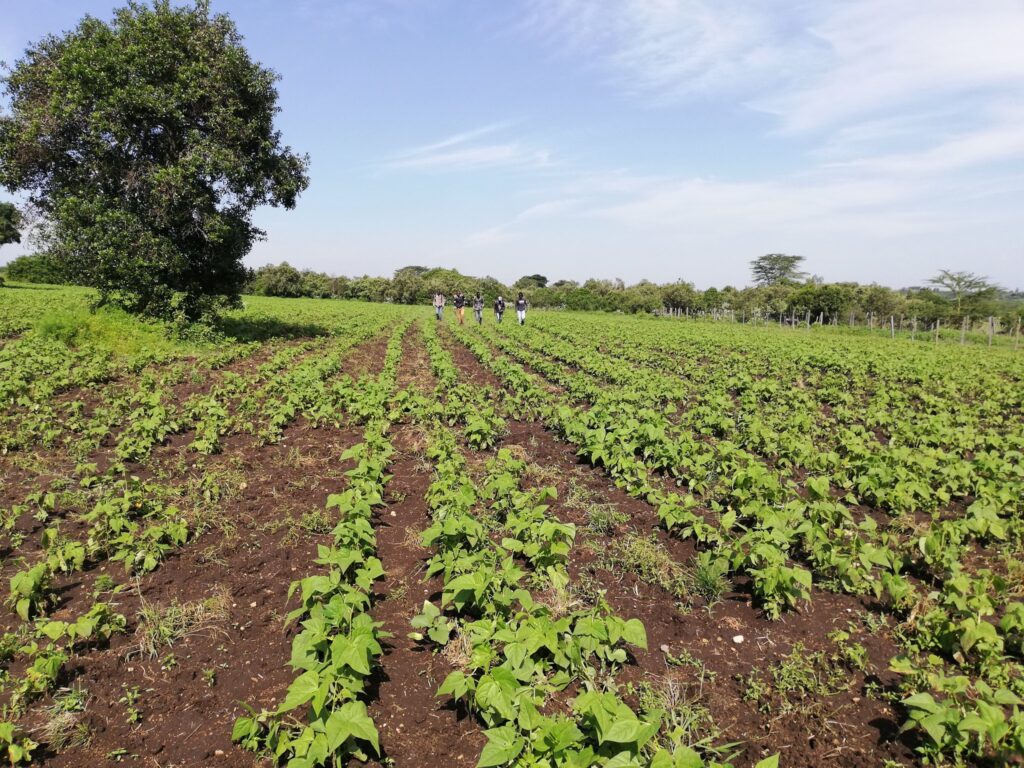
Average Nyota Bean Yields and Revenue per hectare
Yield per season: 12 bags (90 kg each) per hectare
Number of cropping cycles per year: 3
Total annual yield: 36 bags per hectare
Price per bag: Ksh 10,000
Revenue per year: 36 × 10,000 = Ksh 360,000
With proper land preparation and agronomic practices, farmers can harvest Nyota beans three times a year, making it a highly profitable option compared to maize.
Profitability Comparison Table: Maize vs. Nyota Beans (Per hectare)
| Parameter | Maize | Nyota Beans |
|---|---|---|
| Yield per hectare per cycle | 30 bags | 12 bags |
| Crop cycles per year | 1 | 3 |
| Total annual yield | 30 bags | 36 bags |
| Average price per 90kg bag | Ksh 3,500 | Ksh 10,000 |
| Annual gross revenue | Ksh 105,000 | Ksh 360,000 |
| Input cost (approx.) | Ksh 18,000–25,000 | Ksh 15,000–20,000 (per cycle) |
| Time to maturity | 120–150 days | 70–90 days |
| Market demand | High but unstable | High and growing |
| Post-harvest handling risk | High (storage, drying) | Moderate (quicker processing) |
Cost Considerations
While Nyota beans offer higher returns, farmers must also consider input costs:
- Seed Costs:
- Maize seeds cost approximately Ksh 3,000 – Ksh 5,000 per hectare.
- Nyota bean seeds cost Ksh 8,000 – Ksh 12,000 per hectare per cycle (Ksh 24,000 – Ksh 36,000 annually).
- Fertilizer & Pesticides:
- Maize requires significant fertilizer (DAP, CAN), costing Ksh 6,000 – Ksh 10,000 per hectare.
- Beans require less fertilizer due to nitrogen fixation, averaging Ksh 4,000 – Ksh 8,000 per cycle.
- Labor Costs:
- Maize is labor-intensive during planting and harvesting.
- Beans require more labor during multiple harvests but offer quicker returns.
Even after accounting for higher input costs, Nyota beans still provide significantly higher net profits compared to maize.
Market Dynamics and Risks
Maize Market Challenges
- Price Volatility: Maize prices fluctuate drastically between Ksh 2,500 and Ksh 6,000 per sack.
- Government Intervention: The National Cereals and Produce Board (NCPB) sometimes sets price ceilings, affecting profitability.
- Post-Harvest Losses: Poor storage leads to aflatoxin contamination, reducing marketability.
Nyota Beans Market Advantages
- High Demand: Local and export markets consistently seek yellow beans.
- Stable Prices: Prices remain high (Ksh 8,000 – Ksh 12,000 per sack) due to demand from Uganda, Rwanda, and Europe.
- Multiple Harvests: Farmers can spread risk across three cycles instead of relying on one maize season.
Which Crop Should Farmers Choose?
While Nyota beans are more profitable, farmers should consider:
- Land Suitability: Beans perform well in medium to high-altitude areas.
- Market Access: Farmers near bean aggregation centers benefit more.
- Labor Availability: Multiple bean harvests require consistent labor.
For farmers seeking higher returns with manageable risks, Nyota beans present a better option. However, maize remains essential for food security, and a balanced farming approach (intercropping beans with maize) can optimize land use.
Why Nyota Beans Are More Profitable
From the table above, it’s clear that Nyota beans can generate over 3.4 times more income per acre annually compared to maize. This is largely attributed to:
Multiple harvests per year: Unlike maize, which can only be grown once a year in many regions, Nyota beans can be cultivated three times a year.
Higher market price: The premium pricing of yellow beans makes them more lucrative.
Lower input costs per cycle: Less fertilizer and pest control are needed compared to maize.
Faster maturity: This allows for quicker returns and reinvestment.
Tips for Successful Nyota Bean Farming
Access Certified Seeds: Ensure you plant KALRO-approved Nyota bean seeds to guarantee yield and disease resistance.
Soil Testing: Always test your soil to determine fertility and apply the right fertilizer based on nutrient needs.
Use Early Planting Windows: Utilize early rains and ensure good land preparation to achieve optimal germination.
Practice Crop Rotation: Avoid planting beans continuously to reduce disease build-up.
Build Market Networks: Connect with schools, processors, or aggregators to secure better pricing.
Challenges in Nyota Bean Farming
While the profitability is appealing, Nyota bean farming is not without its challenges:
Seed availability: Certified Nyota bean seeds can be limited in remote areas.
Training needs: Many farmers are unfamiliar with crop management practices for beans grown three times a year.
Market access: Although demand is high, proper aggregation and value-chain linkages are still needed.
Pest and disease risk: Though resilient, poor agronomic practices can invite issues like bean root rot and aphid infestations.
Real-World Applications and Farmer Experiences
In counties like Nakuru, Trans Nzoia, and Embu, farmers have already begun shifting portions of their land from maize to Nyota beans. Reports from these regions indicate that:
A farmer earning Ksh 100,000 per year from maize on one acre is now making up to Ksh 350,000–400,000 per year on the same land growing Nyota beans.
Labor costs are lower because the crop is harvested in less time, and post-harvest losses are minimal due to fast sales and drying times.





Leave a Reply