Soursop Farming in Kenya 2026 – The Complete Guide to Growing Graviola for Profit
Soursop Farming in Kenya 2026 – A Complete Guide for Commercial Farmers
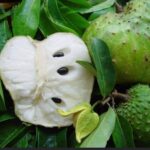
Soursop, also called graviola is a tropical fruit that grows well in warm areas of Kenya. Farmers in the Coastal region, Western Kenya, and parts of Lower Eastern like Makueni and Machakos have been growing this fruit for many years. The fruit sells for good money in Nairobi markets. A kilogram of soursop costs 300 to 500 shillings at City Market and Ngara in 2026. People buy soursop because they believe it helps with various health conditions.

The soursop tree grows best in places below 1,200 meters above sea level. It needs soil that drains well because the roots rot easily in waterlogged ground. The tree does well in warm temperatures and cannot survive frost. Good areas for soursop farming in Kenya include Kwale, Kilifi, Lamu, Kakamega, Busia, Homabay, Makueni, and Machakos.
A farmer who plants grafted soursop seedlings will get the first fruits after 3 to 4 years. The tree will keep producing for 25 to 35 years. One acre with 150 trees can give 5,000 to 8,000 kilograms of fruit every year when the trees are fully grown. The farm gate price for soursop is 200 to 350 shillings per kilogram. A farmer can earn 1 to 2.8 million shillings per acre per year.
This guide by Farmers Trend Ltd. covers variety selection, land preparation, planting, pollination, nutrition, pest control, harvesting, and financial planning for soursop farming in Kenya. The information comes from successful growers and agricultural research institutions.

Varieties of Soursop for Kenyan Farmers
The best soursop varieties for Kenya are those that produce large fruits with few seeds and good flavor. Farmers Trend Ltd sells certified grafted soursop seedlings for 500 shillings each. These seedlings come from mother trees that have proven yields and disease resistance.
The Cuban variety produces large fruits weighing 3 to 5 kilograms. The fruit has white flesh and a sweet-sour taste that buyers like. The tree grows vigorously and starts producing in 3 to 4 years. Cuban variety is good for fresh fruit markets.
The Brazilian variety produces medium fruits weighing 2 to 3 kilograms. The fruit has fewer seeds than other varieties, which makes it popular for processing into juice and pulp. The tree is more compact than the Cuban variety, which allows for closer spacing.
The local variety that has been grown in coastal Kenya for generations produces smaller fruits weighing 1 to 2 kilograms. The fruit has more seeds and less flesh, but the tree is very hardy and tolerates drought better than the improved varieties. Some farmers prefer this variety for low input systems.
| Variety | Fruit Weight | Seed Content | Best Use | Tree Vigor |
|---|---|---|---|---|
| Cuban | 3-5 kg | Medium | Fresh market | High |
| Brazilian | 2-3 kg | Low | Processing | Medium |
| Local | 1-2 kg | High | Home use | Low |
Land Preparation for Soursop Farming in Kenya
Soursop trees need well-drained soil to grow properly. Heavy clay soils that hold water cause the roots to rot, and the tree will die within a few years. The best soils for soursop are sandy loams or volcanic loams that allow water to pass through quickly.
Before planting, clear the land of all weeds and bushes. Plough the land to a depth of 30 centimeters. Remove all stones and break up large clods of soil. Harrow the land to create a fine seedbed.
Test the soil before planting. Soursop prefers soil with a pH between 5.5 and 6.5. If the soil is too acidic, add lime several months before planting. If the soil is too alkaline, add sulfur to lower the pH. A soil test costs 2,000 to 5,000 shillings and tells you exactly what your soil needs.
Dig planting holes that are 60 centimeters wide, 60 centimeters deep, and 60 centimeters long. Mix the topsoil with 20 kilograms of well-rotted manure and 200 grams of DAP fertilizer. Fill the holes back up and let them settle for two weeks before planting.
Spacing and Planting of Soursop Trees
The recommended spacing for soursop farming in Kenya is 5 meters by 5 meters, which gives 150 trees per acre. This spacing allows each tree to get enough sunlight and air, and it leaves room for workers to move between the trees during harvest.
Some farmers use 6 meters by 6 meters spacing for 110 trees per acre. This wider spacing is good for farmers who want larger trees and who have plenty of land. The total yield per acre is lower, but each tree produces more fruit.
Dig the planting holes two weeks before you plan to plant. This allows the soil to settle and the manure to start breaking down. Plant the seedlings at the same depth they were growing in the nursery pot. The graft union must stay above the soil level.
The best time to plant soursop is at the start of the long rains in March. The rain helps the young trees establish their roots before the dry season comes. If you have drip irrigation, you can plant at any time of year, but you must water the trees regularly during the first year.
| Cost Item | Quantity | Unit Price | Total |
|---|---|---|---|
| Grafted soursop seedlings (Cuban) | 150 | 500 KSh | 75,000 KSh |
| Land preparation | 1 acre | 15,000 KSh | 15,000 KSh |
| Manure (20kg per hole) | 3,000 kg | 3,000 KSh/ton | 9,000 KSh |
| DAP fertilizer | 30 kg | 130 KSh/kg | 3,900 KSh |
| Drip irrigation system | 1 acre | 60,000 KSh | 60,000 KSh |
| Mulch materials | 1 acre | 10,000 KSh | 10,000 KSh |
| Labor (planting, mulching) | 15 days | 500 KSh/day | 7,500 KSh |
| Pest control materials | 1 acre | 15,000 KSh | 15,000 KSh |
| Pruning tools | 1 set | 5,000 KSh | 5,000 KSh |
| Total First-Year Investment | 200,400 KSh |
Water and Irrigation for Soursop Trees
Soursop trees need consistent moisture during the first two years after planting. The young trees have shallow roots and cannot reach deep water. Drip irrigation is the best method because it delivers water directly to the root zone and keeps the leaves dry.
During the first year, water the trees twice per week. Give each tree 20 to 30 liters of water per week. During the dry season, you may need to water more often. Check the soil moisture by digging a small hole near the tree. If the soil is dry 5 centimeters below the surface, it is time to water.
Once the trees are established after two years, they can tolerate some drought. The deep roots can reach water from deeper in the soil. However, water stress during flowering and fruit development will cause the fruits to be small and the yields to be low.
Mulching around the trees helps to keep the soil moist. Apply a 10 to 15 centimeter layer of dry grass, straw, or wood chips around the base of each tree. Keep the mulch away from the trunk to prevent rot.

Feeding Your Soursop Trees
Young trees need different fertilizer than mature trees. For trees that are 1 to 3 years old, apply 200 grams of NPK 17:17:17 per tree three times per year. Apply the fertilizer at the start of the rains, in the middle of the growing season, and at the end of the rains.
For trees that are 4 years and older, apply 500 grams of NPK 17:17:17 per tree three times per year. Add 500 grams of CAN per tree twice per year for trees that are producing heavy crops. The extra nitrogen supports the growth of the fruit.
Potassium is important for fruit size and quality. Apply potassium sulphate at 200 grams per tree during the fruit development stage. Without enough potassium, the fruits will be small and the flavor will be poor.
Every two years, add 20 to 30 kilograms of well-rotted manure per tree. The manure improves the soil structure and adds organic matter that feeds the soil microorganisms. Manure also provides trace elements that are not in chemical fertilizers.
Hand Pollination of Soursop Flowers
Soursop trees have flowers that can pollinate themselves, but the natural pollination rate is very low. Without hand pollination, a tree may produce only 5 to 10 fruits per year. With hand pollination, the same tree can produce 30 to 50 fruits per year.
The flowers open in the morning and stay open for only one day. The male parts release pollen in the morning, and the female parts are ready to receive pollen in the afternoon. This timing difference is why natural pollination fails.
To hand pollinate, collect pollen from flowers that opened in the morning. Use a small brush or a cotton swab to pick up the yellow pollen from the male parts. Then apply the pollen to the female parts of flowers that opened on a different tree. Do this in the afternoon between 2 PM and 4 PM.
Hand pollination is labor intensive but necessary for commercial production. One worker can pollinate 100 to 200 flowers per hour. For a 1-acre orchard with 150 trees, you will need 2 to 3 workers during the flowering season.
Pruning Soursop Trees
Pruning shapes the tree and helps the fruit to develop properly. Young trees need training to develop a strong framework of branches. Select 3 to 4 main branches to form the structure of the tree, and remove any branches that grow straight up or straight down.
Remove any branches that cross each other or grow inward toward the center of the tree. These branches will rub against each other and create wounds where diseases can enter. Keep the center of the tree open so that light can reach all parts of the canopy.
Remove dead, diseased, or damaged wood as soon as you see it. Cut the branch back to healthy wood, and make the cut at a 45 degree angle. Seal large cuts with wound dressing to prevent disease entry.
Prune during the dry season when the tree is not producing new growth. Do not prune heavily during the wet season because the open wounds can become infected with fungi.

Pests and Diseases of Soursop
Fruit flies are the worst pest for soursop farmers. The female fly lays eggs inside the developing fruit, and the maggots eat the flesh from the inside. The fruit then rots and falls off the tree before it is ready to harvest. Hang pheromone traps to catch the male flies, using 4 to 6 traps per acre. Apply protein bait sprays mixed with insecticide when the fly population is high.
Mealybugs cluster on the stems and leaves and suck the sap from the plant. Heavy infestations cause the leaves to turn yellow and the tree to stop growing. Control mealybugs with neem oil or insecticidal soap. Encourage natural predators like ladybugs to live in your orchard.
Scale insects attach themselves to the bark and suck the sap from the tree. They look like small brown bumps on the branches and trunk. Control scale insects with dormant oil sprays applied during the dry season. Prune out branches that are heavily infested.
Root rot is caused by waterlogged soil. The roots rot, the tree wilts, and it eventually dies. Prevention is the best cure. Plant your soursop trees in well-drained soil or on raised beds. Do not overwater.
Harvesting Soursop Fruits
Soursop fruits do not continue to ripen after they are picked, so you must harvest them when they are fully mature. The fruit is ready to harvest when the skin changes from dark green to light green, and the spines become softer and spread apart.
The fruit will also change color slightly, developing a yellowish tinge. Press the fruit gently with your thumb. If it gives slightly, it is ready. If it is still hard, leave it on the tree for a few more days.
Use pruning shears to cut the stem, leaving 2 to 3 centimeters attached to the fruit. Do not pull the fruit off the branch because this can damage the tree and the fruit. Place the fruit in a single layer in a ventilated crate.
Soursop fruits have a very short shelf life of only 3 to 5 days at room temperature. To keep them longer, store them in a cool place at 10 to 15 degrees Celsius. Under these conditions, they can be stored for 7 to 10 days. For longer storage, process the fruit into juice or frozen pulp.
| Year | Yield per Tree (kg) | Total Yield (kg) | Price/kg | Gross Revenue | Net Profit |
|---|---|---|---|---|---|
| 1-3 | 0 | 0 | 250 | 0 | -200,400 |
| 4 | 10 | 1,500 | 250 | 375,000 | 174,600 |
| 5 | 20 | 3,000 | 300 | 900,000 | 699,600 |
| 6 | 30 | 4,500 | 350 | 1,575,000 | 1,374,600 |
| 7 | 40 | 6,000 | 350 | 2,100,000 | 1,899,600 |
| 8 | 45 | 6,750 | 350 | 2,362,500 | 2,162,100 |
| 9 | 50 | 7,500 | 350 | 2,625,000 | 2,424,600 |
| 10+ | 50 | 7,500 | 350 | 2,625,000 | 2,424,600 |
How Much Money You Can Make from Soursop Farming in Kenya
The first year of growing soursop on one acre costs about 200,400 shillings for seedlings, land preparation, manure, fertilizer, irrigation, and labor. You will not get any fruit for the first 3 years, so you need other income during this time. Some farmers intercrop with beans or vegetables in the early years.
From year 4 onward, the trees start producing. A 4 year old tree gives about 10 kilograms, which is 1,500 kilograms per acre. At 250 shillings per kilogram, you get 375,000 shillings, and your profit is about 174,600 shillings.
By year 5, each tree gives 20 kilograms, which is 3,000 kilograms per acre. At 300 shillings per kilogram, you get 900,000 shillings, and your profit is about 699,600 shillings.
By year 6, each tree gives 30 kilograms, which is 4,500 kilograms per acre. At 350 shillings per kilogram, you get 1,575,000 shillings, and your profit is about 1,374,600 shillings.
By year 7, each tree gives 40 kilograms, which is 6,000 kilograms per acre. At 350 shillings per kilogram, you get 2,100,000 shillings, and your profit is about 1,899,600 shillings.
By year 8, each tree gives 45 kilograms, which is 6,750 kilograms per acre. At 350 shillings per kilogram, you get 2,362,500 shillings, and your profit is about 2,162,100 shillings.
By year 9 and beyond, each tree gives 50 kilograms, which is 7,500 kilograms per acre. At 350 shillings per kilogram, you get 2,625,000 shillings, and your profit is about 2,424,600 shillings per acre every year.
Marketing Your Soursop Fruits
The best place to sell fresh soursop fruits is at City Market in Nairobi. Traders from all over the city come to buy fruits there, and they pay good prices for quality produce. You can also sell at Ngara market or at the Wakulima market.
Some farmers sell directly to supermarkets like Naivas, Carrefour, and Quickmart. These supermarkets pay higher prices than the open markets, but they require consistent quality and proper packaging. You will need to deliver the fruits in clean crates with labels.
Juice processors also buy soursop fruits, especially those that are too ripe for the fresh market or that have minor blemishes. The processors turn the fruits into juice, nectar, and frozen pulp. This market accepts lower quality fruits but pays lower prices.
The export market for soursop is still developing. Some companies are starting to export frozen soursop pulp to Europe and the Middle East. To access this market, you need to have a consistent supply of high quality fruits and the proper certifications.

Value Addition for Soursop Fruits
Processing your soursop fruits into value added products can increase your income. Fresh fruits sell for 200 to 350 shillings per kilogram, but frozen pulp sells for 500 to 700 shillings per kilogram. Dried soursop powder sells for 1,000 to 1,500 shillings per kilogram.
To make frozen pulp, wash the fruits and cut them open. Remove the seeds and scoop out the flesh. Blend the flesh until smooth, then pack it in plastic containers or bags. Freeze the pulp immediately. Frozen pulp can be stored for 6 to 12 months.
To make dried powder, spread the pulp on drying trays and dry it in a food dehydrator or in the sun. Grind the dried pulp into a fine powder using a hammer mill or a grinder. Store the powder in airtight containers away from light and moisture.
To make juice, blend the pulp with water and sugar. Strain the mixture to remove any remaining seeds or fibers. Pasteurize the juice by heating it to 85 degrees Celsius for 15 minutes, then bottle it hot and seal the bottles.
The Nutritional Value of Soursop Fruit
The soursop fruit is rich in vitamin C, which helps the body fight infections and keeps the skin healthy. One cup of soursop pulp contains about 46 milligrams of vitamin C, which is more than half of what a person needs in a day. The fruit also contains B vitamins like thiamine, riboflavin, and niacin, which help the body turn food into energy.
Soursop fruit has fiber that helps with digestion. A person who eats soursop regularly may have fewer problems with constipation because the fiber helps food move through the intestines. The fiber also helps control blood sugar levels because it slows down how fast sugar enters the bloodstream.
The fruit contains potassium, which helps control blood pressure. Potassium works against sodium in the body, and people who eat enough potassium have lower risk of high blood pressure. Soursop also has magnesium, which helps muscles work properly and keeps the heart beating regularly.
Health Benefits of Eating Soursop Fruit
Eating soursop fruit may help boost the immune system. The vitamin C in the fruit helps white blood cells work better, and these cells are the ones that fight off infections. People who eat fruits rich in vitamin C often get sick less often than those who do not.
The antioxidants in soursop help protect the body from damage caused by free radicals. Free radicals are molecules that can damage cells and lead to aging and disease. Antioxidants neutralize these harmful molecules, and eating foods rich in antioxidants may help prevent chronic diseases.
Soursop fruit may help reduce inflammation in the body. Inflammation is a normal response to injury or infection, but chronic inflammation can lead to problems like arthritis and heart disease. The compounds in soursop have been shown to reduce markers of inflammation in laboratory studies.
Benefits of Soursop Leaves
Soursop leaves have been used in traditional medicine for many years. People boil the leaves in water to make tea, and they drink this tea for different health purposes. The leaves contain compounds that are not found in the fruit, and these compounds have different effects on the body.
Soursop leaf tea is often used to help people sleep better. Many people drink a cup of soursop leaf tea before bed, and they report that it helps them fall asleep faster and stay asleep longer. The leaves have mild sedative properties that calm the nervous system.
The leaves may help reduce pain and inflammation. People with joint pain or muscle aches sometimes drink soursop leaf tea to get relief. The compounds in the leaves have been shown to block pain signals in laboratory studies.
Soursop leaves may help control blood sugar levels. Some studies have shown that extracts from the leaves can lower blood sugar in animals. People with diabetes sometimes drink soursop leaf tea to help manage their condition, but they should talk to their doctor before using it.
Next Step for Soursop Farming in Kenya
Soursop farming in Kenya takes time and patience, but the money is good for farmers who wait. Cuban and Brazilian varieties are the best choices for commercial farms, and certified grafted seedlings from Farmers Trend cost 500 shillings each. A well-managed acre with 150 trees yields 40 to 50 kilograms per tree at maturity, and the farm gate price is 200 to 350 shillings per kilogram. By year 9, you can earn over 2.4 million shillings per acre.
The best time to plant is March at the start of the long rains. Prepare your land, put in drip irrigation, and test your soil before you order seedlings. The trees need well-drained soil and warm temperatures, and they grow best in coastal areas, Western Kenya, and lower Eastern counties.
For certified soursop seedlings at 500 shillings, site checks, and the 2026 Soursop farming in Kenya PDF guide, contact Farmers Trend Ltd at 0790509684. The farmers who planted soursop trees several years ago are now earning good money every season, and their trees will keep producing for another 20 to 30 years. The time to start is now.
https://farmerstrend.co.ke/fruits/soursop-farming/soursop-farming-in-kenya-2026-guide/https://farmerstrend.co.ke/wp-content/uploads/2026/04/1762224584325-576x1024.jpghttps://farmerstrend.co.ke/wp-content/uploads/2026/04/1762224584325-150x150.jpgSoursop Farming# TrendingBrazilian soursop variety,Cost of soursop farming per acre,Cuban soursop variety,Farmers Trend soursop seedlings,Grafted soursop seedlings Kenya,Hand pollination of soursop,Soursop farming in Kenya PDF,Soursop fruit shelf life,Soursop market price per kg Nairobi,Soursop seedlings price in Kenya 2026,Soursop spacing 5m x 5m,Soursop yield per acre KenyaSoursop Farming in Kenya 2026 - A Complete Guide for Commercial Farmers Soursop, also called graviola is a tropical fruit that grows well in warm areas of Kenya. Farmers in the Coastal region, Western Kenya, and parts of Lower Eastern like Makueni and Machakos have been growing this fruit for many years....FarmersTrendjohn doefarmerstrend@gmail.comAdministratorFarmers Trend Ltd.

Leave a Reply