Kenya’s Food Crisis: 1 Million Chapatis Amid Farmers’ Struggles—Success or Political PR?

On March 11, 2025, President William Ruto stood before a crowd of students at St. Teresa Girls Secondary School in Mathare, Nairobi, and made a bold promise: a high-capacity chapati-making machine capable of producing 1 million chapatis daily for the city’s schoolchildren. Flanked by Nairobi Governor Johnson Sakaja, Ruto framed this as an enhancement to the Dishi na County feeding program, which currently serves over 310,000 learners.
The announcement sparked a mix of cheers, memes, and skepticism across Kenya, with social media buzzing with everything from chapati-wielding warriors to accusations of profiteering. But beneath the fanfare lies a stark reality: Kenya is grappling with a deepening food crisis, and this pledge feels more like a flashy distraction than a solution—especially for the country’s struggling farmers.
A Nation Hungry Amid Plenty
Kenya’s agricultural sector, which employs over 70% of the rural population and contributes more than a quarter of GDP, is in distress. Smallholder farmers—the backbone of food production—are battling a perfect storm of high fertilizer costs, unpredictable markets, and climate change. The National Drought Management Authority reports that 4 million Kenyans face hunger, a figure worsened by erratic weather patterns that have seen five failed rainy seasons in the Horn of Africa since 2020, followed by devastating floods in 2023 and 2024.
Soil health is deteriorating, with farmers like Benson Wanjala in Machakos lamenting a drop from 200 bags of maize to just 30 over two decades, blaming acidifying chemical fertilizers pushed by government policies.
Meanwhile, input costs are soaring. Fertilizer prices have tripled since 2020, driven by global disruptions like the Russia-Ukraine war and export restrictions from key suppliers. A 50kg bag now retails at KSh 6,000 in high-producing Rift Valley areas, far beyond the reach of many smallholders.
The government’s subsidy program, injecting $29 million in 2022 and promising 1.4 million bags at reduced rates, has been a Band-Aid at best—economists like Abraham Muthogo call it a “short-term fix” that fails to address structural issues like local production capacity. Add to this unpredictable market prices—small-scale maize farmers plead for fair rates as private millers and imports dominate—and you have a recipe for despair, not dinner.
The Chapati Promise: A Political Flourish
Enter Ruto’s 1 million chapatis pledge. The idea emerged from a lighthearted moment—students chanting for chapatis as a menu addition—seized by Sakaja and escalated by Ruto into a headline-grabbing vow.
On paper, it’s ambitious: a machine producing 41,667 chapatis per hour (12 per second) to feed Nairobi’s kids. In practice, it’s a logistical and financial quagmire. The Dishi na County program, with a KSh 1.7 billion annual budget, feeds 310,000 students at KSh 5 per meal (subsidized by KSh 40-45 from county and donor funds). Scaling to 1 million chapatis daily could cost KSh 11.4 million just for flour and oil, per rough estimates—over KSh 2.4 billion annually—excluding labor, stews, or distribution to 230+ schools.
No procurement details or funding plans have surfaced as of March 12, 2025, leaving critics to cry “hype.”
But the politics run deeper. Posts on X suggest the machine and wheat supply could be a scheme to funnel taxpayer money to Ruto-aligned millers, with one user alleging Sakaja was “ordered” to buy from the president’s associates at inflated prices. Whether true or not, the optics are damning: a government splashing cash on a gimmick while farmers can’t afford seeds.
Saboti MP Caleb Amisi and Embakasi East MP Babu Owino have slammed it as a misstep—Nairobi needs drainage, roads, and water, they argue, not a chapati factory. The pledge fits Ruto’s pattern of bold promises—think affordable housing or climate-smart rhetoric—often light on follow-through.
An Insult to Struggling Farmers
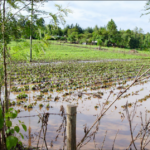
For Kenya’s farmers, this feels like a slap in the face. While the government touts chapatis, smallholders are abandoning fields. In Kitale, flooding has forced farmers like Elkana and Rose to switch from maize to eucalyptus, just to drain waterlogged land. In northern Kenya, pastoralists like Job Metuy watch livestock die amid drought, with 2.5 million head lost since 2022.
The Africa-wide soil health summit in May 2024 highlighted a $4 billion annual nutrient loss, yet policy still leans on imported chemical fertilizers—costly and soil-damaging—over organic alternatives like Bokashi, which farmers can’t access without subsidies.
The irony? Chapatis need wheat, and Kenya imports over 90% of it, spending billions while local wheat farmers get little support. A million chapatis daily could mean more contracts for foreign suppliers or politically connected millers, not empowerment for rural growers. Compare this to Zambia’s maize surpluses, blocked by export bans, or Ethiopia’s mobile tech aiding farmers with weather data—Kenya’s focus seems misplaced. Farmers aren’t asking for handouts; they need affordable inputs, fair markets, and climate-resilient support. Instead, they get a chapati machine they’ll never see.
Politics Over People
Ruto’s administration isn’t blind to the crisis. His 2022 inauguration speech promised to tackle climate change and fossil fuel reliance, and the feeding program itself has merits—boosting school attendance in slums. But the chapati pledge reeks of political PR, not policy substance.
It’s a distraction from systemic failures: underfunded extension services, a fertilizer scandal exposing corruption, and a refusal to pivot from fossil fuel-based inputs driving greenhouse emissions. Greenpeace Africa notes that nitrate fertilizers—pushed by Ruto’s subsidies—acidify soils and pollute water, risking health crises like blue baby syndrome. Yet the government doubles down, ignoring calls for intercropping, compost, or lime to restore soil.
The political lens sharpens the insult. Ruto’s “bottom-up” mantra rings hollow when rural voices—farmers, youth, women—are sidelined for urban photo-ops. The chapati machine could employ a few, but it won’t stem the exodus of young people from farms to ill-equipped cities, as noted by National Geographic in 2016. Nor will it fix the macroeconomic fallout—slower growth, rising poverty, and food imports projected to hit $110 billion across Africa by 2025, per the African Development Bank. Critics on X call it “El Chapo’s” latest hustle, a nod to both street slang and profiteering suspicions.
Recipe for Success or Just Hot Air?
Could this work? Theoretically, yes—a mega-machine could streamline feeding programs, cut costs long-term, and win votes. Industrial roti makers exist, and Nairobi’s centralized schools make distribution feasible. But the numbers don’t add up without massive investment, and the silence on execution suggests it’s more promise than plan. Contrast this with Practical Action’s work around Lake Victoria, training farmers in climate-smart horticulture that yields KSh 250,000 monthly for some—tangible, scalable, farmer-focused.
For now, the 1 million chapatis feel like political theater—a tasty soundbite in a country starving for real solutions. Farmers need soil health, affordable inputs, and market access, not a symbolic snack. Ruto’s pledge might feed headlines and egos, but it’s an insult to those tilling dying land, praying for rain, and watching their livelihoods crumble. Success demands substance over spectacle—otherwise, this is just flour in the wind.
https://farmerstrend.co.ke/trending/kenyas-food-crisis-1-million-chapatis-amid-farmers-struggles-success-or-political-pr/https://farmerstrend.co.ke/wp-content/uploads/2025/03/29f1c3ec-581b-4706-808a-f6de56f0b3fb.webphttps://farmerstrend.co.ke/wp-content/uploads/2025/03/29f1c3ec-581b-4706-808a-f6de56f0b3fb-150x150.webp# Trending'Ruto’s 1 million chapatis promise sparks debate amid Kenya’s food crisis. Farmers face high costs—politics or progress? Dive in.'On March 11, 2025, President William Ruto stood before a crowd of students at St. Teresa Girls Secondary School in Mathare, Nairobi, and made a bold promise: a high-capacity chapati-making machine...FarmersTrendjohn doefarmerstrend@gmail.comAdministratorFarmers Trend Ltd.









Leave a Reply