Vanilla Farming in Kenya 2026: The Complete Technical Growing Guide
Commercial Vanilla Farming in Kenya 2026: The Comprehensive Technical Blueprint for High-Value Orchid Cultivation
Vanilla farming in Kenya is the most misunderstood farming opportunity in Kenyan agriculture. You will wait three years before you see your first bean. You will wake up before sunrise to hand-pollinate each flower. You will spend months curing the pods before you earn a single shilling. But here is the truth. A single kilogram of cured vanilla beans can sell for KSh 50,000 to KSh 80,000 in the export market. That is the reality of this crop. Vanilla is the world’s most lucrative orchid, but it requires so much personal attention that you will basically be marrying the vines before you ever harvest a single bean.
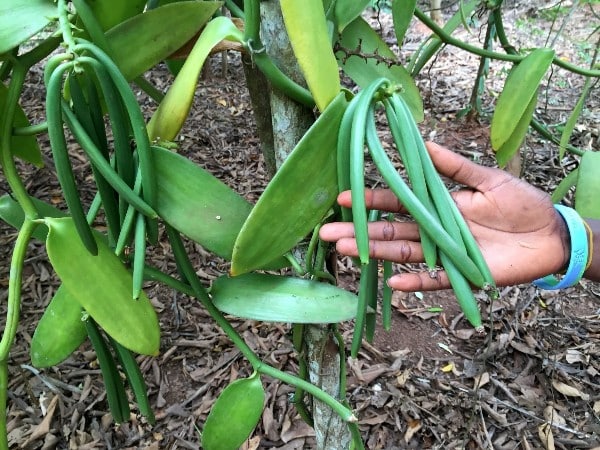
Let me tell you about Maryanne Karemesi from Kwale. She started with 20 vanilla plants on a small plot behind her house. She had no formal training. She learned from YouTube videos and a Ugandan farmer she met on Facebook. Today she has 200 plants on half an acre. One hundred of those plants are flowering. She sells her beans to local hotels at KSh 200 to KSh 250 per bean. Buyers from South Africa and Italy have approached her. They want one tonne of cured vanilla per season. She said no because she cannot yet meet that demand.
That is the problem. Kenya has the buyers. Kenya has the climate. Kenya does not have enough farmers willing to put in the work.
Think about that for a moment. A buyer from Italy wants to give a Kenyan farmer a contract for one tonne of vanilla. That is KSh 50 million to KSh 80 million worth of beans. And the farmer had to turn them down because she cannot produce enough. This is not a market problem. This is a supply problem. And supply problems mean high prices for the few farmers who step up.
So what is stopping Kenyan farmers? Two things. First, the three year wait to first harvest. Second, the daily labor of hand pollination. Most farmers look at these requirements and walk away. They plant maize instead. They plant beans. They get a small harvest every four months and complain about poverty. But the farmers who stay? They are the ones building permanent wealth. Vanilla is not a get rich quick crop. Vanilla is a get rich slow and stay rich crop.
I have walked through vanilla farms in Kilifi, Kwale, and Busia. I have spoken to exporters in Mombasa who cannot find enough beans to fill their containers. I have sat with European buyers who flew to Nairobi specifically to find Kenyan vanilla. They all say the same thing. We want Kenyan vanilla. We will pay a premium for Kenyan vanilla. But we need volume and consistency. Right now, we cannot get either.
This is your chance. The global vanilla market is shifting. Madagascar still produces 80% of the world’s natural vanilla, but cyclones, political instability, and aging plantations have created supply gaps. European buyers are scrambling for new sources. Uganda has stepped up. Papua New Guinea has stepped up. Kenya has the same climate along the coast and around Lake Victoria. This is your window. Get into vanilla farming in Kenya now, and you secure a spot in a supply chain that cannot find enough beans.
Let me give you a number that will stick in your head. One hectare of mature vanilla under good management produces 800 to 1,200 kilograms of green beans per year. At current farm gate prices, that is KSh 3.2 million to KSh 4.8 million per hectare. Cure those beans, and the value jumps to KSh 16 million to KSh 28 million per hectare. Name another crop in Kenya that gives you those numbers. You cannot. Coffee gives you KSh 300,000 per hectare. Tea gives you KSh 400,000. Macadamia gives you KSh 500,000. Vanilla destroys all of them. But only if you do the work.
Now let me be honest with you. Vanilla farming in Kenya is not for everyone. You need patience. You need discipline. You need a love for detailed hand work. This is not a crop you can spray and walk away. You will touch every single flower on every single vine. You will tie every shoot. You will monitor every bean during curing. If you are the kind of farmer who likes to plant and forget, grow cassava. Vanilla will eat you alive.
But if you are the kind of farmer who enjoys precision work, who takes pride in quality, who wants to build a legacy crop for your children, then read every word of this guide. I will take you through everything. Where to plant. How much money you need. How to build your trellises. How to pollinate each flower. How to cure your beans to gourmet standard. By the end, you will know exactly what it takes to succeed at vanilla farming in Kenya.
And here is a promise. If you follow this guide by Farmers Trend Limited and put in the work, you will outcompete every other vanilla farmer in this country. Because most farmers skip the details. They plant cheap cuttings. They use poor shade. They pollinate badly. They cure carelessly. Then they complain that vanilla does not pay. Do not be that farmer. Be the farmer who does every step right. That farmer gets the contracts. That farmer gets the premium prices. That farmer sends their children to university on vanilla money.

The 2026 Premium Spice Economy and Global Supply Gaps
Why Global Buyers Are Desperate for New Sources
Madagascar produces 80% of the world’s natural vanilla. But cyclones hit the island every few years. Political instability disrupts supply chains. Aging plantations produce fewer beans each season. European buyers are terrified of another supply shock. So they are actively seeking farmers in new countries. Kenya is on their list. So is Uganda. So is Tanzania. The buyers have money. They have shipping contracts. They have storage facilities in Europe. They lack one thing. Reliable farmers who can deliver consistent quality year after year.
This is where you come in. A buyer does not care if you have one acre or ten acres. They care about three things. Can you deliver a consistent product? Can you deliver on time? Can you trace your beans back to your farm? Answer yes to these three questions, and you will find a buyer. Answer no, and you will struggle.
Small Scale Vanilla Farming in Kenya Is Highly Viable
Let me clear up a myth. You do not need a large farm to make money from vanilla. Small scale vanilla farming in Kenya works beautifully because the crop grows vertically. One vine climbs up a support tree and produces 40 to 60 beans per year. That is KSh 8,000 to KSh 12,000 worth of green beans from a single vine. From a space of one meter by one meter. You cannot get that kind of value from any other crop in Kenya.
The baseline financial reality for small scale vanilla farming in Kenya is simple. A quarter acre can support 500 vines at a spacing of 1.5 meters by 2 meters. From year four onward, each mature vine gives you 40 beans on average. That is 20,000 beans per quarter acre. At KSh 50 per green bean, you gross KSh 1 million from a quarter acre. At KSh 200 per cured bean, you gross KSh 4 million from that same quarter acre. These numbers are real. They come from farmers who are doing it right now.
Who Are the Premium Off-Takers for Kenyan Vanilla
You have three categories of buyers for vanilla farming in Kenya. Each has different requirements and different price points.
- First, local extraction companies based in Nairobi and Mombasa. Companies like Kenya Vanilla and Spice Processors buy green beans in bulk. They extract oleoresin for the food industry. They pay KSh 3,000 to KSh 5,000 per kilogram for green beans. They do not require cured beans. This is your easiest market. The downside is lower prices.
- Second, high-end confectioneries and hotels. Artcaffe. Java House. Hemingways. These buyers use whole vanilla beans in their kitchens. They pay KSh 150 to KSh 250 per bean. They want long, plump, oily beans with a strong aroma. They will visit your farm to inspect your curing process. Build a relationship with these buyers, and they will pay you every month.
- Third, luxury exporters shipping to Europe. This is the top tier. Exporters buy cured beans in bulk and ship them to buyers in France, Germany, and Italy. They pay KSh 50,000 to KSh 80,000 per kilogram for gourmet grade beans. They require certification. They require traceability. They require volume. But once you qualify, you lock in a premium price for years.
How Global Price Volatility Creates a Window for Domestic Producers
Here is a strange truth. Price volatility is good for new producers. When prices are stable, big producers in Madagascar lock in all the contracts. When prices swing wildly, buyers get scared. They want to spread their risk across multiple countries. That is your opening.
Here is a table to help you understand the price trends.
| Year | Global Vanilla Price (USD per kg) | Kenyan Farm Gate (KSh per kg green) |
|---|---|---|
| 2018 | $600 | KSh 12,000 |
| 2019 | $450 | KSh 9,000 |
| 2020 | $350 | KSh 7,000 |
| 2021 | $250 | KSh 5,000 |
| 2022 | $200 | KSh 4,000 |
| 2023 | $220 | KSh 4,500 |
| 2024 | $250 | KSh 5,000 |
| 2025 | $260 | KSh 5,200 |
| 2026 | $275 (projected) | KSh 5,500 (projected) |
Prices have stabilized. They are not crashing further. They are not skyrocketing either. This is the sweet spot for new farmers. You get predictable returns without the speculative bubble.
The 1-Acre Financial and Capital Investment Blueprint
Let us talk about money directly. No fluff. No vague estimates. You need real numbers to make a decision about vanilla farming in Kenya. I will give you those numbers now.
Cost of Vanilla Farming in Kenya for One Acre
The cost of vanilla farming in Kenya for one full acre breaks down into five major categories. Shade infrastructure. Support posts. Irrigation. Planting material. Labor. You cannot skip any of these. Vanilla is a forest orchid. It dies under direct sun. It dies without consistent moisture. It dies with poor drainage. Spend your capital upfront or lose your entire investment.
Here is the itemized breakdown for one acre. Assume you plant 2,000 vines per acre at a spacing of 1.5 meters between plants and 2 meters between rows. This is the standard density for commercial production.
| Cost Item | Quantity | Unit Cost (KSh) | Total Cost (KSh) |
|---|---|---|---|
| 60% shade net (4,000 sq m) | 1 acre | 150 per sq m | 600,000 |
| Galvanized poles for shade net | 100 poles | 2,000 | 200,000 |
| Support posts (treated timber) | 2,000 posts | 300 | 600,000 |
| Drip irrigation system | 1 acre | 80,000 | 80,000 |
| Water storage tank (5,000L) | 1 tank | 30,000 | 30,000 |
| Solar pump | 1 pump | 50,000 | 50,000 |
| Vanilla cuttings (1 meter) | 2,000 cuttings | 250 | 500,000 |
| Organic mulch and manure | 20 tonnes | 5,000 | 100,000 |
| First year labor | 12 months | 8,000 per month | 96,000 |
| Contingency (10%) | – | – | 225,600 |
| Total | – | – | KSh 2,481,600 |
That number scares many farmers. KSh 2.5 million for one acre sounds impossible. But let me show you a cheaper path.
Low Cost Entry for Small Scale Vanilla Farming in Kenya

You do not need to spend KSh 2.5 million. That is the premium setup for farmers who want maximum yields from day one. For small scale vanilla farming in Kenya, you can start much smaller.
Use living tutor trees. Skip the artificial posts. Plant Gliricidia or Jatropha as your support trees. The seeds cost KSh 500 for enough trees for one acre. Plant bananas as your shade canopy instead of expensive shade nets. Banana suckers cost KSh 50 each. You need 500 suckers per acre. That is KSh 25,000. Your shade is now sorted for a fraction of the cost.
Reduce your vine density to 1,000 per acre instead of 2,000. You get half the yield but also half the upfront cost. Water using a watering can instead of drip irrigation. This is labor intensive but works for the first two years. Skip the solar pump and use a small petrol pump for KSh 15,000.
Here is the low cost breakdown for small scale vanilla farming in Kenya.
| Cost Item | Low Cost Option | Total Cost (KSh) |
|---|---|---|
| Shade | Banana intercropping | 25,000 |
| Support | Living Gliricidia trees | 500 |
| Irrigation | Watering cans + petrol pump | 20,000 |
| Storage tank | 1,000L plastic tank | 15,000 |
| Vanilla cuttings | 1,000 cuttings at KSh 200 | 200,000 |
| Mulch and manure | 10 tonnes from own animals | 20,000 |
| Labor | Family labor | 0 |
| Contingency | – | 28,000 |
| Total | – | KSh 308,500 |
You can start vanilla farming in Kenya with KSh 300,000 on a half acre. Your yields will be lower. Your timeline to full production will be longer. But you will get there. Many successful vanilla farmers started exactly this way.
Expected Returns at Harvest
Now let us talk about the money coming back to you. Vanilla price per kg in Kenya depends on two things. First, whether you sell green beans or cured beans. Second, the grade of your beans.
Green beans are fresh pods harvested right after maturity. They have high moisture content. They sell for KSh 3,000 to KSh 5,000 per kilogram. The buyer takes them immediately and does their own curing. This is the easiest path. You get paid fast. You take no curing risk. But you leave money on the table.
Cured beans have been through the full six month process. They lose 80% of their weight but gain 10 times the value. A kilogram of cured gourmet beans sells for KSh 50,000 to KSh 80,000 to exporters. Local buyers pay KSh 30,000 to KSh 50,000. The curing process adds massive value. But it also adds labor, storage space, and risk. Poor curing destroys the entire batch.
Here is a table showing your returns at different production levels.
| Vine Density (per acre) | Green Beans (kg/year) | Green Bean Revenue (KSh) | Cured Beans (kg/year) | Cured Bean Revenue (KSh) |
|---|---|---|---|---|
| 500 vines | 200 – 300 | 600,000 – 1,500,000 | 40 – 60 | 2,000,000 – 4,800,000 |
| 1,000 vines | 400 – 600 | 1,200,000 – 3,000,000 | 80 – 120 | 4,000,000 – 9,600,000 |
| 1,500 vines | 600 – 900 | 1,800,000 – 4,500,000 | 120 – 180 | 6,000,000 – 14,400,000 |
| 2,000 vines | 800 – 1,200 | 2,400,000 – 6,000,000 | 160 – 240 | 8,000,000 – 19,200,000 |
The numbers speak for themselves. Even a low density farm of 500 vines gives you a solid income. A high density farm of 2,000 vines gives you life changing money. The cost of vanilla farming in Kenya pays back within two harvest seasons if you cure your beans. That is a strong return on investment. Just remember the three year waiting period before the first harvest.
Agro-Ecological Mapping and Regional Microclimates
Where to grow vanilla in Kenya? This is the first question you must answer before buying a single cutting. Vanilla is a tropical orchid. It demands specific conditions. Get these wrong, and your vines will grow leaves but never produce flowers.
The Exact Climatic Parameters for Vanilla Farming in Kenya
The requirements are strict. You cannot bend them. You cannot cheat them. Vanilla either gets what it needs or it gives you nothing.
Temperature must stay between 20°C and 32°C year round. Anything below 18°C slows growth to a crawl. Anything above 35°C burns the leaves and stops flowering. Elevation must stay below 1,500 meters. Higher altitudes get too cold at night. Soil pH must range from 5.5 to 7.5. Vanilla hates alkaline soils and acidic peat. Humidity must stay above 60% at all times. Dry air causes flower drop and poor bean development. Rainfall needs to be between 1,500 mm and 2,500 mm per year. If you get less, you must irrigate. If you get more, you risk fungal diseases.
Where to Grow Vanilla in Kenya: The Three Viable Regions
So which regions in Kenya match these parameters? You have three main zones. Each has advantages and challenges.
The Coastal strip from Kilifi to Kwale to Mombasa is the best location for vanilla farming in Kenya. Temperatures average 25°C to 30°C. Humidity stays high because of the ocean breeze. Elevation is near sea level. The red sandy loam soils drain well but hold enough moisture. Farmers in Kilifi have already established commercial plots. The main challenge is the dry season from December to March. You need reliable irrigation during those months. Land prices are also higher here. An acre in Kilifi costs KSh 1.5 million to KSh 2.5 million.
The Lake Victoria basin around Kisumu, Homa Bay, and Busia is your second option. Temperatures are slightly lower at 22°C to 28°C. Humidity is high because of the lake. Soils are clay loams that require careful drainage. You cannot plant vanilla in waterlogged ground. Build raised beds or planting mounds. The rainfall here is more reliable than the coast. Land is cheaper. An acre in Busia costs KSh 500,000 to KSh 800,000. The downside is higher fungal disease pressure because of the persistent moisture. Use proper spacing and airflow to manage this.
Parts of Western Kenya like Kakamega and Bungoma work well for small scale vanilla farming in Kenya. The climate is similar to the lake basin but with slightly lower humidity. You need to supplement with overhead irrigation during dry spells. The main advantage is lower land prices. You can buy an acre in Kakamega for KSh 400,000 to KSh 600,000. That makes vanilla farming in Kenya accessible for smaller budgets. The challenge is that many parts of Western Kenya have elevations above 1,500 meters. Check your specific location before buying land.
Here is a table comparing the three regions.
| Region | Average Temp | Elevation | Soil Type | Land Cost per Acre | Main Challenge |
|---|---|---|---|---|---|
| Coast (Kilifi, Kwale) | 25°C – 30°C | 0 – 300m | Sandy loam | KSh 1.5M – 2.5M | Dry season irrigation |
| Lake Basin (Kisumu, Busia) | 22°C – 28°C | 1,100 – 1,300m | Clay loam | KSh 500K – 800K | Fungal diseases |
| Western (Kakamega, Bungoma) | 21°C – 27°C | 1,200 – 1,500m | Loam | KSh 400K – 600K | Borderline elevation |
Microclimates Within Your Region
Once you pick your region, you need a specific microclimate. Not all parts of Kilifi are equal. Not all slopes in Busia work.
Avoid valleys where cold air pools at night. Cold air flows downhill like water. It settles in low spots. Your vanilla vines in those low spots will get frost damage on cold nights. Avoid exposed slopes where wind dries out the vines. Vanilla needs high humidity. Wind strips moisture from the leaves and flowers. Plant on gentle slopes with eastern or western exposure. Morning sun and afternoon shade work best.
Use a simple thermometer and hygrometer to monitor your site for three months before investing. Record daily highs and lows at 6am, 12pm, and 6pm. Measure morning humidity right after sunrise. If you see temperatures outside the 20°C to 32°C range more than five times in three months, pick a different location. If humidity drops below 60% for more than 10 days in a row, you will need misters or extra irrigation.
I visited a farmer in Vihiga who tried vanilla at 1,800 meters elevation. His vines grew well for two years. Then the first cold snap hit. Temperatures dropped to 12°C for three nights. All his flowers aborted. He lost an entire year of potential harvest. Do not repeat his mistake. Check your elevation before you plant.
Support Architecture, Shade, and Agroforestry Integration
Vanilla is a climbing vine. It does not stand up by itself. It does not support its own weight. You must give it a structure to climb. But here is the catch. Vanilla also refuses direct sunlight. It grows on the forest floor in its natural habitat. So your support system must provide two things. A vertical structure for climbing. A canopy of shade to block 50% to 75% of sunlight.
Living Tutor Trees: The Cheapest Support System
Living tutor trees are the cheapest and most sustainable option for vanilla farming in Kenya. You plant fast growing trees that serve as living poles for your vanilla vines. The best tutor trees are Gliricidia sepium and Jatropha curcas.
Gliricidia grows quickly. It reaches 2 meters within six months. It fixes nitrogen in the soil. Its leaves drop and decompose into organic mulch. This mulch feeds your vanilla vines and keeps the soil moist. Gliricidia also tolerates pruning well. You can cut it back when it gets too tall. Jatropha also works well. It is drought tolerant and produces seeds that can be sold for biofuel. The seeds give you a secondary income stream.
Plant your tutor trees at the same spacing as your vanilla vines. Use 1.5 meters between trees and 2 meters between rows. Allow the trees to grow for six months before planting your vanilla cuttings. This gives the trees time to develop a strong root system and a straight stem.

Artificial Trellises: Higher Cost, Higher Control
Artificial trellises are your second option. Use treated timber posts, concrete posts, or steel pipes. Drive the posts 1.5 meters into the ground. Leave 2 meters above ground. String galvanized wires between the posts at 50 centimeter intervals. Your vanilla vines climb these wires.
This system costs more upfront but gives you perfect control over spacing and vine management. It also lasts 15 to 20 years with proper maintenance. The downside is the initial cost of vanilla farming in Kenya using artificial trellises. Budget KSh 500,000 to KSh 800,000 per acre for materials and installation.
Here is a comparison of the two support systems.
| Feature | Living Tutor Trees | Artificial Trellises |
|---|---|---|
| Upfront cost per acre | KSh 500 – 5,000 | KSh 500,000 – 800,000 |
| Time to readiness | 6 months for tree growth | Immediate after installation |
| Lifespan | 10 – 15 years | 15 – 20 years |
| Maintenance | Pruning every 3 months | Wire tightening yearly |
| Secondary income | Firewood, biofuel seeds | None |
| Best for | Small scale farmers | Commercial farms |
Shade Canopy: The Non-Negotiable Layer
Even with tutor trees or artificial posts, you need overhead shade. Without shade, your vanilla vines will turn yellow, drop their leaves, and die within months. This is not an exaggeration. I have seen it happen.
The cheapest shade comes from agroforestry integration. Plant bananas, avocados, or mango trees in a grid across your vanilla plot. These fruit trees provide 50% to 70% shade. They also give you a second income stream from fruit sales. Bananas are the best choice because they grow fast and have large leaves. A banana plant reaches full height in nine months. You can intercrop vanilla under established bananas immediately. The bananas also increase humidity around your vanilla vines. That is exactly what the orchids want.
Use a spacing of 5 meters by 5 meters for your shade trees. This gives you about 160 shade trees per acre. Plant your vanilla vines between the shade trees. The shade trees will protect the vanilla from direct sun while allowing enough light for photosynthesis.
Shade netting is the artificial alternative. Use 60% density black or green shade net. Suspend it on poles at 2.5 meters height. This gives you a uniform shade level across your entire farm. The advantage is consistency. The disadvantage is cost. A full acre of shade netting costs KSh 600,000 to KSh 800,000.
Propagation Mechanics and Sourcing Verified Material
You cannot grow vanilla from seeds. The seeds are tiny. They have no stored energy. They require a specific fungus to germinate. Even scientists struggle with seed propagation. So commercial vanilla farming in Kenya uses stem cuttings.
How Vanilla Cuttings Work
A vanilla cutting is a section of stem taken from a mature healthy vine. The cutting must have nodes. Nodes are the bumps on the stem where leaves and roots emerge. Each node can grow into a new root system. The cutting should be 1 to 1.5 meters long. Longer cuttings establish faster and flower earlier. A 1.5 meter cutting can flower in 18 months. A 50 centimeter cutting takes three years.
Here is the key. Longer cuttings produce more roots. More roots mean more water and nutrient uptake. More uptake means faster growth and more flowers. So pay for long cuttings. The extra cost pays back within two years.
Vanilla Seedlings in Kenya: Where to Source Genuine Material
This is where many farmers fail. They buy cheap cuttings from a neighbor or a roadside vendor. The cuttings look fine. They plant them. Six months later, the vines turn yellow and die. The cause is fusarium wilt or viral pathogens. You cannot see these diseases with your eye. The infected cutting looks healthy until it crashes.
So where do you find genuine vanilla seedlings in Kenya? You have three reliable sources.
First, the Kenya Plant Health Inspectorate Service (KEPHIS). They maintain a list of certified nurseries and propagators. Any seller on their list has been inspected and approved. Ask for the KEPHIS certificate before you pay.
Second, the Kenya Agricultural and Livestock Research Organization (KALRO). Their research stations in Mtwapa and Kakamega produce tissue culture vanilla plantlets. These plantlets are guaranteed disease free. They cost more but they are worth it. A tissue culture plantlet costs KSh 300 to KSh 500 compared to KSh 200 for a regular cutting.
Third, established commercial vanilla farms. Some farmers in Kilifi and Busia sell cuttings from their mature vines. Visit the farm. Inspect the mother vines. Look for yellowing leaves, stunted growth, or wilting stems. If the mother vines look healthy, the cuttings will also be healthy.
Physical Inspection Before You Buy
Before you hand over any money, inspect the cuttings yourself. Look for these five things.
First, check the color. Healthy cuttings are bright green. Brown or black spots indicate rot or fungus. Second, feel the texture. The stem should be firm and plump. Soft or shriveled stems are dehydrated or diseased. Third, look at the nodes. Each node should have a small bump where roots will emerge. Nodes that are flat or missing will not root. Fourth, check the leaf condition. The leaves should be green and turgid. Yellow leaves or brown edges signal stress. Fifth, smell the cutting. A healthy cutting has a mild plant smell. A sour or rotten smell means bacterial infection.
Do not buy cuttings that fail any of these five checks. Even one bad cutting can introduce disease to your entire farm.
Field Planting, Root Zones, and Vine Training
You have your site prepared. Your shade trees are growing. Your support posts are in the ground. Your cuttings have arrived. Now it is time to plant.
Preparing the Planting Mounds
Vanilla hates waterlogged roots. The roots need moisture but they also need air. Waterlogged soil suffocates the roots and invites fungal rot. So you must plant on raised mounds or ridges.
Build mounds that are 50 centimeters wide and 30 centimeters high. Space the mounds 1.5 meters apart along your support rows. Each mound will hold one vanilla cutting. Mix well decomposed organic matter into each mound. Use a ratio of two parts soil to one part compost or manure. This gives you loose, aerated soil that holds moisture but drains excess water.
How to Plant Vanilla Cuttings
Take your 1 to 1.5 meter cutting. Lay it horizontally on the prepared mound. Do not bury the cutting vertically. Vanilla is not a tree. It is a vine that roots along its stem. So you lay the cutting flat on the soil surface.
Cover the bottom two thirds of the cutting with a thin layer of mulch or fine soil. Leave the top third exposed. The exposed portion will climb up your support post or tutor tree. The buried portion will develop roots from each node.
Water the mound immediately after planting. Use a gentle spray so you do not wash away the mulch. Keep the soil moist but not wet for the first month.
Tying the Vine to the Support
After planting, tie the exposed tip of your cutting to your support post or tutor tree. Use soft material like banana fiber or old cloth. Do not use wire or plastic string. Wire cuts into the stem. Plastic string does not breathe and traps moisture against the stem.
Tie loosely. The vine needs room to swell as it grows. A tight tie will strangle the vine. You should be able to slide your finger between the tie and the stem.
Check your ties every month. Loosen them as the vine grows. Replace any ties that have started to rot.
Canopy Architecture: The Science of Looping and Topping
Your vanilla vine wants to climb forever. In the wild, a vanilla vine can reach 30 meters up a tree. You cannot harvest beans from a vine that is 10 meters in the air. So you must control the vine through two techniques. Looping and topping.
Looping: Bringing the Vine Back Down
Looping means detaching the growing tip of the vine from its upper support. You then bend the tip downward and loop it back to the ground. You bury the tip in a new mound where it will root and start a new vertical climb.
This technique does two things. First, it keeps the vine within human reach for pollination and harvesting. Second, it creates multiple rooted sections along the same vine. Each rooted section develops its own root system. That gives you more nutrient uptake and more flowers.
Loop your vines every 12 to 18 months. When the vine reaches the top of your support post at 2 meters, it is time to loop. Detach the tip. Bring it down in a gentle curve. Do not bend sharply or the stem will snap. Bury the tip in a new mound 1 meter away from the original plant.
Topping: Forcing Flowering
Topping means cutting off the growing tip of the vine at a specific height. This stresses the plant slightly. The stress forces the vine to stop putting energy into upward growth and start putting energy into lateral branching and flowering.
Top your vine when it reaches 1.8 meters height. Cut the tip cleanly with a sharp knife. The vine will respond by producing 3 to 5 lateral branches from the upper nodes. These lateral branches are where your flowers will appear.
Do not top a vine that is weak or stressed. Topping a weak vine can kill it. Only top healthy, vigorous vines with thick stems and dark green leaves.
The Flowering Cycle and Human-Driven Pollination
Vanilla produces flowers. But the flowers do not pollinate themselves. In Mexico, a specific bee called the Melipona bee pollinates vanilla flowers. That bee does not live in East Africa. So if you leave your vanilla flowers alone, they will bloom and fall off. Zero beans.
How Long Does It Take for a Vanilla Plant to Produce Fruit
This is a common question. How long does it take for a vanilla plant to produce fruit from the initial planting date? The answer depends on your cutting length and your management.
A 1.5 meter cutting planted in good conditions will flower in 18 to 24 months. A 50 centimeter cutting takes 30 to 36 months. From flower to harvestable bean takes another 8 to 9 months. So your first harvest comes 26 to 33 months after planting with long cuttings. That is just over two years. With short cuttings, you wait 38 to 45 months. That is nearly four years.
Here is a timeline summary.
| Cutting Length | Time to First Flower | Time to First Harvest |
|---|---|---|
| 1.5 meters | 18 – 24 months | 26 – 33 months |
| 1 meter | 24 – 30 months | 32 – 39 months |
| 50 centimeters | 30 – 36 months | 38 – 45 months |
The lesson is clear. Pay for long cuttings. The extra upfront cost gets you to harvest one to two years faster. That is one to two years of revenue you do not miss.
The Pollination Window
Vanilla flowers open at sunrise. They stay open for only 6 to 8 hours. By mid afternoon, the flower closes and wilts. You have one morning to pollinate each flower. Miss that window, and the flower is gone forever.
Each vine produces 40 to 60 flowers over a two month period. That means you must inspect every vine every morning for two months straight. You cannot skip a day. A day missed is a day of flowers lost.
How to Hand Pollinate
Use a small bamboo toothpick or a sharpened twig. Locate the flower’s reproductive parts. The male part is the anther. The female part is the stigma. Between them is a membrane called the rostellum.
Lift the rostellum with your toothpick. Press the anther against the stigma. That is it. The flower is pollinated. The whole process takes 10 seconds per flower.
A trained worker can pollinate 1,000 flowers per hour. That is 1,000 potential beans. At KSh 50 per bean, that is KSh 50,000 worth of value in one hour of work. Pay your workers well for pollination. This is where your money is made.
Harvesting Indicators and Maturity Metrics
Eight to nine months after pollination, your beans are ready. You cannot harvest early. Early beans have low vanillin content and poor aroma. You cannot harvest late. Late beans split open and lose their seeds.
The Color Test
A mature vanilla bean changes color from dark green to pale yellow. The yellow starts at the blossom end (the tip away from the vine) and moves up toward the stem. When the bottom 5 centimeters of the bean turn pale yellow, the bean is ready.
Do not wait for the whole bean to turn yellow. That means the bean is overripe. Overripe beans split open. Split beans have no commercial value.
How to Harvest
Snap each bean individually from the stem. Do not pull. Pulling tears the vine casing and invites infection. Use your thumb and forefinger to snap the bean at its base. The snap should be clean and dry.
Place harvested beans in a woven basket. Do not pile them deep. Deep piles generate heat and start fermentation. Spread the beans in a single layer if you have more than 5 kilograms.
Post-Harvest Curing Science and Market Standardization
Freshly harvested green vanilla beans have no flavor. None. You can chew a green bean and taste nothing but a grassy, bitter plant taste. The famous vanilla flavor comes from curing. Curing is a six month process that develops vanillin and the other 200 flavor compounds.
- Sweating. The beans sweat inside the boxes for 24 to 48 hours. Temperature inside the box reaches 45°C to 50°C. Enzymatic reactions begin. The beans turn dark brown. The first aromas appear.
- Sun drying. Spread the beans on mats in direct sun for 1 to 2 hours each day. Roll the beans between your palms during drying. This distributes the moisture evenly. Repeat daily for two weeks. The beans lose 60% of their weight during this stage.
- Conditioning. Store the beans in wax paper lined boxes for 3 to 5 months. Open the boxes weekly to let air circulate. The beans slowly develop the full vanilla aroma. White crystals of vanillin appear on the bean surface. This is the sign of a perfectly cured bean.
How Many Vanilla Beans Are in 1 Kg
This is a critical question for pricing and contracts. How many vanilla beans are in 1 kg? The answer depends on bean length and curing.
Green beans. A 15 centimeter green bean weighs 8 to 12 grams. That gives you 85 to 125 beans per kilogram. A 20 centimeter green bean weighs 12 to 16 grams. That gives you 65 to 85 beans per kilogram.
Cured beans lose 80% of their weight. A 15 centimeter green bean becomes a 12 centimeter cured bean weighing 1.6 to 2.4 grams. That gives you 420 to 625 cured beans per kilogram. A 20 centimeter green bean becomes a 16 centimeter cured bean weighing 2.4 to 3.2 grams. That gives you 315 to 420 cured beans per kilogram.
Here is a table for quick reference.
| Bean Length | Green Bean Weight | Green Beans per kg | Cured Bean Weight | Cured Beans per kg |
|---|---|---|---|---|
| 12 cm | 6 – 8 grams | 125 – 165 | 1.2 – 1.6 grams | 625 – 835 |
| 15 cm | 8 – 12 grams | 85 – 125 | 1.6 – 2.4 grams | 420 – 625 |
| 18 cm | 12 – 15 grams | 65 – 85 | 2.4 – 3.0 grams | 335 – 420 |
| 20 cm+ | 15 – 20 grams | 50 – 65 | 3.0 – 4.0 grams | 250 – 335 |
Exporters pay by weight, not by bean count. But local buyers buying whole beans for cooking pay by the bean. So longer beans give you more money per bean in the local market. Shorter beans give you more beans per kilogram for export. Plan your market before you plant.
What is your next step? Are you ready to invest the meticulous daily labor required to hand-pollinate your first batch of vanilla orchids? Do you have the hot, humid coastal climate or lake basin conditions needed to break ground this season? Walk outside right now. Check your temperature. Feel the humidity. Look at your land. If the conditions match what I have described, start preparing your first planting mounds today. The buyers are waiting. The only question is whether you will be the farmer who steps up to meet them.
https://farmerstrend.co.ke/crops/vanilla-farming/vanilla-farming-in-kenya-farming-guide/https://farmerstrend.co.ke/wp-content/uploads/2026/05/Vanilla-Farming-767x1024.jpghttps://farmerstrend.co.ke/wp-content/uploads/2026/05/Vanilla-Farming-150x150.jpgVanilla Farming# Trendingcommercial vanilla farming in Kenya,cost of vanilla farming in Kenya,hand pollination of vanilla in Kenya,how long does it take for a vanilla plant to produce fruit,how many vanilla beans are in 1 kg,small scale vanilla farming in Kenya,vanilla curing process Kenya,vanilla price per kg in Kenya,vanilla seedlings in Kenya,where to grow vanilla in KenyaCommercial Vanilla Farming in Kenya 2026: The Comprehensive Technical Blueprint for High-Value Orchid Cultivation Vanilla farming in Kenya is the most misunderstood farming opportunity in Kenyan agriculture. You will wait three years before you see your first bean. You will wake up before sunrise to hand-pollinate each flower. You will...FarmersTrendjohn doefarmerstrend@gmail.comAdministratorFarmers Trend Ltd.

Leave a Reply