Okra Farming in Kenya: The 2026 Profitable Export Guide to Earning KSh 500,000 Per Acre with Hybrid Varieties
Okra Farming in Kenya: The 2026 Technical Guide to High-Yield Hybrids and Export Profits
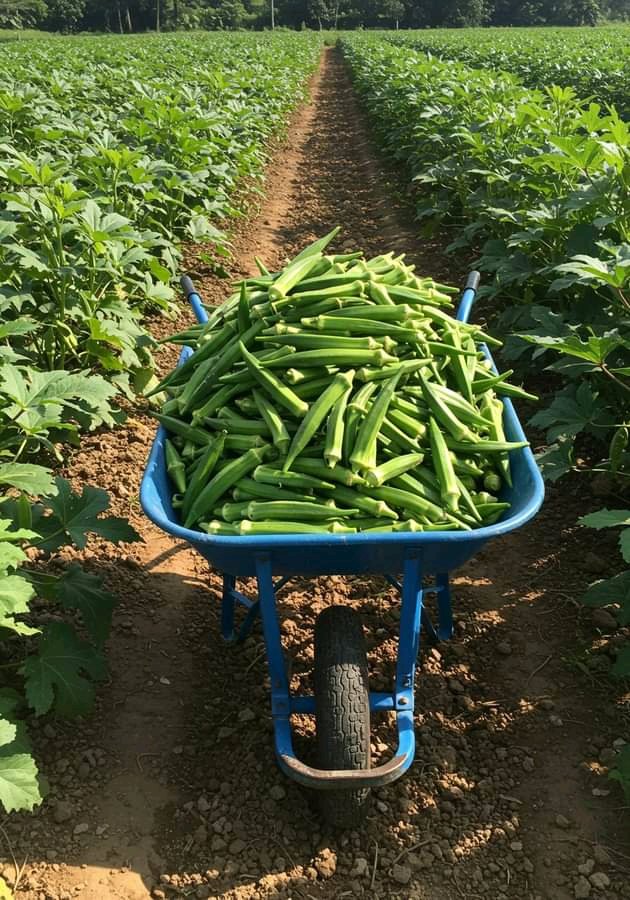
Okra farming in Kenya has transformed from a traditional garden vegetable into a serious commercial crop with export potential. Walk through the farms of Kilifi, the irrigated plots of Makueni, or the vegetable belts of Kiambu, and you will find farmers who have discovered the profit potential of this versatile crop. The reason is simple. Okra offers quick returns, multiple harvests, and access to both local and export markets.

The numbers attract serious farmers. A well-managed acre of okra produces 3,000 to 5,000 kilograms of fresh pods per season. At farm-gate prices of 50 to 100 shillings per kilogram, gross revenue reaches 150,000 to 500,000 shillings per acre per season. With two to three seasons possible annually, okra farming profit per acre reaches 300,000 to 1.5 million shillings per year.
This guide by Farmers Trend Ltd. provides everything you need to know about commercial okra farming in Kenya. You will learn about hybrid varieties, cultivation techniques, nutrient management, pest control, harvesting protocols, and financial projections. The information comes from successful growers and agricultural research stations across the country.

Industry Status and Market Dynamics for Okra Farming in Kenya
The 2026 Kenyan market for okra shows strong and growing demand. Local consumption is highest in Kisumu, Mombasa, and coastal regions where okra is a staple in traditional dishes. The crop is used in stews, soups, and as a fried vegetable. Urban centers like Nairobi and Nakuru are seeing increased demand as more consumers adopt diverse diets.
Is okra farming profitable? Yes, and the dual market structure proves it. Local markets in Kisumu and Mombasa offer steady demand with prices ranging from 40 to 70 shillings per kilogram. The export hub in Kilifi pays premium prices of 80 to 120 shillings per kilogram for quality pods meeting European standards. Farmers who can access export markets capture the highest returns.
How to make money from okra farming extends beyond fresh pod sales. Value addition through okra flour opens new markets. Dried okra powder is used in soups, thickening agents, and nutritional supplements. Processed okra products fetch 200 to 300 shillings per kilogram, triple the price of fresh pods.
The export market for Kenyan okra continues growing. European buyers seek tender, straight pods of uniform size. Middle Eastern markets appreciate the crop’s culinary versatility. With proper variety selection and post-harvest handling, farmers can access these premium markets.
Seed Selection and Variety Performance for Okra Farming in Kenya
The 2026 varieties of okra in Kenya range from traditional open-pollinated varieties to high-yielding hybrids. Variety choice directly affects yield, quality, and market acceptance.
- Pusa Sawani is the most widely grown open-pollinated variety. It produces medium-sized pods with good flavor. The plants are vigorous and disease-tolerant. However, yields average 4,000 kilograms per acre, lower than modern hybrids. Seed costs 1,600 shillings per kilogram, making it accessible for small-scale farmers.
- OH 102 is a hybrid variety developed for export markets. It produces straight, uniform pods with excellent color. Plants are compact and productive. Yields reach 8,000 to 10,000 kilograms per acre under good management. Seed costs 3,400 to 4,000 shillings per kilogram. This variety is preferred for commercial okra farming in Kenya targeting export.
- Naiya F1 is another hybrid option. It produces dark green, tender pods with consistent size. The variety has good disease resistance and tolerates heat stress. Yields are comparable to OH 102. Seed costs 3,200 to 3,800 shillings per kilogram.
- Ridhika F1 is a high-yielding hybrid suited for both local and export markets. Pods are smooth, straight, and retain tenderness longer after harvest. Yields reach 8,000 to 12,000 kilograms per acre. Seed costs 3,500 to 4,000 shillings per kilogram.
How many kgs of okra seeds per acre? For open-pollinated varieties, 8 to 10 kilograms per acre is standard. Hybrids require less seed due to higher germination rates and better plant vigor, with 4 to 6 kilograms per acre sufficient.
How much does okra seeds cost in Kenya? Pusa Sawani ranges from 1,500 to 1,800 shillings per kilogram. Hybrids cost 3,200 to 4,000 shillings per kilogram. Farmers Trend Ltd nurseries and Virtual Agrovet offer certified seeds of all varieties.
Cultivation Strategy and Seasonal Timing for Okra Farming in Kenya
Which soil is best for okra? The crop thrives in well-drained sandy loam soils with pH between 5.8 and 6.8. Heavy clay soils cause poor root development and increased disease pressure. Soils with high organic matter produce the best yields.
What is the best month to plant okra? Targeting dry months for high prices requires strategic timing. Plant in January to February for harvest during March to April when prices rise. Plant in July to August for harvest during September to October. With irrigation, you can plant year-round.
How long does okra take to mature? From planting to first harvest takes 45 to 60 days depending on variety and growing conditions. Warm temperatures speed growth. Cool temperatures extend the timeline.
The lifespan of an okra plant in commercial production is 3 to 4 months. Plants begin bearing 6 to 8 weeks after planting and continue producing for 8 to 12 weeks with regular harvesting. After this period, yields decline and plants become woody.

Nutrient Management and Soil Health for Okra Farming in Kenya
What is the best fertilizer for okra? Okra responds well to balanced nutrition throughout its growing cycle. The crop requires adequate nitrogen for leaf growth and potassium for pod development.
How much NPK does okra need? Apply DAP at 100 kilograms per acre during planting. Phosphorus supports root development and early growth. Incorporate into soil before planting.
When to add fertilizer to okra? Apply the first top dressing of CAN at 50 kilograms per acre at 3 weeks after emergence. Apply a second top dressing at 6 weeks, also 50 kilograms per acre. Split applications ensure nutrients are available when plants need them most.
For organic production, incorporate 15 to 20 tons of well-decomposed manure per acre before planting. Supplement with compost tea or foliar feeds during active growth. Mulching conserves moisture and adds organic matter.
Intercropping and Companion Planting for Okra Farming in Kenya
Can I plant okra and maize together? Generally avoid intercropping okra with maize. Maize shades okra, reducing light penetration and yields. The tall maize plants compete for water and nutrients. Separate crops into different fields for best results.
What to avoid planting with okra? Avoid planting sweet potatoes near okra. Sweet potatoes host root-knot nematodes that attack okra roots, causing galls and reduced yields. Practice crop rotation to break pest cycles.
Good companions for okra include peppers, eggplants, and tomatoes. These crops have similar growing requirements and do not compete heavily. Some farmers interplant okra with beans, which fix nitrogen and provide ground cover.
5 Tips to Grow Lots of Okra
Irrigation: Okra needs consistent moisture throughout its growth cycle. Drip irrigation is most efficient, delivering water directly to roots while keeping foliage dry. During dry periods, water every 2 to 3 days.
Heavy feeding: Okra responds strongly to fertilizer. Apply DAP at planting and CAN at 3 and 6 weeks. Supplement with foliar feeds during flowering and pod set.
Timely harvesting: Harvest pods when they are 3 to 4 inches long, before they become fibrous. Harvest every 2 to 3 days to encourage continued production. Overly mature pods reduce yields and plant vigor.
Pest scouting: Check plants regularly for signs of pests. Flea beetles, aphids, and spider mites attack okra. Early detection allows spot treatment before populations explode.
Proper spacing: Plant at 60 centimeters between rows and 30 centimeters between plants. This gives approximately 22,000 plants per acre. Proper spacing ensures good air circulation and reduces disease pressure.

Harvesting, Yield, and Pest Challenges for Okra Farming in Kenya
How many okra can be harvested from one plant? A healthy okra plant produces 20 to 40 pods over its productive life. With regular harvesting, plants continue producing for 8 to 12 weeks.
How many kg of okra per hectare? Commercial yields range from 10,000 to 12,000 kilograms per hectare (4,000 to 5,000 kilograms per acre) with hybrid varieties. Open-pollinated varieties yield 6,000 to 8,000 kilograms per hectare.
Common okra plant problems include flea beetles, aphids, and leaf curl virus. Flea beetles create small holes in leaves, reducing photosynthetic area. Control with neem oil or appropriate insecticides. Aphids cluster on new growth and transmit viruses. Use insecticidal soap or introduce natural predators.
Leaf curl virus causes yellowing and distortion of leaves. It is spread by whiteflies. Control whiteflies to control the virus. Remove infected plants promptly to prevent spread.
2026 Okra Production Cost-Benefit Table
| Cost Item | Amount (KSh) |
|---|---|
| Seeds (hybrid, 5 kg at KSh 3,500) | 17,500 |
| Land preparation | 8,000 |
| Manure (15 tons) | 20,000 |
| Fertilizers (DAP and CAN) | 15,000 |
| Pest control materials | 10,000 |
| Labor (planting, weeding, harvest) | 35,000 |
| Irrigation operation | 8,000 |
| Total Costs Per Acre | 113,500 KSh |
| Yield Level | Yield (kg) | Price/kg | Gross Revenue | Net Profit |
|---|---|---|---|---|
| Conservative | 3,000 | 50 | 150,000 | 36,500 |
| Good Management | 4,000 | 70 | 280,000 | 166,500 |
| Excellent | 5,000 | 100 | 500,000 | 386,500 |
| Export Premium | 4,500 | 120 | 540,000 | 426,500 |
Hybrid vs. OPV Yield Comparison Matrix
| Variety | Type | Seed Rate (kg/acre) | Seed Cost (KSh/acre) | Yield (kg/acre) | Price/kg | Gross Revenue | Profit Margin |
|---|---|---|---|---|---|---|---|
| Pusa Sawani | OPV | 8-10 | 14,400 | 3,000-4,000 | 60 | 210,000 | Moderate |
| OH 102 | Hybrid | 4-6 | 17,500 | 5,000-6,000 | 80 | 440,000 | High |
| Naiya F1 | Hybrid | 4-6 | 18,000 | 5,000-6,000 | 80 | 440,000 | High |
| Ridhika F1 | Hybrid | 4-6 | 19,000 | 6,000-7,000 | 80 | 520,000 | Highest |

Sourcing Quality Okra Seeds
Farmers Trend Ltd nurseries offer certified okra seeds of all major varieties through their Virtual Agrovet platform. Their seeds are tested for germination rates and varietal purity. Contact Farmers Trend Ltd at 0790509684 to place orders or inquire about availability.
The Virtual Agrovet platform allows you to order online with delivery arranged to your farm. Browse varieties, check prices, and place orders at any time. Farmers Trend Ltd also provides agronomic advice for okra farming in Kenya.
The Okra farming in Kenya PDF guide available on their website provides additional technical information for farmers seeking detailed management protocols.
Next Step
Okra farming in Kenya offers one of the most profitable opportunities in horticulture. The crop matures in 45 to 60 days. Hybrid varieties yield 5,000 to 7,000 kilograms per acre. Prices range from 50 to 120 shillings per kilogram depending on market. Net profits exceed 380,000 shillings per acre per season.
The 2026 planting windows approach. January to February and July to August offer ideal conditions for targeting high-price dry months. Your seeds are waiting at Farmers Trend Ltd nurseries. The Virtual Agrovet platform makes ordering simple.
Start with soil testing to know your pH and nutrient levels. Choose hybrid varieties like OH 102 or Ridhika F1 for export quality. Prepare your land thoroughly with proper drainage. Install drip irrigation for consistent moisture.
Order your certified okra seeds from Farmers Trend Ltd through their Virtual Agrovet platform or call them at 0790509684.
The farmers earning substantial incomes from okra started exactly where you are now. They learned, they planned, and they took action. You can do the same.
Your okra farming in Kenya journey begins today. The market is waiting. The profits are real. The time to act is now.
https://farmerstrend.co.ke/crops/herbs-farming-in-kenya/okra-farming/okra-farming-in-kenya-export-profit-guide/https://farmerstrend.co.ke/wp-content/uploads/2026/03/Okra-farming-in-kenya.jpghttps://farmerstrend.co.ke/wp-content/uploads/2026/03/Okra-farming-in-kenya-150x150.jpgOkra Farming# TrendingHerbs Farming In KenyaBest month to plant export okra,Cost of export okra farming per acre,Export okra farming Kenya,Export okra market Europe,Farmers Trend Ltd okra seeds,Hybrid okra varieties for export,Naiya F1 okra hybrid,OH 102 okra seeds Kenya,Okra export price per kg Kenya 2026,Okra farming profit per acre export,Okra fertilizer schedule export,Okra pests and diseases Kenya,Okra yield per acre Kenya export,Ridhika F1 okra export,Virtual agrovet okraOkra Farming in Kenya: The 2026 Technical Guide to High-Yield Hybrids and Export Profits Okra farming in Kenya has transformed from a traditional garden vegetable into a serious commercial crop with export potential. Walk through the farms of Kilifi, the irrigated plots of Makueni, or the vegetable belts of Kiambu,...FarmersTrendjohn doefarmerstrend@gmail.comAdministratorFarmers Trend Ltd.

Leave a Reply