Retired Teacher in Molo Finds Success in Avocado Farming After Switching from Wheat and Potatoes
A retired teacher in Molo switched from wheat to avocado farming and now produces over 150 crates per harvest. He sells to Keitt Exporters and earns steady income.
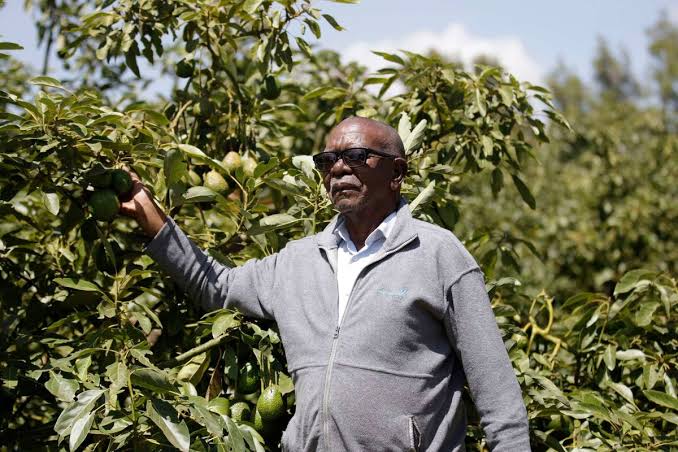
After retiring as an approved teacher in 1996, George Kariuki continued to grow wheat, maize, potatoes and peas at his home in Elburgon, Molo sub-County.
Mr Kariuki says he started farming while he was still working as a civil servant. Twenty years later, he decided to grow avocados on his farm after hearing from other farmers and in the media that this variety sold well at market.
“A local farmer told us that farmers in Central Kenya were growing coffee and tea as cash crops and challenged us to grow avocados too. In the process, farmers willing to grow the variety formed a group, and I joined without hesitation because I knew that a knowledgeable farmer would be available to educate farmers about the crop, market and seedlings,” said Mr Kariuki. The group began with 30 avocado farmers, and this number has now risen to 60. The new members are farmers from Denderu and Turi farms.
Retired but not tired, Mr Kariuki bought and planted 100 certified Hass avocado seedlings, later adding 50 more to cover his one-acre plot of land. He purchased these from a seedling farmer who was growing and propagating certified hass avocado seedlings on a seedbed at 100 shillings per piece.
During planting, he dug holes measuring 60 cm deep and added a mixture of livestock manure and topsoil. He spaced them 6 metres by 6 metres apart to prevent branches from overlapping as they grow, to allow for crop management and aeration, and to make spraying and harvesting easier. When the plants were less than one and a half years old, he intercropped with short-term crops such as potatoes, beans and peas, which help to fix nitrogen.
Mr Kariuki said that avocados require sufficient rainfall and that the ideal time to plant them is during the long rainy season, particularly in April and August. “I continued to apply manure and foliar fertiliser, which helped with flowering, which mostly started after two-and-a-half years. Two years after planting, I started spraying insecticides and pesticides, and continued to spray other chemicals, especially during the cold season, to prevent disease,” he said, adding that avocado fruits take three or four years to mature, depending on the weather in a given region. He noted that avocado fruits are harvested twice a year since they don’t all mature at the same time.
When the crop lacks sufficient water and nutrients, Mr Kariuki said that the pollen aborts, which lowers production. In his first harvest, he produced over 150 crates, each weighing 16 kilos, in 2019, selling them to Keitt Exporters Company. He has continued to sell to them ever since, as they buy from farmers who have formed a group. The number of fruits increased as he continued to harvest his crop. Between 2020 and 2024, production was good as there was enough rainfall in the area, but in 2025, poor production followed due to climate change.
“I have no regrets about switching from wheat and other crops to fruit farming, as the latter is cheaper and more labour-intensive. I am satisfied with the one-acre plot where I grow fruit and have no plans to expand it due to my age,” said Mr Kariuki, adding that his son has followed in his footsteps by growing avocados on the farm too.
To adhere to the group’s policy, Mr Kariuki rarely sells his fruit at the local market. However, many farmers in the area have started growing avocados and selling them at the local market for 15 shillings each. Over the past few months, business has been slow, with farmers citing the Iran–US war as the main cause. He is optimistic about making good sales and increasing his fruit production in time for the harvest in July.
He says that since he began growing avocados and other crops on the farm, he has never seen extension officers from the county government visiting farmers in the area. However, he has noticed that field agronomists from Keitt Exporters have been actively visiting farmers to learn about the challenges they face and share their knowledge, particularly in the areas of disease and pest control and improving production through new farming technologies.
“The area is suitable for farming, the soil is fertile and retains moisture well. Therefore, I have no tanks or wells on the farm as I have never needed to irrigate my crops,” said the former teacher, adding that his avocados have been unaffected by water shortages and droughts. Mr Kariuki said that avocado farming can be practised in a small area, depending on the availability of seedlings. Currently, a mature seedling retails at 300 Kenyan shillings per piece.
To fertilise the soil, the farmer has planted both Hass and Fuerte avocado trees, adding that Hass produces more fruit than the latter variety. If managed well, a single avocado tree can produce over 100 fruits. Since the start of the pandemic, fruit consumption has increased, leading farmers to plant a variety of fruit trees on their farms as demand has been high.
Nutritionists highlight the benefits of avocados, such as promoting healthy gut bacteria, regulating bowel movements, and preventing constipation. They also aid weight management, as the healthy fats and high fibre content slow digestion. Other benefits include protecting the eyes and skin, promoting heart health and improving nutrient absorption.
The farmer calls on leaders from county and national governments to interact with farmers, link them with experienced farmers and agronomists, learn about the challenges they face, and help them find better markets. “For farmers to succeed, our leaders must work closely with us and help us to develop skills at national and international levels.
Farmers need to learn how to control insects such as mites that affect the leaves of avocado trees, as well as how to control diseases and pests, in order to make farming a success,” said Mr Kariuki, who grows maize on a small scale for domestic use. He credits the government for providing subsidised fertiliser, which retails at 2,500 Kenyan shillings per 50 kg bag, as this has also boosted farmers across the region.
By John Njoroge








Leave a Reply