Basil Farming in Kenya: The 2026 Definitive Guide to Earning KSh 1.5 Million Per Acre with Export Contracts
Basil Farming in Kenya: The 2026 Guide to Profits, Export Markets, and Greenhouse Management
Basil farming in Kenya is becoming as one of the most lucrative opportunities in the horticulture sector. This aromatic herb, once confined to Italian restaurants and expatriate kitchens, now commands attention from commercial farmers, exporters, and supermarket chains across the country. The reason is simple. Basil offers quick returns, multiple harvests, and access to premium markets that pay in foreign currency.
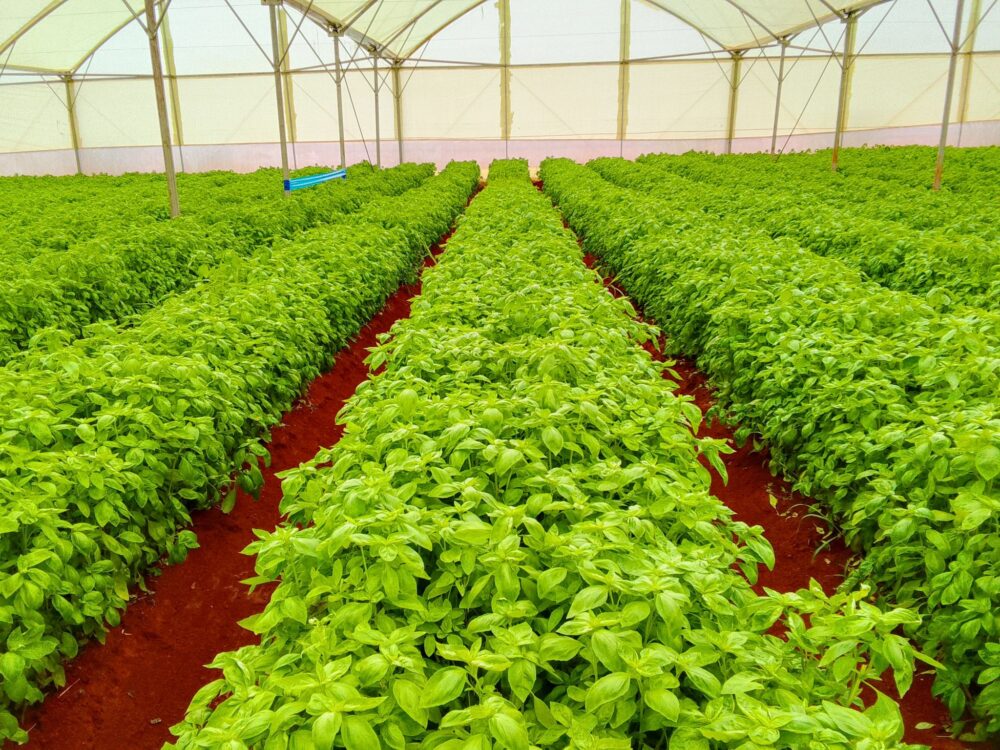
Does basil grow in Kenya? Yes, and it thrives exceptionally well. The Kenyan climate, with its warm days and cool nights, mirrors the Mediterranean conditions where basil originated. Farmers in Kiambu, Murang’a, Nakuru, and parts of the Rift Valley produce world-class basil that competes with imports in quality and freshness.
What are the most profitable herbs in Kenya? Basil consistently ranks at the top alongside chives and mint. A well-managed basil operation generates 100,000 to 300,000 shillings monthly per acre. With proper greenhouse management and access to export markets, annual profits exceed 1.5 million shillings per acre.
Is basil farming profitable? The numbers prove it. A quarter-acre greenhouse produces 500 to 800 kilograms monthly. At local market prices of 150 to 300 shillings per kilogram, revenue reaches 75,000 to 240,000 shillings per month. Export prices of 400 to 700 shillings per kilogram push profits even higher.
This guide by Farmers Trend Ltd. provides everything you need to know about commercial basil farming in Kenya. You will learn about varieties, production techniques, pest management, harvest schedules, and market access. The information comes from successful growers and horticultural experts across the country.

The Herbal Opportunity in 2026
What is the most profitable herb to grow? Basil leads the pack due to its high demand, multiple harvest cycles, and versatility. Unlike other herbs that serve niche markets, basil has broad appeal across cultures and cuisines. Kenyan consumers now embrace basil in their cooking. Hotels use it extensively. Export markets crave it year-round.
How much profit is made in basil farming? A professional grower with one acre under good management achieves monthly revenues of 100,000 to 300,000 shillings. This translates to annual profits of 1.2 million to 3.6 million shillings. The key is consistent production and access to premium markets.
There is a cultural myth that basil attracts money. In Kenya, this belief has some basis in reality. Basil farming has transformed the lives of many small-scale farmers, providing steady income and financial stability. The plant’s commercial value indeed attracts money to those who grow it well.
The global basil market continues expanding. European consumers demand fresh basil year-round. Middle Eastern markets use basil in their cuisines. The demand for organic and sustainably grown herbs opens additional opportunities for Kenyan farmers.
Does Basil Grow in Kenya
Basil grows exceptionally well across Kenya’s diverse agro-ecological zones. The plant originated in tropical regions of Asia and Africa, making it well-suited to our climate.
In lowland areas like Machakos and Makueni, basil thrives with irrigation. The warm temperatures accelerate growth, producing harvests in as little as 45 days. Farmers in these regions achieve multiple cycles annually.
In mid-altitude areas like Kiambu, Murang’a, and Nakuru, basil produces excellent quality with intense flavor. The cooler nights concentrate essential oils, resulting in superior taste. These areas supply the bulk of Kenya’s export basil.
In highland areas like Nyandarua and parts of Kericho, greenhouse production extends the growing season. Protected cultivation maintains temperatures and protects from frost. Basil grown in highlands often commands premium prices due to its quality.
The key requirements are consistent moisture, well-drained soil, and temperatures between 20 and 30 degrees Celsius. Where these conditions exist, basil farming in Kenya succeeds.
Botanical Profile and Growth Cycles
How many months does basil take to grow? From transplanting to first harvest takes 45 to 60 days depending on variety and growing conditions. Sweet basil, the most common commercial variety, reaches harvestable size faster than other types.
What is the lifespan of a basil plant? In commercial production, basil plants remain productive for 4 to 6 months. After this period, quality declines, and plants become woody. Farmers typically replant every 6 months to maintain quality.
Can basil regrow every year? Does basil return every year? Does basil need to be planted every year? These questions reflect confusion about the plant’s lifecycle. Basil is a tender perennial in tropical climates, meaning it can live for several years. However, for commercial production, farmers treat it as an annual or short-lived perennial. Replanting every 6 to 12 months ensures consistent quality and yield.
How many seeds per basil plant? One seed produces one plant under normal conditions. Basil seeds are small, with approximately 600 to 800 seeds per gram. For one acre, you need 100 to 150 grams of seeds depending on spacing and germination rate.
Basil seeds in Kenya are available from Farmers Trend Ltd nurseries and their Virtual Agrovet platform. Contact them at 0790509684 for certified seeds.

Varieties for Commercial Production
Sweet basil, also called Genovese basil, is the most popular commercial variety. It produces large, bright green leaves with the classic sweet basil aroma. This variety dominates both local and export markets.
Thai basil has a distinct anise flavor and purple stems. It is essential in Asian cuisine and commands premium prices in specialty markets. Exporters often seek Thai basil for specific buyers.
Lemon basil offers citrus notes popular in seafood dishes and teas. It serves niche markets but can be profitable for farmers who identify buyers.
Purple basil adds color to salad mixes and garnishes. Its dramatic appearance attracts premium prices from high-end restaurants and supermarkets.
For most commercial farmers, Sweet basil forms the core of production, with small plantings of specialty varieties for diversification.
Basil Seeds in Kenya from Farmers Trend Ltd
Farmers Trend Ltd is your trusted source for quality basil seeds. Their Virtual Agrovet platform makes ordering simple and convenient.
| Basil Variety | Seeds per Gram | Price per 10g | Plants per Acre | Best Use |
|---|---|---|---|---|
| Sweet Basil | 700 | 1,500 KSh | 15,000-20,000 | Local, export |
| Thai Basil | 650 | 1,800 KSh | 15,000-20,000 | Specialty export |
| Lemon Basil | 600 | 2,000 KSh | 15,000-20,000 | Niche markets |
| Purple Basil | 650 | 2,000 KSh | 15,000-20,000 | Premium garnish |
Contact Farmers Trend Ltd at 0790509684 to place orders or inquire about availability. The Virtual Agrovet platform allows you to order seeds online with delivery arranged to your farm.
Land Preparation and Planting
Successful basil farming in Kenya starts with proper land preparation. Plough deeply to 25 to 30 centimeters. Break all clods and remove weeds and stones. Harrow to create a fine seedbed.
Incorporate well-decomposed manure during land preparation. Apply 10 to 15 tons per acre. Manure improves soil structure and water-holding capacity while providing slow-release nutrition.
Form raised beds if drainage is poor. Beds 15 to 20 centimeters high improve root health and reduce waterlogging risk. In well-drained soils, flat planting works adequately.
Spacing determines plant population. For greenhouse production, spacing of 30 centimeters by 20 centimeters gives 15,000 to 20,000 plants per acre. For open field, slightly wider spacing of 40 centimeters by 20 centimeters allows for more air circulation.
How many basil plants do you need? For commercial production, target 15,000 to 20,000 plants per acre. This density balances yield and air flow.

Technical Production and Management
What makes basil grow faster? Three factors accelerate basil growth: consistent warmth, adequate nitrogen, and regular moisture.
Temperature control is critical. Basil grows best between 20 and 30 degrees Celsius. Below 15 degrees, growth slows dramatically. Above 35 degrees, plants stress and quality declines. Greenhouses help maintain optimal temperatures.
Nitrogen drives vegetative growth. Apply nitrogen-rich fertilizers every 2 to 3 weeks during the growing season. CAN at 50 kilograms per acre after each harvest maintains vigor.
Consistent drip irrigation delivers water directly to roots while keeping foliage dry. This prevents disease while maintaining moisture. In hot weather, irrigate daily for 30 to 60 minutes.
Pinching the growing tips encourages branching. When plants reach 15 to 20 centimeters, remove the terminal bud. This promotes lateral growth, increasing yield by 30 to 50 percent.
Basil Harvest Schedule Matrix
| Harvest Number | Days from Planting | Yield per Plant | Yield per Acre |
|---|---|---|---|
| 1 | 45-50 | 80-100g | 1,200-1,800kg |
| 2 | 55-60 | 70-90g | 1,050-1,600kg |
| 3 | 65-70 | 60-80g | 900-1,400kg |
| 4 | 75-80 | 50-70g | 750-1,200kg |
| 5 | 85-90 | 40-60g | 600-1,000kg |
| 6 | 95-100 | 30-50g | 450-800kg |
How many times can you harvest basil? With proper management, you harvest every 7 to 14 days for 3 to 4 months. Each plant produces 6 to 8 harvests before quality declines.
Common Basil Growing Mistakes
What are common basil growing mistakes? Understanding these challenges helps you avoid them.
Overwatering is the most frequent error. Basil hates wet feet. Waterlogged soils cause root rot and plant death. Ensure excellent drainage and allow soil to dry slightly between waterings.
Underwatering is equally damaging. Water stress causes leaves to wilt and lose quality. Consistent moisture is essential for tender, flavorful leaves.
Planting too early in cold soils delays germination and stunts growth. Wait until soil temperatures reach 18 degrees Celsius.
Poor spacing reduces air circulation, encouraging disease. Follow recommended spacing for your variety and system.
Failure to pinch leads to tall, leggy plants with low yield. Pinch early and often to encourage branching.
Basil Farming Challenges
What are some basil farming challenges? Downy mildew and Fusarium wilt are the most serious diseases affecting basil.
Downy mildew appears as yellow patches on leaves with fuzzy gray growth underneath. It spreads rapidly in cool, wet conditions. Control with resistant varieties, good air circulation, and preventative copper sprays.
Fusarium wilt causes wilting and yellowing, eventually killing plants. It is soil-borne and difficult to control. Use resistant varieties and practice long rotations.
Aphids and whiteflies attack new growth. They suck sap and reduce plant vigor. Control with neem oil or insecticidal soap. Introduce beneficial insects like ladybugs.
Thrips cause silvering on leaves and distortion. They are more common in hot, dry conditions. Monitor regularly and spray when populations build.

Basil Yield Per Acre in Kenya
Basil yield per acre in Kenya varies with production system and management.
Open field production yields 2,000 to 3,000 kilograms monthly during peak seasons. Annual production reaches 12,000 to 18,000 kilograms.
Greenhouse production yields 2,500 to 3,500 kilograms monthly year-round. Annual production reaches 20,000 to 30,000 kilograms.
Hydroponic production achieves the highest yields, up to 4,000 kilograms monthly. However, startup costs are significantly higher.
These figures assume multiple harvests from the same plants over 4 to 6 months. Each plant contributes to multiple harvests throughout its life.
Basil Farming Profit Per Acre in Kenya
Cost of basil farming in Kenya for one acre includes seedlings, land preparation, irrigation, and labor
| Cost Item | Open Field | Greenhouse |
|---|---|---|
| Seeds/seedlings | 25,000 KSh | 25,000 KSh |
| Land preparation | 15,000 KSh | 15,000 KSh |
| Manure/fertilizer | 30,000 KSh | 30,000 KSh |
| Greenhouse structure | – | 500,000 KSh |
| Drip irrigation | 75,000 KSh | 75,000 KSh |
| Labor (planting, harvest) | 120,000 KSh | 150,000 KSh |
| Pest control | 20,000 KSh | 15,000 KSh |
| Total First-Year | 285,000 KSh | 810,000 KSh |
Annual production costs after establishment are lower. Greenhouse structure amortizes over 5 to 7 years.
2026 Export vs Local Market Price Table
| Market | Sweet Basil | Thai Basil | Lemon Basil | Requirements |
|---|---|---|---|---|
| Local wholesale | 150-200 KSh/kg | 200-250 KSh/kg | 200-250 KSh/kg | Fresh, clean |
| Supermarkets | 250-350 KSh/kg | 300-400 KSh/kg | 300-400 KSh/kg | Packaged, graded |
| Hotels/restaurants | 300-400 KSh/kg | 350-450 KSh/kg | 350-450 KSh/kg | Consistent quality |
| Export air freight | 400-600 KSh/kg | 450-650 KSh/kg | 450-650 KSh/kg | GlobalGAP certified |
| Organic export | 500-700 KSh/kg | 550-750 KSh/kg | 550-750 KSh/kg | Organic certified |
How much is basil per kg in Kenya? How much is fresh basil worth? How much can you sell basil for? Prices vary widely with market channel and quality. Local wholesale offers the lowest prices but easiest access. Export markets pay premium rates but require certification and consistency.
How Do I Sell My Basil
Where to sell basil in Kenya? Multiple channels offer opportunities for basil farmers.
Supermarkets like Carrefour, Naivas, and Quickmart stock fresh herbs year-round. They require consistent supply, proper packaging, and reliable delivery. Approach their procurement departments with samples.
Export agents like Vegpro and Taste Kenya contract with farmers for regular supply. They provide technical support and guaranteed prices. Export requires GlobalGAP certification, which agents often help farmers obtain.
Hotels and restaurants need daily supply of fresh herbs. Five-star hotels in Nairobi, Mombasa, and tourist destinations use basil extensively. Approach their chefs directly with samples.
Fresh produce markets in major towns buy basil for resale. Wakulima Market in Nairobi, Kongowea in Mombasa, and other regional markets have herb sections. Prices are lower but payment is immediate.
Direct sales to consumers through online platforms reach urban buyers. Social media marketing builds awareness. Deliver to estates in Nairobi and other cities.
What Are the Market Trends for Basil
Organic certification increasingly determines market access. European buyers prioritize organic herbs. Kenyan farmers who obtain organic certification access premium prices and stable contracts.
Year-round availability is essential for export contracts. Buyers need consistent supply, not seasonal peaks. Greenhouses and irrigation enable year-round production.
Traceability and food safety standards tighten. Exporters require documentation of growing practices, pesticide use, and harvest records. Farmers must maintain detailed records.
Value-added packaging creates opportunities. Pre-packaged basil in consumer portions sells at higher prices than bulk herbs. Farmers can partner with packers or invest in their own packaging lines.

Health Benefits of Basil
What organ is basil good for? Basil supports heart and liver health through its anti-inflammatory properties. It contains antioxidants that protect cells from damage. Essential oils in basil have antibacterial and antimicrobial effects.
Basil tea aids digestion and relieves stress. The leaves are rich in Vitamin K, essential for blood clotting. Vitamin A supports eye health. These health benefits increase consumer demand for fresh basil.
Next Step
Basil farming in Kenya offers one of the most profitable opportunities in horticulture. Sweet basil yields 2,000 to 3,500 kilograms monthly. Prices range from 150 to 700 shillings per kilogram depending on market. With proper management, monthly profits reach 100,000 to 300,000 shillings per acre.
The 2026 planting windows approach. March and October offer ideal conditions. Your seeds are waiting at Farmers Trend Ltd. The Virtual Agrovet platform makes ordering simple.
Start with soil testing to know your pH and nutrient levels. Choose Sweet basil for broad markets. Add Thai or Lemon basil for diversification.
Prepare your land thoroughly. Install drip irrigation for consistent moisture. Order your certified seeds from Farmers Trend Ltd through their Virtual Agrovet platform or call them at 0790509684.
The farmers earning substantial incomes from basil started exactly where you are now. They learned, they planned, and they took action. You can do the same.
Your basil farming in Kenya journey begins today. The market is waiting. The profits are real. The time to act is now.
https://farmerstrend.co.ke/crops/herbs-farming-in-kenya/basil-farming/basil-farming-in-kenya-guide/https://farmerstrend.co.ke/wp-content/uploads/2026/03/basil-farming-in-kenya-greenhouse-1024x768.jpghttps://farmerstrend.co.ke/wp-content/uploads/2026/03/basil-farming-in-kenya-greenhouse-150x150.jpgBasil Farming# TrendingHerbs Farming In KenyaBasil export Kenya,Basil farming challenges,Basil farming cost per acre,Basil farming profit per acre,Basil greenhouse production,Basil market price Kenya 2026,Basil seeds in Kenya,Basil yield per acre in Kenya,Farmers Trend Ltd basil seeds,How many times harvest basil,Most profitable herbs in Kenya,Sweet basil farming Kenya,Thai basil farming Kenya,Virtual agrovet basil seeds,Where to sell basil in KenyaBasil Farming in Kenya: The 2026 Guide to Profits, Export Markets, and Greenhouse Management Basil farming in Kenya is becoming as one of the most lucrative opportunities in the horticulture sector. This aromatic herb, once confined to Italian restaurants and expatriate kitchens, now commands attention from commercial farmers, exporters, and...FarmersTrendjohn doefarmerstrend@gmail.comAdministratorFarmers Trend Ltd.

Leave a Reply