Date Farming in Kenya: How One Farmer Turns Dry Land Into Sh4 Million Per Hectare
- Ramesh Gorasia earns up to Sh4 million per hectare growing dates on dry land in Makueni. Here is how date farming works in Kenya, what it costs, and where to buy certified seedlings.
Date Farming in Kenya: How One Farmer Turns Dry Land Into Sh4 Million Per Hectare
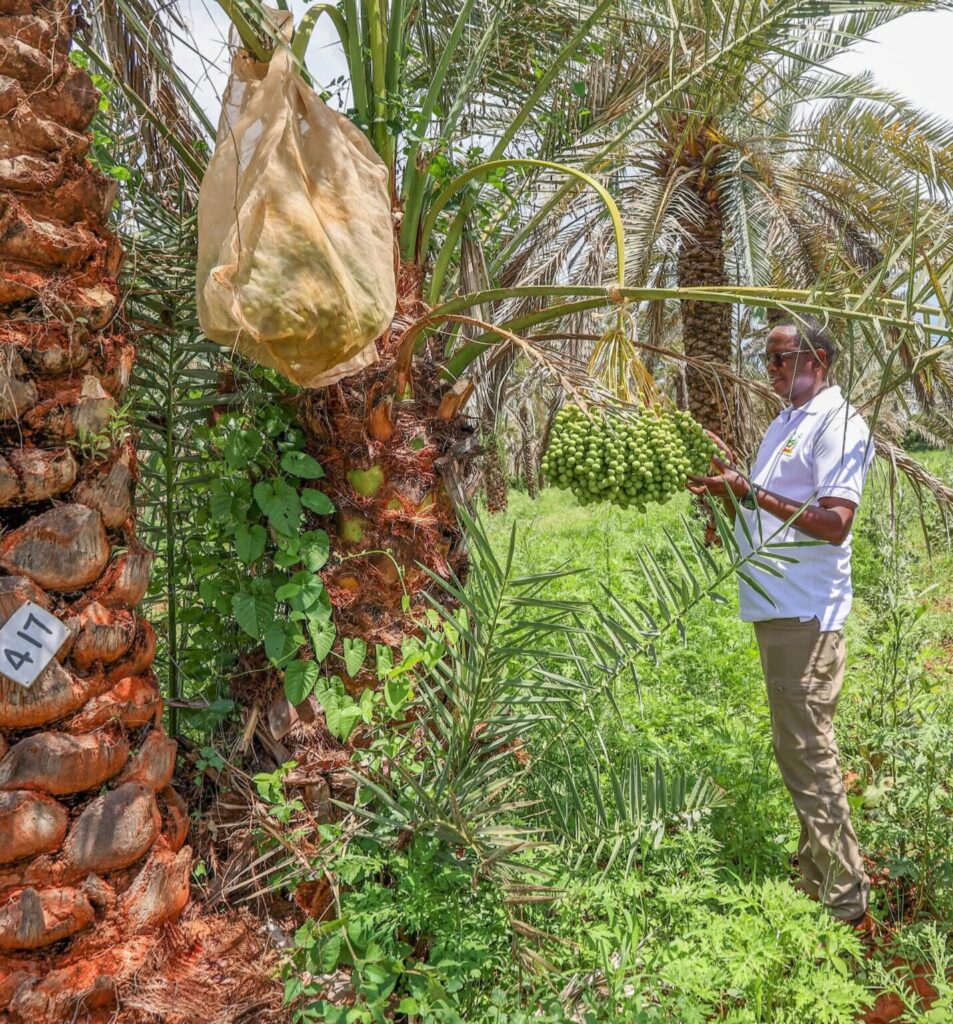
On the Yatta Plateau in Makueni County, where the rain shows up late and leaves early, Ramesh Gorasia has done something his neighbours spent years calling impossible. He grows dates. Not maize. Not sorghum. Dates. And at full maturity, each hectare on his farm brings in as much as Sh4 million a year.
His farm is called Kutch Kibwezi. It covers 400 acres and holds more than 2,500 date palms, all thriving on land that gets roughly 600mm of rain a year. That figure would ruin a maize crop in most seasons. For date palms, the same dry, punishing ground is close to ideal.
If you farm in an arid part of Kenya, or you own land you have written off as too dry to bother with, his story is worth your attention. This is not a feel-good tale about one lucky man. It is a working blueprint, backed by real numbers, for turning some of the country’s least productive land into one of its most profitable.
How a dry-land gamble became a Sh4 million business
Gorasia named his farm after Kutch, a bone-dry district in Gujarat, India, where farmers have grown dates for generations. He did not stumble into date farming. He borrowed proven methods from a place that had already worked out how to make money on land like his, then adapted them to Kenyan conditions.
His neighbours took the usual route. They planted maize, hoped for rain, and watched their crops wilt when the rain failed. Gorasia looked at the same sky and reached a different conclusion. If the land is dry, stop fighting the dryness and plant something that loves it. Date palms handle heat, salty soil, and long dry spells without complaint. While the maize around him died, his trees kept producing.
That single shift in thinking, from forcing the wrong crop onto the land to choosing the right one, is the whole story in miniature.
Why maize keeps failing Makueni farmers
Maize is the default crop across much of Kenya, and in Makueni it fails often. The problem is timing. Maize needs steady rainfall of roughly 500 to 800mm spread evenly through the growing season. Makueni tends to deliver rain in short, heavy bursts followed by weeks of nothing. One badly timed dry spell during flowering, and the whole crop is gone.
The financial risk lands entirely on the farmer. You pay for seed, fertiliser, ploughing, and labour before you know whether the rain will cooperate. In a strong season you eat and sell a little extra. In a weak one you lose everything you put in. Repeat that gamble for a decade and the losses pile up fast.
Gorasia refused to keep betting against the weather. He chose a crop designed for the exact conditions that terrify a maize farmer.
The import gap that leaves money on the table
Here is the part most people miss. Kenya grows only about 1,118 tonnes of dates a year, but Kenyans eat far more than that. To cover the shortfall, the country imports roughly 7,597 tonnes annually. In 2024 alone, Kenya spent more than Sh359 million bringing dates in from abroad.
Look at those numbers side by side. Local farms supply barely one in eight tonnes of the dates consumed in the country. Importers handle the rest. Every shilling spent on imported dates is demand that a Kenyan farmer has not yet claimed.
Demand also spikes in a predictable way. During Ramadhan, Muslim households buy dates to break their daily fast, and prices climb in the weeks leading up to and during the month. Farmers who time their sales around Ramadhan earn the best returns of the year. The rest of the year, dates keep selling as snacks, in baking, in health shops, and in gift boxes. Because dates store and travel well, you avoid the heavy spoilage losses that eat into profits on fresh fruit and vegetables.
What a single date palm actually earns
The economics per tree explain why Gorasia was willing to wait years for his first proper harvest.
A mature date palm produces up to 200 kilograms of fruit a year. At Kenyan farm-gate prices of Sh300 to Sh1,000 per kilogram, one tree earns between Sh60,000 and Sh200,000 in a single season. That is from one tree.
Premium Medjool dates push the figures higher. On export markets they fetch up to Sh1,200 per kilogram. A well-managed hectare holds around 100 to 150 trees, depending on spacing, which puts annual income somewhere between Sh3.4 million and Sh4.4 million once the palms reach full production.
Set that against maize. A hectare of maize in a good year yields maybe 20 to 40 bags, each selling for Sh3,000 to Sh4,000. Your gross income tops out around Sh120,000 in a strong season and drops close to zero in a drought. The gap between the two crops runs into millions of shillings per hectare.
Dates hold one more advantage that maize never will. A date palm keeps producing for 40 to 50 years. You plant once and harvest for decades. A maize farmer starts over from scratch, with fresh seed and fresh risk, every single season. Across a 40-year window, one date planting quietly outearns 40 rounds of maize, at a fraction of the repeated cost.
Why date palms thrive where other crops die
About 82 percent of Kenya is arid or semi-arid. Most food crops struggle or fail on that kind of land. Date palms are one of the few that treat it as home.
A date palm shrugs off extreme heat without losing yield. It grows in saline soil that would kill beans, maize, or vegetables. It drinks water too salty for almost every other crop. Its deep roots reach moisture far below the surface, so it rides out dry spells that flatten shallow-rooted plants.
For dry counties, this changes what the land is worth. Ground that farmers had dismissed as useless suddenly has real earning power. The same heat and salt that wreck other farms are exactly what give dates their edge.
There is a climate angle too. Rainfall across much of Kenya grows less reliable with each passing decade. Crops that depend on predictable rain face rising risk. A crop bred for heat and drought is heading in the same direction the weather is already moving. Planting dates prepares your farm for the conditions coming, not the ones that used to be.
The catch: you wait years before the first harvest
None of this comes quickly, and this is where most people quietly give up. A young date palm takes four to five years before it fruits, and it does not hit full production until around year eight. You are looking at a long stretch with no income from the trees.
Gorasia knew this going in. He planted, irrigated, and waited, spending money on water, labour, and care while the trees gave him nothing in return. Most smallholders cannot absorb that kind of wait without a plan, which is exactly why so few have copied him despite the obvious profits.
You need a way to survive those early years. A common approach is intercropping. Because young palms sit far apart, you can grow short-season vegetables or legumes in the gaps and earn cash while the trees mature. Other farmers lean on savings or off-farm income. A few take loans, though lenders tend to hesitate on crops with such long payback periods.
Whatever you choose, go in with a clear budget for four to five lean years. The farmers who fail usually do not fail at farming. They run out of money a season or two before the first harvest and walk away from trees that were almost ready to pay them.
Water: the make-or-break factor
Dates tolerate drought once established, but young trees still need reliable water to survive and set roots. Gorasia irrigates from the Athi River, sending water straight to the root zone so almost none goes to waste.
Sort out your water source before you plant a single tree. A river, a borehole, or harvested rainwater can all work, but you have to confirm the supply holds through the driest months. Young palms die fast when the water stops during a heat wave.
Drip irrigation suits dates well. It delivers water directly to the roots, cuts evaporation, and lets you control exactly how much each tree gets. In dry counties, water access is often the single factor that decides whether a date project lives or dies, so build the water plan first and everything else second.
Salinity is where dates quietly win again. Water too salty for vegetables still supports date palms. Plenty of dry-land boreholes produce brackish water that is worthless for other crops. Plant dates, and that same water becomes an asset instead of a dead end.
Build in redundancy while you are at it. A single pump failure during peak heat can kill young trees in days. Keep spare parts, a maintenance routine, and a backup source where you can manage one.
Where to buy certified date seedlings in Kenya
The quality of your planting material decides your entire future harvest, so this is not a place to cut corners. Cheap, unverified seedlings often turn out to be male, low-yielding, or the wrong variety, and you will not find out until you have already lost several years. Buy from suppliers who sell certified, verified stock.
Two established Kenyan nurseries supply certified date seedlings:
Farmers Trend Limited Nurseries
Phone: 0790509684
Email: info@farmerstrend.co.ke
Fruit Africa Veriplant
Phone: 0714994444
Email: sales@fruitafrica.org
Before you order, ask a few direct questions. Confirm the variety on offer, whether the plants are tissue-culture plantlets or certified offshoots, and how many are female versus male, since only female palms bear fruit. A reputable nursery will also advise you on spacing, pollination, and the varieties best suited to your county. Order early, because demand for quality date seedlings tends to outstrip supply once a planting season opens.
Government backing for date farming
In December 2025, Kenya launched a billion-shilling programme to build a date palm industry across its dry-land counties. The list of target areas includes Wajir, Mandera, Marsabit, Garissa, Turkana, Kitui, Tana River, and Makueni.
The message behind that spending is clear. Officials now treat dates as a serious commercial crop for arid regions, not a curiosity for a handful of enthusiasts. For you, public backing lowers the risk. Programmes like this often come with subsidised seedlings, training, extension support, and links to buyers, all of which cut your upfront cost and shorten your learning curve.
Get in touch with your county agriculture office and ask about date palm schemes, seedling distribution, and farmer training. Early applicants usually secure the strongest support before the money and the seedlings run thin.
Worth noting: Gorasia reached this point years before the government did. His farm proved the model on real ground with real profits, and the policy followed the evidence he created. You are stepping into a field that now has both a working example and public money behind it, which is more than he ever had.
A step-by-step guide to starting your own date farm
Say you own or lease dry land and want to follow the same path. Here is a practical order of operations.
1. Test your site first
Check rainfall records, soil type, and water access before spending on anything else. Date palms want well-drained soil and full sun. Waterlogged ground kills them. Above all, confirm you have a water source you can rely on for the first five years.
2. Choose the right variety
Medjool commands the highest prices but demands skilled management. Deglet Noor, Barhi, and Zahidi offer alternatives with different yields and market fits. Match your variety to your climate and your buyer. If you are aiming at premium export markets, Medjool leads. If you want a hardier, lower-maintenance crop, look at the tougher varieties.
3. Buy certified planting material
Order tissue-culture plantlets or certified offshoots from trusted nurseries like the two listed above. Insist on mostly female trees, plus a few males for pollination or a firm plan for hand pollination. This is the foundation of everything that follows.
4. Get the spacing right
Date palms need room. Plant them 8 to 10 metres apart, which works out to roughly 100 to 150 palms per hectare. Crowded trees compete for light and water and produce less. Correct spacing on day one saves you expensive regrets later.
5. Install irrigation before you plant
Lay your drip lines at or before planting. Young trees need consistent moisture to build the deep roots that will carry them through future droughts. A single missed watering in year one can set the whole project back.
6. Plan for pollination
Date palms need help to fruit properly. In the wild, wind and male trees do the job. Commercial farms usually pollinate by hand to lift both fruit set and quality. Learn the technique or hire someone who has done it before, because weak pollination quietly slashes your yield no matter how healthy the trees look.
7. Protect the ripening fruit
Birds, insects, and rain all damage maturing dates. Growers use bunch covers and nets to shield the crop. Harvest timing matters too. Pick at the right stage for your market, whether you are selling fresh, soft, or dried, and you earn more per kilogram.
8. Line up your market early
You can sell fresh at the farm gate, supply supermarkets and grocers, or process and package for higher margins. Build relationships with buyers well before your first big harvest, and aim your major sales at the Ramadhan window when demand and prices peak.
What it costs to get going
Date farming pays off over the long haul, but the early bill is steep. Budget honestly for the following before you commit.
Land preparation and fencing come first. You will clear, level, and secure the site against livestock and thieves. Fencing a large plot is a real cost, and skipping it invites losses.
Planting material is next, and it is not cheap. Quality Medjool offshoots or tissue-culture plants often run several thousand shillings each. For a hectare of 150 trees, your planting stock alone adds up to a serious sum, but this is the last place you should try to save money.
Irrigation infrastructure follows. Boreholes, pumps, tanks, and drip lines all require money upfront, and water stays your largest running cost for the life of the farm.
Then there is labour, which you will pay for every year. Planting, watering, pollination, pest control, and harvesting all take hands, and the skilled work of pollination and harvest costs more than general farm labour. That skill earns its keep through higher yields.
Weigh all of this against the payoff. You spend heavily for five to eight years, then earn for four or five decades. Run the numbers for your own land, your own water, and your own prices before you plant. A clear budget is what separates the farmers who reach harvest from the ones who quit halfway.
The risks worth knowing
No crop is a sure thing, and dates are no exception. Go in with your eyes open to the following.
The long wait is the biggest hurdle. Five to eight years with no income tests any budget, and a cash shortfall midway is what pushes most people to abandon their trees. Plan your finances for the full stretch.
Pests and disease are a genuine threat. The red palm weevil damages date palms in growing regions around the world. Catch it early, inspect your trees often, and act fast when you see the warning signs.
Market saturation is a longer-term concern. If a lot of farmers plant dates at once, local prices will soften over the years. Aiming for export-grade quality and adding value to your fruit protects your margins against a crowded home market.
Water failure can end everything quickly. A dry borehole or a broken pump during a heat wave kills young trees within days. Build backup water and spare parts into your plan from the start.
Skill gaps hurt yields more than people expect. Pollination, pruning, and harvest timing all shape your income, and poor technique drags down both quantity and quality. Invest in training or bring in experienced help before you scale up.
Adding value beyond raw fruit
Selling raw dates makes money. Processing them makes more, and it widens your market.
Start with the basics. Cleaning, grading, and packing dates into branded boxes lifts your price well above loose farm-gate fruit. Buyers pay for presentation, consistency, and hygiene, especially in the retail and gift markets.
From there you can move into paste, syrup, and stuffed products. Bakeries, health food brands, and supermarkets buy these inputs all year round, and processed products store longer and travel farther than fresh fruit, which cuts spoilage and extends your reach.
Value addition needs its own investment in equipment, packaging, and food safety standards, so grow into it. Begin with clean grading and packing, then add processing as your volumes rise. Every step up the chain hands you a bigger share of the final price.
What you can learn from Ramesh Gorasia
Gorasia farmed the same dry land as his neighbours. He ended up with a completely different result, and none of it was luck.
He matched the crop to the conditions instead of forcing an unsuitable plant onto dry ground. He brought proven knowledge from Kutch rather than experimenting blind. He locked down his water before he scaled. He accepted the long wait and planned his money around it. He learned the crop deeply and sharpened his methods year after year. Only once the model worked did he expand.
The same options are open to you. Dry land across Kenya sits idle or grows failing maize season after season. The demand for dates already exists, proven by hundreds of millions of shillings spent on imports every year. The government is now putting money behind the crop, and certified seedlings are available from established nurseries. The real barrier is not the market. It is the patience and the capital to get through the first few years.
So weigh the trade honestly. You give up quick returns and accept several lean seasons. In exchange you get four to five decades of high, dependable income from land that grows almost nothing else. For farmers with the patience and the resources to wait, the numbers point firmly toward dates.
The drylands were never empty or worthless. They were simply waiting for the right crop and the right farmer. Gorasia saw the opening and took it. The same opening is sitting in front of you right now. The only question left is whether you keep planting a crop the climate keeps rejecting, or plant one built for the land you already own.
https://farmerstrend.co.ke/trending/date-farming-in-kenya-lessons/https://farmerstrend.co.ke/wp-content/uploads/2026/09/dates-farming-in-kenya-1429x1536-1-953x1024.jpghttps://farmerstrend.co.ke/wp-content/uploads/2026/09/dates-farming-in-kenya-1429x1536-1-150x150.jpg# TrendingDates FarmingSuccess StoriesRamesh Gorasia earns up to Sh4 million per hectare growing dates on dry land in Makueni. Here is how date farming works in Kenya, what it costs, and where to buy certified seedlings.Date Farming in Kenya: How One Farmer Turns Dry Land Into Sh4 Million Per Hectare On the...FarmersTrendjohn doefarmerstrend@gmail.comAdministratorFarmers Trend Ltd.




Leave a Reply