Dates Farming in Kenya: The 2026 Authority Guide to Commercial Date Palm Cultivation and Profit
Dates Farming in Kenya: The 2026 Authority Guide to Commercial Date Palm Cultivation and Profit Guide
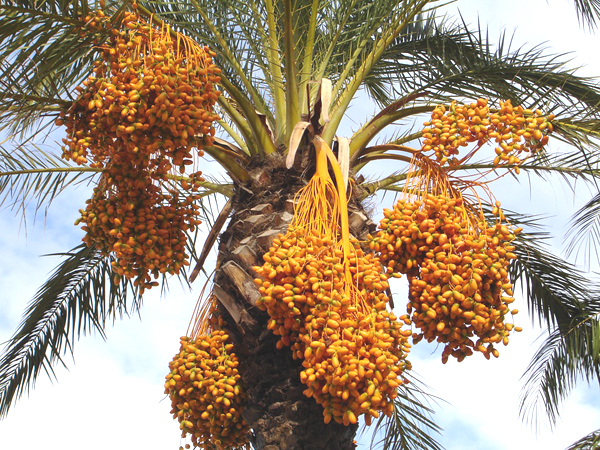
Executive Summary: How Do I Start Date Farming in Kenya?
Starting dates farming in Kenya requires three things. First, you need the right land. Hot, dry regions like Turkana, Garissa, Marsabit, and Tana River are ideal. Second, you need certified offshoots, not seeds. Seeds take 4-8 years and give 50% male trees that produce no fruit. Farmers Trend offshoots (Ksh 1,000-1,500 each) are clones of high-yield mother plants. Third, you need one male tree for every 50-100 female trees for pollination. A well-managed 1-hectare orchard with 100 females produces Ksh 4 million annually by year 6. Your total investment over 5 years is approximately Ksh 828,000. This is a 50+ year retirement asset. For hands-on help, visit our nurseries in Murang’a or Muthaiga, Nairobi.
Part One: Why Is Date Farming the Next Big Opportunity in Kenya?
Dates are the high-value climate solution for Kenya’s arid and semi-arid lands. Over 80 percent of Kenya is ASAL, and date palms thrive where other crops die. The government has identified dates as a strategic crop for food security and economic development.
In 2026, there is a renewed push to cut the annual Ksh 359 million date import bill. This bill represents money leaving Kenya for Tunisia, Egypt, Iran, and Israel. Every kilogram of dates produced locally keeps that money in our economy.
We have been cultivating date palm offshoots at our facilities in Murang’a and Muthaiga, Nairobi for years. The demand from farmers in Turkana, Baringo, Garissa, and Tana River has grown every season. You are welcome to visit either nursery for a physical consultation on which offshoots suit your specific land.
What Is the Market Gap for Dates in Kenya?
Kenya consumes large quantities of dates, especially during Ramadan. Local production is negligible compared to demand. Supermarkets in Nairobi, Mombasa, Kisumu, and Nakuru stock imported dates at high prices. Local dates have a competitive advantage. They are fresher. They do not need long shipping times. Consumers will pay a premium.
The export potential is also real. Middle Eastern, European, and Asian markets are always looking for new date suppliers. Kenyan dates could find strong markets there, especially if certified organic.
Why Is Farmers Trend Limited Your Trusted Partner?
Farmers Trend Limited is not a casual seedling seller. We are a certified nursery operator with facilities in Murang’a and Muthaiga, Nairobi. Our date palm offshoots are sourced from high-yielding, disease-free mother plants. Our offshoots are the equivalent of tissue-culture-standard planting materials. They are genetically identical to the mother plant. When you buy a Medjool offshoot from us, you know exactly what you are getting. You know the fruit quality, yield potential, and sex of the tree.
Table 1: Date Import vs. Local Production Gap in Kenya (2026)
| Metric | Current Status | Target | Gap |
|---|---|---|---|
| Annual date import bill | Ksh 359 million | Ksh 100 million | Ksh 259 million |
| Local production (tons) | 2,500 tons | 10,000 tons | 7,500 tons |
| ASAL land under dates | 1,500 hectares | 10,000 hectares | 8,500 hectares |
| Farmer households engaged | 3,000 | 20,000 | 17,000 |
Part Two: How to Identify Male vs. Female Date Palms and Maximize Profit
This is the most critical technical section in date palm cultivation. If you get this wrong, your entire investment is wasted.
Why Are Date Palms Different from Other Fruit Trees?
Date palms are dioecious. This means male and female flowers grow on separate trees. A female tree produces fruit only if it receives pollen from a male tree. A male tree produces no fruit at all. This is different from mangoes or avocados, where one tree has both male and female flowers. With dates, you need both sexes in your orchard, but not equal numbers.
We have had farmers call us five years after planting complaining that their date trees are not producing fruit. When we visit, we find they planted all female trees with no male pollinator. Or they planted seeds from dates they ate, and all the trees turned out male. These farmers lost years of potential income.
Why Is Growing Dates from Seeds a Business-Killing Mistake?
Many farmers think they can save money by planting date seeds from fruits they bought at the market. This is a terrible idea.
First, the seed gamble. A date seed has a 50 percent chance of becoming male and 50 percent chance of becoming female. You will not know which is which for 4 to 8 years. If half your trees turn out male, you have wasted land, water, and labor.
Second, the quality gamble. Date seeds do not produce trees identical to the parent. The fruit may be small, low quality, or completely different from the date you ate.
Third, the time gamble. A seed-grown date palm takes 4 to 8 years to reach maturity. You wait almost a decade to find out if your tree is male or female.
Certified offshoots from Farmers Trend Limited solve all these problems. Offshoots are clones of the mother plant. You know the sex. You know the fruit quality. You know the yield potential. And they fruit faster because they are already several years old when you plant them.
Table 2: Seed-Grown vs. Certified Offshoot Comparison
| Factor | Seed-Grown Date Palm | Certified Offshoot (Farmers Trend) |
|---|---|---|
| Sex predictability | 50% male, 50% female | 100% known (female offshoots) |
| Fruit quality | Unknown, unpredictable | Identical to high-yield mother plant |
| Time to first fruit | 4 to 8 years | 2 to 4 years |
| Genetic consistency | Variable | Clonal, identical |
| Survival rate | Low (30-50%) | High (85-95%) |
| Cost per unit | Ksh 50 to 100 (seed) | Ksh 1,000 to 1,500 (offshoot) |
| Lifetime value | Low | High (50+ years of production) |
How Do You Identify Male vs. Female Flowers?
Once your trees start flowering, you need to know which is which.
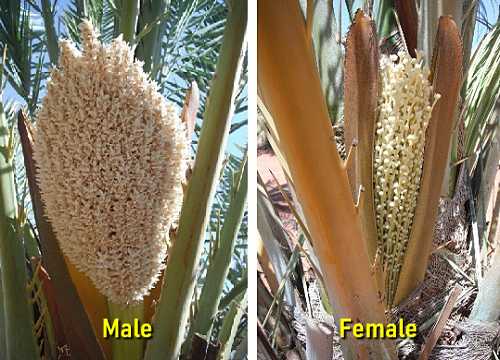
Male inflorescence: The male flower cluster is short and thick. The individual flowers are small and produce large amounts of pollen. There is no swelling at the base.
Female inflorescence: The female flower cluster is longer and more branched. The individual flowers have a small swelling at the base, which is the ovary. This swelling will develop into a date if pollinated.
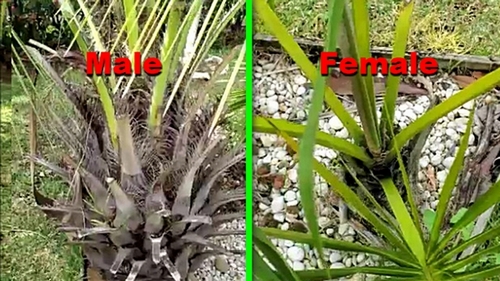
Expert Tip: We recommend farmers learn to identify male and female flowers before the pollination season. Walk your orchard weekly. Take photos. Compare with reference images. If you are unsure, call us at +254790509684 or book a farm visit through our consultancy service.
What Is the Ideal Pollination Ratio for Maximum Profit?
You do not need equal numbers of male and female trees. One healthy male tree produces enough pollen to pollinate 50 to 100 female trees. This means you need only 1 male for every 50 to 100 females.
For a one-hectare orchard with 100 female trees, you need only 1 or 2 male trees. The rest of the space is dedicated to fruit-producing females. This maximizes your land productivity and your profit.
- Pollination methods. You can pollinate naturally by wind, but this is unreliable. Commercial farmers use artificial pollination. They collect pollen from male trees and dust it onto female flowers by hand or with a small blower. This ensures every female flower is pollinated.
- How to collect pollen. When male flowers open, cut the entire flower strand. Hang it in a dry, shaded area for 2 to 3 days. The pollen will fall off. Collect and store it in an airtight container in the refrigerator. Pollen remains viable for one to two years.
Expert Tip: One male tree can pollinate 100 females. But we recommend planting 2 male trees per hectare as a backup. If one male dies, you still have a pollinator. The cost of one extra male is small compared to the value of the crop it protects.
Table 3: Pollination Ratio Recommendations
| Orchard Size (Hectares) | Number of Female Trees | Number of Male Trees | Ratio |
|---|---|---|---|
| 1 | 100 | 2 | 1:50 |
| 2 | 200 | 3 | 1:67 |
| 5 | 500 | 6 | 1:83 |
| 10 | 1,000 | 12 | 1:83 |
Part Three: Where Are the Best Regions for Date Farming in Kenya?
Date palms thrive in hot, dry climates with low humidity. They need long, hot summers to ripen their fruit. They cannot tolerate frost.
Which Counties Are Most Suitable for Dates?
- North Eastern Region (Marsabit, Garissa, Wajir, Mandera): These counties are the most suitable. Temperatures are high year round. Rainfall is very low. The main challenge is water access for irrigation. Farmers here have successfully established commercial orchards using drip irrigation from boreholes. Our agronomists regularly visit this region for on-site consultations.
- Rift Valley (Turkana, Baringo, Samburu, West Pokot): These counties have hot, dry conditions that date palms love. Turkana has significant potential, especially near Lake Turkana where water is available. The main challenge is infrastructure and market access.
- Coast Region (Tana River, Kilifi, Lamu, Kwale): These counties have high temperatures but also high humidity. Humidity can promote fungal diseases. However, with good management and proper spacing, dates can grow well here. Tana River has established date farms already.
- Other Potential Areas: Parts of Kitui, Makueni, and Tharaka Nithi have microclimates that could support dates. Test a small plot before committing to a large orchard.
We have supplied offshoots to farmers in all these regions. The most successful orchards are in Turkana and Garissa. These have the ideal combination of high heat, low humidity, and water access. Visit our Murang’a or Muthaiga nursery to discuss your specific location with our agronomists.
What Soil and Water Do Date Palms Need?
Soil. Date palms prefer deep, well-draining sandy loam soils. Roots can reach 5 to 10 meters deep, so the soil must not have a hardpan layer. Heavy clay soils hold water and cause root rot. The ideal soil pH is 8.0 to 8.5 (slightly alkaline).
Water. A mature date palm consumes 100 to 200 liters of water per day. This is less than a mango tree but more than citrus. Drip irrigation is the best method. It delivers water directly to the root zone without wetting leaves or fruit. For professional drip irrigation systems designed for date palms, consider professional irrigation systems designed for date palms to ensure optimal water efficiency.
Before planting, test your water. Date palms tolerate saline water, but there are limits. If your water is too saline, fruit quality suffers. If very saline, you may need to mix with fresh water or install a desalination system.
Table 4: Regional Suitability for Dates Farming in Kenya
| Region | Counties | Temperature Suitability | Humidity | Water Access | Overall Rating |
|---|---|---|---|---|---|
| North Eastern | Garissa, Wajir, Mandera | Excellent (high) | Low (good) | Moderate (boreholes) | ★★★★★ |
| Rift Valley | Turkana, Baringo | Excellent (high) | Low (good) | Moderate (Turkana water) | ★★★★★ |
| Coast | Tana River, Kilifi | Good (high) | High (challenge) | Good (rivers) | ★★★☆☆ |
| Eastern | Kitui, Makueni | Good (moderate to high) | Moderate | Poor (seasonal) | ★★☆☆☆ |
Part Four: Which Date Variety Is Best for Your Farm?
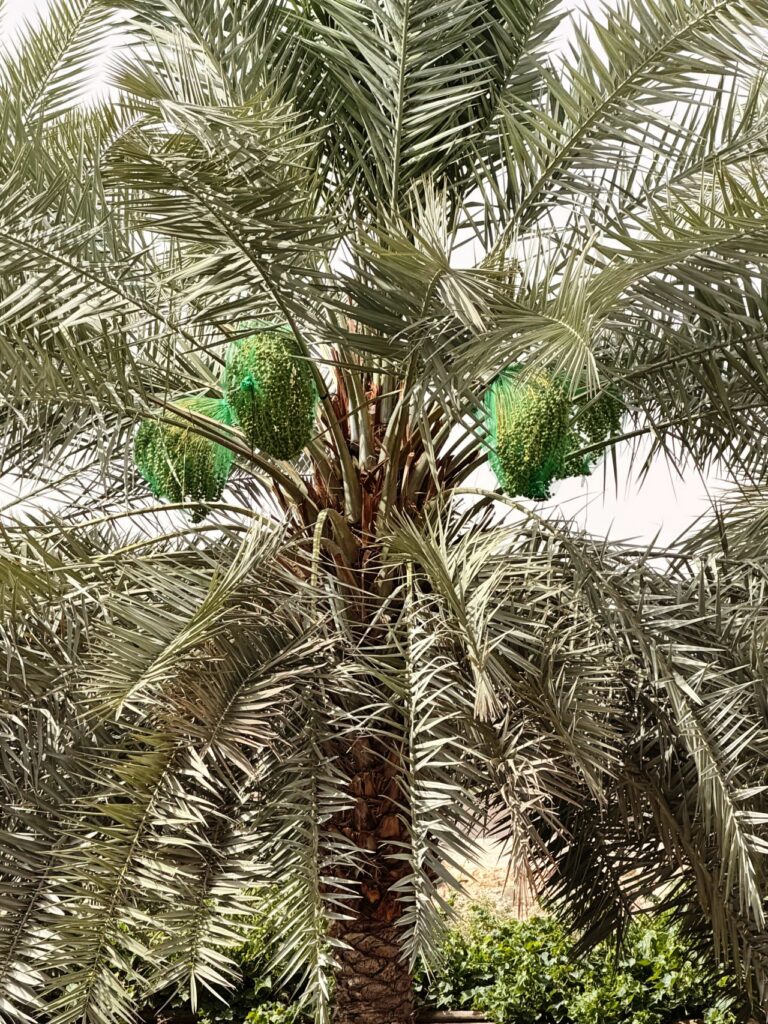
The variety you choose determines your market, price, and profit.
Medjool. The King of Dates.
Medjool is the most popular date variety worldwide. It is large, soft, and sweet with a rich, caramel-like flavor. Medjool commands premium prices in both local and export markets.
Fruit size: 20 to 30 grams each. Yield per tree: 80 to 120 kilograms per year once mature. Medjool needs hot, dry conditions. High humidity causes fruit splitting.
Medjool offshoots from Farmers Trend Limited are Ksh 1,500 each.
Ajwa. The Premium Medicinal Date.
Ajwa dates are highly valued in the Middle East for medicinal properties. They are smaller than Medjool with a dark, almost black color. The flavor has hints of chocolate and tamarind.
Ajwa commands extremely high prices, especially during Ramadan. The Kenyan market is smaller than for Medjool. Ajwa is best for farmers targeting export or premium local markets.
Ajwa offshoots are Ksh 1,500 each.
Zahidi. The Processing Date.
Zahidi dates are medium-sized with a golden yellow color. They have a firm texture and sweet, nutty flavor. Zahidi is often used for processing into date syrup, date sugar, or date paste.
Yield is high at 100 to 150 kilograms per tree. Zahidi is less prone to splitting than Medjool. It is a good choice for farmers targeting the processing market.
Zahidi offshoots are Ksh 1,000 each.
Expert Tip: We recommend Medjool for most commercial farmers. Demand is strong, price is good, and trees are productive. For export, Ajwa is good but requires more marketing. For processing, Zahidi is best. Visit our Murang’a or Muthaiga nursery to see mother plants of all three varieties before you buy.
Table 5: Date Variety Comparison for Kenyan Farmers
| Variety | Fruit Size | Yield per Tree (kg/year) | Market Price (KES/kg) | Offshoot Price (KES) | Best For |
|---|---|---|---|---|---|
| Medjool | Large (20-30g) | 80-120 | 500-1,000 | 1,500 | Fresh local and export |
| Ajwa | Small (10-15g) | 40-60 | 1,000-2,000 | 1,500 | Premium/medicinal market |
| Zahidi | Medium (15-20g) | 100-150 | 300-500 | 1,000 | Processing and syrup |
Part Five: How Do You Plant and Maintain a Commercial Date Orchard?
This roadmap takes you from bare ground to your first commercial harvest. Follow each step carefully.
What Is the Correct Planting Process for Date Offshoots?
Land preparation. Clear the land of weeds, stones, and debris. Deep rip the soil to 1 meter to break up compacted layers. This allows date palm roots to penetrate deep.
Pit preparation. Dig pits that are 3 feet wide, 3 feet long, and 3 feet deep. This is the standard size for date palm planting. The pit gives the young offshoot room to establish its root system.
Mix the excavated soil with 20 to 30 kilograms of well-decomposed manure per pit. If your soil is heavy clay, add sand to improve drainage.
Spacing. The recommended spacing for date palms is 8 meters by 8 meters or 10 meters by 10 meters. This gives each tree 64 to 100 square meters of space. With 8×8 meter spacing, you can plant approximately 150 trees per hectare. With 10×10 meter spacing, you can plant approximately 100 trees per hectare. Wider spacing is better because date palms grow large.
Planting. Plant your offshoots at the same depth they were growing in the nursery. The bud should be at or slightly above ground level. Backfill the pit with the soil-manure mixture. Water thoroughly immediately after planting.
Expert Tip: When you receive your offshoots from us, they are already hardened. But they still need care during the first few months. Water them every 2 to 3 days. Mulch around the base to conserve moisture. Protect them from livestock. After 6 months, they will be established.
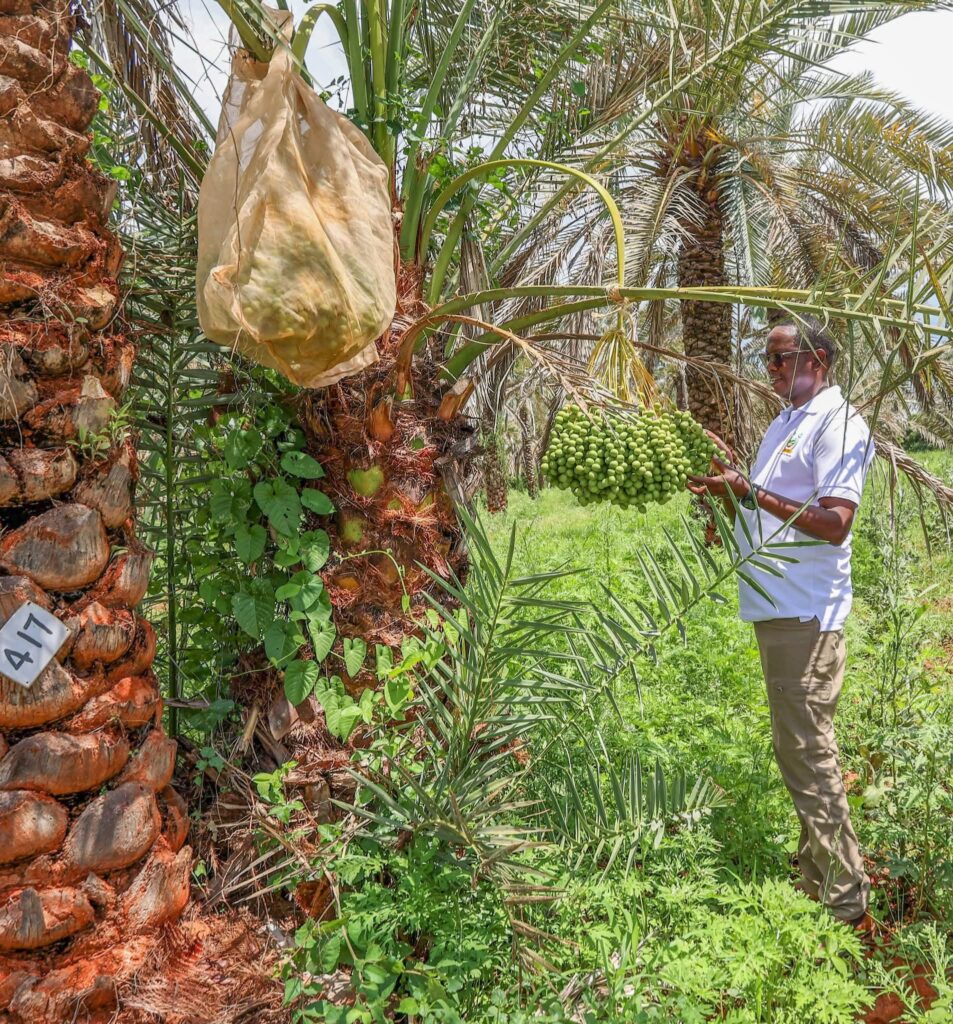
What Is the Hardening Advantage?
Hardening is a process where we gradually expose offshoots to outdoor conditions. At our nursery, we start offshoots under shade netting. Over several weeks, we move them into full sun. This mimics the conditions they will face on your farm.
Hardened offshoots have thicker leaves, stronger root systems, and better drought tolerance. They survive transplanting better. They establish faster. They start producing fruit sooner. Farmers who buy non-hardened offshoots from untrusted sources often see 50 percent mortality. Our hardened offshoots have a survival rate of 85 to 95 percent.
What Crops Can You Intercrop While Date Palms Mature?
Date palms take 3 to 5 years to produce their first commercial harvest. Intercropping solves the problem of no income during this period.
Good intercrops include:
- Mangoes. Mango trees grow well in the same conditions as date palms. They start producing fruit in 3 to 4 years.
- Okra. Okra is a short-season crop that grows well in hot, dry conditions. You can plant okra between date palms for 2 to 3 years.
- Pixies (cowpeas). Pixies are drought-tolerant legumes that fix nitrogen in the soil. They improve soil fertility while providing food or income.
- Watermelons. Watermelons grow well in sandy soils and hot conditions. They are harvested in 3 to 4 months.
Expert Tip: Do not intercrop with tall crops that will shade your young date palms. Also, do not intercrop with crops that require frequent irrigation, as this can waterlog the date palm roots. Okra and pixies are our top recommendations.
Table 6: Intercropping Options for Young Date Palm Orchards
| Intercrop | Duration to Harvest | Water Requirement | Compatibility with Dates | Revenue Potential |
|---|---|---|---|---|
| Okra | 2-3 months | Moderate | High (shallow roots) | Ksh 50,000-100,000/acre |
| Pixies (cowpeas) | 2-3 months | Low | High (fixes nitrogen) | Ksh 30,000-60,000/acre |
| Watermelons | 3-4 months | High | Moderate (needs more water) | Ksh 80,000-150,000/acre |
| Mangoes | 3-4 years | Moderate | Good (tall, separate canopy) | Ksh 200,000-500,000/acre |
Part Six: What Is the Financial Return on Date Farming? (Profit Calculator)
Dates farming is a long-term wealth-building asset. The returns are substantial for patient investors.
What Are the Establishment Costs per Hectare?
For a 1-hectare orchard with 100 female Medjool trees and 2 male trees. Total offshoots needed: 102.
One-time establishment costs:
Certified offshoots: 102 x Ksh 1,500 = Ksh 153,000
Land preparation and pitting: Ksh 50,000
Manure and amendments: Ksh 30,000
Drip irrigation system: Ksh 150,000
Labor for planting: Ksh 20,000
Total establishment cost: Ksh 403,000
What Are the Annual Maintenance Costs?
Irrigation water and pumping: Ksh 30,000 per year
Fertilizers: Ksh 20,000 per year
Labor for maintenance: Ksh 25,000 per year
Pest and disease control: Ksh 10,000 per year
Total annual cost: Ksh 85,000 per year
What Is the Revenue Timeline?
Year 4 yield per tree: 20 kilograms
Year 4 total yield: 100 trees x 20 kg = 2,000 kg
Year 4 revenue at Ksh 500/kg: 2,000 x 500 = Ksh 1,000,000
Year 5 yield per tree: 40 kilograms
Year 5 total yield: 100 trees x 40 kg = 4,000 kg
Year 5 revenue at Ksh 500/kg: 4,000 x 500 = Ksh 2,000,000
Year 6 and beyond yield per tree: 80 to 120 kilograms
Year 6 total yield: 100 trees x 80 kg = 8,000 kg
Year 6 revenue at Ksh 500/kg: 8,000 x 500 = Ksh 4,000,000
Table 7: Projected Revenue for 1 Hectare vs. 5 Hectares
| Orchard Size | Number of Female Trees | Year 4 Revenue (KES) | Year 5 Revenue (KES) | Year 6+ Revenue (KES) |
|---|---|---|---|---|
| 1 hectare | 100 | 1,000,000 | 2,000,000 | 4,000,000 |
| 5 hectares | 500 | 5,000,000 | 10,000,000 | 20,000,000 |
What Is the Net Profit at Year 5 vs. Year 10? (Profit Calculator Table)
This is the key table that serious investors request. It shows the real wealth-building power of date farming over time.
Table 8: Annual Net Profit per Hectare at Year 5 vs. Year 10
| Metric | Year 5 (Early Production) | Year 10 (Full Maturity) |
|---|---|---|
| Gross revenue (KES) | 2,000,000 | 4,000,000 |
| Annual maintenance cost (KES) | 85,000 | 85,000 |
| Annual labor and harvesting (KES) | 50,000 | 80,000 |
| Net profit (KES per hectare) | 1,865,000 | 3,835,000 |
| Cumulative profit over 10 years (KES) | 8,500,000 | 35,000,000 |
Your cumulative investment for 1 hectare over 5 years is Ksh 828,000 (establishment of 403,000 plus 5 years maintenance of 425,000). Your cumulative revenue by year 5 is Ksh 3,000,000. Your net profit by year 5 is Ksh 2,172,000. From year 6 onward, your annual profit is approximately Ksh 3,835,000.
Expert Tip: A date palm orchard is a retirement asset. It requires patience for the first 5 years, but then it produces income for decades. We have farmers who planted 10 hectares 10 years ago. They are now earning Ksh 20 million to Ksh 40 million per year from their orchards. For a custom profit projection based on your specific land and chosen variety.
Part Seven: Where Can You Buy Certified Date Palm Offshoots in Kenya?
Farmers Trend Limited is a certified nursery operator and trusted partner for date palm offshoots. We operate two nursery locations where commercial farmers can inspect the offshoots before purchasing.
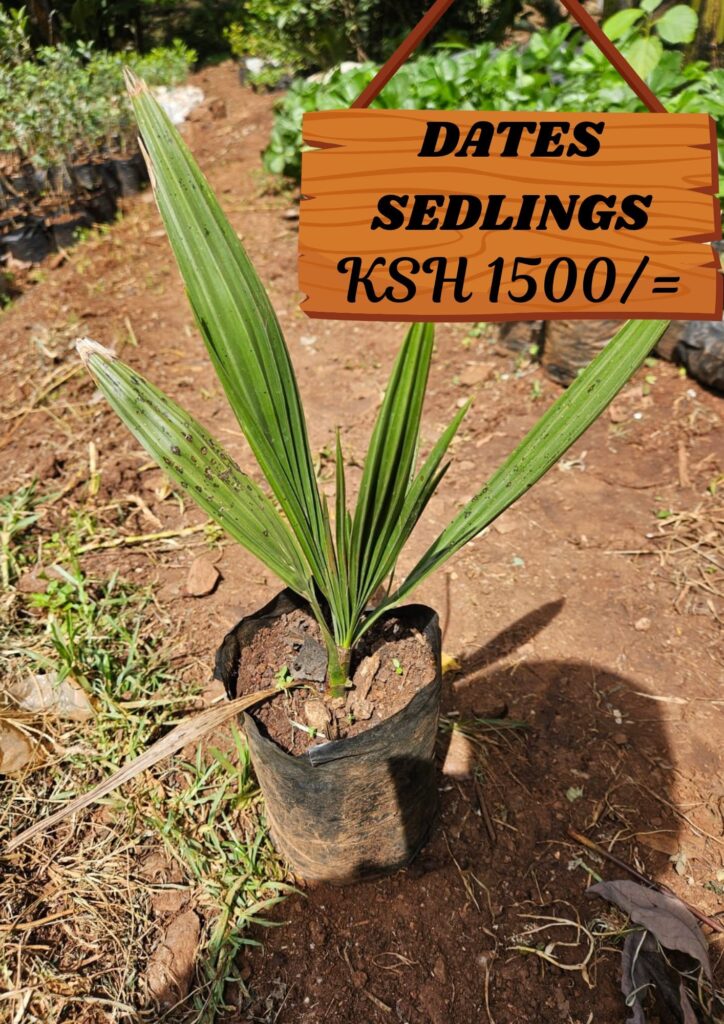
Visit Our Nurseries.
Muthaiga Nursery (Nairobi): Located next to the Golf Course, Muthaiga. Open Monday to Saturday, 8 AM to 5 PM.
Murang’a Nursery: Located along the Nairobi-Embu Highway at Kwa Samaki. This is our main production nursery. Visitors can see our mother plants and select offshoots directly.
Our Price Point.
- Medjool: Ksh 1,500 per offshoot
- Ajwa: Ksh 1,500 per offshoot
- Zahidi: Ksh 1,000 per offshoot
Bulk orders (50+ offshoots) receive a discount. Contact our sales team for a custom quote.
How to Order.
Option 1: Visit our nursery. Come to Murang’a or Muthaiga. Inspect the offshoots yourself. Speak with our agronomists. Pay and collect.
Option 2: Order via Virtual Agrovet. Call us or send a message to +254790509684. We will send photos of available offshoots. Payment is via M-Pesa. Transport to your farm can be arranged at an additional cost.
Option 3: Large commercial orders. For orders of 100 or more offshoots, we offer site visits. An agronomist will come to your farm, assess your land, and recommend the best variety and spacing for your conditions.
Register in Our National Farmers Database.
Commercial farmers are encouraged to register in the Farmers Trend National Farmers Database to receive seasonal planting alerts, market price updates for dates, access to agronomist support, and connections to buyers when fruit is ready.
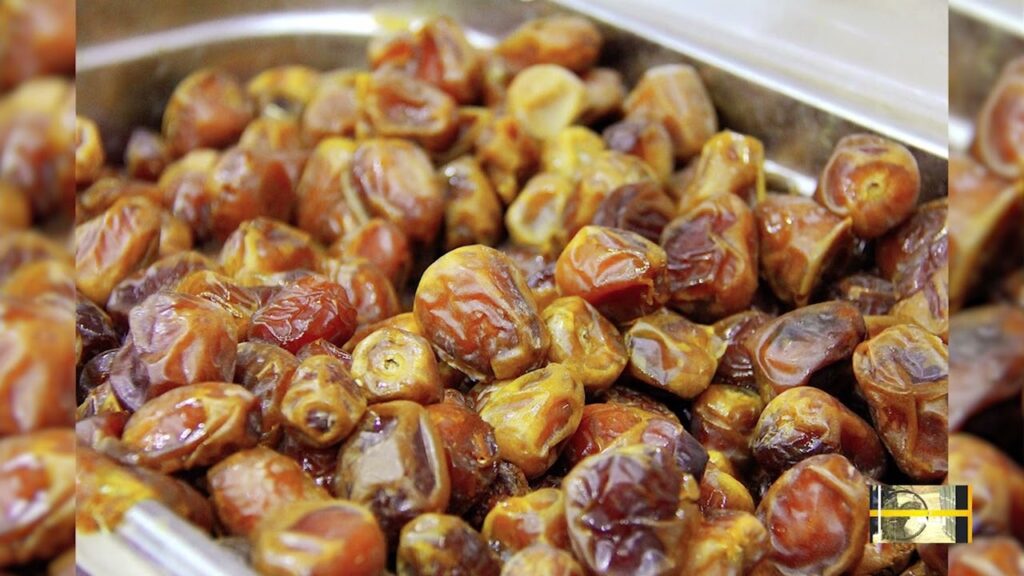
Conclusion: Your Next Steps in Date Farming.
Date farming in Kenya represents a high-value opportunity for farmers in ASAL regions. The government is actively working to cut the Ksh 359 million annual import bill. Local markets are ready for fresh Kenyan dates. The climate conditions across Turkana, Garissa, and Tana River are ideal for commercial production.
Success depends on starting with the right planting material. Certified offshoots from Farmers Trend Limited provide genetic certainty, guaranteed sex identification, disease-free hardened seedlings, and ongoing technical support. Seeds remain a high-risk gamble that often leads to years of wasted investment.
For farmers ready to establish a commercial date orchard, Farmers Trend Limited offers certified offshoots, professional irrigation systems, and expert consultancy services. Visit our nurseries in Murang’a or Muthaiga, call +254790509684, or register in our National Farmers Database to begin.
Call to Action:
📞 Call us: +254790509684
💬 Click here to chat with us on WhatsApp
📍 Visit Murang’a or Muthaiga Nursery
📝 Register in the National Farmers Database
Bulk orders: Ask about commercial grower discounts and site visit consultancy. The date revolution in Kenya is underway. Secure your certified offshoots today.
https://farmerstrend.co.ke/fruits/dates-farming/dates-farming-in-kenya/https://farmerstrend.co.ke/wp-content/uploads/2026/06/a-date-tree-in-kenya.jpghttps://farmerstrend.co.ke/wp-content/uploads/2026/06/a-date-tree-in-kenya-150x150.jpgDates Farming# TrendingDates Farming in Kenya: The 2026 Authority Guide to Commercial Date Palm Cultivation and Profit GuideExecutive Summary: How Do I Start Date Farming in Kenya? Starting dates farming in Kenya requires three things. First, you need the right land. Hot, dry regions like Turkana, Garissa, Marsabit, and Tana River are ideal. Second,...FarmersTrendjohn doefarmerstrend@gmail.comAdministratorFarmers Trend Ltd.







Leave a Reply