How Over-Regulation in Kenya Agriculture Is Stifling Growth and Blocking Farmer Access to Technology
Over-regulation in Kenya agriculture is blocking farmer access to climate-resilient technologies. Experts at the DialogueNEXT Africa conference called for faster approval of improved crop varieties.
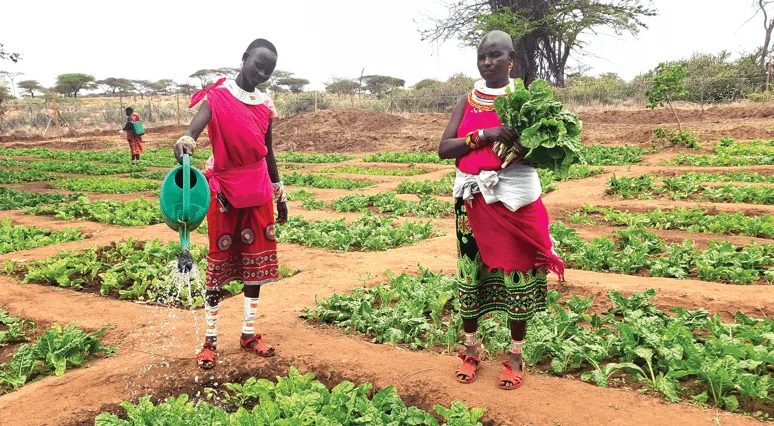
The real problem, experts and industry leaders now say, lies elsewhere: regulatory systems that slow the movement of these technologies across borders, denying millions of farmers timely access to climate-resilient solutions.
Speaking during this year’s DialogueNEXT Africa conference, organised by the World Food Prize Foundation in Nairobi on Tuesday, scientists, policymakers and agricultural leaders said outdated regulatory frameworks are becoming one of the continent’s greatest obstacles to climate adaptation and food security.
“The challenge in Africa is no longer the lack of technologies or innovation. We know what works. The issue is political will and regulatory systems that delay getting those technologies to farmers,” he said.
Dr Adesina argued that one of the biggest barriers is the lengthy approval process for improved crop varieties before they can be released across different countries.
Many African countries require new crop varieties to undergo years of testing before they are approved for commercial cultivation. The same process is often repeated in neighbouring countries, even where climatic and agroecological conditions are virtually identical.
He said this has been particularly evident in the development and adoption of agricultural biotechnologies for crop production. “If a drought-tolerant variety has already been tested successfully in Kenya’s arid and semi-arid lands (Asal) region, why should another country with the same agroecological conditions spend another four years repeating exactly the same tests?” he posed.
He stated that technologies should be approved based on agroecological zones rather than political boundaries, allowing innovations that have been proven effective under similar climatic conditions to move more freely across countries.
“Drought does not carry a passport. Crop pests do not need visas. Climate change does not respect national borders. Our regulations should reflect that reality.”
Dr Adesina said the continent already possesses many of the innovations needed to confront climate change.
Africa currently loses about $7 billion (Sh906 billion) annually due to climate change, a figure projected to rise to $50 billion (Sh6.47 trillion) by 2050 if adaptation efforts are not accelerated.
However, technologies such as drought-tolerant maize, heat-tolerant wheat, digital climate advisory systems and agricultural insurance are already helping farmers reduce climate-related risks. Adoption of crop and livestock insurance in Kenya remains extremely low, with penetration estimated at less than one percent.
He noted that Africa’s agricultural market is projected to reach USD 1 trillion (Ksh129.5 trillion) by 2030, while the blue economy is expected to expand from about $350 billion (Sh45.3 trillion) today to $1.5 trillion (S194.2 trillion) by 2050.
“The future millionaires and billionaires of Africa will come from agriculture because everybody eats food,” he said, adding that despite the sector’s enormous potential, nearly 320 million Africans continue to suffer from acute hunger and malnutrition.
Weak dissemination of tech
Also speaking at the conference, themed “Born to Feed the Future”, Prof Ruth Oniang’o, founder of the African Journal of Food, Agriculture, Nutrition and Development, said that even where technologies exist, they often fail to reach the smallholder farmers who need them most. “The technology goes ahead and is available, but when you go to the ground, you don’t find it,” she said.
She attributed the gap to weak dissemination systems, inadequate investment and poor communication between researchers, extension services and farming communities.
Prof Oniang’o stressed the need to translate scientific breakthroughs into practical knowledge that farmers can understand and adopt.
“We need to demystify the science and bring it down to the farmer. If the farmer is not empowered to take up the technology, then they cannot feed the rest of us.”
She also cautioned that discussions on food security should not focus solely on increasing production. Food, she argued, must also be nutritious, safe, culturally acceptable and diverse.
Using Kenya’s past aflatoxin contamination in maize as an example, she noted that poor post-harvest management can wipe out production gains by rendering grain unsafe for both human and livestock consumption. Adoption of technologies, she observed, could help address such challenges facing farmers, particularly the small-scale.
The Nairobi conference sought to move beyond policy discussions by fostering partnerships capable of accelerating agricultural transformation across Africa.
World Food Prize Foundation President Mashal Husain said the DialogueNEXT initiative, launched in 2023, aims to take conversations on food security closer to the regions where they matter most.
She said the platform deliberately brings together scientists, governments, agribusinesses, investors, innovators, young people and, most importantly, farmers.
“Our conversations are farmer-centred because the technologies only matter if they ultimately reach the people producing the food,” she said.
The speakers warned that unless African governments remove unnecessary regulatory barriers and embrace biotechnology and other modern scientific advances, the continent risks missing one of its greatest opportunities to strengthen food security, build climate resilience and unlock agriculture’s vast economic potential.
By: Sammy Waweru
https://farmerstrend.co.ke/trending/over-regulation-in-kenya-agriculture/https://farmerstrend.co.ke/wp-content/uploads/2026/07/Over-Regulation-in-Kenya-Agriculture.webphttps://farmerstrend.co.ke/wp-content/uploads/2026/07/Over-Regulation-in-Kenya-Agriculture-150x150.webp# TrendingOver-regulation in Kenya agriculture is blocking farmer access to climate-resilient technologies. Experts at the DialogueNEXT Africa conference called for faster approval of improved crop varieties.The real problem, experts and industry leaders now say, lies elsewhere: regulatory systems that slow the movement of these technologies across borders, denying millions of...FarmersTrendjohn doefarmerstrend@gmail.comAdministratorFarmers Trend Ltd.








Leave a Reply