Pears Farming in Kenya 2026 – The Complete Commercial Blueprint for High-Yield Farming Investment
Pears Farming in Kenya: The 2026 Commercial Blueprint for High-Yield Orchard Investment
Kenya imports nearly 90 percent of the pears consumed in the country. Supermarkets in Nairobi display pears from South Africa and Europe priced at 150 to 300 shillings per kilogram. Local production remains minimal despite the highlands of Limuru, Molo, Timau, and Meru offering ideal conditions for growing this temperate fruit. The gap between import volume and local supply represents a multi-million shilling opportunity for farmers willing to invest in long-term orchard assets.
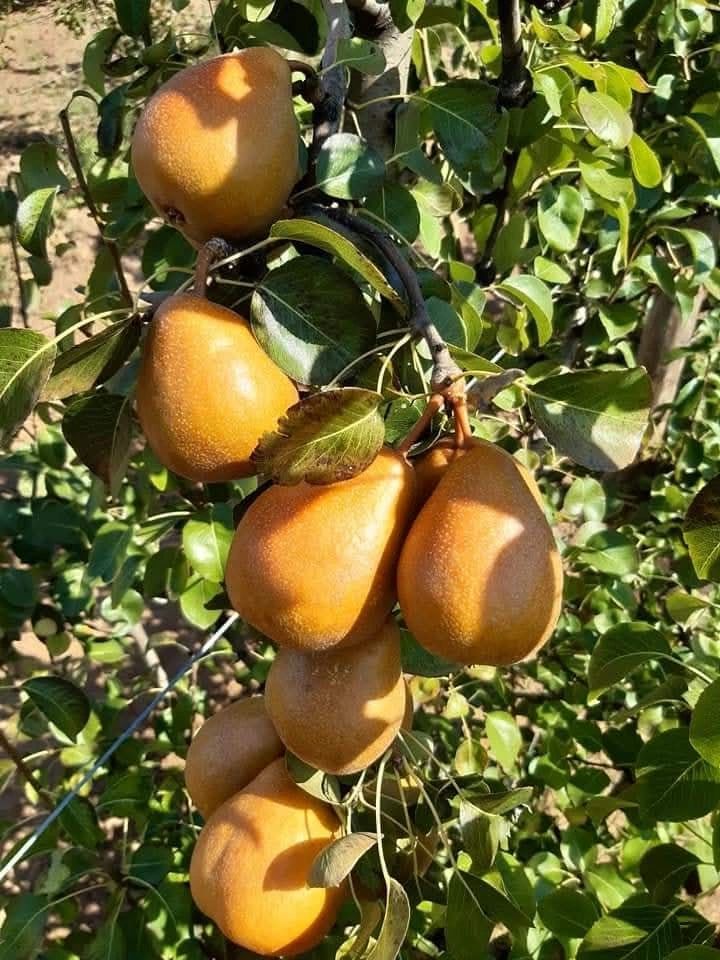
Pears farming in Kenya requires patience and capital. A farmer who plants grafted trees today will wait 3 to 4 years for the first harvest. The trees then produce for 50 years or more. This is not a short-term crop. It is a generational investment that pays back steadily for decades.
This guide by Farmers Trend Ltd. covers everything needed to establish a commercial pear orchard. You will learn about variety selection, grafted tree advantages, orchard layout, pruning techniques, pest control, and financial projections. The information comes from successful temperate fruit growers and agricultural research stations across the country.

The 2026 Temperate Fruit Economic Gap in Pears Farming in Kenya
Pears farming in Kenya has remained underdeveloped for many years. Farmers in the highlands have focused on cabbages, potatoes, and maize. These crops provide quick returns but low profits per acre. Pears offer a different value proposition. A single tree produces fruit for half a century. Each harvest generates income year after year. The land appreciates in value as the orchard matures.
The highlands of Kenya are naturally suited for pears farming in Kenya. Limuru, Molo, Timau, and Meru have the right altitude, temperature, and soil conditions. The trees require cold winters to set fruit properly, and these regions receive adequate chill hours during the June to August dormancy period. Farmers who plant pears in these areas have a natural competitive advantage.
The market for local pears remains wide open. Supermarkets struggle to find reliable local suppliers. Hotels pay premium prices for quality fruit delivered fresh. Processors need consistent supply for juice and baby food production. Farmers who enter this market now will establish themselves before competition intensifies.
The profitability of pears farming in Kenya is driven by import substitution. Imported pears must cover transport, tariffs, and cold chain costs. Local farmers can sell at competitive prices while still earning healthy margins. A well-managed orchard generates 15 to 25 tons per hectare annually. At 100 shillings per kilogram farm gate, that is 1.5 to 2.5 million shillings per hectare.
Genetics: Grafted Superiority vs Seedlings for Pears Farming in Kenya
Farmers Trend nurseries offer two categories of planting material for pears farming in Kenya. Non-grafted seedlings cost 350 shillings each. These trees come from seeds and take 7 to 10 years to start producing fruit. The fruit quality varies from tree to tree. Some trees give small, hard pears. Others produce fruit with poor flavor and texture. Seedlings are not suitable for commercial production.
Premium grafted varieties cost 1,500 shillings each. These trees are produced by taking a cutting from a proven mother tree and attaching it to a hardy rootstock. Grafted trees start producing fruit in 3 to 4 years. The fruit quality matches the mother tree exactly. Every tree produces the same variety with consistent size, flavor, and appearance.
The 1,500 shillings investment in a grafted tree is justified by time and certainty. A seedling costs less at purchase but delays income by 7 to 10 years. A grafted pear seedling costs more but generates revenue 4 to 6 years sooner. Over the 50 year lifespan of the orchard, the grafted tree produces more fruit of higher quality. The return on investment is substantially higher for pears farming in Kenya.
Best Pear Varieties for Pears Farming in Kenya
Packham’s Triumph is the most widely grown pear variety in the world and performs excellently in Kenyan highlands. The fruit is medium to large with green skin that turns yellow when ripe. The flesh is white, juicy, and sweet with a smooth, buttery texture. Packham’s Triumph requires cross pollination from another variety.
Williams Bon Chretien, also known as Bartlett, produces large golden yellow fruits with soft, juicy flesh. The flavor is sweet and aromatic. Williams is popular for fresh eating and for canning. This variety pollinates well with Packham’s Triumph and Beurre Bosc.
Beurre Bosc has a distinctive elongated shape with russeted brown skin. The flesh is firm, dense, and very sweet. This variety stores well and commands premium prices in upscale markets. Beurre Bosc requires similar chill hours as Packham’s Triumph.
Conference is a self-fertile variety that does not need a pollination partner. The fruit is long and narrow with green skin. The flesh is sweet and slightly grainy. Conference works well for farmers with limited space who cannot plant multiple varieties.
| Variety | Chill Hours Needed | Pollination Partner | Market Suitability |
|---|---|---|---|
| Packham’s Triumph | 600-800 | Williams or Bosc | Local and export |
| Williams Bon Chretien | 600-800 | Packham or Bosc | Fresh and canning |
| Beurre Bosc | 700-900 | Packham or Williams | Premium local |
| Conference | 500-700 | Self-fertile | Small orchards |

Orchard Layout and Planting for Pears Farming in Kenya
How many pear trees per acre? The recommended spacing for commercial pears farming in Kenya is 4 meters by 4 meters, giving 250 trees per acre. Some farmers use 4 meters by 5 meters spacing for 200 trees per acre. Wider spacing allows each tree to develop a larger canopy but reduces the total number of trees per acre.
High-density systems use 3 meters by 4 meters spacing for 330 trees per acre. This layout requires more intensive pruning and management. The trees produce more fruit in the early years but may need replanting sooner than standard spacing.
The best month to plant pears is June to July. This is the dormancy period when trees have no leaves and are not actively growing. Planting during dormancy reduces transplant shock and allows roots to establish before the next growing season.
Prepare planting holes measuring 60 centimeters wide, 60 centimeters deep, and 60 centimeters long. Mix the topsoil with 20 kilograms of well-rotted manure. Add 200 grams of DAP fertilizer. Refill the holes and allow them to settle for 2 weeks before planting.
Pear trees require cross pollination to produce fruit. Plant at least two different varieties that flower at the same time. Packham’s Triumph and Williams Bon Chretien pollinate each other well. Arrange the varieties in alternating rows. Row one with Packham, row two with Williams, row three with Packham. This pattern ensures bees and wind can carry pollen between trees.

Chill Hours and Pruning in Pears Farming in Kenya
Chill hours are the number of hours when the temperature stays below 7 degrees Celsius during winter. Different pear varieties need different amounts of chill hours. Packham’s Triumph needs 600 to 800 chill hours. Beurre Bosc needs 700 to 900 chill hours.
Areas with insufficient chill hours produce fewer flowers and poor fruit set. The highlands of Limuru, Molo, Timau, and Meru receive adequate chill hours for most pear varieties. Farmers in warmer regions must select low-chill varieties or consider other crops for pears farming in Kenya.
Pruning shapes the tree and directs energy into fruit production. The open center system works well for pears farming in Kenya. Remove the central leader so the tree grows with an open center. Select 3 to 4 scaffold branches that form a 45 degree angle with the trunk. Remove branches that cross each other or grow inward.
Prune during dormancy, ideally in June to July. Remove 20 to 30 percent of the growth from the previous year. This encourages new branches that will bear fruit. Make clean cuts at 45 degree angles. Remove dead, diseased, or damaged wood promptly.
Pest and Disease Control in Pears Farming in Kenya
Fire blight is the most destructive disease affecting pears farming in Kenya. Infected branches wilt and turn black, appearing as if burned by fire. The disease spreads rapidly in warm, wet weather. Control with copper-based fungicides applied during bloom. Prune out infected branches immediately, cutting 30 centimeters below visible damage. Disinfect pruning tools between cuts.
Pear scab causes dark spots on leaves and fruit. Infected fruit becomes unmarketable. Control with fungicide sprays applied at regular intervals during the growing season. Resistant varieties reduce the need for chemical intervention for pears farming in Kenya.
Fruit flies attack ripening fruit. Female flies lay eggs inside the fruit, and the maggots feed on the flesh. Control with pheromone traps that attract male flies. Apply protein bait sprays mixed with insecticide. Harvest fruit as soon as it reaches maturity.
Aphids cluster on new growth and suck sap from leaves. They also transmit viruses between trees. Control with neem oil or insecticidal soap. Encourage natural predators like ladybugs to establish in the orchard.

Harvesting and Cold Chain for Pears Farming in Kenya
Pears must be harvested when mature but still hard. Fruits that soften on the tree become mealy and lose flavor. The ripening process continues after picking, which allows for storage and transport.
Harvest by gently twisting the fruit. Fruits that come off easily are ready. Fruits requiring force to detach should remain on the tree. Place harvested fruit in single layers in ventilated crates to prevent bruising.
Store pears at 1 to 4 degrees Celsius with high humidity. Under these conditions, the fruit can be stored for 2 to 4 months. The fruit ripens when brought to room temperature. This storage capability gives pears an advantage over many other temperate fruits in pears farming in Kenya.
Financial Projections for Pears Farming in Kenya
Here is a 2026 budget for establishing one acre of pear orchard at 4 meters by 4 meters spacing.
| Cost Item | Quantity | Unit Price | Total |
|---|---|---|---|
| Grafted seedlings (Packham’s Triumph) | 250 | 1,500 KSh | 375,000 KSh |
| Land preparation | 1 acre | 15,000 KSh | 15,000 KSh |
| Manure (20kg per hole) | 5,000 kg | 3,000 KSh/ton | 15,000 KSh |
| DAP fertilizer | 50 kg | 130 KSh/kg | 6,500 KSh |
| Drip irrigation system | 1 acre | 60,000 KSh | 60,000 KSh |
| Mulch materials | 1 acre | 10,000 KSh | 10,000 KSh |
| Labor (planting, mulching) | 20 days | 500 KSh/day | 10,000 KSh |
| Pest control materials | 1 acre | 15,000 KSh | 15,000 KSh |
| Pruning tools | 1 set | 5,000 KSh | 5,000 KSh |
| Total First-Year Investment | 511,500 KSh |
| Year | Yield per Tree (kg) | Total Yield (kg) | Price/kg | Gross Revenue | Net Profit |
|---|---|---|---|---|---|
| 1-3 | 0 | 0 | 100 | 0 | -511,500 |
| 4 | 5 | 1,250 | 100 | 125,000 | -386,500 |
| 5 | 15 | 3,750 | 110 | 412,500 | 26,000 |
| 6 | 30 | 7,500 | 120 | 900,000 | 513,500 |
| 7 | 50 | 12,500 | 130 | 1,625,000 | 1,238,500 |
| 8 | 70 | 17,500 | 140 | 2,450,000 | 2,063,500 |
| 9 | 85 | 21,250 | 150 | 3,187,500 | 2,800,000 |
| 10+ | 100 | 25,000 | 150 | 3,750,000 | 3,360,000 |
Next Step
Pears farming in Kenya offers a long-term investment with exceptional returns. Grafted trees from Farmers Trend nurseries cost 1,500 shillings each. Non-grafted seedlings cost 350 shillings but are not recommended for commercial production. Grafted trees start producing fruit in 3 to 4 years. A mature orchard yields 60 to 100 kilograms per tree. Farm gate prices range from 100 to 150 shillings per kilogram. Net profit reaches 2 to 3.3 million shillings per acre by year 8.
The best time to plant is June to July during dormancy. Prepare the land now. Order grafted seedlings from Farmers Trend Ltd.
For site audits, professional orchard establishment, and the 2026 Pears farming in Kenya PDF guide, contact Farmers Trend Ltd at 0790509684.
The farmers who planted pears a decade ago are now harvesting steady profits each season. The trees will continue producing for another 40 years. That is the power of planting the right crop with the right genetics. The time to start is now.
https://farmerstrend.co.ke/fruits/pears-farming/pears-farming-in-kenya-2026/https://farmerstrend.co.ke/wp-content/uploads/2026/04/1751997329155.jpeghttps://farmerstrend.co.ke/wp-content/uploads/2026/04/1751997329155-150x150.jpegPears Farming# TrendingPears Farming in Kenya: The 2026 Commercial Blueprint for High-Yield Orchard Investment Kenya imports nearly 90 percent of the pears consumed in the country. Supermarkets in Nairobi display pears from South Africa and Europe priced at 150 to 300 shillings per kilogram. Local production remains minimal despite the highlands of...FarmersTrendjohn doefarmerstrend@gmail.comAdministratorFarmers Trend Ltd.







Leave a Reply