Heifer Kenya Calls for Farmer – Responsive Livestock Financing to Boost Kenya’s Meat Industry
- Heifer Kenya is calling for farmer-responsive livestock financing in Kenya to improve access to credit, strengthen markets and grow the meat industry.
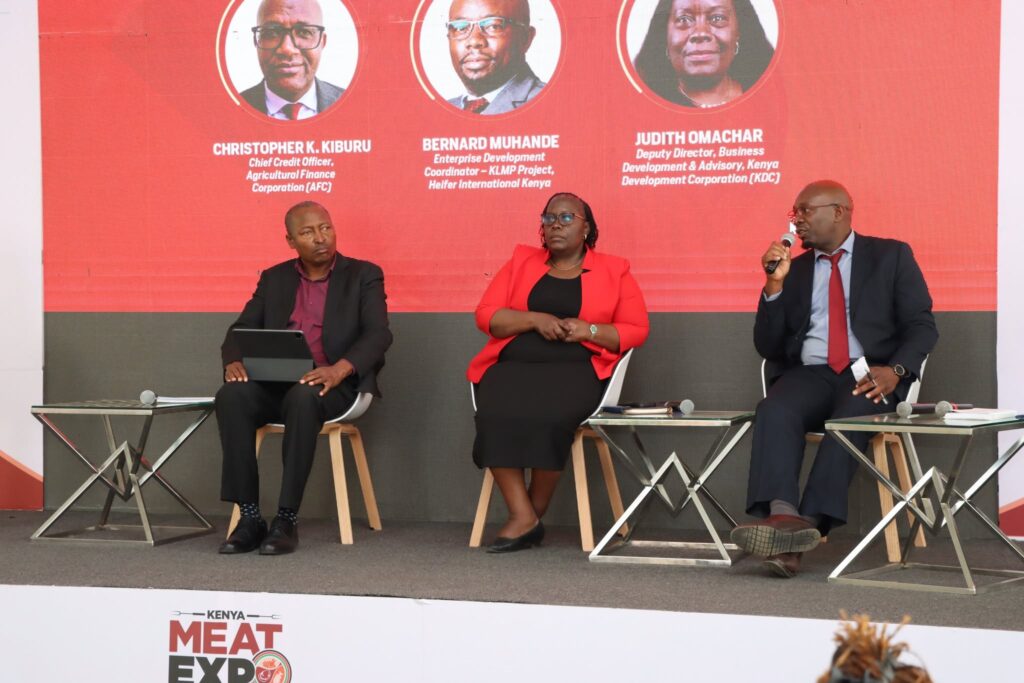
Heifer International Kenya has called for livestock financing models that reflect the realities of farmers and pastoralists as stakeholders seek to unlock greater investment across Kenya’s meat and livestock value chain.
The call was made during the 5th Kenya Meat Expo 2026, which brought together livestock producers, aggregators, processors, exporters, buyers, financial institutions, technology providers, investors, government representatives, policymakers and development partners.
The stakeholders discussed ways of improving access to finance, strengthening commercial relationships and creating more competitive livestock markets in Kenya.
Through the Kenya Livestock Marketing and Resilience Project (KLMP), Heifer International Kenya is working with livestock producers and market actors to strengthen commercial linkages, attract investment and improve access to sustainable domestic, regional and international markets.
Heifer Kenya Pushes for Cash-Flow-Based Livestock Financing
Benard S. Muhande, Enterprise Development Coordinator at the KLMP Project, said traditional collateral-based lending models often fail to reflect how livestock businesses operate at the grassroots level.
He called for a shift towards cash-flow-based livestock financing, supported by stronger market management and transaction systems.
“We cannot fight informality in access to finance; it is part of the reality at the grassroots. We need to shift from collateral-based financing to cash-flow-based financing, supported by market management systems,” Muhande said.
According to Muhande, stronger market systems could improve livestock traceability while giving financial institutions access to transaction data that can help them assess the ability of farmers and other livestock businesses to repay loans.
This could open financing opportunities for producers who may have viable livestock enterprises but lack the conventional collateral required by banks.
Livestock Financing Needs to Reflect How Farmers Earn
Livestock enterprises often operate differently from conventional businesses.
Farmers may generate income when animals are sold, while pastoralists can experience seasonal variations in livestock prices, production and market access.
Muhande argued that financing products should therefore be designed around livestock cash flows rather than relying exclusively on fixed monthly repayment structures or traditional collateral requirements.
He also called for a shift from individual lending towards portfolio-based livestock financing, which could help financial institutions spread risk across groups of producers and make the livestock sector more attractive to lenders.
The approach could be particularly relevant for smallholder farmers and pastoralists who operate in fragmented livestock markets.
Market Data Could Help Banks Finance More Livestock Farmers
One of the major challenges facing livestock finance is limited information about farmers’ transactions and business performance.
Digital market information systems could help address this gap by recording livestock transactions, prices, buyers and sellers.
Better transaction records could provide financial institutions with information that helps them assess the commercial activity and repayment capacity of livestock enterprises.
Muhande said strengthening market management systems would therefore serve a purpose beyond connecting farmers with buyers.
It could also create the data infrastructure needed to expand livestock lending.
Heifer Kenya Strengthens Livestock Market Linkages
Through its Market Systems Development (MSD) approach, Heifer International Kenya is working with private-sector players to strengthen the livestock market system.
The KLMP Project brings together different actors across the red meat value chain to identify barriers to investment and develop practical solutions.
The objective is to create stronger connections between farmers, markets, financial institutions, processors and other businesses operating within the livestock economy.
This approach recognises that improving farmer incomes requires more than increasing livestock production.
Farmers also need reliable markets, market information, finance, appropriate technologies and commercially viable relationships with buyers.
Digital Technology Could Improve Livestock Access to Finance
Technology is increasingly becoming part of Kenya’s livestock market infrastructure.
Ranch Experts, one of the private-sector partners working within the market systems approach, operates Flockr, a market information system designed to support pastoralist livestock producers in Kenya’s arid and semi-arid lands.
The system provides market information and supports transaction traceability, creating data that could help strengthen financing decisions.
For farmers operating in remote areas, access to reliable market information can make it easier to understand prevailing prices and identify potential buyers.
For financial institutions, transaction data could provide another way of understanding the performance of livestock businesses.
Financing Remains Critical to Kenya’s Livestock Transformation
Kenya’s livestock sector has significant potential to generate income, employment and export earnings. However, unlocking that potential will require financial products that work for the farmers and businesses operating within the sector.
Improved access to finance could allow livestock producers to invest in better breeding, feeds, water infrastructure, animal health, pasture management, transport and market preparation.
It could also support businesses involved in aggregation, processing, cold-chain logistics and meat exports.
The discussions at the Kenya Meat Expo 2026 therefore point to a broader issue facing Kenya’s livestock industry: the need to connect finance with functioning markets and reliable transaction data.
For smallholder farmers and pastoralists, the future of livestock financing may increasingly depend not only on what they own as collateral, but also on the strength of their businesses, their market relationships and the cash flows generated from livestock enterprises.
https://farmerstrend.co.ke/trending/heifer-kenya-livestock-financing-in-kenya/https://farmerstrend.co.ke/wp-content/uploads/2026/08/Heifer-Kenya-Calls-for-Farmer-Responsive-Livestock-Financing-to-Boost-Kenyas-Meat-Industry-1024x683.jpghttps://farmerstrend.co.ke/wp-content/uploads/2026/08/Heifer-Kenya-Calls-for-Farmer-Responsive-Livestock-Financing-to-Boost-Kenyas-Meat-Industry-150x150.jpg# Trendingagricultural financing Kenya,agricultural loans for livestock farmers,cash flow based financing Kenya,Flockr Kenya,Heifer International Kenya,Kenya Livestock Marketing and Resilience Project,Kenya Meat Expo 2026,KLMP Kenya,livestock business Kenya,livestock farmers financing Kenya,livestock farmers loans,livestock finance for farmers,livestock financing in Kenya,livestock investment Kenya,livestock investment opportunities Kenya,livestock loans in Kenya,livestock market financing,livestock market information Kenya,livestock market systems,livestock value chain Kenya,meat industry Kenya,meat value chain Kenya,pastoralist financing Kenya,Ranch Experts KenyaHeifer Kenya is calling for farmer-responsive livestock financing in Kenya to improve access to credit, strengthen markets and grow the meat industry.Heifer International Kenya has called for livestock financing models that reflect the realities of farmers and pastoralists as stakeholders seek to unlock greater investment across Kenya’s meat...FarmersTrendjohn doefarmerstrend@gmail.comAdministratorFarmers Trend Ltd.





Leave a Reply