Star Apple Farming in Kenya 2026 – The Complete Guide to Growing Caimito for Profit
Star Apple Farming in Kenya 2026 – The Complete Guide to Growing Caimito for Profit
Star apple is one of the least known fruits in Kenya, but that is changing slowly by slowly since more farmers and consumers are discovering how delicious and valuable this tropical fruit can be.

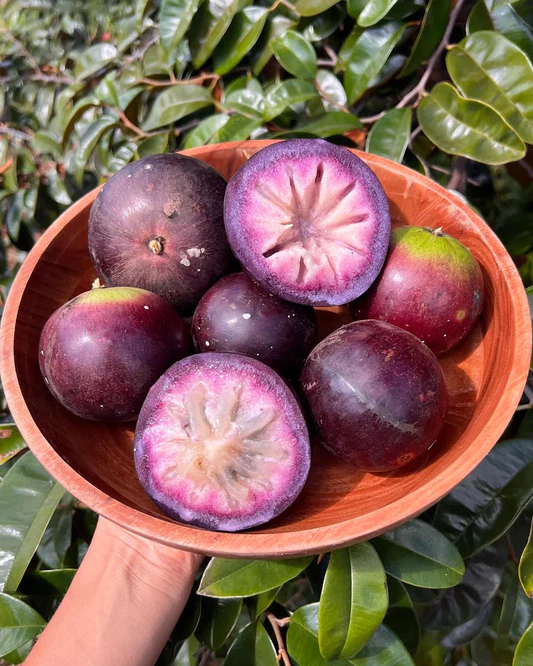
The fruit has a purple or green skin and white flesh inside that tastes sweet and milky, and when you cut it open, the seeds form a star pattern that gives the fruit its name. In Nairobi supermarkets, star apples sell for 800 shillings per kilogram, and export markets in Europe and the Middle East pay up to 1,500 shillings per kilogram for quality fruit from star apple farming in Kenya.
Star apple farming in Kenya is still new, which means there is very little competition and farmers who plant now will have an advantage when the market grows.
The tree grows well in low altitude areas near the coast and around Lake Victoria, where the weather is warm and there is no frost. A mature tree can produce 75 to 100 kilograms of fruit every year, and with 120 trees on one acre, the total harvest from star apple farming in Kenya reaches 9,000 to 12,000 kilograms annually.
At farm gate prices of 500 to 600 shillings per kilogram, the revenue from one acre of star apple farming in Kenya can reach 4.5 to 7.2 million shillings, and with export prices reaching 1,500 shillings per kilogram, the potential is even higher.
This guide by Farmers Trend Ltd highlights what you need to know about growing star apples for money in Kenya. You will learn which varieties to plant for star apple farming in Kenya, how to prepare your land, how to space the trees, how to feed them, how to control pests, how to harvest, and how much money you can make from star apple farming in Kenya.

Why Star Apple Farming in Kenya Is a Good Opportunity
Star apple farming in Kenya is a good business opportunity because the fruit is still rare in local markets and the demand is growing every year. Supermarkets in Nairobi are looking for local suppliers for star apple farming in Kenya because they currently import star apples from other countries at high prices. Hotels in Mombasa and Diani serve star apples to tourists who know the fruit from their home countries, and they need consistent supply from star apple farming in Kenya throughout the year.
The tree grows best in low altitude areas between sea level and 800 meters, which includes the coastal counties of Mombasa, Kwale, and Kilifi, as well as the Lake Victoria basin around Kisumu, Homa Bay, and Migori. These areas have the warm temperatures that star apples need for successful star apple farming in Kenya, and they do not experience frost which can kill young trees. The tree is sensitive to strong winds, so farmers in windy areas should plant windbreaks such as casuarina or other fast-growing trees around their star apple farming in Kenya orchards.
The best time to plant star apples for star apple farming in Kenya is March at the start of the long rains, because the rain helps the young trees establish their roots before the dry season comes. If you have drip irrigation for star apple farming in Kenya, you can plant at any time of year, but you must water the trees regularly during the first year and protect them from dry season heat. The trees are sensitive to cold, so do not plant them in highland areas like Limuru or Timau where temperatures drop at night.
Star apple farming in Kenya is a long-term investment because the trees take 5 to 7 years to start producing fruit, but once they start, they will keep producing for 50 years or more. This means that a farmer who plants star apples today will be harvesting fruit for the rest of their life, and their children will also benefit from the same trees in star apple farming in Kenya. The initial waiting period is long, but the returns are very good for farmers who are patient.
| Parameter | Ideal Range | Critical Limit | Impact on Yield |
|---|---|---|---|
| Altitude | Sea level to 800m | Above 1,200m | Poor flowering, low fruit set |
| Temperature | 20-30°C | Below 15°C | Tree damage, fruit drop |
| Rainfall | 1,000-2,000mm | Below 800mm | Requires irrigation |
| Soil pH | 5.5-6.5 | Below 5.0 or above 7.0 | Nutrient deficiency |
| Wind | Protected | Strong winds | Branch breakage, fruit scarring |
Detailed Soil Preparation for Star Apple Farming in Kenya
Before you plant any star apple trees, you need to prepare your soil properly because the quality of your soil determines how well your trees will grow and how much fruit they will produce. The first step in soil preparation for star apple farming in Kenya is to take soil samples from different parts of your farm and send them to a laboratory for testing. The soil test will tell you the pH level, the nutrient content, and the organic matter percentage of your soil.
The ideal pH for star apple farming in Kenya is between 5.5 and 6.5, which is slightly acidic. If your soil test shows that the pH is below 5.5, you need to add agricultural lime to raise the pH. The lime should be applied at least three months before planting because it takes time to react with the soil. The amount of lime you need depends on your soil type and how low the pH is, and the soil test report will give you a recommendation.
If your soil test shows that the pH is above 6.5, you need to add sulfur or other acidifying materials to lower the pH. This is less common in Kenya because most soils in the coastal and Lake Victoria regions are slightly acidic, but it can happen in some areas. The sulfur should also be applied several months before planting.
After you have corrected the pH, you need to add organic matter to your soil. Well-rotted manure is the best source of organic matter for star apple farming in Kenya because it improves soil structure, adds nutrients, and helps the soil hold water. Apply 10 to 20 tons of manure per acre and mix it into the top 20 centimeters of soil during land preparation.
You should also add phosphorus fertilizer to your soil because star apple trees need phosphorus for root development. Rock phosphate is a good choice for organic production, but DAP fertilizer also works well. Apply 50 to 100 kilograms of DAP per acre during land preparation.
Irrigation Scheduling and Water Management for Star Apple Farming in Kenya
Water is critical for star apple farming in Kenya, especially during the first year when the trees are establishing their root systems. Young trees need 20 to 30 liters of water per tree twice a week during the dry season, and mature trees need 40 to 60 liters per tree per week during flowering and fruit development.
Drip irrigation is the best method for star apple farming in Kenya because it delivers water directly to the root zone and reduces water loss through evaporation. The drip lines should be placed along the rows of trees, with emitters spaced at 50 centimeters. Each tree should have two emitters to ensure even water distribution.
During the rainy season, you can reduce or stop irrigation because the natural rainfall will provide enough water for your star apple farming in Kenya operation. However, you should monitor the soil moisture because too much water can cause root rot, especially in heavy clay soils.
The most critical time for watering in star apple farming in Kenya is during flowering and fruit development. If the trees do not get enough water during this period, the flowers may drop off and the fruit may be small and dry. You should water regularly from the time the flowers appear until the fruit is harvested.
Mulching is an important practice for star apple farming in Kenya because it helps the soil retain moisture, suppresses weeds, and adds organic matter as the mulch breaks down. Apply a layer of dry grass, straw, or wood chips that is 10 to 15 centimeters thick around the base of each tree, but keep the mulch away from the trunk to prevent rot.

Detailed Pruning Techniques for Different Tree Ages in Star Apple Farming in Kenya
Pruning is one of the most important practices in star apple farming in Kenya because it shapes the tree, controls its size, and directs energy into fruit production. Different aged trees need different pruning approaches, and understanding these differences will help you get the best results from your star apple farming in Kenya operation.
For young trees in the first year of star apple farming in Kenya, the goal of pruning is to create a strong central leader and select the main scaffold branches. After planting, cut the tree back to a height of 60 to 70 centimeters. This low cut encourages the tree to produce branches near the ground. During the first growing season, select 3 to 5 well-spaced branches to be the main scaffolds, and remove all other branches. The selected branches should be evenly spaced around the trunk and should have wide angles where they attach.
In the second year of star apple farming in Kenya, the goal is to develop secondary branches on the scaffolds. Select 2 to 3 secondary branches on each scaffold, and remove any branches that cross each other or grow inward toward the center of the tree. Remove suckers that grow from the base of the tree and water sprouts that grow straight up from the branches. Keep the center of the tree open so that light can reach all parts of the canopy.
In the third and fourth years of star apple farming in Kenya, continue to develop the branching structure of the tree. Remove any branches that are growing too close together or that are rubbing against each other. The goal is to create a tree with an open center and well-spaced branches that can support heavy crops.
For mature trees that are producing fruit in star apple farming in Kenya, the goal of pruning is to maintain the tree at a manageable height and to remove old wood that no longer produces well. Remove about 20 percent of the oldest wood each year, cutting it back to a younger branch. This renewal pruning keeps the tree productive for many years.
You should also remove any dead, diseased, or damaged wood as soon as you see it in star apple farming in Kenya. These branches can harbor pests and diseases that can spread to healthy parts of the tree. Make clean cuts at 45 degree angles using sharp, clean pruning tools, and seal large cuts with wound dressing to prevent disease entry.
Intercropping Options During Establishment Years for Star Apple Farming in Kenya
One of the biggest challenges in star apple farming in Kenya is that the trees take 5 to 7 years to start producing fruit, which means you have several years with no income from your orchard. However, you can plant other crops between your star apple trees during these early years to generate income and make use of the space.
The best intercrops for star apple farming in Kenya are shallow-rooted crops that do not compete too much with the young trees for water and nutrients. Beans, cowpeas, and green grams are good choices because they are legumes that fix nitrogen in the soil, which benefits the star apple trees. These crops can be planted in the spaces between the tree rows and harvested within 3 to 4 months.
Vegetables like tomatoes, kales, and spinach can also be intercropped in star apple farming in Kenya, but they require more water and nutrients than legumes. If you choose to grow vegetables, you will need to irrigate and fertilize more frequently, which will increase your costs. However, the income from vegetables can help cover your expenses while you wait for the star apple trees to mature.
Maize and other tall crops should not be intercropped in star apple farming in Kenya because they will shade the young trees and compete too aggressively for water and nutrients. The maize plants can grow taller than the young star apple trees and block the sunlight that the trees need to grow properly.
When intercropping in star apple farming in Kenya, you should leave a clear area of at least 1 meter around each tree so that the tree roots are not disturbed and the tree gets enough light. You should also avoid planting intercrops that are susceptible to the same pests and diseases as star apple, because this can increase pest pressure on your orchard.
Pest and Disease Control Calendar for Star Apple Farming in Kenya
A regular pest and disease control schedule is essential for successful star apple farming in Kenya because problems that are caught early are easier to control than those that are allowed to spread. Here is a month-by-month guide for pest and disease management in star apple farming in Kenya.
January to February (dry season): Monitor for scale insects and mealybugs, which are more common during dry weather. Apply dormant oil sprays to control scale insects. Check pheromone traps for fruit flies and replace lures as needed.
March to April (long rains start): Apply copper-based fungicide to prevent anthracnose, which spreads during wet weather. Monitor for fruit flies as the trees begin to flower. Place yellow sticky traps to catch aphids and other flying insects.
May to June (peak rains): Continue copper fungicide applications every 2 to 3 weeks during wet weather. Monitor for signs of root rot, especially in areas with poor drainage. Remove any fallen fruit from the ground because it can attract fruit flies and other pests.
July to August (cool dry period): Prune trees and remove any dead or diseased wood. Apply dormant oil to control scale insects and mealybugs. Reduce irrigation because the trees need less water during this period.
September to October (short rains start): Apply fertilizer before the rains start. Monitor for fruit flies as the trees begin flowering. Apply neem oil to control aphids and other soft-bodied insects.
November to December (fruit development): Apply potassium-rich foliar feeds to improve fruit quality. Monitor fruit for signs of fruit fly damage. Harvest fruit as soon as it is mature to reduce the risk of pest damage.
Year-round practices for star apple farming in Kenya include keeping the orchard clean of fallen fruit and weeds, inspecting trees regularly for signs of pests or disease, and maintaining records of what you see and what treatments you apply.
Marketing Strategies and Value Addition for Star Apple Farming in Kenya
Once your star apple trees start producing fruit, you need to have a plan for selling your harvest. The best time to start marketing is before the fruit is ready, so that you have buyers lined up when you harvest. Here are some marketing strategies for star apple farming in Kenya.
Supermarkets like Naivas, Carrefour, and Quickmart are good buyers for star apples because they have consistent demand and pay higher prices than local markets. You will need to contact their procurement departments and provide samples of your fruit. They will also require that you pack the fruit in clean, labeled containers with the weight and grade clearly marked.
Hotels and resorts along the coast are also good buyers for star apple farming in Kenya because they serve the fruit to tourists who are familiar with it. Approach the kitchen managers of hotels in Mombasa, Diani, Malindi, and Watamu. Offer them samples and discuss regular delivery schedules.
Export markets offer the highest prices for star apple farming in Kenya, with prices reaching up to 1,500 shillings per kilogram for quality fruit. To access export markets, you will need GlobalGAP certification and you will need to work with an exporter who has established relationships with buyers in Europe and the Middle East. The exporter will handle the shipping and customs clearance, but you will need to provide consistent quality and volume.
Value addition can increase your returns from star apple farming in Kenya because processed products often sell for higher prices than fresh fruit. You can make star apple juice by blending the flesh with water and sugar, then pasteurizing and bottling it. You can make star apple jam by cooking the fruit with sugar and lemon juice. You can also dry star apple slices in a food dryer to make a snack that lasts for months.
Direct sales to consumers through farmers markets and online platforms are another option for star apple farming in Kenya. You can set up a stall at the Organic Farmers Market in Karen or at other farmers markets in Nairobi. You can also create a Facebook page or WhatsApp group to take orders and arrange deliveries.
Common Mistakes to Avoid in Star Apple Farming in Kenya
Many new farmers make mistakes that cost them time and money in star apple farming in Kenya. Here are some common mistakes and how to avoid them.
Planting at the wrong spacing is a common mistake in star apple farming in Kenya. Some farmers plant trees too close together because they want more trees per acre, but crowded trees compete for light and produce fruit only on the outer branches. The recommended spacing of 6 meters by 6 meters gives each tree enough room to develop a full canopy and produce fruit throughout the tree.
Neglecting windbreaks is another mistake in star apple farming in Kenya. Star apple trees have brittle branches that break easily in strong winds, and the fruit can also be damaged by wind. Planting windbreaks before you plant your star apple trees is essential for protecting your orchard.
Over-fertilizing with nitrogen is a problem in star apple farming in Kenya because too much nitrogen makes the tree grow many leaves and few fruits. The leaves may be lush and green, but the harvest will be small. Follow the fertilizer rates given in this guide, and do not add extra nitrogen.
Planting in the wrong location is a serious mistake in star apple farming in Kenya. Star apples need low altitude areas with warm temperatures and no frost. Farmers who plant star apples in highland areas like Limuru or Timau will be disappointed because the trees will not produce fruit or may die from cold damage.
Harvesting fruit too early is a common error in star apple farming in Kenya. Star apples do not ripen after they are picked, so if you harvest them too early, they will be hard, dry, and not sweet. Wait until the fruit comes off the tree easily when twisted, and the skin has changed to the mature color for the variety.
Neglecting pest control is another mistake in star apple farming in Kenya. Fruit flies can destroy a large portion of your harvest if you do not control them. Use pheromone traps and monitor them regularly. Apply protein bait sprays when trap catches are high.
Case Studies of Successful Star Apple Farmers in Kenya
Learning from farmers who have already succeeded can help you avoid mistakes in star apple farming in Kenya. Here are some examples of farmers who are making money from star apples.
In Kilifi County, Mr. Juma Mwamburi planted 100 star apple trees on his 2 acre farm in 2015. He bought certified star apple seedlings from Farmers Trend and followed the recommended spacing and care practices. In 2022, his trees started producing commercial quantities of fruit, and he now harvests 5,000 to 6,000 kilograms per year. He sells his fruit to supermarkets in Mombasa and earns an average of 500,000 shillings per year from his star apple farming in Kenya operation.
In Kisumu County, Mrs. Pamela Atieno planted 50 star apple trees on her farm near the lake shore. She intercropped the young trees with beans and vegetables for the first 5 years to generate income while waiting for the trees to mature. Her trees started producing in 2023, and she now supplies fruit to hotels in Kisumu and to traders who export to Uganda. She plans to expand her star apple farming in Kenya by planting another 50 trees this year.
In Kwale County, a group of 10 farmers formed a cooperative to grow star apples for export. They planted a total of 1,200 trees across their farms, with technical support from Farmers Trend. They are working towards GlobalGAP certification so that they can access the European market, where star apples sell for 1,500 shillings per kilogram. Their trees are now 6 years old and starting to produce good harvests.
Financial Projections for Star Apple Farming in Kenya
| Cost Item | Quantity | Unit Price | Total |
|---|---|---|---|
| Star apple seedlings (purple variety) | 120 | 2,800 KSh | 336,000 KSh |
| Land preparation | 1 acre | 15,000 KSh | 15,000 KSh |
| Manure (30kg per hole) | 3,600 kg | 3,000 KSh/ton | 10,800 KSh |
| DAP fertilizer | 24 kg | 130 KSh/kg | 3,120 KSh |
| Drip irrigation system | 1 acre | 60,000 KSh | 60,000 KSh |
| Windbreak trees (casuarina) | 100 | 50 KSh | 5,000 KSh |
| Mulch materials | 1 acre | 10,000 KSh | 10,000 KSh |
| Labor (planting, mulching) | 20 days | 500 KSh/day | 10,000 KSh |
| Pest control materials | 1 acre | 15,000 KSh | 15,000 KSh |
| Pruning tools | 1 set | 5,000 KSh | 5,000 KSh |
| Total First-Year Investment | 469,920 KSh |
| Year | Yield per Tree (kg) | Total Yield (kg) | Price/kg | Gross Revenue | Net Profit |
|---|---|---|---|---|---|
| 1-4 | 0 | 0 | 500 | 0 | -469,920 |
| 5 | 5 | 600 | 500 | 300,000 | -169,920 |
| 6 | 10 | 1,200 | 550 | 660,000 | 190,080 |
| 7 | 20 | 2,400 | 600 | 1,440,000 | 970,080 |
| 8 | 40 | 4,800 | 650 | 3,120,000 | 2,650,080 |
| 9 | 60 | 7,200 | 700 | 5,040,000 | 4,570,080 |
| 10+ | 80 | 9,600 | 800 | 7,680,000 | 7,210,080 |
Next Step for Star Apple Farming in Kenya
Star apple farming in Kenya is a long-term investment that requires patience, but the returns are very good for farmers who wait. Certified seedlings from Farmers Trend cost 2,800 shillings each, and a well-managed acre with 120 trees yields 75 to 100 kilograms per tree at maturity. The farm gate price ranges from 500 to 800 shillings per kilogram, and by year 10 of star apple farming in Kenya, you can earn over 7.2 million shillings per acre. With export prices reaching 1,500 shillings per kilogram, the potential is even higher for farmers who can access those markets.
The best time to plant for star apple farming in Kenya is March to April at the onset of the long rains, and you should prepare your land, put in drip irrigation, plant windbreaks, and test your soil before you order seedlings. The trees need low altitude areas like the Coast and Lake Victoria basin for successful star apple farming in Kenya, where the weather is warm and there is no frost.
For certified star apple seedlings at 2,800 shillings, site checks, and the 2026 Star apple farming in Kenya PDF guide, contact Farmers Trend Ltd at 0790509684. The farmers who planted star apples ten years ago are now earning millions every season from star apple farming in Kenya, and their trees will keep producing for another 40 years. The time to start your star apple farming in Kenya journey is now.
https://farmerstrend.co.ke/fruits/star-apple-farming/star-apple-farming-in-kenya-guide/https://farmerstrend.co.ke/wp-content/uploads/2026/04/Star-Apple-.webphttps://farmerstrend.co.ke/wp-content/uploads/2026/04/Star-Apple--150x150.webpStar Apple Farming# TrendingBest climate for star apple in Kenya,Caimito farming cost per acre,Caimito fruit export Kenya,Farmers Trend star apple seedlings,Green star apple variety,Purple star apple variety,Star apple farming in Kenya PDF,Star apple market price Nairobi,Star apple seedlings price in Kenya 2026,Star apple spacing 6m x 6m,Star apple yield per tree,tropical fruit farming KenyaStar Apple Farming in Kenya 2026 - The Complete Guide to Growing Caimito for Profit Star apple is one of the least known fruits in Kenya, but that is changing slowly by slowly since more farmers and consumers are discovering how delicious and valuable this tropical fruit can be.The fruit...FarmersTrendjohn doefarmerstrend@gmail.comAdministratorFarmers Trend Ltd.


Leave a Reply