Hot Pepper Farming in Kenya 2026 – The Complete Guide to Growing Chili for Export and Local Markets
Hot Pepper Farming in Kenya 2026 – The Complete Guide to Growing Chili for Export
Hot peppers are among the most profitable horticultural crops that a farmer can grow in Kenya because the demand for fresh and processed chilies continues to grow in both local and international markets.

The European and Middle Eastern markets pay premium prices for Kenyan hot peppers, with export grade fruit fetching between 150 and 350 shillings per kilogram depending on the variety and certification. Local supermarkets and processors also buy significant volumes, creating a stable market for hot pepper farming in Kenya.
A well-managed acre of hot peppers produces 8 to 15 tons of fruit annually depending on the variety and the level of management, and the productive lifespan of a single planting lasts 9 to 12 months with proper harvesting and pruning. The first harvest comes 2.5 to 3 months after transplanting, and after that you can pick every 7 to 14 days for the rest of the season.
With export prices reaching 350 shillings per kilogram for premium varieties, the revenue potential for hot pepper farming in Kenya reaches 2.8 to 5.2 million shillings per acre.
This guide by Farmers Trend Limited covers what you need to know about growing hot peppers for money in Kenya. You will learn which varieties to plant, how to prepare your land, how to space the plants, how to feed them, how to control pests, how to harvest, and how much money you can make from hot pepper farming in Kenya. The information comes from successful growers and from agricultural research stations that study spice crops.

Why Hot Pepper Farming in Kenya Is Growing Fast
Hot pepper farming in Kenya has grown quickly because more farmers have discovered that chilies can be grown on small pieces of land and still produce high incomes. The crop does not need a lot of space, and you can plant up to 15,000 plants per acre using the recommended spacing of 45 centimeters by 60 centimeters. This high plant population means that even a small farm can produce significant volumes for the export market.
The best areas for growing hot peppers in Kenya are warm zones with temperatures between 20 and 32 degrees Celsius, which includes Machakos, Makueni, Kilifi, and the Lake Victoria basin around Kisumu and Homa Bay. The plants need well-drained soils with a pH between 5.5 and 6.8, and they do not tolerate waterlogged conditions. Hot peppers are also grown successfully in greenhouses, where the environment can be controlled to optimize production.
The export market for Kenyan hot peppers is concentrated in Europe, where buyers look for specific varieties with consistent heat levels and high visual quality. The certifications required for export include GlobalGAP, which covers food safety and traceability, and organic certification for farmers who use only natural inputs. The price difference between certified and uncertified produce can be 50 to 100 shillings per kilogram, so the investment in certification is worth it for commercial growers.
Best Hot Pepper Varieties in Kenya
| Variety | Scoville Rating | Growth Habit | Target Market | Yield Potential |
|---|---|---|---|---|
| Demon Red F1 | 30,000-50,000 | Upright | Export fresh | 10-15 tons/acre |
| Habanero F1 | 100,000-350,000 | Spreading | Specialty export | 8-12 tons/acre |
| Long Cayenne F1 | 20,000-40,000 | Upright | Fresh market | 10-14 tons/acre |
| Birds Eye | 50,000-100,000 | Spreading | Export dried | 5-8 tons/acre |
| Fury F1 | 30,000-50,000 | Upright | Processing | 12-15 tons/acre |
| Bullet Chilli | 2,500-5,000 | Upright | Pickling | 10-12 tons/acre |
Choosing Hot Pepper Seedlings for Farming in Kenya
The seedlings you plant determine the type of fruit you will get and how much you will harvest, so this decision is very important for commercial hot pepper farming in Kenya. Commercial hot pepper seedlings currently average 15 shillings per seedling at certified nurseries across the country, and you need about 15,000 seedlings per acre at the recommended spacing of 45 centimeters by 60 centimeters. The total seedling cost for one acre is about 225,000 shillings, which is a significant investment but one that pays back quickly.
- Demon Red F1 is the high-yielding industry standard for intensive hot pepper farming in Kenya because it produces large quantities of uniform red fruits with good heat levels. The plants have an upright growth habit, which makes harvesting easier and reduces disease pressure. Demon Red is preferred by export buyers because the fruits have good shelf life and maintain their quality during transport.
- Habanero F1 is prized for its extreme Scoville rating, which ranges from 100,000 to 350,000 units, and its distinct floral aroma that is valued in specialty sauces and salsas. The plants have a spreading growth habit, so they need more space than upright varieties. Habanero is more challenging to grow than Demon Red because it is more sensitive to temperature fluctuations and requires precise nutrition.
- Long Cayenne F1 is the culinary staple essential for the fresh market supply chain because the fruits are used in many dishes and sauces. The plants produce long, thin fruits that turn from green to red as they mature. Long Cayenne has moderate heat levels and is popular with both local and export buyers.
- Birds Eye chilli is the small-podded, high-value variety with massive export demand, especially in the dried form. The plants produce many small fruits that are very hot, and they are often dried and ground into powder or sold whole. Birds Eye is more drought-tolerant than other varieties, making it suitable for areas with less reliable rainfall.
- Fury F1 is engineered for consistent, heavy production cycles, and it is a good choice for farmers who want to maximize yields. The plants are vigorous and disease-resistant, and they produce uniform fruits that are suitable for both fresh market and processing.
- Bullet chilli, also known as Fresno or Jalapeno, is the primary variety for the pickling and processing industry. The fruits are harvested when they are still green and firm, and they are used in sauces, salsas, and pickled products. Bullet chilli has lower heat levels than other varieties, which makes it more accessible to consumers who do not like very spicy food.
| Cost Item | Quantity | Unit Price | Total |
|---|---|---|---|
| Hot pepper seedlings (Demon Red F1) | 15,000 | 15 KSh | 225,000 KSh |
| Land preparation | 1 acre | 15,000 KSh | 15,000 KSh |
| Manure (5 tons) | 5,000 kg | 3,000 KSh/ton | 15,000 KSh |
| DAP fertilizer | 100 kg | 130 KSh/kg | 13,000 KSh |
| CAN fertilizer | 200 kg | 90 KSh/kg | 18,000 KSh |
| Drip irrigation system | 1 acre | 60,000 KSh | 60,000 KSh |
| Mulch materials | 1 acre | 10,000 KSh | 10,000 KSh |
| Labor (planting, weeding, harvest) | 50 days | 500 KSh/day | 25,000 KSh |
| Pest control materials | 1 acre | 15,000 KSh | 15,000 KSh |
| Export licensing and certification | 1 year | 25,000 KSh | 25,000 KSh |
| Harvest crates and packing materials | 1 acre | 10,000 KSh | 10,000 KSh |
| Total First-Season Investment | 431,000 KSh |
Planting Your Hot Pepper Farm
Hot pepper plants need to be spaced properly to allow air to move between them and to make harvesting easier. The recommended spacing for commercial hot pepper farming in Kenya is 45 centimeters between plants and 60 centimeters between rows, which gives you about 15,000 plants per acre. This spacing allows each plant to get enough sunlight and air, and it also leaves room for workers to walk between the rows during harvest.

Dig holes that are 15 centimeters wide, 15 centimeters deep, and 15 centimeters long for transplanting the seedlings. Mix the topsoil with well-rotted manure and a small amount of DAP fertilizer. Fill the holes back up and water them before you plant. The plants should be set at the same depth they were growing in the nursery pot, and the soil should be firmed gently around the roots.
The best time to plant hot peppers is at the start of the rains, but the strategic advantage of planting in August is that the harvest will hit the peak demand window in European markets during the northern hemisphere winter. Farmers with irrigation can plant at any time of year, but they must water the plants regularly during the first month and protect them from dry season heat.
Hot peppers do not need staking or trellising for most varieties, but the plants can become top-heavy when they are loaded with fruit. Support stakes are recommended for Demon Red and Long Cayenne varieties to prevent the branches from breaking under the weight of the fruit. The stakes should be placed at the time of transplanting to avoid damaging the roots later.
Feeding Your Hot Pepper Plants
Hot peppers need good nutrition to produce high yields of quality fruit, and the fertilizer program is different for the establishment phase and the production phase. Before planting, you should have mixed manure into your soil during land preparation, about 5 tons per acre. This manure will feed the plants slowly over the whole season.
About 4 weeks after transplanting, apply CAN fertilizer at 50 kilograms per acre. You do this by sprinkling the fertilizer along the rows, being careful not to let it touch the leaves because it can burn them. Water the field after applying fertilizer so that the nutrients go down to the roots.
You should do another application of CAN at 8 weeks after transplanting, and another one at 12 weeks after transplanting if the plants are still producing. Do not use too much nitrogen because it will make the plants grow too many leaves and not enough fruit. Too much nitrogen also makes the plants more susceptible to diseases.
Potassium is very important for fruit quality in hot pepper farming in Kenya because it influences the pungency and the color of the fruit. Apply potassium sulphate at 100 kilograms per acre when the flowers appear, and again when the fruit starts to develop. Without enough potassium, the fruits will be small and have lower heat levels, which will reduce their market value.
Calcium is essential for preventing blossom end rot, which causes sunken spots on the bottom of the fruit. Apply calcium nitrate as a foliar spray at 10 grams per 20 liters of water when the fruit starts to develop. Boron is also important for flower development and fruit set, and a deficiency of boron causes poor fruit set and misshapen fruits. Apply boron foliar spray at 10 grams per 20 liters of water at 80 percent flowering.
Irrigation and Water Management for Hot Pepper Farming
Hot peppers need consistent moisture for high yields, and water stress can cause flower drop, poor fruit development, and reduced pungency. Drip irrigation is the most efficient method for hot pepper farming in Kenya because it delivers water directly to the root zone and keeps the foliage dry, which reduces the incidence of fungal diseases.
During dry periods, apply 25 to 30 millimeters of water per week, which is equivalent to 250,000 to 300,000 liters per hectare per week. The soil should be moist but not waterlogged because pepper roots are shallow and can be damaged by waterlogging. Sandy soils need more frequent watering than clay soils.
The most critical time for watering is during flowering and fruit development. If the plants experience water stress during this period, the flowers will drop off and the fruits that do form will be small and have low heat levels. Consistent moisture also prevents the development of bitter flavors in the fruit.
Mulching is essential for hot pepper farming in Kenya because it keeps the soil moist, suppresses weeds, and adds organic matter to the soil. Apply a thick layer of dry grass, straw, or black plastic mulch around the base of the plants. Black plastic mulch also warms the soil, which is beneficial in cooler areas.
Pruning and Training Your Hot Pepper Plants
Pruning and training are important for maximizing yields in hot pepper farming in Kenya because they direct the plant’s energy into fruit production rather than excessive leaf growth. The first pruning should be done when the plants are 20 to 25 centimeters tall, removing the top 5 centimeters of the main stem. This encourages the plant to produce side branches, which increases the number of fruiting sites.
Remove any suckers that grow from the base of the plant, and remove any leaves that touch the ground because they can become diseased. The lower leaves are also the first to get fungal infections during wet weather, and removing them improves air circulation.
For trellised peppers, tie the main stem loosely to the stake using soft twine. Do not tie too tightly because the stem needs room to grow. Remove any branches that are growing inward toward the center of the plant, and remove any that are crossing other branches.
After the first flush of fruit is harvested, you can prune the plants back to encourage a second flush. Cut the plants back to about 30 centimeters tall, leaving a few leaves on each branch. Fertilize and water the plants after pruning, and they will produce another crop in 6 to 8 weeks.

Pests and Diseases That Attack Hot Peppers
Thrips are the most common pest in hot pepper farming in Kenya, and they cause silvering of the leaves and scarring on the fruit. The tiny insects feed on the plant sap, and heavy infestations can reduce yields significantly. Control thrips with neem oil or insecticidal soap, and use blue sticky traps to monitor the population.
Aphids cluster on the undersides of young leaves and growing tips, sucking plant sap and causing the leaves to curl and distort. They also transmit viruses that can stunt plant growth. Control aphids with neem oil or insecticidal soap, and encourage natural predators like ladybugs by avoiding broad-spectrum insecticides.
Spider mites are another pest that can damage hot peppers, especially during dry weather. They cause stippling on the leaves and fine webbing on the plants. Control spider mites with miticides or with predatory mites that eat them.
Bacterial wilt is the most serious disease in hot pepper farming in Kenya, and it causes the plants to wilt and die suddenly. There is no cure, and prevention is the only strategy. Use certified disease-free seedlings, rotate crops, and avoid planting in fields where solanaceous crops have been grown recently.
Powdery mildew appears as white powder on the leaves, and it spreads during dry weather with cool nights. Control powdery mildew with sulfur-based fungicides, and improve air circulation by spacing plants properly.
| Pest/Disease | Damage | Control |
|---|---|---|
| Thrips | Silvering of leaves, fruit scars | Neem oil, blue sticky traps |
| Aphids | Curled leaves, virus transmission | Neem oil, insecticidal soap |
| Spider mites | Stippled leaves, webbing | Miticides, predatory mites |
| Bacterial wilt | Sudden wilting and death | Resistant varieties, rotation |
| Powdery mildew | White powder on leaves | Sulfur fungicides |
| Fruit flies | Larvae inside fruit | Pheromone traps, bait sprays |
Harvesting Your Hot Peppers
Hot peppers are a continuous harvest crop, and picking must be done at the exact maturity stage required by the specific market. For green varieties like Bullet chilli, harvest when the fruits are fully formed and firm but still green. For red varieties like Demon Red and Long Cayenne, harvest when the fruits have turned completely red.

Harvest in the morning when the fruits are cool, and handle them gently to prevent bruising. Use sharp pruning shears to cut the stem, leaving a short piece attached to the fruit. Do not pull the fruits off the plant because this can damage the branches.
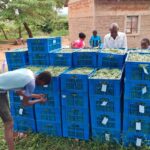
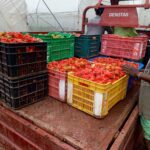
After harvest, sort the fruits by size, color, and quality. Remove any fruits that are damaged, diseased, or misshapen. For export markets, grade the fruits by size and pack them in clean, ventilated cartons. The cartons should be labeled with the variety, weight, and any certification marks.
Store hot peppers at 10 to 12 degrees Celsius with high humidity of 85 to 90 percent. Under these conditions, the fruits can be stored for 7 to 14 days. For longer storage, the peppers can be dried, frozen, or processed into sauce or powder.
| Harvest Cycle | Weeks After Transplanting | Yield per Acre (kg) |
|---|---|---|
| 1st | 10-12 | 1,500-2,000 |
| 2nd | 14-16 | 2,000-2,500 |
| 3rd | 18-20 | 2,000-2,500 |
| 4th | 22-24 | 1,500-2,000 |
| 5th | 26-28 | 1,000-1,500 |
| 6th | 30-32 | 500-1,000 |
How Much Money You Can Make from Hot Pepper Farming
The first season of growing hot peppers on one acre costs about 431,000 shillings for seedlings, land preparation, manure, fertilizer, irrigation, labor, pest control, and export licensing. You will start harvesting 2.5 to 3 months after transplanting, and the total harvest over the 9 to 12 month season can reach 8 to 15 tons per acre.
At an average export price of 250 shillings per kilogram, the revenue from 10 tons is 2.5 million shillings. After subtracting the costs of 431,000 shillings, your profit is about 2.07 million shillings per acre per season.
If you sell to local markets at lower prices of 100 to 150 shillings per kilogram, the revenue is lower but the costs are also lower because you do not need export certification. A farmer selling locally can still make good profit from hot pepper farming in Kenya.
| Yield per Acre (kg) | Price per kg | Gross Revenue | Net Profit |
|---|---|---|---|
| 8,000 | 200 | 1,600,000 | 1,169,000 |
| 10,000 | 250 | 2,500,000 | 2,069,000 |
| 12,000 | 300 | 3,600,000 | 3,169,000 |
| 15,000 | 350 | 5,250,000 | 4,819,000 |

Next Step for Hot Pepper Farming in Kenya
Hot pepper farming in Kenya is a profitable venture for farmers who have access to irrigation, good soil, and export markets. Commercial seedlings cost 15 shillings each, and you need 15,000 plants per acre. A well-managed acre produces 8 to 15 tons of fruit annually, and export prices range from 200 to 350 shillings per kilogram. By the end of the season, you can earn over 2 million shillings per acre.
The best time to plant is August to hit the European winter market, but you can plant year-round with irrigation. Prepare your land, put in drip irrigation, and test your soil before you order seedlings. The plants need warm conditions and well-drained soil.
For certified hot pepper seedlings, site checks, and the 2026 Hot pepper farming in Kenya PDF guide, call Farmers Trend Ltd at 0790509684. The farmers who started growing hot peppers a few years ago are now earning millions every season, and their plants keep producing for up to a year. The time to start is now.
https://farmerstrend.co.ke/crops/pepper-cultivation/hot-pepper-farming-in-kenya-2026-guide/https://farmerstrend.co.ke/wp-content/uploads/2026/04/1759165398794.jpeghttps://farmerstrend.co.ke/wp-content/uploads/2026/04/1759165398794-150x150.jpegpepper cultivation# TrendingBirds Eye chilli farming,Bullet chilli processing,Chili farming in Kenya profit per acre,Demon Red F1 variety,Farmers Trend hot pepper seedlings,GlobalGAP certification Kenya,habanero farming in kenya,Hot pepper farming in Kenya PDF,Hot pepper seedlings price in Kenya 2026,Hot pepper spacing 45cm x 60cm,Long Cayenne production,Red Demon F1 yieldHot Pepper Farming in Kenya 2026 - The Complete Guide to Growing Chili for Export Hot peppers are among the most profitable horticultural crops that a farmer can grow in Kenya because the demand for fresh and processed chilies continues to grow in both local and international markets.The European and...FarmersTrendjohn doefarmerstrend@gmail.comAdministratorFarmers Trend Ltd.

How can I register as a farmer to export chilli