Onion Farming in Kenya 2026 – The Complete Guide to 25 Ton Per Acre Hybrid Production
Onion Farming in Kenya 2026 – The Complete Guide to Growing Hybrid Bulbs for Profit
Onion farming in Kenya has been transforming from a smallholder subsistence activity into a large-scale commercial industry, particularly in the Kajiado onion belt around Kisaju, where farmers have mastered the art of producing 18 to 25 tons per acre using hybrid seeds and drip irrigation. The demand for onions in Kenya is constant because they are used in almost every kitchen, and the country still imports significant quantities from Tanzania to meet the local demand. Farm gate prices fluctuate between 60 and 100 shillings per kilogram, while urban retail prices in Nairobi often exceed 150 shillings per kilogram.
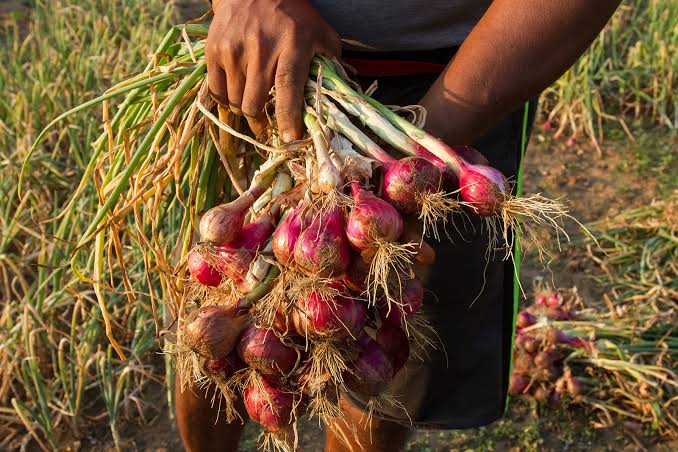
A farmer who plants certified hybrid onion seeds today will invest 6 to 8 weeks in the nursery followed by 3 to 4 months in the field, totaling a 5 to 6 month investment cycle from seed to harvest. With a well-managed acre using drip irrigation and hybrid varieties like Red Coach F1 or Neptune F1, the yield reaches 18 to 25 tons per acre. At farm gate prices of 60 to 100 shillings per kilogram, the revenue from one acre can reach 1.08 to 2.5 million shillings per season.
This guide by Farmers Trend Limited compiles what you need to know about growing onions for money in Kenya. You will learn which hybrid varieties to plant, how to prepare your nursery, how to transplant, how to space the plants, how to irrigate and fertilize, how to control pests and diseases, how to cure and store the bulbs, and how much money you can make. The information comes from successful onion farmers in Kajiado, Narok, and Karatina, and from agricultural research stations.

The 2026 Commercialization of the Bulb
Onion farming in Kenya has become more organized in recent years, with investors putting money into large-scale production hubs in Kajiado (Kisaju), Narok, and Karatina. These areas have the well-drained sandy loam soils that onions need to develop large bulbs, and they have access to water for drip irrigation. The shift from smallholder subsistence to the industrial model has been driven by the high returns that hybrid onions can generate.
The soil chemistry in the Kajiado onion belt is ideal for onion cultivation because the sandy loam soils are well drained and have a pH of 5.8 to 6.8. Onions cannot tolerate waterlogged soil, which causes the bulbs to rot, so the well-drained soils of Kajiado and Narok are a natural advantage for farmers in those areas. Farmers in Karatina and other highland areas also succeed, but they must pay more attention to disease control because the higher humidity can encourage fungal infections.
The market for onions in Kenya is huge because onions are used in almost every household every day. The country consumes approximately 400,000 tons of onions annually, but local production only meets about 60 to 70 percent of this demand. The remaining 30 to 40 percent is imported from Tanzania, which means that there is always a market for quality onions produced locally. The best time to sell is during the dry season when imports are more expensive and farm gate prices are highest.
| Variety | Maturity (Days) | Skin Color | Potential Yield | Market Demand |
|---|---|---|---|---|
| Red Coach F1 | 120-150 | Red | 20-25 tons/acre | High (local, export) |
| Neptune F1 | 120-150 | Red | 18-22 tons/acre | High (local) |
| Jambar F1 | 120-150 | Red | 18-22 tons/acre | Medium (local) |
| Bombay Red | 150-180 | Red | 10-15 tons/acre | Low (local) |
Genetics and Seed Selection: The Red Coach F1 Standard and the Hybrid Premium
The choice of seed is the most critical decision in commercial onion farming in Kenya because the variety determines the yield potential, the bulb size, the disease resistance, and the storage life. Certified hybrid onion seeds like Red Coach F1 and Neptune F1 cost approximately 25,000 to 30,000 shillings per kilogram, and an acre requires 1 to 1.5 kilograms of seed. This means the seed cost per acre ranges from 25,000 to 45,000 shillings, which is a significant investment but one that pays back through higher yields.
Red Coach F1 is the most popular hybrid for commercial onion farming in Kenya because it produces large, red bulbs with excellent storage life of 6 months or more. The plants are vigorous and have good resistance to thrips and purple blotch, which are the two most common problems in onion production. Red Coach F1 matures in 120 to 150 days and can produce 20 to 25 tons per acre under good management with drip irrigation.
Neptune F1 is another excellent hybrid that produces slightly smaller bulbs than Red Coach F1 but has better uniformity and higher yield potential under ideal conditions. Neptune F1 matures slightly faster at 120 to 140 days and is preferred by some farmers because the bulbs are more uniform in size, which makes them easier to pack and sell to supermarkets.
The local varieties like Bombay Red are open-pollinated and produce smaller bulbs with lower yields of 10 to 15 tons per acre. These varieties also have shorter storage life and are more susceptible to diseases. The lower seed cost is not worth the reduction in yield and quality for commercial farmers.
When you buy onion seeds, look for seeds that have been treated with fungicide to prevent damping off in the nursery. The seeds should be stored in a cool, dry place before planting because high temperatures and humidity can reduce germination rates.

Estimated Cost of Onion Production in Kenya Per Acre
| Cost Item | Quantity | Unit Price | Total |
|---|---|---|---|
| Hybrid onion seeds (Red Coach F1) | 1.2 kg | 28,000 KSh/kg | 33,600 KSh |
| Nursery setup (shade net, manure) | 1 set | 5,000 KSh | 5,000 KSh |
| Land preparation | 1 acre | 8,000 KSh | 8,000 KSh |
| Manure (10 tons) | 10,000 kg | 3,000 KSh/ton | 30,000 KSh |
| DAP fertilizer | 50 kg | 130 KSh/kg | 6,500 KSh |
| NPK 17:17:17 (Winner) | 100 kg | 100 KSh/kg | 10,000 KSh |
| CAN fertilizer | 50 kg | 90 KSh/kg | 4,500 KSh |
| Drip irrigation system | 1 acre | 60,000 KSh | 60,000 KSh |
| Labor (nursery, planting, weeding) | 40 days | 500 KSh/day | 20,000 KSh |
| Pest control materials | 1 acre | 15,000 KSh | 15,000 KSh |
| Harvest containers | 50 pieces | 200 KSh | 10,000 KSh |
| Total First-Season Investment | 202,600 KSh |
Nursery Establishment for Onion Farming in Kenya
The nursery is where onion seedlings spend the first 6 to 8 weeks of their life, and getting the nursery right is essential for producing strong, healthy seedlings that will transplant well into the field. The nursery bed should be raised 15 to 20 centimeters above ground level to prevent waterlogging, and it should be 1 meter wide so that you can reach across it easily for weeding and watering.
The nursery bed should be covered with a shade net for the first 2 to 3 weeks to protect the young seedlings from the hot sun, but you should gradually expose them to full sun as they harden off before transplanting. The soil in the nursery should be fine and free from stones and weed seeds, and it should be mixed with well-rotted manure at a rate of 5 kilograms per square meter.
Sow the seeds in rows spaced 10 centimeters apart, and cover them with a thin layer of fine soil or compost. Do not bury the seeds too deep because they need light to germinate. Water the nursery bed gently using a watering can with a fine rose, and water daily or every other day to keep the soil moist but not waterlogged.
The seedlings are ready for transplanting when they are pencil thickness, which is about the thickness of a pencil, and have 4 to 6 leaves. This usually happens 6 to 8 weeks after sowing. The seedlings should be hardened off by reducing water and exposing them to full sun for 5 to 7 days before transplanting.

Field Preparation and Transplanting
The field should be prepared by ploughing to 20 to 25 centimeters depth, followed by harrowing to create a fine seedbed. Incorporate 10 tons of well-rotted manure per acre during land preparation, and apply DAP fertilizer at 50 kilograms per acre. The DAP provides phosphorus for root development, which is critical for onion seedlings that have small root systems.
The recommended spacing for commercial onion farming in Kenya is 10 centimeters between plants and 15 centimeters between rows, which gives approximately 200,000 to 300,000 plants per acre. This high density maximizes the number of bulbs per acre, but it also requires careful management of water and nutrients to prevent competition.
Transplanting should be done in the evening to reduce transplant shock, and the seedlings should be watered immediately after planting. The transplants should be set at the same depth they were growing in the nursery, and the soil should be firmed gently around the roots.
The best months to plant onions in Kenya are January and February or June and July, because these planting windows allow you to harvest during the dry season when prices are highest. Onions planted in January and February are harvested in June and July, while onions planted in June and July are harvested in October and November. With drip irrigation, you can plant at any time of year, but you should avoid planting during the coldest months because the bulbs will not develop properly.
Water Management for Onion Farming in Kenya
Onions need consistent moisture throughout their growing period, but they cannot tolerate waterlogged soil. Drip irrigation is the best method for onion farming in Kenya because it delivers water directly to the root zone and keeps the foliage dry, which reduces the incidence of fungal diseases. The drip lines should be placed along the rows of plants, with emitters spaced at 30 centimeters.
During the early growth stage, onions need about 20,000 liters of water per acre per week. During the bulb expansion stage, which is the most critical period for yield, the water requirement increases to 40,000 liters per acre per week. If the plants do not get enough water during bulb expansion, the bulbs will be small and the yield will be low.
You should reduce watering 2 to 3 weeks before harvest to allow the bulbs to dry and cure in the ground. This is called curing, and it helps the onions develop the dry outer skin that protects them during storage. If you continue watering right up to harvest, the bulbs will be soft and will not store well.

Fertilization Logic for Onion Farming in Kenya
Onions are heavy feeders and need a lot of nutrients to produce high yields. The fertilizer program for onion farming in Kenya starts with DAP at planting, which provides phosphorus for root development. Apply DAP at 50 kilograms per acre, placing it in the planting furrow or broadcasting it before transplanting.
About 4 to 6 weeks after transplanting, apply NPK 17:17:17 at 100 kilograms per acre. This balanced fertilizer provides nitrogen for leaf growth, phosphorus for root development, and potassium for bulb formation. Potassium is especially important for bulb weight and quality, and a deficiency of potassium will result in small bulbs.
About 8 to 10 weeks after transplanting, apply CAN at 50 kilograms per acre to provide a boost of nitrogen for continued leaf growth. Nitrogen is important for keeping the plants green and productive, but too much nitrogen late in the season can delay maturity and reduce storage life.
The high-potassium NPK fertilizers like Winner brand are preferred by many onion farmers because they have a higher percentage of potassium than standard NPK formulations. The extra potassium pays for itself in larger bulbs and better storage life.
Pathology and Pest Management
Thrips are the most destructive pest in onion farming in Kenya because they feed on the leaves, causing them to turn white and dry up. Heavy thrips infestations can reduce yields by 50 percent or more. Control thrips with insecticides, and rotate between different chemical classes to prevent resistance. You should also keep the field free of weeds because weeds can harbor thrips.
Purple blotch is a fungal disease that causes purple spots on the leaves, and it spreads rapidly during wet weather. The disease can defoliate the plants and reduce bulb size. Control purple blotch with copper-based fungicides applied at regular intervals during the rainy season. Good air circulation from proper spacing also helps prevent purple blotch.
Downy mildew appears as yellow spots on the leaves with fuzzy purple growth on the undersides, and it is most common during wet, humid weather. Control downy mildew with fungicides, and avoid overhead irrigation that keeps the leaves wet for long periods.
The chemical and biological control budget for onion farming in Kenya is about 15,000 to 30,000 shillings per acre per season. This includes insecticides for thrips, fungicides for purple blotch and downy mildew, and miticides for spider mites. It is a significant cost, but necessary to protect the crop.
Harvesting and Post-Harvest Handling
Onions are ready to harvest when the leaves turn yellow and fall over, which usually happens 120 to 150 days after transplanting for hybrid varieties. The bulbs should be pulled from the ground and left in the field for 2 to 3 days to dry, then moved to a shaded area for curing.
Curing is the process of drying the onions so that the outer skin becomes papery and the neck closes up. This takes about 2 weeks in a well-ventilated, shaded area. The cured bulbs will have a storage life of 6 months or more if kept in a cool, dry place.
After curing, the onions should be sorted by size and quality. Large, firm bulbs with tight skins fetch the highest prices. Smaller bulbs and those with blemishes or soft spots should be sold for processing or used for home consumption.
| Yield Level | Tons per Acre | Price per kg | Revenue | Net Profit |
|---|---|---|---|---|
| Low (rain-fed) | 10 | 60 | 600,000 | 397,400 |
| Medium | 15 | 70 | 1,050,000 | 847,400 |
| High (irrigated, hybrid) | 20 | 80 | 1,600,000 | 1,397,400 |
| Excellent (irrigated, hybrid) | 25 | 90 | 2,250,000 | 2,047,400 |
How Much Money You Can Make from Onion Farming
The first season of growing onions on one acre costs about 202,600 shillings for seeds, nursery setup, land preparation, manure, fertilizer, irrigation, labor, pest control, and harvest containers. You will get a harvest in 5 to 6 months, and depending on your management and the variety, you can get 10 to 25 tons per acre.
- If you get 10 tons and sell at 60 shillings per kilogram, you will get 600,000 shillings, and your profit will be about 397,400 shillings.
- If you get 15 tons and sell at 70 shillings per kilogram, you will get 1,050,000 shillings, and your profit will be about 847,400 shillings.
- If you get 20 tons and sell at 80 shillings per kilogram, you will get 1,600,000 shillings, and your profit will be about 1,397,400 shillings.
- If you get 25 tons and sell at 90 shillings per kilogram, you will get 2,250,000 shillings, and your profit will be about 2,047,400 shillings.
The higher yields require hybrid seeds, drip irrigation, and intensive management, but the returns justify the investment.
The Brokerage War: Navigating the Nairobi-Marikiti Supply Chain
The onion market in Nairobi is controlled by brokers who buy from farmers and sell to retailers. To get the best price for your onions, you need to understand how the market works and how to time your sales. The best time to sell is during the dry season when imports from Tanzania are more expensive and local supply is lower.
You can sell directly to retailers in Marikiti Market, but this requires time and negotiation skills. Many farmers prefer to sell to brokers because it is faster and they get paid immediately, but the brokers take a commission of 10 to 20 percent. Some farmers have formed cooperatives to sell directly to supermarkets and processors, bypassing the brokers entirely.
The quality of your onions is the most important factor in determining the price you get. Onions that are well-cured, uniform in size, and free from blemishes will command the highest prices. Onions that are soft, sprouted, or have damaged skins will be rejected or sold at a discount.
Next Step for Onion Farming in Kenya
Onion farming in Kenya is a profitable venture for farmers who have access to water and are willing to invest in hybrid seeds and drip irrigation. Certified hybrid seeds like Red Coach F1 cost 25,000 to 30,000 shillings per kilogram, and you need 1 to 1.5 kilograms per acre. A well-managed acre with drip irrigation and hybrid seeds can produce 20 to 25 tons of onions, and at farm gate prices of 70 to 90 shillings per kilogram, your profit can reach 1.4 to 2 million shillings per season.
The best time to plant is January to February or June to July to catch the dry season market. You should prepare your land, install drip irrigation, and test your soil before you plant.
For certified hybrid onion seeds, site checks, and the 2026 Onion farming in Kenya PDF guide, contact Farmers Trend Ltd at 0790509684. Farmers Trend also organizes exclusive farm tours and on-site training in the Kajiado and Kisaju onion belts, where you can learn practical skills in drip management and bulb curing from experienced farmers. The people who started onion farming a few years ago are now earning millions every season. You can do the same. The time to start is now.
https://farmerstrend.co.ke/crops/onion-farming/onion-farming-in-kenya-2026-guide/https://farmerstrend.co.ke/wp-content/uploads/2026/04/F5vr-YGXMAAMQOx.jpghttps://farmerstrend.co.ke/wp-content/uploads/2026/04/F5vr-YGXMAAMQOx-150x150.jpgOnion Farming# TrendingBest month to plant onions in Kenya,Drip irrigation for onions,Hybrid onion farming Kenya,Kajiado onion farming,Neptune F1 onion,Onion curing and storage,Onion farming profit per acre Kenya,Onion market price per kg Nairobi,Onion seeds price in Kenya 2026,Purple blotch treatment,Red Coach F1 yield per acre,Step by step onion farming pdf in Kenya,Thrips control in onionsOnion Farming in Kenya 2026 - The Complete Guide to Growing Hybrid Bulbs for Profit Onion farming in Kenya has been transforming from a smallholder subsistence activity into a large-scale commercial industry, particularly in the Kajiado onion belt around Kisaju, where farmers have mastered the art of producing 18 to...FarmersTrendjohn doe[email protected]AdministratorFarmers Trend Ltd.

Leave a Reply