From 10 Chickens to a Shared Future: How PRISM United and Transformed a Rwandan Farming Community
In the rolling hills of Rwanda’s Southern Province, big changes often have humble beginnings. In the Kabagari Sector of Ruhango District, a remarkable transformation didn’t begin with a grand gesture, but with a simple, shared opportunity and the decision of a community to seize it together. This is the story of how 126 farmers, armed with nothing more than ten chickens each, are building a legacy of unity, resilience, and shared prosperity.

The catalyst for this change was the Partnership for Resilient and Inclusive Small Livestock Markets (PRISM) project. For the farmers of Kabagari, PRISM was more than just a development program; it was the spark that ignited a collective dream.
A Humble Start: The Gift of Ten Chickens
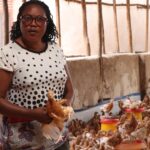
Jeanette Mujawayezu, the determined President of the Terimbere Mworozi Rwoga Group, remembers the early days with clarity and pride. “When PRISM first came to our community, we were each given 10 chickens,” she recalls, her voice filled with the weight of how far they’ve come. “For many of us, it was the very first time we owned any livestock. It was a small start, but it was our start.”
Initially, the farmers organized themselves into six smaller groups. They learned the fundamentals of poultry management—housing, feeding, and health—through the hands-on training provided by the project. They shared experiences, troubleshot problems together, and celebrated small victories. But as they learned and grew, a powerful realization took hold: their individual successes would be magnified if they stood as one.
“We saw that we were stronger together,” Jeanette explains. “If one of us had a sick chicken, the others could help. If someone needed advice, a neighbor had it. We decided to stop being six small groups and become one big family.”
That decision to unite as the Terimbere Mworozi Rwoga Group was their first major leap of faith. It immediately fostered a powerful spirit of cooperation. They began a collective savings scheme, with each member contributing what they could. This fund became their safety net and, more importantly, their launchpad.
Scaling Up: From Poultry to Pigs
With a small but growing pool of savings and the confidence gained from their poultry success, the group looked for their next opportunity. In 2025, they made a strategic decision to invest in pig farming. Pooling their resources, they purchased 12 pigs.
The move was a masterstroke. The pigs thrived, reproducing quickly and providing the group with a new, lucrative product: piglets. The sale of these piglets injected fresh capital into their collective savings, proving that their model of collaborative investment worked. Today, their group savings account boasts an impressive 820,000 Rwandan Francs—a powerful symbol of their collective grit and financial discipline.
The Secret Ingredient: Knowledge is Power
However, the story of Kabagari is not just about acquiring animals; it’s about acquiring wisdom. The farmers are quick to credit their success to the practical skills they gained through PRISM’s Farmer Field Schools. These weren’t theoretical lessons, but hands-on training in modern, sustainable livestock management.
They learned innovative techniques that have revolutionized their farms, particularly in the area of animal feed, which is often the biggest cost for smallholder farmers.
Azolla Farming: They now cultivate Azolla, a tiny, protein-rich aquatic fern, in small ponds. This “super-plant” grows rapidly and provides a cost-effective, highly nutritious feed supplement for their chickens and pigs.
Hydroponic Fodder: In simple structures, they grow lush, green fodder from barley or maize seeds without soil, using only water and a little care. This provides their animals with a consistent supply of fresh, vitamin-packed feed, even during dry seasons.
“These techniques changed everything for us,” Jeanette emphasizes. “Before, buying feed was eating into all our profits. Now, we can produce our own quality feed at a fraction of the cost. Our animals are healthier, more productive, and our farming is truly sustainable.”
A Story of Confidence, Cooperation, and a Brighter Tomorrow
Looking back, the path from a handful of chickens to a bank account teeming with savings is nothing short of extraordinary. What was once a collection of individuals with a small opportunity has transformed into a powerful, united community of farmers.
For the 126 members of the Terimbere Mworozi Rwoga Group, the PRISM project has been about much more than livestock. It has been a lesson in confidence—the belief that they could master new skills and manage their own economic destiny. It has been a testament to cooperation—the understanding that by lifting each other up, they all rise higher.
Today, with their savings and their newfound knowledge, the farmers of Kabagari are already planning their next steps. They dream of expanding their livestock enterprises further, perhaps investing in dairy cows or scaling up their piggery. They are no longer just recipients of aid; they are architects of their own future, entrepreneurs who have proven that even the smallest start, nurtured by unity and hard work, can lead to a profoundly meaningful transformation. Their shared success is a powerful model for rural communities everywhere.
Post Credit: Dieudonne HARAGIRIMANA
https://farmerstrend.co.ke/global-farming/global-get-inspired/from-10-chickens-to-a-shared-future/https://farmerstrend.co.ke/wp-content/uploads/2026/03/10-chickens-2026.jpghttps://farmerstrend.co.ke/wp-content/uploads/2026/03/10-chickens-2026-150x150.jpgGlobal: Get InspiredIn the rolling hills of Rwanda's Southern Province, big changes often have humble beginnings. In the Kabagari Sector of Ruhango District, a remarkable transformation didn't begin with a grand gesture, but with a simple, shared opportunity and the decision of a community to seize it together. This is the...FarmersTrendjohn doe[email protected]AdministratorFarmers Trend Ltd.



Leave a Reply