Before Nursery Establishment: How to Plan for Successful Seedling Production
Before starting a nursery, it is essential to plan for the marketing of your seedlings. Selling seedlings without a clearly identified market can result in financial losses. Potential buyers may include government agencies, NGOs, landscape or reforestation projects, private landowners, schools, and community groups, particularly in coastal areas. Seedling production should align with prior agreements where the required species, quantities, and plantation schedule are defined. This ensures efficiency and minimizes waste.

Several key factors must be considered during planning. A reliable transport system is necessary to carry seedlings without damage, whether using ventilated vans, boats for mangrove projects, or small trucks for inland distribution. The available manpower must be sufficient to manage daily nursery operations. Additionally, a detailed operational plan should cover planting, monitoring, and aftercare. A comprehensive maintenance strategy is critical to achieving a high survival rate for seedlings.
Framework for Seedling Production and Plantation
The planning stage begins with defining project specifications. This includes identifying the species, age, growth characteristics, quantity, and plantation date. A production timeline should be developed based on these specifications. Responsibilities among the nursery team, plantation crew, and maintenance team must be clearly assigned. In parallel, a financial plan should be prepared, outlining budgets for inputs, tools, transportation, labor, and other necessary resources.
Propagation media selection is the next step. Substrates must be chosen according to species requirements, taking into account nutrient content, composition such as sand, peat, or perlite, and physical properties that promote optimal seedling growth. These media should be suitable for the type of facility, whether a greenhouse, shaded area, or open space.
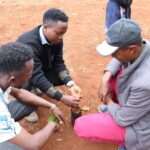
Propagation tools also need to be specified. This includes trays, pots, growing media, and any specialized equipment required for each species. Developing transplanting protocols is essential for potting and repotting seedlings. The timing and technique depend on the growth progress of each species, ensuring seedlings are transferred into larger containers or bags without damaging roots.
Procedures vary depending on the production environment. In greenhouses, temperature and humidity must be controlled, lighting should meet species requirements, and pest and disease management practices must be implemented. Irrigation and fertilization should be tailored to controlled conditions. For shaded areas, monitoring temperature and humidity remains important, while irrigation and fertilization practices must be adapted to partial sunlight and ambient environmental conditions. In open-field production, environmental factors such as sunlight exposure, temperature fluctuations, and soil management practices must be considered. Irrigation and fertilization systems should be designed to suit field conditions.
Following this framework ensures systematic and efficient nursery establishment. It enhances seedling quality, improves survival rates, and increases the overall success of plantation projects.
https://farmerstrend.co.ke/trending/before-nursery-establishment-how-to-plan-for-successful-seedling-production/https://farmerstrend.co.ke/wp-content/uploads/2025/08/GByElTPXsAAuybx-1024x768.jpghttps://farmerstrend.co.ke/wp-content/uploads/2025/08/GByElTPXsAAuybx-150x150.jpg# TrendingBefore starting a nursery, it is essential to plan for the marketing of your seedlings. Selling seedlings without a clearly identified market can result in financial losses. Potential buyers may include government agencies, NGOs, landscape or reforestation projects, private landowners, schools, and community groups, particularly in coastal areas. Seedling...FarmersTrendjohn doefarmerstrend@gmail.comAdministratorFarmers Trend Ltd.









Leave a Reply