Tomato Farming in Kenya 2026 – How to Earn KSh 600,000 Per Acre Without Losing Your Mind
Tomato Farming in Kenya 2026: How to Earn KSh 600,000 Per Acre Without Losing Your Mind
Tomato farming in Kenya is not for the lazy. The plant demands attention like a newborn baby. Skip one watering, and it wilts. Miss one spray, and disease wipes out your investment. Yet the rewards are massive for farmers who get it right. In Kenya, tomatoes are so popular that a kitchen without them is practically declared a state of emergency. The market never sleeps. The opportunities are real. This guide will show you exactly how to earn 600,000 shillings per acre from tomato farming in Kenya.
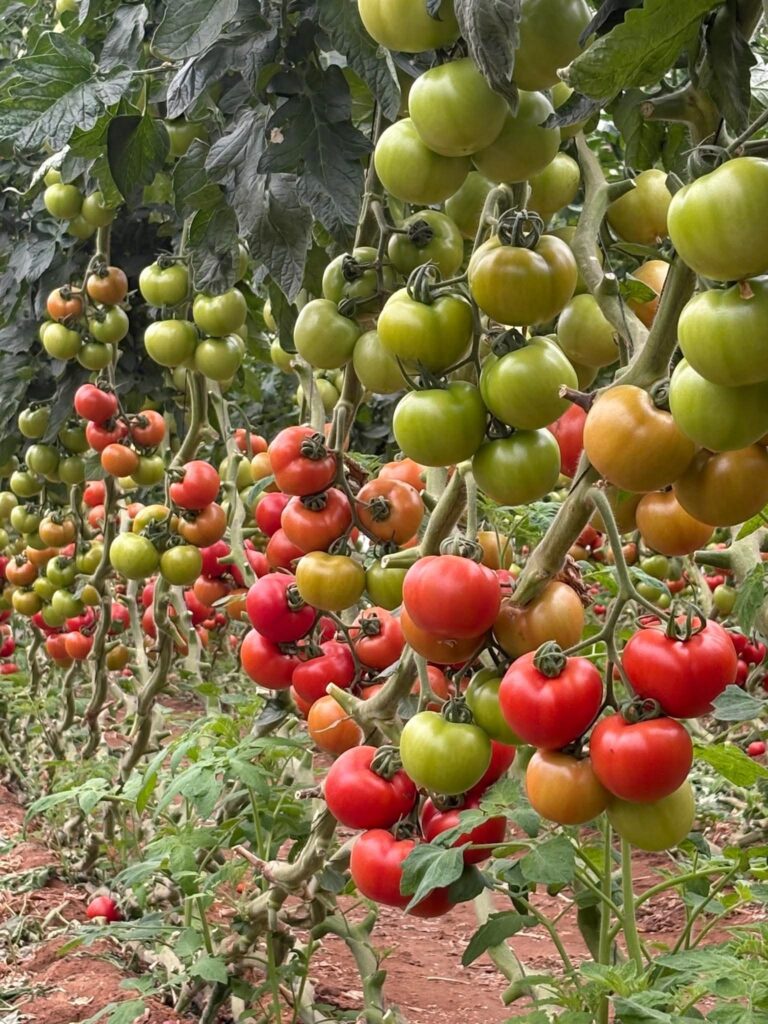
Tomato farming in Kenya is one of the most profitable horticultural ventures in the country. The demand is massive. Nairobi alone consumes over 500 tons of tomatoes every day. Mombasa, Kisumu, and Nakuru add thousands more tons. The market never sleeps. But the market also punishes farmers who do not understand its cycles. Prices can crash from 100 shillings per kilogram to 15 shillings overnight when supply floods in.
This guide by Farmers Trend Ltd. will teach you everything you need to know about commercial tomato farming in Kenya. You will learn about the 2026 market dynamics, financial planning, seasonal timing, nursery management, transplanting, nutrition, pest control, and harvesting.

The 2026 Tomato Economy and Market Dynamics in Tomato Farming in Kenya
Tomato farming in Kenya operates on a predictable cycle. During the peak harvest months of June to August and December to February, supplies are high and prices drop. During the off season, supplies are low and prices rise. A farmer who understands this cycle can earn three times more than a farmer who plants blindly. This is the first secret of successful tomato farming in Kenya.
Farmgate prices for tomatoes in 2026 range from 15 to 30 shillings per kilogram during peak season glut. During the off season, prices rise to 60 to 100 shillings per kilogram. Retail prices in supermarkets like Naivas and Carrefour are even higher, often reaching 150 to 200 shillings per kilogram. The middleman takes the difference. Farmers who sell directly to retailers or consumers capture more value from tomato farming in Kenya.
The market is structured around wholesale markets like Wakulima in Nairobi. Traders from across the country converge here. They buy in bulk and distribute to retail markets. Farmers who deliver to Wakulima get better prices than those who sell at the farm gate. But they also incur transport costs. A smart tomato farming in Kenya operation accounts for these logistics.
The demand for tomatoes is driven by urban growth. More people are moving to cities. More families are eating tomatoes every day. Hotels, restaurants, and schools also buy in large volumes. Processors make tomato paste, sauce, and juice. The market is growing at 5 percent per year. This steady growth makes tomato farming in Kenya a reliable long-term investment.
| Season | Months | Farmgate Price (KSh/kg) | Retail Price (KSh/kg) | Supply Level |
|---|---|---|---|---|
| Peak glut | June-Aug, Dec-Feb | 15-30 | 40-60 | High |
| Off-season | Mar-May, Sep-Nov | 60-100 | 120-200 | Low |
The 1-Acre Commercial Financial Blueprint for Tomato Farming in Kenya
How much does it cost to farm an acre of tomatoes in Kenya? The answer depends on your inputs and management. A professional open field setup using hybrid seeds and drip irrigation costs between 150,000 and 250,000 shillings per season. Here is the detailed breakdown for successful tomato farming in Kenya.
| Cost Item | Quantity | Unit Price (KSh) | Total (KSh) |
|---|---|---|---|
| Certified hybrid seeds (e.g., Anna F1) | 50 g | 3,500 | 3,500 |
| Seedling trays (200 holes each) | 150 | 300 | 45,000 |
| Cocopeat growing medium | 10 bales | 800 | 8,000 |
| Land preparation | 1 acre | 8,000 | 8,000 |
| Drip irrigation kit (including tape) | 1 acre | 60,000 | 60,000 |
| Mulch film (black plastic) | 1 acre | 15,000 | 15,000 |
| DAP fertilizer | 50 kg | 130 | 6,500 |
| CAN fertilizer | 100 kg | 90 | 9,000 |
| NPK 17:17:17 | 100 kg | 120 | 12,000 |
| Potassium nitrate (for fruit sizing) | 50 kg | 200 | 10,000 |
| Calcium nitrate (for blossom end rot) | 25 kg | 180 | 4,500 |
| Fungicides and insecticides (spray program) | 1 acre | 20,000 | 20,000 |
| Staking materials (wooden stakes) | 15,000 pieces | 10 | 150,000 |
| Labor (planting, trellising, spraying, harvest) | 50 days | 500 | 25,000 |
| Harvest crates | 50 pieces | 200 | 10,000 |
| Transport to market | 1 season | 10,000 | 10,000 |
| Total | 396,500 |
How many tomatoes can 1 acre produce in tomato farming in Kenya? Under optimal management with hybrid varieties and drip irrigation, an open field can yield 15 to 25 tons per acre. High-end greenhouse production can reach 40 to 60 tons per acre. The biological potential of advanced hybrids is even higher, but achieving it requires perfect conditions and management.
The revenue calculation is simple. At an average yield of 20 tons (20,000 kilograms) and an average price of 50 shillings per kilogram during the off season, gross revenue is 1,000,000 shillings. Subtract costs of 400,000 shillings. Net profit is 600,000 shillings per acre per season. With two seasons per year, you can earn over 1,200,000 shillings per acre annually from tomato farming in Kenya.

Structural Timings and Seasonal Planning for Tomato Farming in Kenya
Which is the best month to plant tomatoes in Kenya? The answer is March and August. These planting windows position your harvest for the off season when prices are highest. This timing is the difference between profit and loss in tomato farming in Kenya.
Planting in March (early long rains) delivers harvest in June and July. This is the off season. Supplies are low. Prices are high. Farmers who plant in March capture the premium. Planting in August (short rains) delivers harvest in November and December. This is also the off season. The December to January window is another high price period.
Planting in May or June is a mistake. You will harvest during the peak glut of August to September. Prices will be low. You will compete with every other farmer in the country. Many beginners make this error in tomato farming in Kenya.
The meteorological reason is simple. Tomatoes need warm days and cool nights. They need consistent moisture but not waterlogged roots. March and August provide these conditions. May planting often fails because of excessive rain and disease pressure. Plan your tomato farming in Kenya around these windows.
Step-by-Step Production Guide: Nursery Management for Tomato Farming in Kenya
How to grow tomatoes in Kenya step by step starts with the nursery. This is where your crop begins. A weak nursery produces weak plants. Weak plants produce low yields. This is the foundation of tomato farming in Kenya.
Prepare a raised nursery bed. The bed should be 1 meter wide and 15 centimeters high. The length depends on your needs. One square meter of nursery produces seedlings for 10 square meters of field. Sterilize the soil to kill weed seeds and pathogens. Solarization is the cheapest method. Cover the bed with clear plastic for 2 weeks. The sun heats the soil. The heat kills the pathogens.
Mix the soil with well-decomposed manure. Use 1 part manure to 3 parts soil. Add DAP fertilizer at 100 grams per square meter. Rake the bed smooth. Sow the seeds in rows. Space the rows 10 centimeters apart. Sow seeds at 1 centimeter depth. Cover lightly with fine soil. Water gently using a fine rose watering can.
Seedlings emerge in 5 to 7 days. Keep the nursery moist but not wet. Water daily in the morning. Remove weeds immediately. They compete with the young plants. The seedlings are ready for transplanting in 3 to 4 weeks. They should have 4 to 5 true leaves. They should be 10 to 15 centimeters tall. Harden them off by reducing water and exposing them to full sun for 5 days before transplanting. This is a critical step in tomato farming in Kenya.
Step-by-Step Production Guide: Transplanting and Spatial Architecture for Tomato Farming in Kenya
Transplant in the evening. The cooler temperatures reduce shock. Water the nursery bed before removing the seedlings. This keeps the roots intact. The ideal spacing depends on your variety and trellising system. For staked indeterminate varieties, use 60 centimeters between rows and 45 centimeters between plants. This gives approximately 15,000 plants per acre for optimal tomato farming in Kenya.
Dig a hole large enough for the root ball. Place the seedling gently. Cover with soil. Press lightly around the base. Do not bury the crown. Water immediately. What should never be planted near tomatoes? Potatoes and eggplants are bad neighbors. They share the same pests and diseases. Bacterial wilt can spread from potatoes to tomatoes. Fusarium wilt also moves between these crops. Keep them separated by at least 100 meters in your tomato farming in Kenya operation.
Good companions for tomatoes include basil, marigolds, and onions. Basil repels thrips and aphids. Marigolds repel root knot nematodes. Onions deter many insects. Mulch the field immediately after transplanting. Black plastic mulch is best. It suppresses weeds. It warms the soil. It reduces soil splashing onto leaves. This prevents soil borne diseases.

Crop Nutrition and Fruit Expansion Dynamics in Tomato Farming in Kenya
Tomatoes are heavy feeders. They need a constant supply of nutrients. The demand changes as the plant grows. At transplanting, apply DAP at 50 kilograms per acre. Phosphorus supports root development. Strong roots mean strong plants in tomato farming in Kenya.
At 3 weeks, apply CAN at 50 kilograms per acre. Nitrogen drives leaf growth. More leaves mean more photosynthesis. More photosynthesis means more energy for fruit. At 6 weeks, apply NPK 17:17:17 at 50 kilograms per acre. This balanced fertilizer supports the transition to flowering. Continue applying NPK every 2 weeks until the first harvest.
Which fertilizer increases tomato size? Potassium nitrate is the answer. Potassium drives fruit expansion. It moves sugars into the fruit. It also improves firmness and colour. Apply potassium nitrate at 50 kilograms per acre when the fruits are marble sized. Repeat after 2 weeks. This is a key technique in tomato farming in Kenya.
Calcium is critical for preventing blossom end rot. This disorder causes dark sunken spots on the bottom of the fruit. It is not a disease. It is a calcium deficiency. Apply calcium nitrate as a foliar spray at 10 grams per 20 liters of water. Spray weekly during fruit development. Boron and zinc are also important. Boron improves flower set. Zinc supports fruit development. Apply a complete micronutrient foliar spray every 2 weeks.
Development Lifecycles and Yield Expectation per Plant in Tomato Farming in Kenya
How many weeks does it take for tomatoes to bear fruit? Determinate varieties take 60 to 70 days from transplanting to first harvest. Indeterminate varieties take 70 to 80 days. The difference is the growth habit. Determinate varieties stop growing after flowering. Indeterminate varieties keep growing and producing for months. This is important for planning your tomato farming in Kenya calendar.
How many tomatoes can one plant produce per year? A well-managed indeterminate plant in a greenhouse can produce 10 to 15 kilograms of fruit over 8 to 10 months. That is 40 to 60 fruits per plant. In an open field, with staking and pruning, a plant can produce 5 to 8 kilograms over 3 to 4 months. The growth timeline is predictable. Days 0 to 30 are for vegetative growth. Days 30 to 45 are for flowering. Days 45 to 75 are for fruit development. The first harvest comes at day 60 to 80.
| Growth Stage | Days After Transplanting | Key Activities |
|---|---|---|
| Vegetative | 0-30 | Water, fertilize (N), weed |
| Flowering | 30-45 | Reduce N, increase K and Ca |
| Fruit set | 45-60 | Apply KNO3, Ca foliar spray |
| Harvest | 60-80 | Pick ripe fruits every 2-3 days |
Staking, Pruning, and Canopy Management for Tomato Farming in Kenya
Staking is not optional for indeterminate varieties. The plants will collapse under the weight of the fruit. Use wooden stakes 1.5 to 2 meters tall. Drive them 30 centimeters into the ground. Space them next to each plant. Tie the main stem to the stake with soft twine. Use a figure eight knot. This prevents the stem from rubbing against the stake. Tie every 30 centimeters as the plant grows. Proper staking is essential for tomato farming in Kenya.
Pruning is essential for directing energy into fruit. Remove all suckers that grow between the main stem and branches. These suckers will not produce quality fruit. They only steal energy. Also remove the lower leaves. They touch the soil. They collect diseases. Remove them up to 30 centimeters from the ground. For indeterminate varieties, top the plants at 1.5 to 1.8 meters. This stops upward growth. It directs energy into the remaining fruit.

Integrated Pest and Disease Management for Tomato Farming in Kenya
Tomatoes have many enemies. You must have a spray program. Do not wait for problems to appear. Prevent them. Early blight causes dark spots on lower leaves. The spots have concentric rings. Late blight causes water soaked lesions on leaves and fruit. Both are fungal diseases. Control them with copper based fungicides. Spray every 7 to 10 days.
Bacterial wilt is a soil borne disease. The plant wilts and dies suddenly. There is no cure. Prevention is the only strategy. Plant resistant varieties. Rotate crops. Do not plant tomatoes in the same field more than once every 3 years. This is critical for sustainable tomato farming in Kenya.
Whiteflies are the most destructive pest. They suck sap. They transmit viruses. Control whiteflies with yellow sticky traps. Place them at 50 per acre. Use insecticides like imidacloprid or abamectin. Rotate products to prevent resistance.
Spider mites thrive in hot, dry conditions. They cause yellow stippling on leaves. Control mites with miticides like abamectin. Increase humidity by mulching and watering regularly.
| Pest/Disease | Symptoms | Chemical Control | Organic Control |
|---|---|---|---|
| Early blight | Dark spots on lower leaves | Copper fungicides | Neem oil, remove infected leaves |
| Late blight | Water soaked lesions | Mancozeb, Ridomil | Remove infected plants |
| Bacterial wilt | Sudden wilting | None (prevention only) | Crop rotation, resistant varieties |
| Whiteflies | Yellowing, virus transmission | Imidacloprid, abamectin | Yellow sticky traps, neem oil |
| Spider mites | Yellow stippling, webbing | Abamectin | Predatory mites, increase humidity |

Harvesting Science and Smart Market Access for Tomato Farming in Kenya
Tomatoes are ready to harvest when they reach the breaker stage. This is when the fruit shows the first colour change from green to pink or red. At this stage, the fruit will continue ripening after harvest. Do not wait for full colour. The fruit will be too soft. It will bruise during transport. It will have a shorter shelf life.
Harvest in the morning when temperatures are cool. Use sharp scissors or a knife. Cut the stem 1 centimeter above the fruit. Do not pull the fruit. This can damage the plant and the fruit. Sort the fruit by size and colour. Grade out any damaged or diseased fruit. Pack them in clean crates. Do not stack more than 3 layers deep. The bottom fruits will crush. Proper post-harvest handling is essential for profitable tomato farming in Kenya.
Your tomato farming in Kenya journey does not end at harvest. The smart farmer thinks ahead to the next season while still picking fruits from the current one. Successful tomato farming in Kenya requires continuous learning and adaptation. The market changes. The weather changes. Pest pressure changes. You must change with them.
One of the biggest mistakes farmers make is neglecting post-harvest handling. Up to 20 percent of harvested tomatoes can be lost between the field and the market. This is money left on the ground. Handle your fruits with care. Do not throw them into crates. Do not stack them too high. Do not leave them in the sun while waiting for transport.
A simple shed with shade netting can reduce post-harvest losses by half. Keep your harvested tomatoes in a cool, shaded area. Sort them before transport. Remove any damaged or diseased fruits immediately. One rotten tomato can spoil a whole crate.
Transport your tomatoes early in the morning. The temperatures are lower. The fruits are firmer. Cover the crates with a damp sack to keep them cool. Do not use a plastic sheet. It traps heat and moisture. This speeds up rotting.

Common Mistakes That Destroy Tomato Farming in Kenya
Many farmers fail because they repeat the same mistakes season after season. Here are the most common errors in tomato farming in Kenya. Avoid them at all costs.
Planting the same variety every season is a mistake. Hybrids lose their vigour over time. Rotate between different varieties. This also helps break pest cycles.
Ignoring crop rotation is another error. Never plant tomatoes in the same field two seasons in a row. The soil becomes infected with wilt pathogens. Rotate with maize, beans, or onions. A three-year rotation is ideal.
Skipping the hardening off process kills many seedlings. Farmers who rush to transplant without hardening lose 30 percent of their plants. Do not skip this step. It takes only 5 days.
Overwatering causes root rot and blight. Many farmers think more water means more fruit. The opposite is true. Too much water encourages disease. Water only when the top 2 centimeters of soil feel dry.
Underwatering is equally bad. Water stress causes blossom end rot and fruit cracking. The key is consistency. Keep the soil evenly moist. Do not let it dry out completely between waterings.
Ignoring early pest signs is a disaster. A few aphids today become thousands next week. Walk through your field every morning. Look under the leaves. Check the growing tips. Act at the first sign of trouble.
Using the wrong fertilizer at the wrong time wastes money. Nitrogen is for leaves. Potassium is for fruit. Apply them at the correct growth stages. Too much nitrogen when the plants are flowering will give you lots of leaves and no fruit.
Not staking indeterminate varieties is a guarantee of low yields. The fruit will rot on the ground. The plants will be harder to spray. The harvest will take twice as long. Spend the money on stakes. It pays back.
Greenhouse vs Open Field for Tomato Farming in Kenya
Many farmers ask whether they should invest in a greenhouse. The answer depends on your budget and goals. Greenhouse tomato farming in Kenya has advantages and disadvantages.
Greenhouses protect your crop from rain and wind. This reduces disease pressure. You can grow tomatoes year-round, even during the rainy season. You can also control the environment more precisely.
The downside is cost. A 500 square meter greenhouse costs 300,000 to 500,000 shillings. This is a significant investment. You also need to manage temperature and humidity carefully. A poorly managed greenhouse is worse than an open field.
Open field tomato farming in Kenya is cheaper to start. You can begin with 100,000 shillings per acre. The risks are higher because of weather exposure. But the potential returns are still good.
For beginners, start with open field. Learn the crop. Master the basics. Then consider upgrading to a greenhouse once you have capital and experience.
Water Quality and Its Impact on Tomato Farming in Kenya
Water quality is often ignored. Yet it affects every aspect of tomato farming in Kenya. Poor water causes leaf burn, root problems, and disease.
Test your water before planting. High salt levels will damage your plants. The leaves will turn yellow at the edges. The growth will be stunted. The fruit will be small.
If your water is salty, consider installing a filtration system. Or collect rainwater. Or mix your borehole water with rainwater to dilute the salts.
The pH of your water also matters. Ideal pH is 6.0 to 6.8. Water that is too acidic or too alkaline will lock up nutrients. Your plants will show deficiencies even when you are applying fertilizer.

Soil Health and Long-Term Sustainability
Tomato farming in Kenya depletes soil nutrients rapidly. You must replenish what you take out. Otherwise, your yields will drop season after season.
Add organic matter every season. Compost, manure, and crop residues all improve soil structure. They also feed soil microbes. These microbes help your tomatoes absorb nutrients.
Green manure crops are another option. Plant cowpeas or lablab between tomato seasons. Then plough them into the soil. They add nitrogen and organic matter.
Test your soil every 2 years. Know your pH, organic matter, and nutrient levels. This information guides your fertilizer choices. It saves you money and improves yields.
Value Addition Opportunities in Tomato Farming in Kenya
You do not have to sell all your tomatoes fresh. Value addition can increase your profits significantly. Here are some options.
Tomato paste is easy to make. Wash the tomatoes. Boil them until soft. Press through a sieve to remove skins and seeds. Cook the pulp until thick. Add salt. Bottle in sterilised jars. Paste sells for 300 to 500 shillings per kilogram.
Sun-dried tomatoes are another product. Slice the tomatoes thinly. Lay them on a clean surface. Cover with a net to keep insects away. Dry for 3 to 5 days. Pack in airtight containers. Sun-dried tomatoes sell for 800 to 1,200 shillings per kilogram.
Tomato juice is also in demand. Blend ripe tomatoes with a little water. Strain. Add sugar and lemon juice. Pasteurize and bottle. Juice sells for 100 to 200 shillings per litre.
These value-added products have a longer shelf life than fresh tomatoes. You can sell them when prices are low for fresh produce. They also open up new markets like health food stores and hotels.

The Role of Technology in Tomato Farming in Kenya
Technology is changing tomato farming in Kenya. Smart farmers are using digital tools to improve their yields and profits.
Weather apps help you plan planting and spraying. Know when rain is coming. Avoid spraying before a downpour. The rain will wash away your chemicals.
Market price apps show real-time prices at different markets. You can compare prices before loading your truck. This small step can add thousands of shillings to your profit.
Soil moisture sensors take the guesswork out of irrigation. They tell you exactly when to water. This saves water and prevents overwatering.
Drones are now used for scouting large fields. They spot pest hotspots before they spread. This allows targeted spraying, which saves money and protects beneficial insects.
You do not need all this technology to start. But adopt one new tool each season. Over time, you will build a highly efficient operation.
Farmer Success Stories in Tomato Farming in Kenya
Learning from others is powerful. Here is a story of a farmer who transformed his life through tomato farming in Kenya.
Mr. Peter Maina from Nyeri started with 0.5 acres in 2020. He had no experience. He made every mistake in the book. His first crop failed. His second crop was eaten by pests. He almost gave up.
In 2021, he attended a training on tomato farming. He learned about varietal selection, crop rotation, and integrated pest management. He invested in drip irrigation and black plastic mulch. He planted Anna F1 hybrid seeds.
His third crop produced 12 tons from 0.5 acres. He sold at 80 shillings per kilogram during the off season. His revenue was 960,000 shillings. His costs were 250,000 shillings. His profit was 710,000 shillings from half an acre.
He now farms 2 acres. He employs three workers. He has built a new house and bought a motorbike. His children are in private school. He plans to expand to 5 acres in 2027.
His advice is simple. Start small. Learn the basics. Master one acre before expanding. Use certified seeds. Follow a spray program. Do not cut corners. The market rewards quality.
The Future of Tomato Farming in Kenya
The future of tomato farming in Kenya looks bright. Demand continues to grow. Technology is making farming easier. New hybrid varieties are increasing yields.
The government is supporting horticulture through the Kenya Plant Health Inspectorate Service (KEPHIS). They certify seeds and monitor pests. They also train extension officers who help farmers.
The export market for Kenyan tomatoes is also opening up. Processors are looking for high-quality paste tomatoes. European buyers want organic cherry tomatoes. This creates new opportunities for farmers who can meet the standards.
The key to success in tomato farming in Kenya is continuous learning. Attend trainings. Read guides. Talk to other farmers. Experiment with new varieties and techniques. Keep records of what works and what does not.
Your Next Step
Tomato farming in Kenya is not for the faint of heart. It requires hard work, attention to detail, and patience. But the rewards are real. Farmers are earning 600,000 shillings per acre. They are building houses. They are sending children to university. They are escaping poverty.
Your next step is clear. Decide which hybrid variety you will plant. Anna F1 is a good choice for open field. Choose your planting window. March and August are best. Prepare your nursery. Sterilize your soil. Use certified seeds.
When your seedlings are ready, transplant in the evening. Space at 60 by 45 centimeters. Water immediately. Mulch with black plastic. Stake your plants. Prune the suckers. Follow a strict spray program. Harvest at the breaker stage.
Sell directly to retailers for the best prices. Build relationships with hotels and restaurants. Join a cooperative to aggregate produce. Consider value addition for overripe fruits.
For certified tomato seeds, drip irrigation kits, and the 2026 Tomato Farming in Kenya PDF guide, contact Farmers Trend Ltd at 0790509684. The market is waiting. The profits are real. The time to plant is now. Which hybrid variety are you prepping your nursery for? Your tomato farming in Kenya journey starts today. Go plant. Go earn. Go change your life.
https://farmerstrend.co.ke/crops/tomato-farming/tomato-farming-in-kenya-guide/https://farmerstrend.co.ke/wp-content/uploads/2026/05/Tomato-farming-in-kenya-2026-768x1024.jpghttps://farmerstrend.co.ke/wp-content/uploads/2026/05/Tomato-farming-in-kenya-2026-150x150.jpgTomato Farming# TrendingAnna F1 tomato seeds Kenya,Best month to plant tomatoes Kenya,Blossom end rot prevention,Determinate vs indeterminate tomatoes,Farmers Trend tomato seeds,How to grow tomatoes step by step,Potassium nitrate for tomato size,Staking and pruning tomatoes,Tomato farming profit per acre,Tomato price per kg Nairobi 2026,Tomato yield per acre Kenya,Whitefly control tomatoesTomato Farming in Kenya 2026: How to Earn KSh 600,000 Per Acre Without Losing Your Mind Tomato farming in Kenya is not for the lazy. The plant demands attention like a newborn baby. Skip one watering, and it wilts. Miss one spray, and disease wipes out your investment. Yet the...FarmersTrendjohn doefarmerstrend@gmail.comAdministratorFarmers Trend Ltd.

Leave a Reply