Complete Guide to Mangosteen Farming in Kenya: Planting, Care, Harvesting, and Profitability
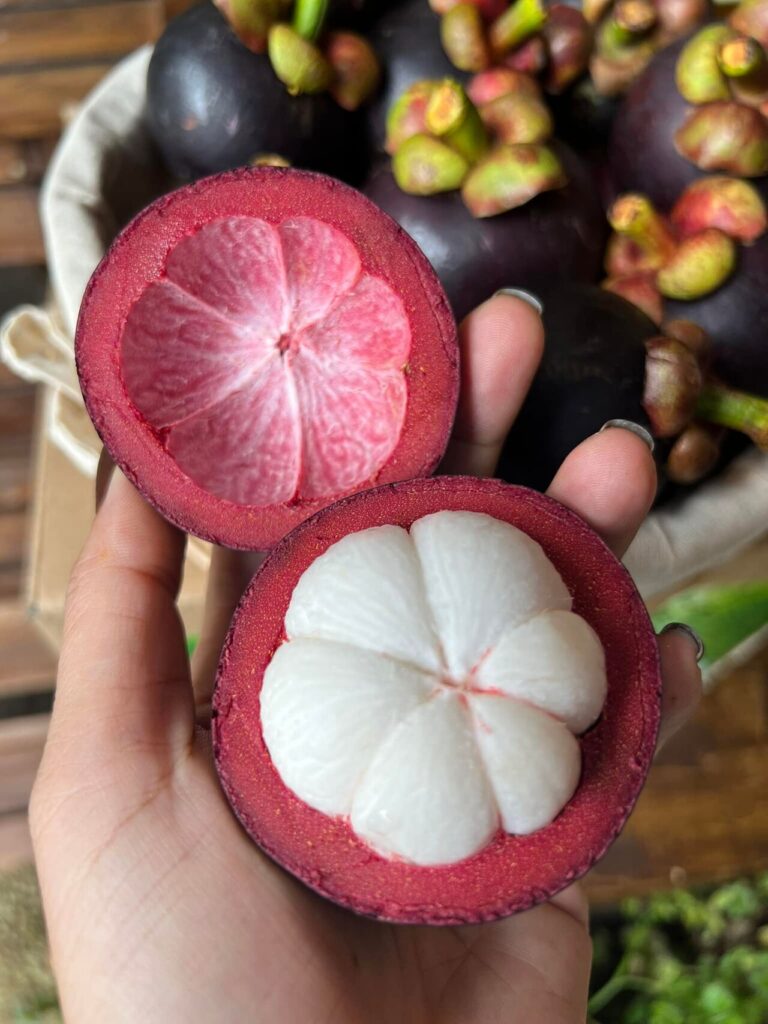
Mangosteen (Garcinia mangostana) is a tropical fruit crop highly valued for its market price and demand. Known for its long juvenile phase, careful attention to nursery, soil, irrigation, and pest management is essential for successful production. In Kenya, farmers are increasingly investing in mangosteen due to its potential profitability, especially in coastal and western regions where rainfall and humidity are sufficient.

Mangosteen farming requires patience, as trees take 8–12 years to start bearing fruits. However, once established, a single acre can produce 150 trees, each yielding 200–800 fruits per season, translating into substantial revenue at the current retail price of 1,500 Ksh per kilogram.
Suitable Regions for Mangosteen in Kenya
Mangosteen thrives in humid tropical areas with fertile, well-drained soils. Recommended regions include:
- Coastal Counties: Kilifi, Kwale, Tana River, Lamu, Mombasa.
- Western Kenya: Kakamega, Bungoma, Busia.
- Other Regions: Kitui, Machakos, and areas with reliable irrigation.
https://agrovet.farmerstrend.co.ke/online-agrovet/farm-inputs/mangosteen-seedlings/
Seedlings should be sourced from reliable suppliers. Farmers Trend offers high-quality mangosteen seedlings. For orders, contact 0790509684 or 0724559286.
Ecological Conditions
- Temperature: 25–35°C; sensitive to frost.
- Rainfall: 1,500–2,500 mm annually. Supplement irrigation in dry periods.
- Soil: Sandy loam, clay loam, or volcanic soils; avoid waterlogging.
- Shade: Young trees require 50% shade for 1–2 years.
- Irrigation: Ensure consistent moisture, particularly in the first five years.
Mangosteen Varieties
Kenya primarily grows seed-propagated, parthenocarpic varieties. These produce fruits without fertilization and are preferred for commercial production. Select seedlings that are healthy and disease-free.
Propagation and Nursery Management
Mangosteen is propagated through seeds:
- Seed Selection: Choose large, fresh seeds weighing over 1 g.
- Preparation: Rub seeds in fine sand, soak 24 hours before sowing.
- Nursery Media: Mix topsoil with compost, coir dust, or peat; maintain pH 6.0–6.5.
- Sowing: Plant seeds 1 cm deep in seed boxes, polybags, or pots; maintain 50% shade.
- Watering: 3–4 times per week, avoiding waterlogging.
- Fertilization: Light doses of NPK and organic manure.
- Pest Management: Monitor for leaf miners, caterpillars, and fungal infections.
Mangosteen Seedlings are ready for transplanting after 1.5–2 years, reaching 30 cm in height.
Land Preparation
- Clearing: Remove stumps and roots.
- Ploughing and Harrowing: Deep ploughing once or twice, followed by harrowing for good soil tilth.
- Planting Holes: 60 x 60 x 60 cm; mix topsoil with 20 kg well-decomposed cow, chicken, or goat manure, and 500 g rock phosphate per hole.
- Spacing: 5 x 5 m recommended in Kenya, allowing 150 trees per acre.
Temporary shade can be provided with bananas or papayas.
Transplanting
- Transplant at the start of the rainy season.
- Water seedlings thoroughly before moving.
- Carefully remove polybags, keeping root ball intact.
- Place seedlings at same depth as nursery growth.
- Fill holes with soil-manure mix and mulch around the base.
- Water immediately after planting.

Irrigation
- Young trees: water 60–75% of daily pan evaporation.
- Mature trees: irrigation every 1–2 weeks in dry season.
- Use drip irrigation or low-angle sprinklers.
- Mulch helps retain moisture.
- Short dry periods (2–3 weeks) can trigger flowering.
Weed Control
- Use mulches or herbicides for commercial orchards.
- Glyphosate (1.5–3.75 kg/ha) or paraquat (0.5–1 kg/ha) can control annual and perennial weeds.
- Monitor young seedlings regularly to prevent competition.
Intercropping and Mulching
- Intercrop with bananas, papayas, or other shade crops.
- Mulch 10–15 cm thick around base using leaves, grass, or wood chips.
- Mulching reduces weeds, retains moisture, and adds organic matter.
Windbreaks and Staking
- Use fast-growing trees or hedges as windbreaks.
- Stake young trees until roots establish.
- Reduces breakage and leaf loss.
Pest and Disease Management
| Pest/Disease | Description | Management |
|---|---|---|
| Leaf miners (Phyllocnistis sp.) | Larvae create mines in leaves | Remove affected leaves, apply neem or insecticides |
| Leaf-eating caterpillars (Stictoptera spp.) | Feed on leaves and shoots | Handpick or use Bacillus thuringiensis (Bt) |
| Fungal diseases (anthracnose) | Fruit rot, leaf spots | Remove affected parts, maintain drainage, use copper fungicides |
| Fruit borers | Bore into fruits | Bag fruits, remove damaged fruits, pheromone traps |
Fertilization
- Apply NPK 16-16-16 combined with organic manure.
- Apply micronutrients like magnesium and zinc.
- Regular fertilization is crucial for canopy and fruit development.

Training and Pruning
- Remove weak, dead, or diseased branches.
- Correct upright growth and inner branches to improve lateral development.
- Avoid pruning during flowering or fruiting.
- Increases light penetration and air circulation, enhancing yield.
Harvesting
- Fruit-bearing starts 8–12 years from seed.
- Harvest when rind turns deep purple.
- Use scissors or pruning shears to avoid branch damage.
- Each tree produces 200–800 fruits per season.
Post-Harvest Handling
- Handle fruits carefully to avoid bruising.
- Wash, dry, and pack in ventilated crates.
- Store in cool, shaded areas to extend shelf life.
Marketing
- Retail price: 1,500 Ksh per kg.
- Markets include supermarkets, hotels, local shops, and exports.
- Direct sales or contracts with distributors improve profitability.
Yield and Profitability per Acre
- 150 trees per acre at 5 x 5 m spacing.
- Each tree: 200–800 fruits.
- Average fruit weight: 75–150 g.
- Revenue potential is high, making mangosteen a profitable crop with proper management.
Pros and Cons
Pros:
- High market demand and price.
- Long productive life.
- Can be intercropped with other crops.
- Enhances farm biodiversity.
Cons:
- Long juvenile period (8–12 years).
- Sensitive to water stress.
- Requires careful nursery and transplant management.
- High initial investment.
Health Benefits
- Rich in antioxidants.
- Supports immune health.
- Promotes digestion.
- Reduces inflammation.
- Provides vitamins and minerals.

Frequently Asked Questions (FAQs)
- Does mangosteen grow in Kenya?
Yes, in humid coastal and western regions with adequate rainfall. - How long to fruit?
8–12 years from seed. - Best spacing?
5 x 5 meters per tree, 150 trees per acre. - Seedling price?
Up to 8,500 Ksh. - Intercropping possible?
Yes, bananas and papayas provide shade. - Average yield per tree?
200–800 fruits. - Price per kg?
1,500 Ksh. - Main pests?
Leaf miners, caterpillars, fruit borers, fungal diseases. - Soil type?
Well-drained sandy or clay loam. - Watering frequency?
3–4 times weekly for seedlings; mature trees every 1–2 weeks. - When to transplant?
At the beginning of the rainy season. - Pruning necessary?
Yes, to remove dead and weak branches. - Drought tolerance?
Sensitive, short dry periods tolerated. - Recommended fertilizer?
NPK 16-16-16 with organic manure. - Mulch thickness?
10–15 cm. - Seedling maturity for transplant?
1.5–2 years. - Marginal soils?
Possible with soil amendments and irrigation. - Tree lifespan?
Several decades. - Fruit export possible?
Yes, with proper handling. - Shade requirement?
50% shade for young trees. - Irrigation method?
Drip or micro-sprinklers. - Wind protection?
Yes, windbreaks required. - Expected profit?
High, depending on yield and price. - Home garden planting?
Yes, if conditions are met. - Main limitation?
Long juvenile period. - Fruit handling?
Wash, dry, and store in ventilated crates. - Uses of leaves?
Medicinal and research purposes. - Fruit diseases?
Anthracnose and rot. - Flowering stimulation?
Short dry spell and adequate care. - Where to buy seedlings?
Farmers Trend: 0790509684 or 0724559286.



Hi thank you for the guide.
I’m looking forward to grow mangosteen trees in Lamu Kenya. Where can I get the seedlings? And what are the best varieties that I have to look for?
Get intorch with +254790509684