Flip-Over Disease in Broilers: How to Prevent SDS and Ascites Through Feed Restriction
The Broiler Growth Paradox: Eradicating Flip-Over Disease (SDS) and Ascites through Precision Nutrition and Ventilation Management
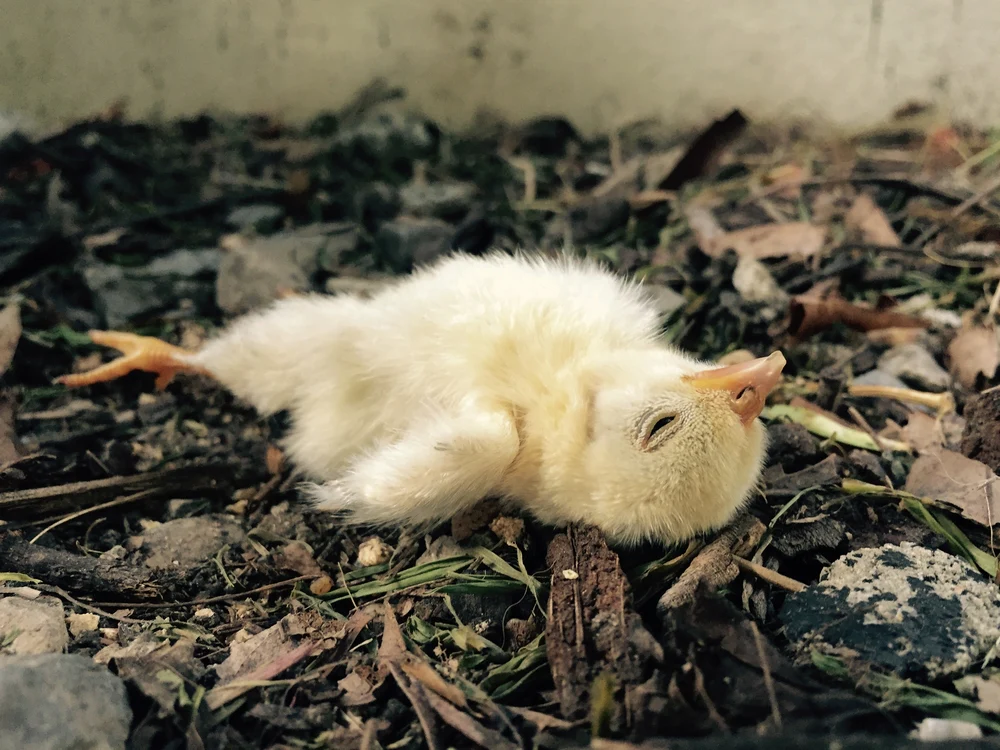
You walk into the broiler house at dawn. The birds are feeding aggressively. Everything looks normal. Two hours later, you find 15 dead birds on their backs. Legs stiff. Wings spread. Full crops. These were your healthiest, fastest growing birds yesterday. Today they are carcasses.
Trying to cure a flock experiencing massive metabolic flip-over losses by simply throwing cheap antibiotics into the water line is like trying to fix a blown car head gasket by wiping down the windshield. You are treating the wrong problem. Flip-Over Disease, Sudden Death Syndrome (SDS), and Ascites are not bacterial infections. They are metabolic failures. They result from the biological collision between hyper-accelerated broiler genetics and suboptimal feed management or poor ventilation.
Modern broiler chickens have been genetically selected for one trait above all others. Rapid muscle deposition. A broiler today reaches slaughter weight in 35 to 42 days. The same process took 80 days thirty years ago. This genetic gain comes with a biological cost. The broiler’s heart and lungs have not evolved at the same speed as its breast muscles.
Consequently, the cardiovascular system becomes the limiting factor. The bird’s relatively small lungs cannot extract enough oxygen to support the explosive muscle growth. The heart struggles to pump blood through the pulmonary circuit. Pressure builds in the right ventricle. Fluid leaks into the abdominal cavity. This is Ascites. Alternatively, the heart simply stops. The bird dies instantly. This is Flip-Over Disease or Sudden Death Syndrome.
This guide is for broiler farmers who lose birds in the final two weeks of the grow-out. It is for farm managers who have accepted 3 to 5 percent mortality as normal. It is for anyone who wants to finish more birds at target weight without losing them to metabolic failure.
Let us fix your flock.
Introduction: The Biological Cost of Hyper-Accelerated Broiler Genetics
The modern broiler is a biological paradox. It has been bred to grow at a rate that its own organ systems cannot always support. Selective breeding programs have focused almost exclusively on feed conversion ratio (FCR) and breast muscle yield. Heart size, lung capacity, and vascular density have received little attention.
As a result, the broiler’s oxygen demand outstrips its oxygen delivery capacity. This mismatch becomes critical in the final two weeks of the grow-out. The bird has reached 70 to 80 percent of its final body weight. Its metabolic rate is at its peak. Any additional stress. A hot day. A ventilation failure. A sudden increase in feed intake. This pushes the bird over the threshold.
Flip-Over Disease and Ascites are not new problems. However, their prevalence has increased as broiler genetics have improved. Flocks with mortality rates above 5 percent in the last 14 days are almost certainly experiencing some level of metabolic syndrome. The economic impact is severe. Each dead bird represents lost feed, lost medication, lost labor, and lost revenue. A 10,000 bird flock with 10 percent late mortality loses 1,000 birds. At slaughter weight, this is approximately 2,000 kilograms of meat. At Kenyan market prices, this is KES 500,000 to KES 800,000 in lost income.
The good news is that metabolic mortality is largely preventable. You cannot change the bird’s genetics. You can change how you feed it. You can change its environment. Precision nutrition and ventilation management are your primary tools. We cover both in detail.
Pathophysiology: Inside the Cardiovascular Collapse of Flip-Over Disease
Flip-Over Disease is also called Sudden Death Syndrome (SDS). It is an acute metabolic event. The bird is eating normally minutes before death. It shows no prior signs of illness. It simply dies on the spot.
The Acute Cardiac Event
The underlying mechanism is cardiac arrhythmia. The broiler’s heart is working at maximum capacity. The myocardium (heart muscle) is under constant stress. This stress alters the electrical conduction system of the heart. The normal rhythmic contraction becomes disorganized. The ventricles quiver instead of pump. This is ventricular fibrillation. Blood flow stops. The bird loses consciousness and dies within seconds.
Why does the broiler heart reach this state of electrical instability? The answer lies in the cellular level. The heart muscle cells (cardiomyocytes) require large amounts of adenosine triphosphate (ATP) to contract and relax. ATP is produced in the mitochondria using oxygen. When oxygen supply is insufficient, the mitochondria produce reactive oxygen species (free radicals). These free radicals damage the cell membranes and disrupt the ion channels that control electrical activity.
Specifically, the rapid growth rate demands high levels of thyroid hormone. Thyroid hormone increases the basal metabolic rate. It also directly stimulates the heart rate. A broiler’s resting heart rate can exceed 400 beats per minute. This is twice the rate of a layer hen. Such a high heart rate leaves little room for compensation during stress.
Post-Mortem Findings in SDS
The classic post-mortem finding in Sudden Death Syndrome is the position of the body. Birds are typically found on their backs with their legs pointing upward. This is the “flip-over” position. The legs are stiff and extended. The wings may be spread slightly away from the body.
Internally, the crop and ventriculus (gizzard) are full of feed. The bird ate right up to the moment of death. The lungs are congested and dark red. There may be petechial hemorrhages (small red spots) on the heart and liver. The gall bladder is empty or significantly distended with bile. This is a key distinguishing feature. Empty gall bladder indicates that bile was released just before death. This is a stress response.
The heart itself may appear enlarged. The right ventricle is often dilated compared to the left. This is evidence of chronic pressure overload that predated the acute event. The bird was compensating until it could compensate no longer.
Age and Sex Predisposition
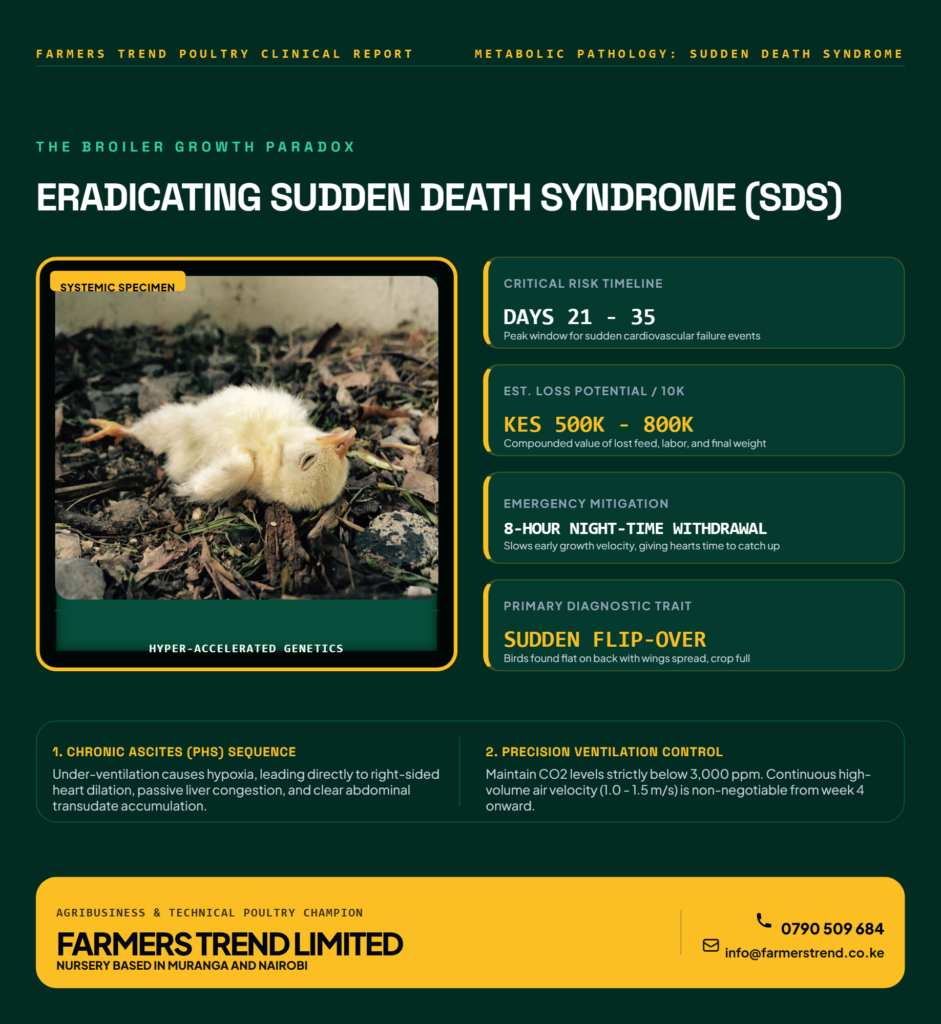
Sudden Death Syndrome typically occurs in the third to fifth week of the grow-out. The peak incidence is between days 21 and 35. Male birds are affected two to three times more frequently than females. This is because males grow faster and reach a higher final body weight. Their oxygen demand is proportionally greater.
The syndrome often follows a period of rapid weight gain. A flock that has achieved excellent feed conversion and high daily weight gains is paradoxically at higher risk. This is the growth paradox in action. Your best performing birds are your most vulnerable.
Pulmonary Hypertension Syndrome: The Mechanical Chain Reaction Leading to Ascites
Ascites is a chronic metabolic failure. Unlike the acute collapse of SDS, Ascites develops over days or weeks. The bird gradually accumulates fluid in its abdominal cavity. The abdomen becomes distended and pendulous. The bird breathes with difficulty. It may have a bluish discoloration of the comb and wattles (cyanosis).
The Pathophysiology of Right Ventricular Failure
Ascites is a clinical sign, not a disease. The underlying condition is Pulmonary Hypertension Syndrome (PHS). The mechanical chain reaction proceeds through six steps.
First, the broiler’s high metabolic rate demands large amounts of oxygen. Second, the bird’s relatively small lungs cannot extract oxygen efficiently at high blood flow rates. Third, the blood vessels in the lungs constrict in response to low oxygen levels (hypoxia). This is called hypoxic pulmonary vasoconstriction. Fourth, this vasoconstriction increases the resistance to blood flow through the lungs. Fifth, the right ventricle must work harder to pump blood against this increased resistance. Sixth, the right ventricle fails. Blood backs up into the liver and abdominal cavity. Fluid leaks out.
The fluid that accumulates is a transudate. It is a clear, straw-colored liquid. It is not blood or pus. The abdomen becomes distended. The bird walks with a wide-based stance to accommodate the fluid. It breathes with an open beak. The comb and wattles may appear pale or bluish due to poor oxygenation.
Cellular Hypoxia in Broilers
The fundamental problem is oxygen delivery. A 2.5 kilogram broiler at 35 days consumes approximately 10 to 15 liters of oxygen per hour. This is three to four times the oxygen consumption of a layer hen of the same weight. The broiler’s lungs are not three to four times larger. They are roughly the same size.
The bird compensates by increasing its respiratory rate. A normal broiler at rest breathes 30 to 40 times per minute. A bird with early Ascites may breathe 60 to 80 times per minute. This rapid breathing is inefficient. The air does not have time to fully exchange in the lungs. The oxygen saturation of the blood remains low.
The low blood oxygen (hypoxemia) triggers the release of erythropoietin. This hormone stimulates the bone marrow to produce more red blood cells. The blood becomes thicker (polycythemia). Thicker blood is harder to pump. The right ventricle works even harder. The cycle accelerates.
Post-Mortem Findings in Ascites
The most obvious post-mortem finding is the abdominal fluid. When you open the abdominal cavity, clear yellow fluid pours out. A severely affected bird may contain 100 to 200 milliliters of fluid. The liver is often enlarged, firm, and pale. It may have a rounded edge instead of a sharp edge. This is due to chronic passive congestion. Blood backs up from the failing right ventricle into the liver.
The heart shows dramatic changes. The right ventricle is dilated and flabby. The right ventricular wall may be thinner than normal, not thicker. This is a late-stage change indicating failure. The left ventricle is usually normal. The lungs are congested and wet.
The bird is typically underweight compared to its pen mates. The fluid in the abdomen displaces internal organs. The bird cannot consume enough feed to compensate. Growth rate slows dramatically in the final week.
Nutritional Interventions: Sizing and Restricting Feed Without Destroying Your FCR
Feed management is your most powerful tool for controlling metabolic mortality. The goal is not to reduce final body weight. The goal is to slow the growth rate during the critical window of cardiovascular vulnerability (days 14 to 28). Then allow catch-up growth in the final two weeks.
The Precision Feed Restriction Matrix
Table 1: Differential Diagnostic Matrix for Broiler Metabolic Syndromes
| Condition | Primary Pathology | Target Age Window | Key Post-Mortem Lesions | Clinical Onset Speed | Primary Trigger |
|---|---|---|---|---|---|
| Flip-Over Disease (SDS) | Cardiac arrhythmia, ventricular fibrillation | Days 21-35 | On back, full crop/gizzard, empty gall bladder, congested lungs | Acute (seconds to minutes) | High energy diet, rapid weight gain |
| Ascites (PHS) | Right ventricular failure, pulmonary hypertension | Days 28-42 | Abdominal fluid, enlarged pale liver, dilated right ventricle, cyanosis | Chronic (days to weeks) | Poor ventilation, high altitude, cold stress |
| Heat Stroke | Hyperthermia, multiorgan failure | Any age, hot days | No specific lesions, rapid onset of death, wet bedding | Acute (minutes to hours) | High ambient temperature, high humidity, poor ventilation |
| Fatty Liver Hemorrhagic Syndrome (FLHS) | Hepatic lipidosis, liver rupture | Days 28-42 | Pale, friable, fatty liver with blood clots in abdomen | Acute (minutes) | High energy, low choline, low methionine |
This matrix helps you distinguish between similar-looking mortality events. A bird found on its back with a full crop is likely SDS. A bird with a distended abdomen is likely Ascites. A bird that dies on a hot afternoon with no other lesions is likely heat stroke. A bird with a pale, greasy liver that bleeds when touched likely has FLHS.
Feed Restriction Protocols
The principle behind feed restriction is simple. Slow the growth rate during the period of maximum cardiovascular vulnerability. The heart and lungs need time to catch up to the muscles.
Table 2: The Precision Feed Restriction Matrix for Broilers
| Protocol Name | Practical Execution Steps | Impact on Final FCR | Target Age of Implementation |
|---|---|---|---|
| Skip-A-Day | Feed normally one day. Withhold feed completely the next day. Repeat for 7-10 days. Provide continuous water. | Increases FCR by 3-5 points (0.03-0.05) | Days 14-24 |
| 8-Hour Night-Time Feed Withdrawal | Remove feed from 10 PM to 6 AM daily. Provide water continuously. Run lights during withdrawal to maintain activity. | Increases FCR by 2-3 points (0.02-0.03) | Days 10-28 |
| 90% Quantitative Restriction | Feed 90% of normal daily intake (by weight) for 14 days. Use a separate, slow-growing ration with lower energy. | Increases FCR by 1-2 points (0.01-0.02) | Days 14-28 |
| Early Light Restriction | Reduce light hours to 12 hours per day from days 7-21. Increase to 18 hours at day 22 and 23 hours at day 35. | Minimal FCR impact (0.01) | Days 7-35 |
Skip-A-Day Protocol: This is the most aggressive restriction. It is suitable for fast-growing male birds in flocks with high mortality. Withhold feed for 24 hours. The next day, feed normally. Repeat for 7 to 10 days. Do not restrict for longer than 10 days. The birds will show compensatory growth after restriction ends. Final body weight may be 100 to 200 grams less than unrestricted birds. However, mortality reduction typically saves more birds than the weight loss.
8-Hour Night-Time Feed Withdrawal: This is a milder restriction. Remove feed for 8 hours overnight. The birds are naturally less active at night. This minimizes fighting and stress. Provide water continuously. This protocol is easy to implement with automated feeding systems. Set the timer to turn off the auger at 10 PM. Turn it back on at 6 AM.
90% Quantitative Restriction: This requires precise feed weighing. Determine the normal daily feed intake for your flock. Reduce this amount by 10 percent. Provide the reduced amount for 14 days. This protocol works best with a low-energy ration. The birds eat the same volume but consume fewer calories.
Early Light Restriction: Light restriction reduces feed intake because birds eat primarily during daylight hours. Start with 12 hours of light per day at day 7. Increase to 18 hours at day 22. Increase to 23 hours at day 35. The single hour of darkness per day in the final week reduces stress and allows the birds to rest.
Nutritional Adjustments Beyond Restriction
Feed restriction alone is not enough. The composition of the feed matters. Reduce the energy density of the ration during the restriction period. Use a lower fat content. Replace some of the vegetable oil or tallow with fiber sources like wheat bran or rice hulls. The birds eat the same volume but consume fewer calories.
Increase the vitamin and electrolyte content. High-growth broilers have higher requirements for vitamin E, selenium, and electrolytes. These nutrients support antioxidant systems and heart function. Add extra vitamin C to the water during heat stress. Vitamin C reduces the negative effects of high temperature on the heart.
Monitor feed form. Crumbles and pellets are consumed faster than mash. Faster consumption leads to rapid spikes in blood glucose and insulin. These spikes may trigger arrhythmias. Switch from pellets to mash during the restriction period. The birds take longer to eat. They consume less total feed.
Environmental Engineering: Eliminating Hypoxia through Precision Poultry House Ventilation
Ventilation is the second pillar of metabolic mortality prevention. Poor ventilation leads to high carbon dioxide levels and low oxygen levels. Low oxygen triggers pulmonary hypertension. Pulmonary hypertension leads to Ascites.
The Oxygen-Carbon Dioxide Balance
A broiler consumes oxygen and produces carbon dioxide. A 2 kilogram broiler produces approximately 50 liters of carbon dioxide per day. In a poorly ventilated house, carbon dioxide accumulates. Oxygen levels drop.
The target maximum carbon dioxide level is 3,000 parts per million (ppm). At 5,000 ppm, birds show reduced activity. At 8,000 ppm, growth rate decreases. At 10,000 ppm, mortality increases significantly. Many Kenyan broiler houses exceed 10,000 ppm during cold weather when farmers close the curtains to keep the birds warm.
Ammonia is another concern. Ammonia damages the respiratory epithelium. Damaged lungs cannot exchange oxygen efficiently. The bird compensates by breathing faster. Faster breathing increases the workload on the heart. The maximum allowable ammonia level is 25 ppm. At 50 ppm, respiratory damage is visible. At 75 ppm, keratoconjunctivitis (eye inflammation) appears.
Ventilation Benchmarks by Age
Table 3: Environmental Ventilation and Static Pressure Benchmarks for Broilers
| Bird Age (Weeks) | Target Air Velocity (m/s) | Minimum Ventilation Rate (CFM/bird) | Maximum Allowable Ammonia (ppm) | Ideal Static Pressure Range (inches of water) |
|---|---|---|---|---|
| Week 1 | 0.2 – 0.3 | 0.3 – 0.5 | 10 | 0.05 – 0.08 |
| Week 2 | 0.3 – 0.5 | 0.8 – 1.2 | 15 | 0.08 – 0.10 |
| Week 3 | 0.5 – 0.8 | 1.5 – 2.0 | 20 | 0.10 – 0.12 |
| Week 4 | 0.8 – 1.0 | 2.5 – 3.5 | 25 | 0.12 – 0.15 |
| Week 5 | 1.0 – 1.2 | 4.0 – 5.0 | 25 | 0.12 – 0.15 |
| Week 6 | 1.2 – 1.5 | 5.0 – 6.0 | 25 | 0.12 – 0.15 |
Week 1 to 2: Newly placed chicks require minimal ventilation. Their oxygen consumption is low. However, ammonia from litter can accumulate quickly. Run minimum ventilation every 10 to 15 minutes. Use a timer to cycle the fans. Air velocity should be barely detectable. High velocity chills young chicks.
Week 3 to 4: This is the critical window for cardiovascular development. Increase ventilation rates. Air movement becomes visible. The chicks’ feathers should ruffle slightly. Maintain ammonia below 20 ppm. If you smell ammonia, ventilation is inadequate.
Week 5 to 6: Oxygen demand peaks. Run fans continuously. Target air velocity of 1.0 to 1.5 meters per second. Birds should feel a breeze across their backs. If the air is still, you are not moving enough volume.
Static Pressure and Air Inlet Management
Static pressure is the difference in air pressure between the inside and outside of the house. Correct static pressure ensures that incoming air travels to the center of the house before dropping to bird level. Incorrect static pressure leads to drafts on the birds or dead spots with no air movement.
Measure static pressure using a manometer. The target range is 0.10 to 0.15 inches of water for most Kenyan tunnel-ventilated houses. Adjust the air inlet openings to achieve this pressure. Inlets that are too small increase static pressure. The air jets across the ceiling and drops too quickly. Inlets that are too large reduce static pressure. The air falls immediately, chilling the birds.
During cold weather, farmers often reduce ventilation to save heat. This is a mistake. Cold birds need clean air. Reduce heat loss by improving insulation, not by turning off fans. Minimum ventilation must continue even in cold weather. The timer settings may be longer intervals, but fans must run.
Flock Diagnostics: Conducting an On-Farm Post-Mortem for Metabolic Syndromes
You do not need a veterinary degree to perform a basic post-mortem. A sharp knife, a clean surface, and a systematic approach are sufficient. This section walks you through a simple on-farm necropsy.
Equipment and Safety
Use a sharp scalpel or a clean, dedicated knife. Wear disposable gloves. Work in a well-ventilated area away from other birds. Double-bag the carcass after the examination. Burn or bury the remains.
External Examination
Record the bird’s weight. Compare it to the average flock weight. A bird with Ascites is often underweight. A bird with SDS is usually at or above average weight.
Note the bird’s position at death. On its back with legs up suggests SDS. On its side or breast with no specific position suggests other causes.
Check the comb and wattles. Blue or purple discoloration indicates poor oxygenation. This supports Ascites or heart failure.
Palpate the abdomen. A fluid-filled abdomen feels soft and ballotable. You can feel the fluid wave when you tap one side of the abdomen. A firm abdomen suggests organ enlargement or a mass.
Internal Examination
Open the abdominal cavity. Make a shallow incision through the skin along the midline. Cut through the muscle layer. Be careful not to puncture the intestines.
Look for fluid. Clear yellow fluid that pours out indicates Ascites. Measure the volume using a graduated cylinder. More than 50 milliliters is significant. More than 100 milliliters is severe.
Examine the liver. A normal liver is deep red-brown with sharp edges. An Ascites liver is pale, enlarged, and has rounded edges. A Fatty Liver Hemorrhagic Syndrome liver is pale yellow, greasy, and friable. It crumbles when touched.
Examine the heart. Remove the pericardial sac (the membrane around the heart). A normal heart is firm and symmetrical. A heart with right ventricular failure has a dilated, flabby right ventricle. The right ventricle may be two to three times larger than the left.
Examine the lungs. Normal lungs are pink and spongy. Congested lungs are dark red and wet. Fluid may drip from the cut surface.
Examine the crop and ventriculus. A full crop and gizzard with feed support SDS. An empty crop and gizzard suggest that the bird stopped eating before death. This is more consistent with an infectious disease.
Interpretation Guide
| Findings | Most Likely Diagnosis |
|---|---|
| On back, full crop, empty gall bladder, congested lungs | Flip-Over Disease (SDS) |
| Abdominal fluid, pale enlarged liver, dilated right ventricle | Ascites (PHS) |
| No specific lesions, multiple birds dead in one area | Heat stroke or toxicity |
| Pale fatty liver with blood clots in abdomen | Fatty Liver Hemorrhagic Syndrome |
The 7-Step Emergency Action Plan for Mitigating Flock Mortality Storms
When mortality spikes above 1 percent per day, take immediate action. Do not wait. Do not assume the problem will resolve itself.
Step 1: Confirm the Diagnosis (Hours 0 to 4)
Perform post-mortem examinations on five to ten recently dead birds. Use the diagnostic matrix above. Take photos of the lesions. Send photos to your veterinarian or Nile Feeds poultry advisor for confirmation.
Step 2: Increase Ventilation Immediately (Hours 0 to 2)
Open curtains. Turn on all fans. Remove any obstructions to air flow. If the house is closed, open it. Cold air is better than stagnant air. The birds can tolerate cold temperatures for a few hours. They cannot tolerate low oxygen.
Step 3: Withdraw Feed for 8 Hours (Hours 0 to 8)
Turn off the feeding system immediately. Do not feed the flock for 8 hours. Provide continuous water. Add electrolytes and vitamin C to the water. The electrolyte solution supports heart function.
Step 4: Implement Night-Time Feed Withdrawal (Day 1 onward)
After the 8-hour fast, implement the 8-hour night-time withdrawal protocol. Remove feed from 10 PM to 6 AM. Continue this protocol for 10 to 14 days.
Step 5: Reduce Feed Energy Density (Day 1 onward)
Switch to a lower energy ration. Remove any added fats or oils. Add fiber sources such as wheat bran or rice hulls. The goal is to slow growth without reducing feed volume.
Step 6: Cull Severely Affected Birds (Day 1 onward)
Walk the house. Identify birds with labored breathing, open beaks, or distended abdomens. These birds will not recover. Remove them humanely. Culling reduces competition for feed and water. It also reduces the pathogen load in the house.
Step 7: Monitor Response and Adjust (Daily)
Track mortality daily. Track feed intake daily. Track water consumption daily. If mortality does not decrease within 48 hours, your initial diagnosis may be incorrect. Re-evaluate. Consider infectious disease causes. Consult your veterinarian.
Conclusion: Balancing Growth and Survival
The broiler growth paradox is real. You want fast growth and low FCR. You also want low mortality. These goals can conflict. However, with precision nutrition and ventilation management, you can achieve both.
The key is understanding the bird’s physiology. The heart and lungs need time to develop. Feed restriction during the critical window (days 14 to 28) allows this development to occur. Good ventilation ensures adequate oxygen delivery. Together, these strategies reduce Flip-Over Disease and Ascites without destroying your FCR.
You have learned the pathophysiology of Sudden Death Syndrome. You understand the mechanical chain reaction of Pulmonary Hypertension Syndrome. You have three actionable tables for diagnosis, feed restriction, and ventilation management. You can perform an on-farm post-mortem. You have a 7-step emergency plan for mortality storms.
What is your current flock mortality rate in the final two weeks? How old are your birds, and what feeding program are you using? Drop your mortality numbers, flock age, and feeding details in the comments below. Our poultry team will respond with personalized diagnostic troubleshooting for your farm.
https://farmerstrend.co.ke/trending/flip-over-disease-and-ascites/https://farmerstrend.co.ke/wp-content/uploads/2026/05/Flip-Over-Disease-in-Broilers-How-to-Prevent-SDS-and-Ascites-Through-Feed-Restriction.webphttps://farmerstrend.co.ke/wp-content/uploads/2026/05/Flip-Over-Disease-in-Broilers-How-to-Prevent-SDS-and-Ascites-Through-Feed-Restriction-150x150.webp# TrendingDiseasesIn Poultryabdominal transudate broilers,ammonia control broiler litter,ascites pathophysiology broilers,broiler cardiovascular development,broiler compensatory growth,broiler crop and gizzard post-mortem,broiler cyanosis,broiler differential diagnosis,broiler feed energy density,broiler feed restriction strategies,broiler growth paradox,broiler heart failure,broiler house static pressure,broiler mash vs pellets,broiler metabolic mortality,broiler mortality emergency plan.,broiler mortality prevention,broiler post-mortem findings,broiler ventilation requirements,carbon dioxide levels poultry,cold stress broiler mortality,dilated right ventricle poultry,early light restriction broilers,electrolytes for broiler stress,empty gall bladder broilers,fatty liver hemorrhagic syndrome broilers,flip-over disease causes,heat stroke poultry,high altitude ascites broilers,hypoxic pulmonary vasoconstriction,low energy broiler ration,minimum ventilation rate broilers,night-time feed withdrawal,preventing ascites in chickens,Pulmonary Hypertension Syndrome chickens,right ventricular failure poultry,right-sided heart failure chickens,SDS broiler treatment,SDS vs ascites,skip-a-day feeding broilers,Sudden Death Syndrome poultry,vitamin E broiler heartThe Broiler Growth Paradox: Eradicating Flip-Over Disease (SDS) and Ascites through Precision Nutrition and Ventilation Management You walk into the broiler house at dawn. The birds are feeding aggressively. Everything looks normal. Two hours later, you find 15 dead birds on their backs. Legs stiff. Wings spread. Full crops. These...FarmersTrendjohn doefarmerstrend@gmail.comAdministratorFarmers Trend Ltd.

Leave a Reply