KALRO Helps Turkana Farmers Tackle Soil Salinity and Pests to Improve Sorghum and Cowpea Production
Farmers in Turkana County are receiving technical support to address soil salinity, poor crop establishment and pest infestations as Kenya steps up efforts to promote climate-smart agriculture in the country’s Arid and Semi-Arid Lands.
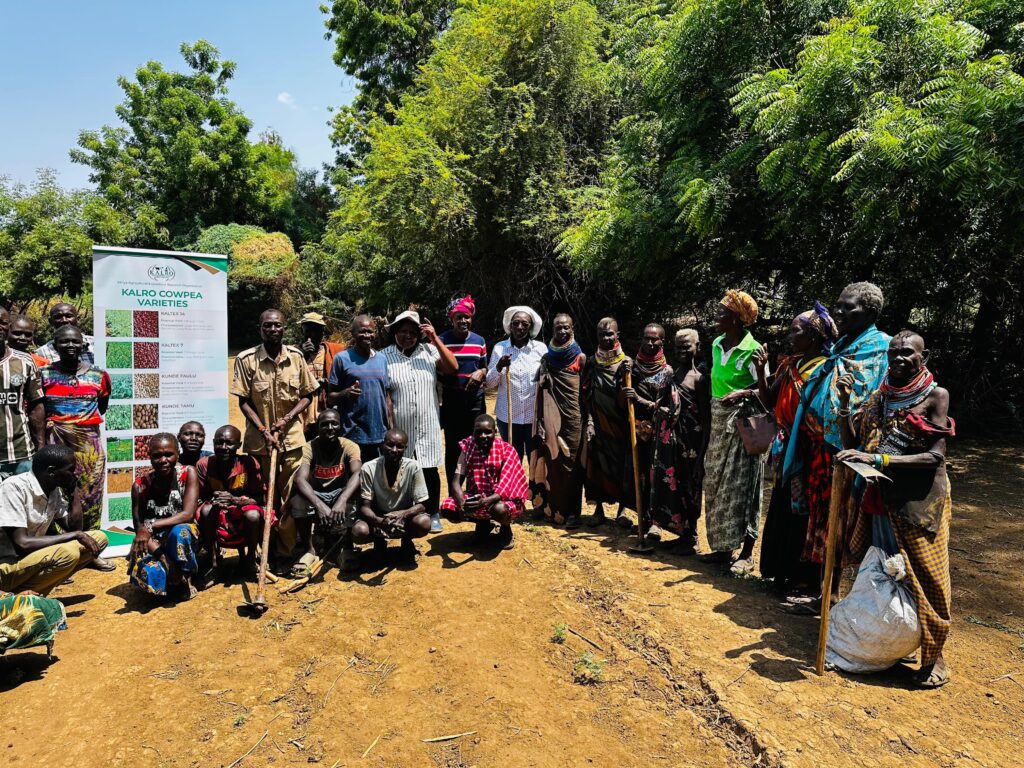
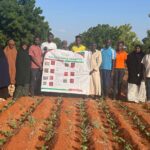
Researchers from the Kenya Agricultural and Livestock Research Organization (KALRO), through the Food Systems Resilience Project (FSRP), recently visited the Natoot and Nazareen Irrigation Schemes in Kanamkemer Ward, where they engaged farmer groups through practical demonstrations, field assessments and agricultural advisory sessions.
The initiative is aimed at helping farmers in one of Kenya’s most challenging agricultural environments improve crop productivity while adapting to harsh climatic and soil conditions.
KALRO trains farmers on better crop management
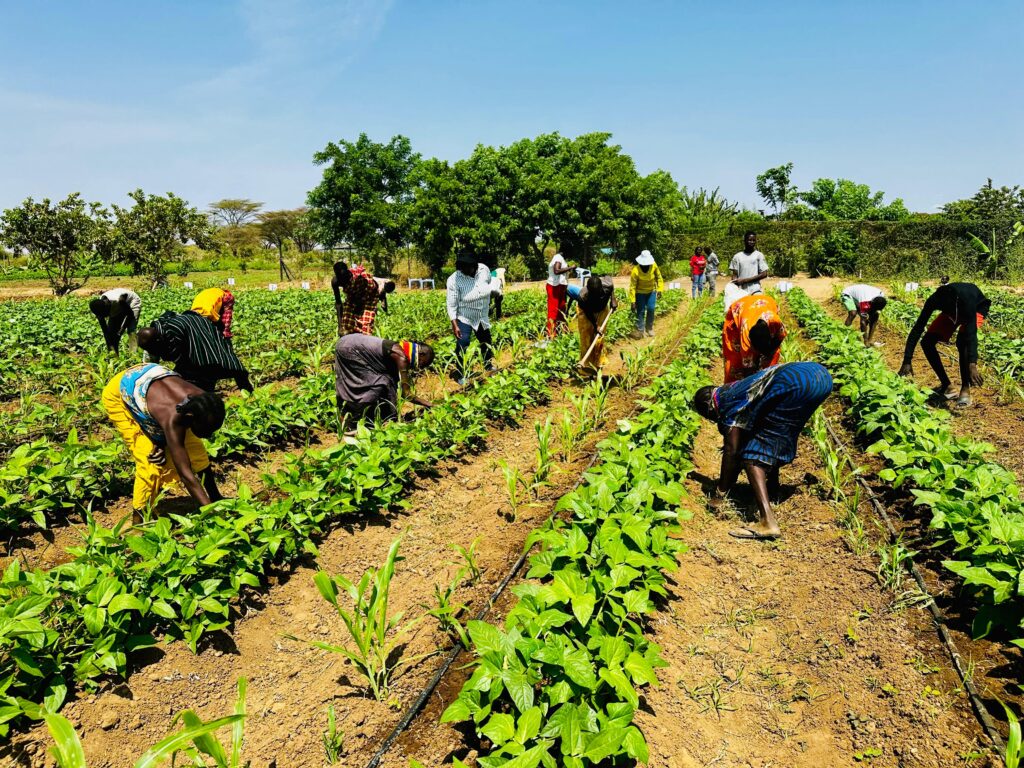
At the Natoot Irrigation Scheme, KALRO researchers conducted practical training on Good Agronomic Practices (GAPs), focusing on measures farmers can use to improve crop establishment and yields.
One of the key areas addressed was the timely thinning of sorghum.
Researchers explained that maintaining the recommended plant population is important because overcrowding increases competition among plants for water, nutrients and sunlight. Proper thinning allows the remaining plants to develop stronger root systems and healthier growth.
Farmers were also trained on integrated pest and disease management, with researchers encouraging them to combine appropriate cultural practices and locally available solutions with recommended chemical control measures where necessary.
The approach is designed to reduce unnecessary pesticide use while ensuring that serious pest outbreaks are addressed before they cause significant crop losses.
Soil salinity threatens crop production
One of the most pressing challenges identified during the field mission was soil salinity.
Researchers attributed poor crop establishment in parts of the irrigation schemes to saline irrigation water and the accumulation of salts in the soil.
High concentrations of salts in the root zone can interfere with plants’ ability to absorb water and nutrients. As salinity increases, crops may struggle to establish, grow slowly and produce lower yields.
For farmers who depend on irrigation in an otherwise dry environment, managing the quality of irrigation water and the condition of the soil is therefore critical.
KALRO researchers advised farmers to use organic manure to improve soil health and help mitigate the effects of salinity.
They also emphasized the importance of appropriate irrigation management.
Frequent irrigation can help move accumulated salts below the crop’s root zone, provided sufficient water and suitable drainage conditions are available.
Farmers were cautioned that inadequate irrigation can allow salts to accumulate around plant roots, further weakening crops and creating conditions that can increase their vulnerability to pests and diseases.
Soil and water tests to guide recommendations
The researchers have also been collecting soil and water samples from the area for laboratory analysis at the National Agricultural Research Laboratories (NARL).
The analysis is expected to provide more detailed information about soil nutrient levels and the quality of irrigation water.
Such information can help researchers and extension officers develop more targeted recommendations for farmers rather than relying on generalized advice.
The results could also help identify appropriate soil management practices and measures for reducing the impact of salinity on crop production.
Stem borers and aphids identified as major pests
The field assessment also identified pest challenges affecting farmers’ crops.
Stem borers were found to be the major pest affecting sorghum, while aphids were the main pest observed in cowpea fields.
Both pests can reduce crop performance when not detected and managed early.
Farmers were therefore advised to strengthen field monitoring and adopt integrated pest management practices to identify pest populations before they reach damaging levels.
Early scouting can allow farmers to determine whether intervention is necessary and select the most appropriate control method.
The researchers also emphasized responsible pesticide use where chemical control becomes necessary.
Irrigation offers opportunities in Turkana’s dry environment
The work at Natoot and Nazareen comes as irrigation continues to create opportunities for agricultural production in Kenya’s ASAL counties.
Turkana’s dry climate presents major challenges for rain-fed agriculture. Reliable irrigation can therefore provide farmers with greater control over crop production, allowing them to grow food even when rainfall is inadequate.
However, irrigation itself must be carefully managed.
Poor-quality irrigation water, inadequate drainage and inappropriate watering practices can gradually degrade agricultural soils. This means that expanding irrigation must go hand in hand with soil testing, water-quality monitoring and proper farm management.
The KALRO intervention demonstrates the importance of combining irrigation infrastructure with technical support so that farmers can maintain productive soils over the long term.
Farmers encouraged to use KALRO advisory services
KALRO is also encouraging farmers to seek technical assistance throughout the cropping season rather than waiting for challenges to become severe.
Farmers can use KALRO’s call centre and SMS advisory services to obtain information on crop production, pest and disease management, soil health and other agricultural challenges.
The advisory services provide an additional channel through which farmers can receive expert recommendations after researchers and extension teams leave the field.
For farmers operating in remote ASAL areas, access to timely technical information can be particularly important because agricultural challenges can develop quickly and local access to specialists may be limited.
Climate-smart agriculture gains importance in ASALs
The intervention in Turkana forms part of broader efforts to increase the adoption of climate-smart agricultural technologies in Kenya’s Arid and Semi-Arid Lands.
These areas face a combination of challenges, including water scarcity, high temperatures, unpredictable rainfall, degraded soils and increasing pressure on natural resources.
Improving agricultural productivity therefore requires more than simply increasing the amount of land under cultivation.
Farmers also need technologies and practices that help them use available water efficiently, maintain soil fertility, manage pests and diseases and sustain production under changing climatic conditions.
Through field demonstrations, farmer training, soil and water analysis and continued technical advisory services, KALRO is seeking to bridge the gap between agricultural research and practical farming.
For farmers in Natoot, Nazareen and other irrigation schemes in Turkana, the success of these interventions will ultimately be measured by stronger crop establishment, reduced production losses and higher yields.
The lessons from the schemes could also provide useful information for other farmers across Kenya’s ASAL counties as the country seeks to expand climate-resilient agricultural production and strengthen food security.
https://farmerstrend.co.ke/trending/turkana-farmers-kalro-soil-salinity-sorghum-cowpea/https://farmerstrend.co.ke/wp-content/uploads/2026/08/KALRO-Helps-Turkana-Farmers-Tackle-Soil-Salinity-and-Pests-to-Improve-Sorghum-and-Cowpea-Production-2026-1024x768.jpeghttps://farmerstrend.co.ke/wp-content/uploads/2026/08/KALRO-Helps-Turkana-Farmers-Tackle-Soil-Salinity-and-Pests-to-Improve-Sorghum-and-Cowpea-Production-2026-150x150.jpeg# Trendingagriculture in Turkana County,climate-smart agriculture Kenya,Food Systems Resilience Project,irrigation farming in Turkana,KALRO climate-smart agriculture,KALRO FSRP,KALRO Turkana,Turkana agriculture,Turkana farmersFarmers in Turkana County are receiving technical support to address soil salinity, poor crop establishment and pest infestations as Kenya steps up efforts to promote climate-smart agriculture in the country's Arid and Semi-Arid Lands.Researchers from the Kenya Agricultural and Livestock Research Organization (KALRO), through the Food Systems Resilience Project...FarmersTrendjohn doefarmerstrend@gmail.comAdministratorFarmers Trend Ltd.








Leave a Reply